Business News Today, 8 November 2026: Oil’s biggest weekly fall since 2020, NGX loses N3.82trn, $7.7bn loan


Last updated: 8 November 2026 · By Naijatipsland Editorial Team · Editorial policy
Morning roundup · Sunday 8 November 2026 · By Ade Adeniyi, Founder and Editor
Good morning. Oil had its sharpest weekly fall since 2020 before fresh weekend flare-ups in the Gulf, the stock market’s slide is being blamed on the Dangote refinery IPO and election nerves, and the Senate has a new $7.7 billion loan request to weigh. Here is the business news that matters to your pocket, in plain language.
Today at a glance
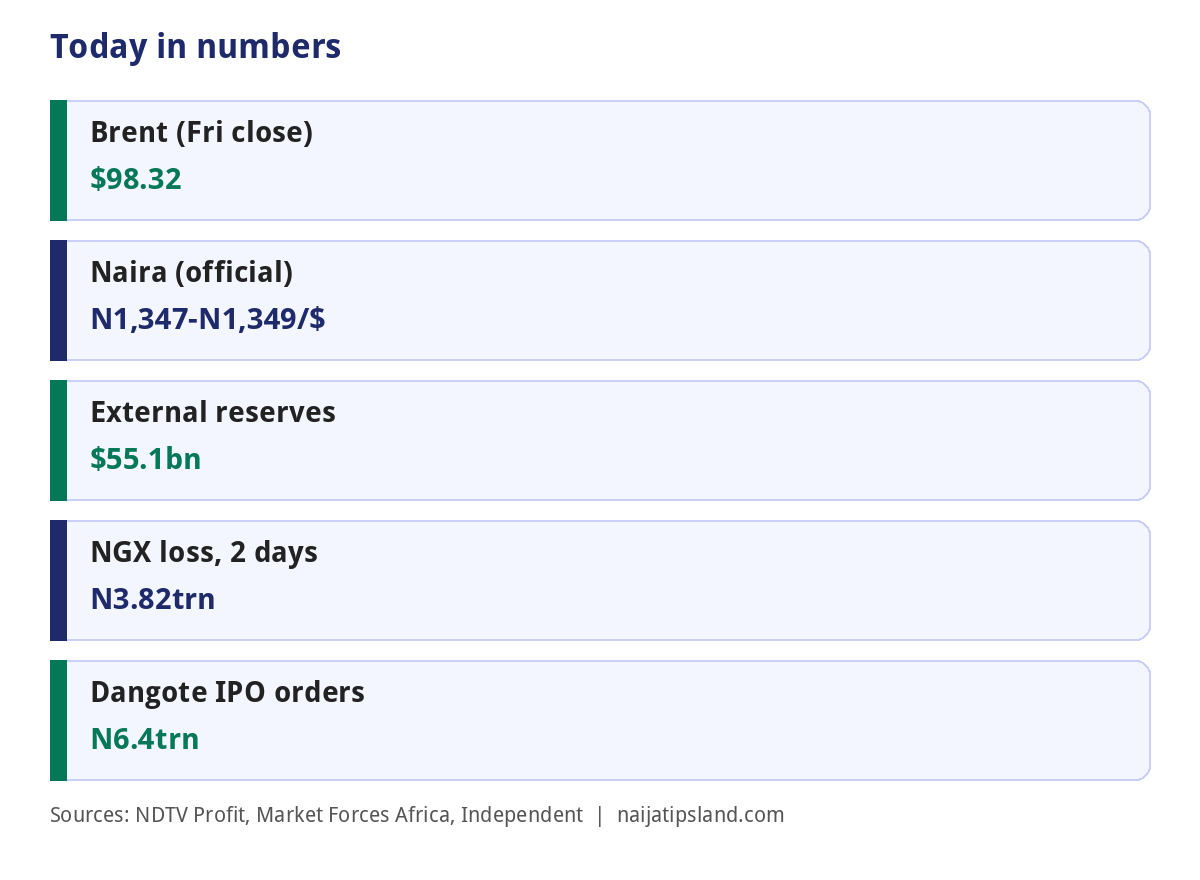
- Brent falls more than 16% in a week to $98.32, then Gulf tensions flare again.
- Naira ends the week around ₦1,347-₦1,349/$ officially; reserves slip to about $55.1 billion.
- NGX loses ₦3.82 trillion in two sessions; analysts point to the Dangote IPO and the elections.
- Dangote refinery IPO drew ₦6.4 trillion in orders; listing expected in December.
- Senate weighs a $7.7 billion external loan for the 2026 budget.
- Oyedele calls for cheaper borrowing for developing countries at Istanbul summit.
- Blackouts and ₦1,350 petrol push more small businesses to solar.
1. Oil: biggest weekly drop since 2020, then new Gulf alarms
What happened
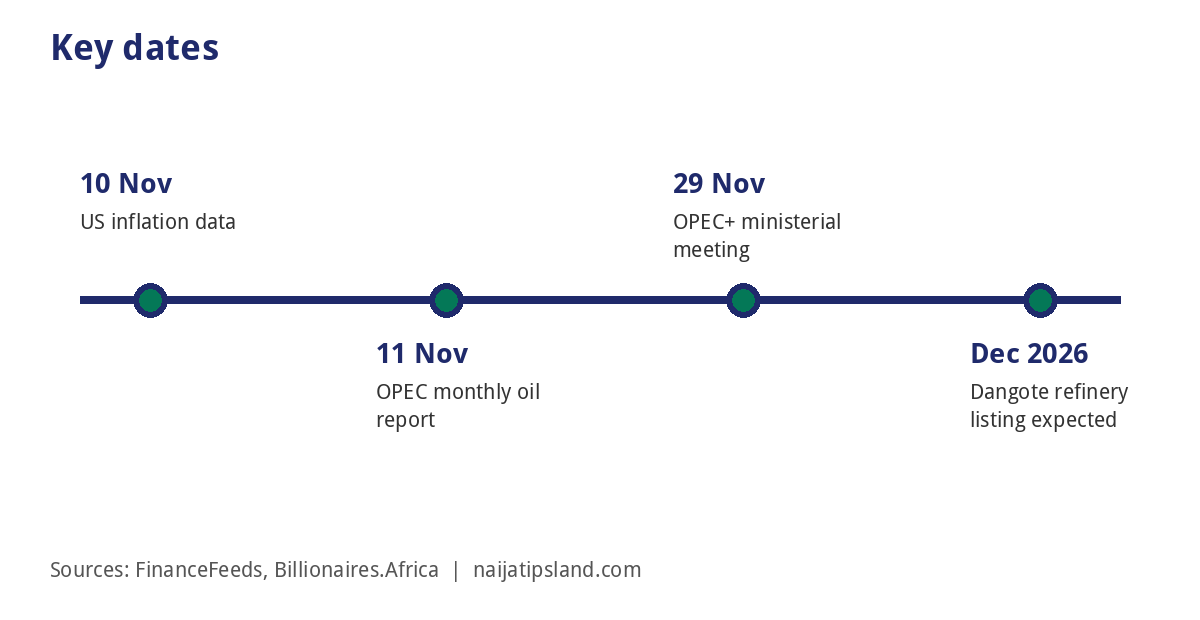
Brent crude settled at $98.32 a barrel on Friday, down more than 16% on the week, its largest weekly fall since 2020, as traders bet that the US midterm result would push Washington towards a deal with Iran. WTI closed at $90.83. Over the weekend, Iran’s Revolutionary Guards said two tankers hit sea mines near Hormuz, and Yemen’s Houthis claimed strikes on Saudi Aramco sites, according to NDTV Profit. OPEC+ is keeping December output unchanged, and OPEC’s monthly report is due on Wednesday.
Why it matters
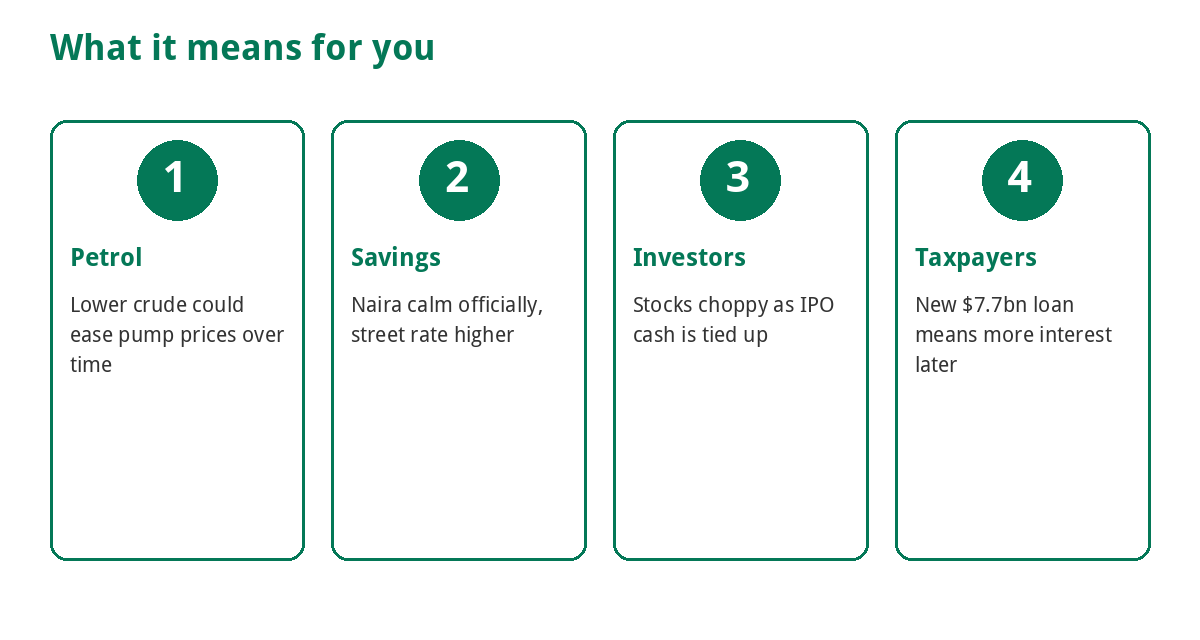
Nigeria’s 2026 budget assumes $64.85 a barrel, so prices near $100 still mean strong oil earnings and dollar inflows. Cheaper crude would ease petrol and diesel costs over time. Expect sharp moves on Monday if the weekend incidents are confirmed.
Source: NDTV Profit; Asharq Al-Awsat (Reuters); ThisDay.
2. Naira: steady at the official window, reserves edge down
What happened
The naira closed the week at about ₦1,346.79/$ at the official Nigerian Foreign Exchange Market (NFEM), according to Market Forces Africa, with another market report putting the close at ₦1,349/$, a 0.1% weekly dip, despite a $50 million CBN sale to dealers. Parallel-market quotes on Saturday ranged from about ₦1,390 to ₦1,419/$ depending on the dealer. Gross external reserves fell for several days to about $55.1 billion, from a recent peak of $55.26 billion. Forward contracts priced the naira at about ₦1,557/$ in a year.
Why it matters
The official rate is calm, but the gap with the street rate and the softer forward prices show businesses still expect some pressure into the election period. Check today’s rates on our dollar to naira page.
Source: Market Forces Africa; GovBusiness Journal; Legit.ng.
3. Stock market: why ₦3.82 trillion disappeared
What happened
Equities market value fell from ₦165.42 trillion on Wednesday to ₦161.59 trillion on Friday, a ₦3.82 trillion drop in two sessions, the Independent reported. The All-Share Index closed Friday at 248,877.22, down 0.33%. Dangote Cement alone shed about ₦2.57 trillion in value, with Huaxin Building Materials (formerly Lafarge Africa), MTN Nigeria, Presco, First HoldCo and Zenith also lower. Analysts blamed a liquidity squeeze after investors poured cash into the Dangote refinery IPO, plus some caution ahead of the elections. For perspective, NGX data show total market capitalisation hit a record ₦226.38 trillion by 30 October, up 51% this year.
Why it matters
Pension funds and many retail investors hold these stocks. Short-term dips after big offers are common, but election uncertainty can keep prices choppy until January.
Source: Independent; Okay News; ThisDay.
4. Dangote refinery IPO: three times oversubscribed
What happened
The Dangote Petroleum Refinery offer of 4.1 billion shares at ₦525 each sought about ₦2.15 trillion but drew roughly ₦6.4 trillion in orders from investors in 120 countries when it closed on 27 October. The shares are expected to start trading on the NGX in December, which at the offer price would value the refinery at about ₦65.2 trillion. Separately, Aliko Dangote told the WIMBIZ conference in Lagos that he once paid Nigerian banks interest of up to 40% on loans for the Obajana cement plant.
Why it matters
Applicants will soon learn how many shares they get, and refunds for unallotted shares could return cash to the market. The interest-rate comments add to pressure on lenders and the CBN over the high cost of business credit.
Source: Billionaires.Africa; Independent.
5. Senate weighs a $7.7 billion external loan
What happened
President Tinubu has asked the National Assembly to approve $7.7 billion (about ₦10.79 trillion) in external borrowing to part-finance the 2026 budget deficit, replacing an earlier, larger request. The 2026 budget already authorised ₦29.2 trillion in new borrowing for a deficit of about ₦31.4 trillion. Options include Eurobonds, multilateral and bilateral loans and bridge financing. Senate President Godswill Akpabio referred it to the debt committee. A Leadership editorial urged lawmakers to publish the project list and expected terms; the opposition NDC called it a borrowing spree, while the Presidency says the proceeds will also support reserves and the naira.
Why it matters
More debt means more of future revenue goes to interest. How the Senate scrutinises the terms will matter for taxpayers long after the election.
Source: allAfrica; Leadership.
6. Oyedele: developing countries pay a “prejudice premium”
What happened
Finance Minister Taiwo Oyedele told the Bosphorus Summit in Istanbul that developing countries pay an estimated $500 billion a year more in borrowing costs than rich economies, and called for fairer credit ratings, a more representative IMF and faster debt restructuring. He cited 4.43% GDP growth in Q2 2026 and reserves above $55 billion, promoted “Projects Nigeria”, 65 investment opportunities seeking about $78.5 billion, and said Nigeria and Türkiye aim to grow trade to $5 billion.
Why it matters
Lower borrowing costs for Nigeria would free money for roads, power and schools. The $78.5 billion is financing sought, not money already secured.
7. Blackouts and petrol costs push small firms to solar
What happened
With outages hitting Lagos, Abuja, Kwara and Oyo, small business owners in Lagos told New Telegraph that petrol at about ₦1,350 a litre makes generators unaffordable, and several have switched to solar. The Power Minister says the first generating units should return within days; NNPC disputes that gas supply caused the shortfall.
Why it matters
Energy is one of the biggest costs for barbers, tailors and shop owners. Each week of blackouts raises prices for customers or cuts profits.
Source: New Telegraph; ThisDay.
What to watch next
- Oil prices on Monday after the weekend Gulf incidents; US inflation data on Tuesday and OPEC’s report on Wednesday.
- Dangote refinery share allotment and the December listing date.
- The Senate debt committee’s report on the $7.7 billion loan.
- Whether power supply in Lagos and Abuja improves this week.
Frequently asked questions
What is the dollar to naira rate today?
The official NFEM rate closed the week at about ₦1,347-₦1,349/$, while street rates were about ₦1,390-₦1,419/$. Markets reopen on Monday.
When will Dangote refinery shares start trading?
Listing on the Nigerian Exchange is expected in December 2026, after allotment.
Why did the NGX fall this week?
Analysts link it mainly to cash tied up in the Dangote refinery IPO, profit-taking after nine-month results, and caution ahead of the elections.
This roundup summarises reporting by the outlets credited under each story, in our own words. Follow Naijatipsland Updates on WhatsApp for the next edition. Spotted an error? Tell us and we will correct it under our editorial policy.