Last updated: 13 October 2026. This article is general information about social connection and wellbeing, not medical advice. If you are struggling with your mental health, speak to a qualified health professional. In an emergency in Nigeria, call 112.
Community and mental health at a glance
- Loneliness is common: the World Health Organization (WHO) says about one in six people worldwide experienced loneliness between 2014 and 2023.
- It matters for health: loneliness is linked to an estimated 871,000 deaths a year, about 100 every hour.
- Young people are affected: between 17% and 21% of people aged 13 to 29 report loneliness, with the highest rate among teenagers.
- Connection helps: the WHO says strong social connections are linked to better health and a lower risk of early death.
- Not a cure-all: community involvement supports wellbeing but does not replace professional care when you need it.
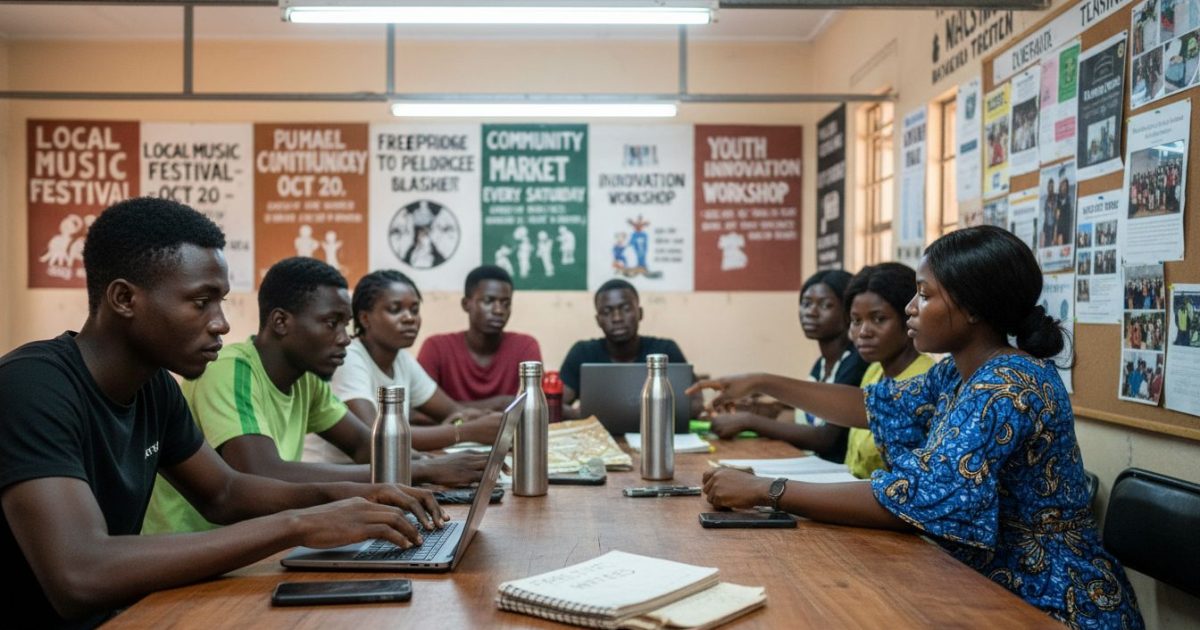
Many young Nigerians spend hours online every day yet still feel disconnected. Real community involvement, such as belonging to a group, helping others and having people to turn to, is one of the strongest protections for wellbeing that researchers have identified. An earlier version of this article promised that engagement delivers a 30% improvement in mental health and quoted figures about reduced anxiety and depression that we could not trace to a reliable source, so we have removed them. This guide sticks to what the WHO and other credible sources actually report.
Loneliness and Social Isolation: What Is the Difference?
The WHO defines social connection as the ways people relate to and interact with one another. Loneliness is the distressing feeling that arises when there is a gap between the relationships you want and those you have. Social isolation is the objective lack of social ties. You can be lonely in a crowd, and you can have few contacts and feel fine, so the two are related but not the same.
What the WHO Report Found
On 30 June 2025 the WHO Commission on Social Connection published its flagship report, From Loneliness to Social Connection. Its main findings include:
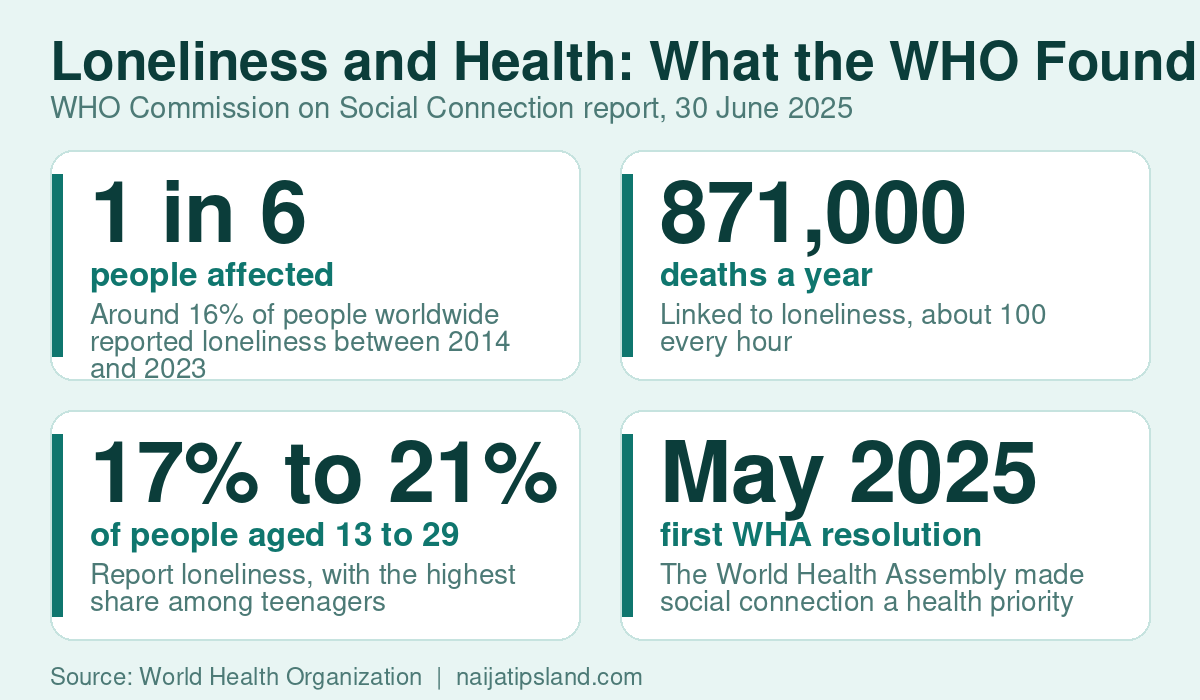
- About 16% of people worldwide, or one in six, experienced loneliness between 2014 and 2023.
- Loneliness and social isolation are linked to an estimated 871,000 deaths a year.
- They increase the risk of stroke, heart disease, type 2 diabetes, cognitive decline and early death.
- Loneliness is more common among young people and in low- and middle-income countries.
- In May 2025 the World Health Assembly adopted its first resolution on social connection.
- The report raises concern about excessive screen time and harmful online interactions, especially for young people.
These findings describe associations and population estimates. They do not prove that any single activity will improve a given person’s mental health, but they do show why social connection is now treated as a public health priority. The Lancet Public Health has even described social health as a third pillar of health, alongside physical and mental health.
What Community Engagement Can Offer
- Belonging and support. Having people who know you and who you can ask for help is protective for many people.
- Purpose. Contributing to something larger than yourself, such as a project, a cause or a group, can give your days structure and meaning.
- Information and opportunity. Communities share advice, jobs, training and contacts that are hard to find alone.
- Accountability and encouragement. Study groups, fitness groups and savings groups help people stay on track.
- A sense of identity. Belonging to a group can strengthen your sense of who you are, particularly during big life changes such as moving cities.
Ways to Build Real Connection
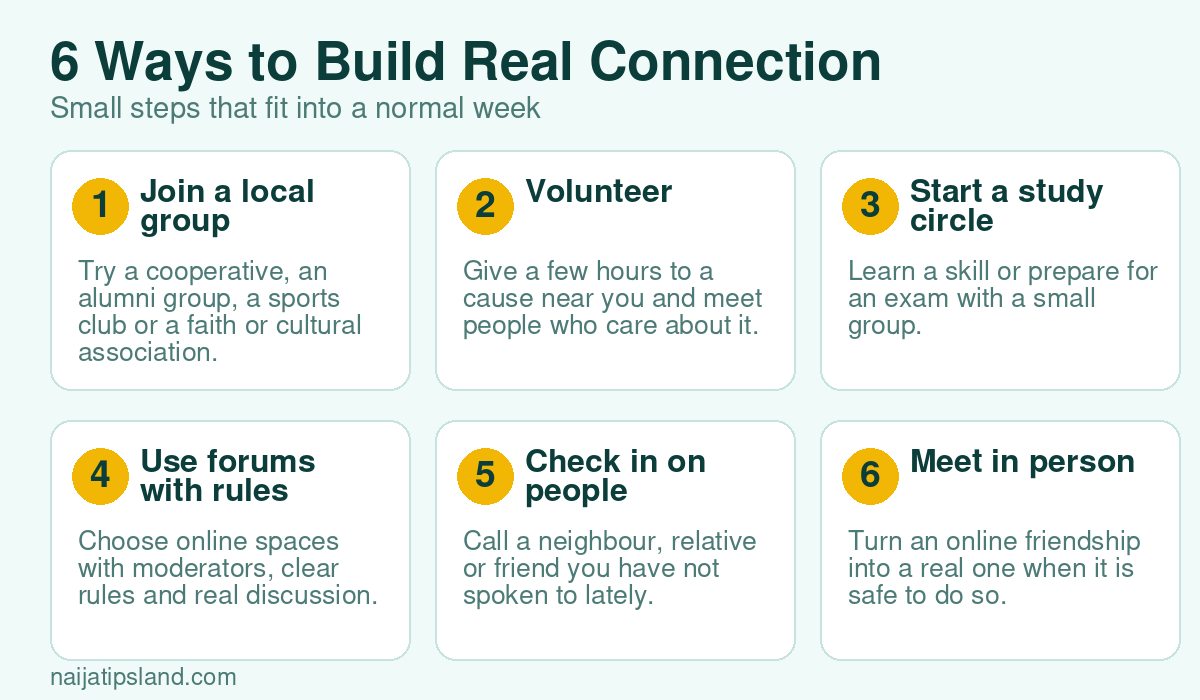
- Join a local group. Options include cooperatives, alumni associations, sports clubs, professional networks and faith or cultural associations. Many Nigerians already belong to one, and getting more involved in it can deepen real friendships.
- Volunteer. Give a few hours to a cause you care about and you will meet people who share your interests.
- Start a study or skills circle. A small group preparing for an exam or learning a trade keeps everyone motivated.
- Use online forums with rules. Choose communities with moderators and clear guidelines, where people discuss ideas respectfully. See our guide on why comment moderation matters.
- Check in on people. A call to a relative, neighbour or colleague costs little and often means a lot.
- Move from online to in person when it is safe. Meet in public places, tell someone where you are going and be cautious with new contacts.
Healthy Habits for Online Communities
Online spaces can help people stay in touch, find support and share interests, but the WHO has flagged concern about excessive screen time and harmful interactions. A few habits make online community life healthier:
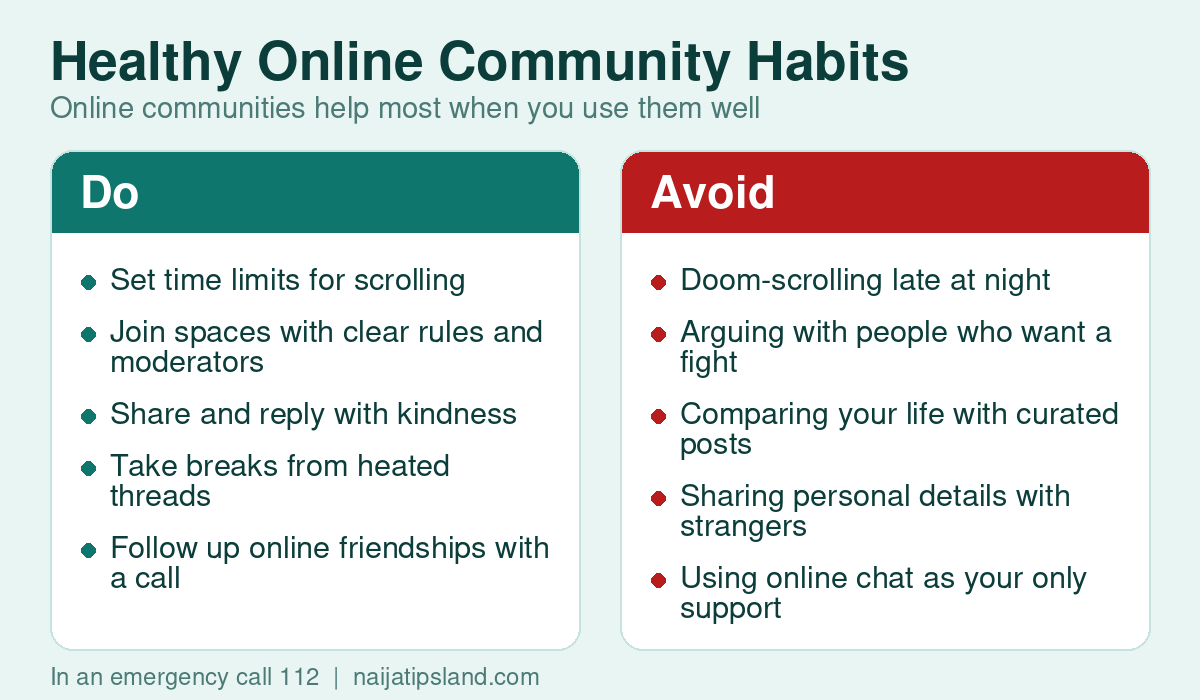
- Set time limits and keep devices out of the bedroom.
- Prefer spaces with clear rules and active moderation.
- Be careful about arguments that leave you angry or anxious. Our guide to discussing politics online explains how to disagree without fighting.
- Avoid sharing personal details with strangers, and do not rely on online chat as your only support.
Common Misconceptions
- “More followers means more connection.” Followers are not the same as people who know and support you.
- “Community involvement will fix depression.” It can help, but persistent low mood or anxiety needs professional assessment.
- “I am too busy.” Small, regular contact, such as a weekly call or a monthly group meeting, matters more than occasional large efforts.
- “Only extroverts benefit.” Connection can be quiet, such as a small circle of close friends or a study partner.
When to Seek Professional Help
Talk to a doctor, counsellor or other qualified professional if you notice persistent sadness, loss of interest, trouble sleeping, constant anxiety or thoughts of harming yourself. If you or someone else is in immediate danger, call the emergency number 112 or go to the nearest hospital. Connection and professional care work best together.
Community Engagement in Practice
Many Nigerians already belong to communities that offer connection. Examples include cooperative and thrift groups, age-grade and town unions, faith and cultural associations, alumni networks, professional bodies and sports clubs. Young people also take part in structured service, such as the community development service that is part of the National Youth Service Corps, and in volunteer groups and student organisations. The key is not the kind of group but how regularly you take part and whether it gives you people you can talk to honestly.
How Communities Can Support Young People
- Offer safe spaces where young people can ask questions and speak freely without being ridiculed.
- Pair them with mentors who can advise on school, work and life decisions.
- Make joining easy. Low fees, clear rules and welcoming leaders help newcomers stay.
- Talk openly about mental health, and know where to refer someone who needs professional help.
- Combine online and offline contact, so a chat group leads to real meetings.
A Simple Four-Week Plan
- Week 1: reach out to one person you have lost touch with and arrange a call or a visit.
- Week 2: pick one group that matches an interest and attend a meeting or join its discussion.
- Week 3: offer to help with a small task, which is the fastest way to be noticed and valued.
- Week 4: review what felt good, keep the activities you enjoyed and set a regular time for them.
Small, repeated contact beats occasional big gestures, and you can adjust the plan to your schedule and comfort.
Supporting a Friend Who Seems Lonely
Sometimes the person who needs connection is someone you know. If a friend or relative has withdrawn, stopped replying or seems low, a few simple steps can help:
- Reach out directly. A call or a visit says more than a reaction on social media.
- Listen without fixing. Let them talk, and avoid minimising their feelings with phrases such as “it is not that bad”.
- Invite them to something small. A walk, a meal or a short activity is easier to accept than a big event.
- Keep in touch. A regular message or call over several weeks builds trust.
- Encourage professional help if they talk about feeling hopeless or unsafe, and help them find a doctor or counsellor. If they may be in immediate danger, call 112.
Looking after your own wellbeing matters too. You can support others better when you have your own connections in place.
Frequently Asked Questions
How common is loneliness?
The WHO estimates that about one in six people worldwide experienced loneliness between 2014 and 2023, with higher rates among young people and in low- and middle-income countries.
Does joining a community improve mental health?
Strong social connections are linked to better health and a lower risk of early death, according to the WHO. The effect on any individual varies, and community involvement is not a replacement for treatment when you need it.
Can online communities help?
They can, especially when they are well moderated and lead to real discussion or friendship. The WHO also warns about excessive screen time and harmful online interactions, so use them mindfully.
How can I meet people if I am shy?
Start small. Join a group built around a shared interest, volunteer for a specific task, or arrange regular one-to-one meetings with a friend.
What should I do if I feel very lonely?
Reach out to someone you trust, try one of the steps above, and speak to a health professional if the feeling persists or affects your daily life.
Related Guides
- How to discuss politics online respectfully
- Why moderate comments: a guide for Nigerian communities
- How to avoid internet scams
Sources
- World Health Organization: Social connection linked to improved health and reduced risk of early death
- WHO: From loneliness to social connection, report of the WHO Commission on Social Connection
- UN News: Every hour, 100 people die of loneliness-related causes
- The Lancet Public Health: Social health, the neglected third pillar