
How to Start a Laundry Business in Nigeria (2026): Startup Costs, Equipment, Pricing and Getting Customers

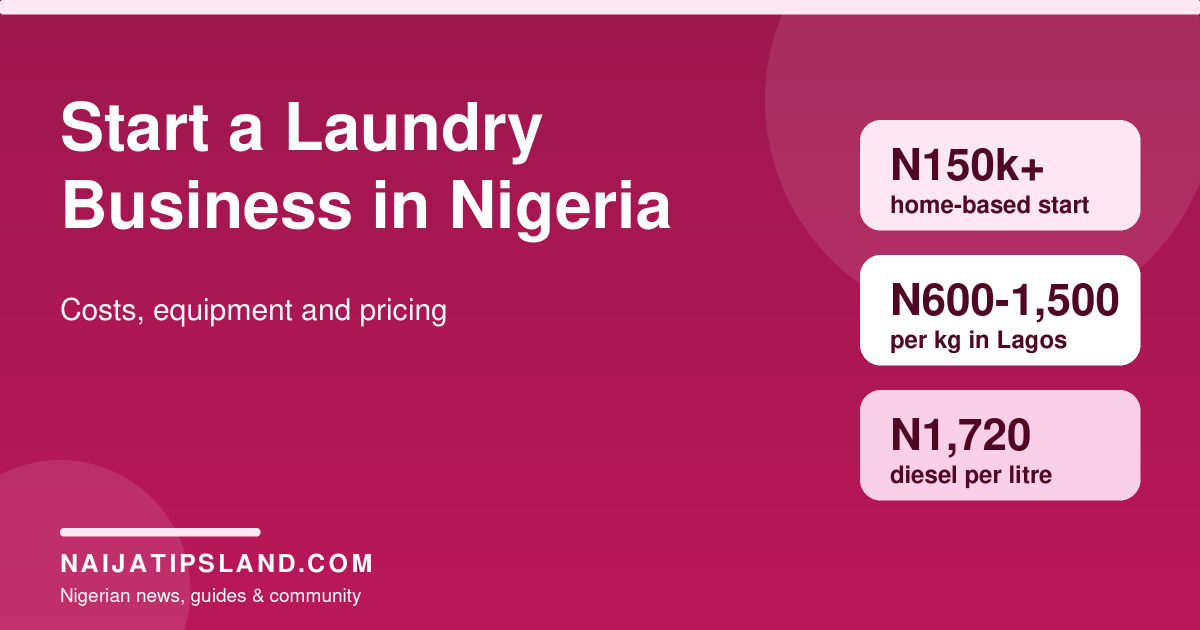
Last updated 19 November 2026. Prices in naira move quickly with the exchange rate and the cost of fuel, so treat every figure here as a starting point and get a fresh quote before you spend. I am a writer, not a business adviser. Several of the cost guides I used are published by laundry businesses and software sellers, and I flag that where it matters.
Laundry is one of those businesses that looks small and turns out to be a real operation. People in Lagos, Abuja and Port Harcourt are busy, many flats have no space or reliable power for a washing machine, and ironing is a chore most households would rather hand over. That is the demand. The supply side is harder than it looks, because power, water and breakdowns will shape your profit more than the price you put on a shirt.
This guide sets out what the sources I checked say about costs, equipment, pricing and customers. Where they disagree, and they often do, I show the range and explain why.
How a laundry makes money
You are paid for turning dirty clothes into clean, pressed, correctly returned clothes, and you can charge in two ways. Per-kilogram pricing suits everyday household loads. Per-item pricing suits suits, native wear and anything delicate. Most successful shops sell both. A weekly bag of shirts and trousers goes by the kilo, and an agbada or a wedding outfit goes by the piece.
The costs come from labour, detergent, water, power, rent and repairs. Of those, power is the one that surprises new owners, and it deserves its own section below.
How much it costs to start
You will see very different startup figures online, and the gap is not because anyone is lying. The guides describe different businesses. One starts with a single machine in a spare room. Another describes a street-front shop with staff and a delivery bike. Here is how the figures I found line up.
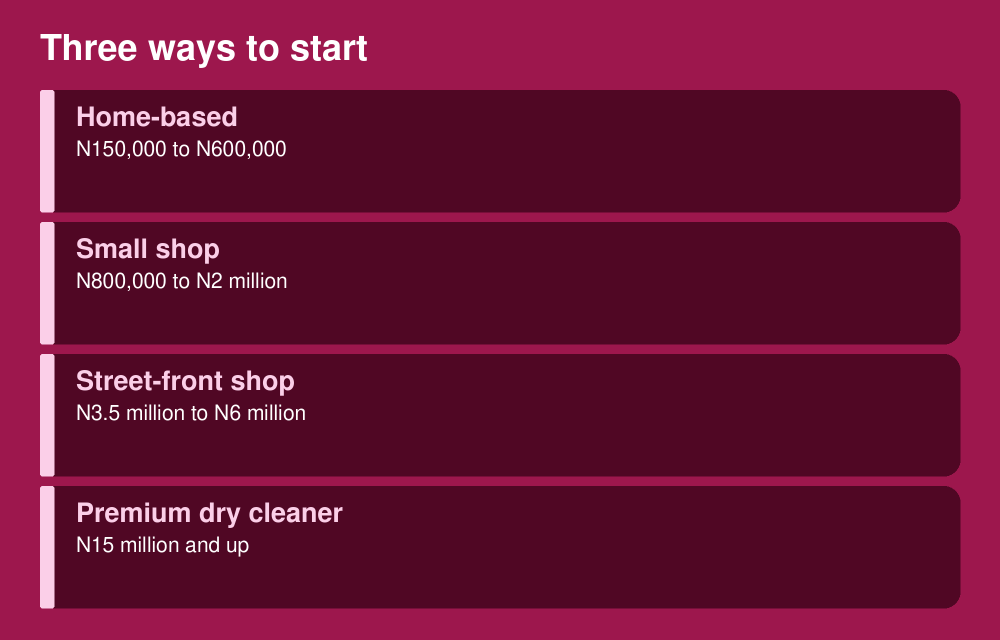
One guide puts a home-based start at ₦150,000 to ₦400,000 for a pickup-and-delivery operation with one washing machine, a steam iron, racks and supplies, and adds that a better-equipped setup with a tumble dryer and a delivery motorbike needs ₦400,000 to ₦800,000. Another gives a minimum setup of ₦134,000 to ₦318,000 with no dryer and no vehicle. A third says ₦500,000 to ₦2 million for a walk-in shop, which it converts to about $364 to $1,455 at the July 2026 official rate of ₦1,375 to the dollar.
A software seller’s guide describes tiers. It gives a lean start at ₦800,000 to ₦1.5 million, a standard laundromat at ₦3.5 million to ₦6 million, and a premium dry cleaner at ₦15 million and above. Another page from the same company says a standard competitive laundry should budget ₦1.5 million to ₦2 million. Because that company sells laundry management software, its figures lean toward the bigger end, and you should weigh them with that in mind.
My reading: you can begin small and honestly for a few hundred thousand naira if you work from home, but a proper shop with rent, power and staff is a seven-figure commitment. Pick the level you can afford to lose a little of while you learn.
Equipment you need
The equipment list is short, and the quality of each item matters more than the number.
- Washing machines. The sources suggest buying two. One says to buy two smaller machines because one will always be down. Prices swing widely: about ₦80,000 to ₦180,000 for a 7kg semi-automatic or automatic, ₦100,000 to ₦120,000 each for 14kg top loaders in one guide, and ₦300,000 to ₦800,000 in another that has commercial units in mind.
- A dryer. Tumble dryers run roughly ₦80,000 to ₦350,000 in the figures I found. They cost more at the start, but in the rainy season line drying slows you down badly.
- Pressing irons and tables. A heavy-duty steam iron is ₦15,000 to ₦80,000 depending on the source, plus a wide pressing table at ₦8,000 to ₦150,000. Keep a spare iron so a failure does not stop the day.
- Racks, hangers and tags. Item tagging is what stops mix-ups when you have several clients’ clothes in the shop.
- Detergent, softener and stain removers, roughly ₦10,000 to ₦25,000 for a month in the lower-cost guide.
If you buy fairly used equipment, the low-capital guide advises having a trusted technician test the motors before you pay. It also warns against rare brands. If a pump breaks and the part has to come from overseas, your business waits for weeks. Stick with brands that have technicians in your city.
Power and water decide your margin
Public electricity in many Nigerian cities is unreliable, so nearly every guide treats a generator as part of the startup cost. The figures run from ₦100,000 to ₦300,000 for a small unit up to ₦250,000 to ₦600,000 and beyond for a bigger one. One equipment checklist says a shop running only industrial irons and one washer needs a 15kVA soundproof generator at minimum, and that larger setups with several dryers may need 30kVA to 60kVA. Another budget puts a 3.5kVA generator and a 1,000-litre tank in its lean tier. Those two views do not fit together, and the honest answer is that your size depends on your machines, so ask the seller what load your exact equipment draws.
Diesel is the running cost to watch. On 9 November 2026 petroleumprice.ng reported that Dangote cut its diesel gantry price by ₦120 to ₦1,720 per litre, and Lagos depot prices were reported around ₦1,800 a litre in late October. Retail prices at the pump will be higher than the gantry figure. Ask your generator seller how many litres per hour it burns at your expected load, multiply by the price you actually pay, and add that to every day of the budget.
Water is the other quiet cost. The guides recommend storage tanks and, in many areas, a filter. Borehole water often contains iron, which can stain clothes and clog parts of a machine. If your water is hard or discoloured, test it before you promise clients white shirts.
Where to set up and whether to register
Rent is the biggest fixed cost, and the cheapest route is to start at home or share a corner of an existing shop for intake and pickups. The low-capital guide suggests this, and it makes sense: you test demand before signing a lease. Annual shop rent in the figures I found runs from about ₦200,000 to ₦500,000 in cheaper areas to ₦300,000 to ₦1.2 million from Lagos mainland to Lekki, and landlords often want one or two years upfront.
Registration is optional on day one, but it helps. A registered business can open a proper business account, look credible to hotels and offices, and bid for contract work. One budget guide puts CAC registration and permits at ₦25,000 to ₦70,000, depending on structure and local government. Our guides to registering a business name and registering a limited company with the CAC go through the steps and the current process, and the Start a Business in Nigeria hub collects the rest.
What to charge
Check what your neighbours charge before you set any price. The guides give a useful range for Lagos, and a price-comparison page checked on 24 October 2026 lists typical rates.
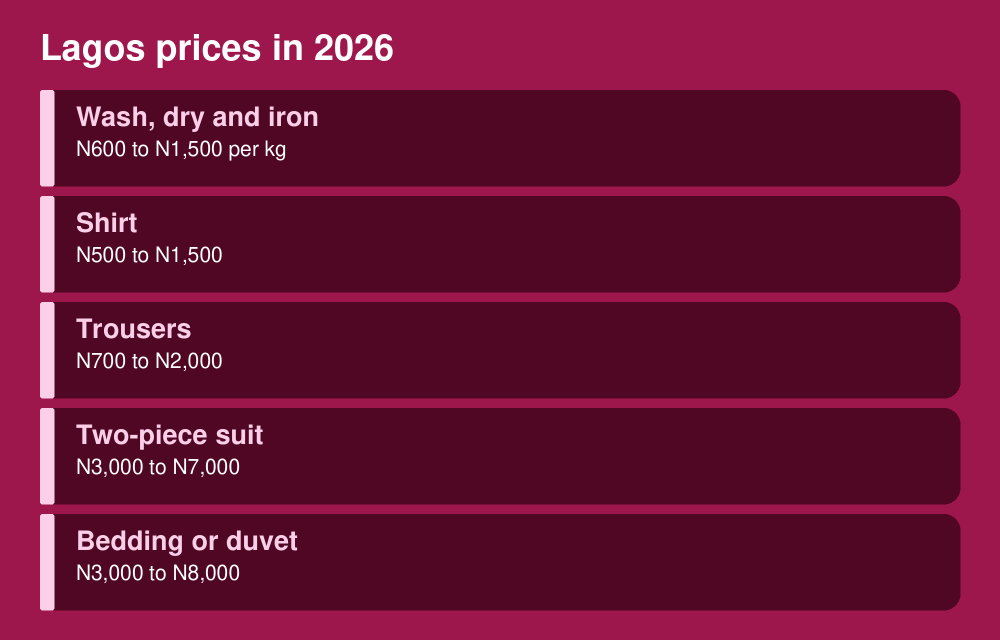
Another guide quotes wash-and-fold at ₦3,000 to ₦8,000 for a 5kg bag and wash, dry and iron at ₦5,000 to ₦15,000 a bag in Lagos and Abuja. Those do not line up exactly with the per-kilo figures, because bag size and service level vary. The lesson is that you should write your own price list, put it where customers can see it, and apply the same rule every time.
Here is a rough illustration, not a forecast. Suppose you take in 20kg a day at ₦1,000 per kilo and work 26 days a month. That is ₦20,000 a day and ₦520,000 in monthly sales, before you pay for fuel, detergent, rent, staff and repairs. Change the numbers to match your area and your machines, then subtract your real costs. If the answer is thin, raise the price, add pickup fees or sell more items per customer.
Two other revenue streams come up repeatedly in the sources. Express service at a premium of 50 to 100 per cent over the standard rate is one. Contract work with hotels, restaurants, clinics and offices is the other, with figures like ₦30,000 to ₦120,000 a month for staff uniforms and ₦50,000 to ₦250,000 a month for linen from one source. These are steadier than walk-in trade, but they also demand reliable turnaround, so land them after your operation runs smoothly.
How to get customers
Start with the people who already hate ironing. One guide suggests beginning with a starch-and-iron service for suits, senator wear and agbada, then using the profit to buy your first washing machine within a few months. That keeps your startup cost low while you build a name.
- Offer pickup and delivery. Busy professionals pay for convenience, and a branded laundry bag that a customer carries through their building advertises you to the neighbours.
- Ask your first ten customers for referrals, and make it easy by sharing a WhatsApp contact.
- Visit estate managers, hostels, guest houses and small offices. They need regular service and talk to one another.
- Take photos of finished work and post them with permission, and keep your pricing visible.
Do not forget the cost of delivery. Early on you can use an okada or ride-hailing courier. Add your own bike when volume justifies it, which the sources put at ₦80,000 to ₦500,000 for a motorbike or vehicle.
Mistakes that cost owners money
The sources agree on a handful of avoidable errors. Buying cheap residential machines for commercial use leads to repeated repairs. Skipping a backup iron or machine halts the day when something fails. Tracking orders on scraps of paper causes lost items and disputes, so log every garment at drop-off with the customer’s number, the item, its condition and the price. Taking cash with no record makes it hard to see where the money went, and the overseas-owner guide suggests pushing payment to bank transfers for that reason. Ignoring a maintenance log leaves you guessing about which machine breaks and why.
Also set a plan for damaged items. State in writing what you will do if a garment is stained, shrunk or lost, and tell customers before work starts. A clear policy saves you from arguments that can wreck a young reputation.
Funding the start
Many people begin with savings, a family contribution or a cooperative loan. If you need outside money, read our guide to getting a small business loan in Nigeria first, and borrow only what the sales can repay. If you are comparing other small ventures before you choose, the catering and small chops guide follows the same cost-and-pricing approach, and this list of small businesses that succeed may help you compare.
Related guide (updated 19 November 2026)
How to Start a Bakery Business in Nigeria (2026) Startup costs at four budget levels, oven and flour prices, NAFDAC and CAC steps, and an honest look at bread margins.
FAQ
How much do I need to start a laundry business in Nigeria?
It depends on the model. Sources put a home-based start between roughly ₦150,000 and ₦600,000, a small shop at ₦800,000 to ₦2 million, and a street-front shop at ₦3.5 million to ₦6 million. Get current quotes before you commit.
Do I need a washing machine to begin?
Not necessarily. You can start with a starch-and-iron service and buy a machine from early profits. For more than about ten regular clients, a machine becomes practical.
Is a generator really necessary?
Most guides say yes, because public power is unreliable. The size depends on your equipment, so ask the seller for the load figures.
Should I register the business with the CAC?
You can start informally, but registration helps with banking and contracts. One guide estimates ₦25,000 to ₦70,000 for registration and permits, so check the current fee on the CAC site.
How much should I charge in Lagos?
A price page checked on 24 October 2026 listed ₦600 to ₦1,500 per kg for wash, dry and iron, ₦500 to ₦1,500 for a shirt and ₦3,000 to ₦7,000 for a suit. Check your own area, since prices vary.
Is it better to buy new or used machines?
Used machines cost less but carry risk. Have a technician test them, avoid rare brands, and make sure parts are available locally.
This article gives general information and is not financial or legal advice. Costs, fuel prices and regulations change, so confirm figures with suppliers and the relevant authorities before you invest.
Sources
- CloudLaundry: How to Start a Laundry Business in Nigeria, Step-by-Step Guide for 2026
- CloudLaundry: Budget Breakdown for Laundry Startup, a Realistic 2026 Financial Guide
- CloudLaundry: How Much Do You Need to Start a Laundry Business in Nigeria
- CloudLaundry: How to Start a Laundry Business with Low Capital in Nigeria
- CloudLaundry: Equipment Needed for Laundry Business in Nigeria, 2026 Checklist
- Naijasabi: How to Start a Laundry Business in Nigeria 2026
- Counseal: How to start a laundry business in Nigeria from abroad
- Fixgent: Laundry and dry cleaning prices in Lagos (2026)
- PetroleumPrice.ng: Dangote Refinery cuts diesel gantry price by ₦120 to ₦1,720/litre (9 November 2026)
- Legit.ng: Dangote leads as petrol depots fall across Nigeria
Join the discussion
Have you tried this, or do you have a question we did not answer? 1 reader has already shared their view. Naijatipsland members help each other with real, first-hand experience.






Editor note: do you run a laundry or dry-cleaning shop in Nigeria, or are you planning one? Tell us in the comments what you paid for your machines, what you charge and what your biggest running cost turned out to be. Please leave out phone numbers and account details. We read every comment. – Ade