

Last updated: 7 November 2026 · By Naijatipsland Editorial Team · Editorial policy
Good sleep and manageable stress rarely come from one trick. They come from a handful of ordinary habits done consistently: a regular sleep schedule, daylight and movement, less caffeine late in the day, a calmer wind-down, and ways to deal with the worries that keep your mind running. This guide pulls together practical, low-cost advice from NHS sleep-hygiene leaflets, NHS stress guidance and the World Health Organization, adapted for Nigerian homes where heat, noise, generators, long commutes and money worries are part of daily life.
About this guide: we read the Doncaster and Bassetlaw NHS sleep hygiene page, the NHS page on stress and the WHO physical activity fact sheet on 7 November 2026. This is general information and not medical advice. If sleep or stress problems are severe or long-lasting, please see a doctor.
Quick answer: what works best?
Keep a regular bedtime and wake-up time (including weekends), avoid caffeine after about 2pm, stop using screens before bed, make the bedroom cool, dark and quiet, be active during the day, and use breathing, talking and planning to deal with stress. Avoid relying on alcohol, cigarettes or other substances to cope, as they tend to make sleep and mood worse. If poor sleep or stress continues despite these steps, speak to a doctor.
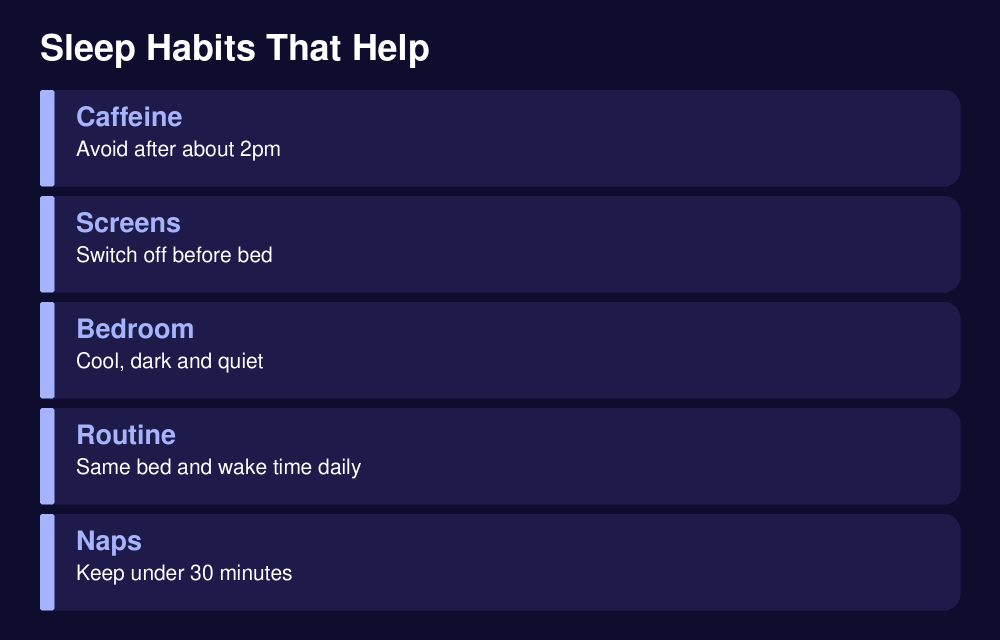
Sleep habits that help
| Habit | What to do |
|---|---|
| Caffeine | Avoid after about 2pm; it can stay in the body for up to six hours. This includes tea, coffee, energy drinks and chocolate |
| Alcohol and nicotine | Limit alcohol before bed (it can disturb sleep later in the night); avoid smoking before bed |
| Screens | Stop using phones, computers and TV before bed, or use a night filter |
| Bedroom | Cool, dark and quiet; use the bed for sleep |
| Routine | Same bed and wake time daily; relax before bed (warm bath 1 to 2 hours earlier, a milky drink, calm breathing) |
| Exercise | Be active in the day; avoid hard exercise within 3 hours of bed; gentle yoga is fine |
| Naps | Keep to under 30 minutes and not late in the day |
Practical fixes for Nigerian homes
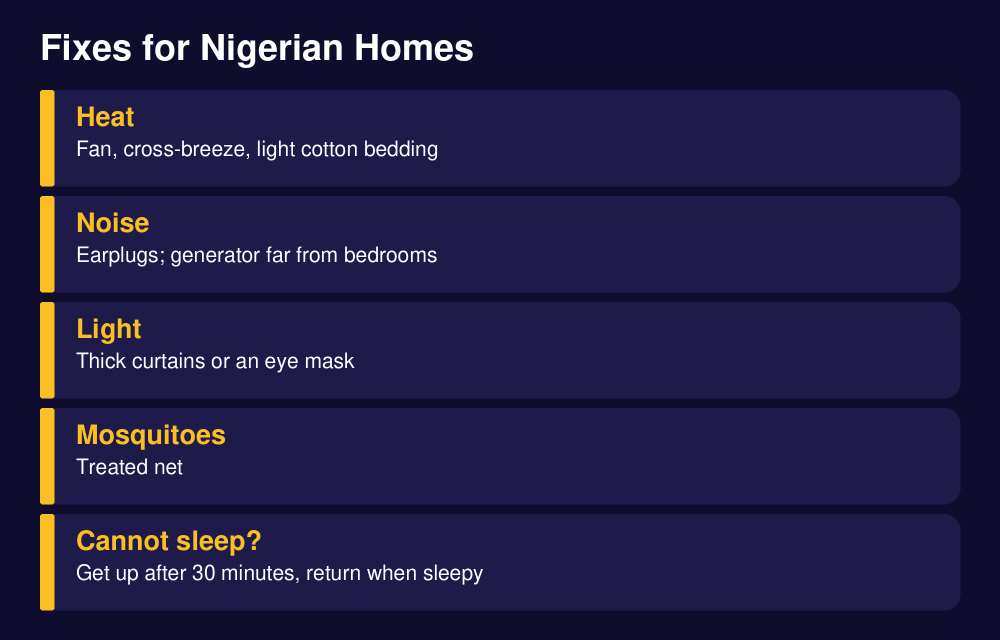
- Heat: sleep with windows open if secure, use a ceiling fan or a simple cross-breeze, light cotton bedding, and a cool shower before bed.
- Noise and generators: earplugs are cheap; place the generator as far from bedrooms as safely possible, and never run it indoors, because carbon monoxide can kill.
- Light: use thick curtains or an eye mask; keep phone chargers and bright LEDs out of sight.
- Mosquitoes: a treated net lets you sleep without disturbance and protects against malaria.
- Long commutes and shift work: protect a fixed sleep window as much as you can, and keep lights dim and screens away in the hour before it.
- If you cannot sleep after about 30 minutes: get up, sit somewhere quiet in dim light, then return to bed when sleepy. Hide the clock.
Move your body: activity helps sleep and mood
The WHO recommends at least 150 minutes of moderate-intensity physical activity each week for adults, and says any amount is better than none. It also notes that physical activity is associated with improved mental health and sleep and lower symptoms of depression and anxiety. You do not need a gym: brisk walking, dancing, skipping, football with friends, or carrying out chores at a good pace all count. Morning or afternoon activity is best for sleep; keep intense workouts away from bedtime.
Food and drink: small changes
- Do not go to bed hungry or after a very heavy, spicy or fried meal. A light dinner a couple of hours before bed works well for many people.
- Replace late-afternoon tea, coffee or energy drinks with water, zobo or a warm milky drink. See Nigerian foods that help control blood sugar for balanced meals.
- Be cautious about herbal sleep remedies and "natural" sleeping products. They are not all tested, and some interact with medicine; check with a pharmacist or doctor first and see natural remedies for common illnesses in Nigeria.
Stress: what the NHS recommends
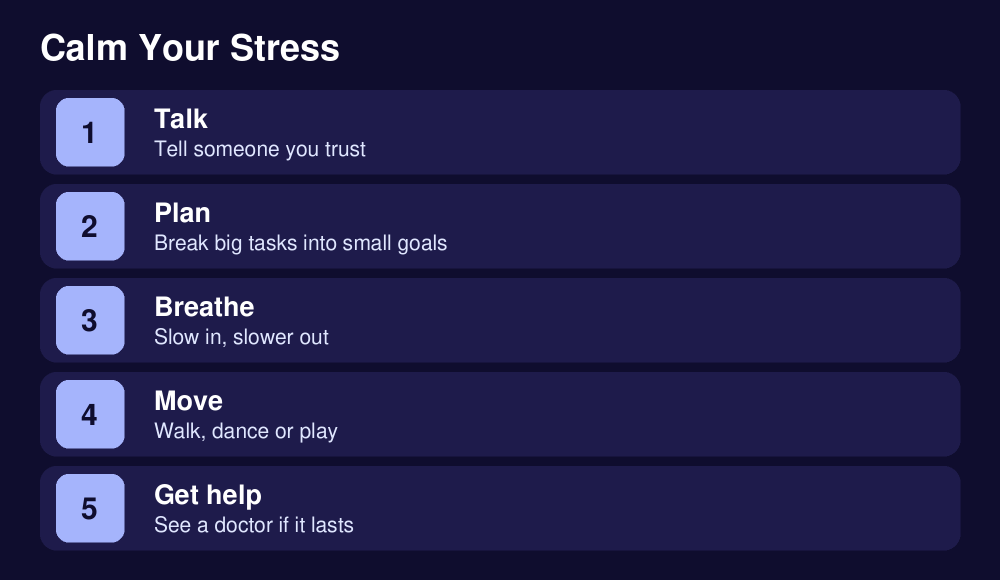
The NHS describes stress as showing up in the body (headaches, muscle tension, stomach problems, a faster heartbeat), the mind (poor concentration, constant worry, feeling overwhelmed) and behaviour (irritability, changes in sleep or appetite, avoiding people, drinking or smoking more). Its self-help suggestions include:
- Talk to someone you trust, such as a friend, family member or health professional.
- Break large tasks into small goals and focus on what you can influence, not what you cannot.
- Plan ahead for stressful days and use simple time-management methods.
- Try breathing exercises, regular exercise and time for yourself.
- Use peer support: people with similar experiences can help each other.
- Avoid alcohol, cigarettes, gambling and drugs as ways to cope.
A simple breathing routine: sit comfortably, breathe in slowly through the nose for about four seconds, breathe out gently for about six, and repeat for a few minutes. It will not fix a problem, but it can settle your body so you can think. If worries keep you awake, write tomorrow’s tasks and worries on paper before bed so your mind can let go.
Money, work and family stress in Nigeria
Many Nigerians sleep badly because of bills, rent, school fees and job pressure. Practical steps reduce the load: make a simple monthly budget, build a small emergency fund, and talk to family early about shared costs (see how to save money on a low salary). For work stress, see burnout among Nigerian professionals and how to manage stress working from home. Community and faith groups can also provide support; see mental health support resources for Nigerians.
When to see a doctor
Speak to a doctor or qualified mental health professional if you are struggling to cope, your own efforts are not helping, poor sleep lasts for weeks, you snore loudly with pauses in breathing or wake gasping, you have low mood or panic, or you use alcohol or drugs to cope. In the UK, the NHS says you can see a GP or self-refer to NHS talking therapies if you are 18 or over, call 111 for urgent non-emergency help, and call 999 in an emergency. In Nigeria, go to a hospital or clinic, or call a trusted mental health service; if you or someone else is in immediate danger, call your local emergency number. If you are in the UK and need someone to talk to, Samaritans are on 116 123.
Frequently asked questions
How many hours of sleep do adults need?
Needs vary, but most adults need around seven to nine hours. Ask a doctor if you are always tired despite enough time in bed.
What is the best natural way to fall asleep faster?
A regular schedule, a cool dark room, no screens or caffeine late, and a relaxing routine (warm bath, quiet reading, breathing) are the most recommended steps.
Does exercise help sleep and stress?
Yes. The WHO says physical activity is associated with better sleep and mental health. Avoid hard exercise within 3 hours of bed.
Is it bad to nap in the afternoon?
Short naps under 30 minutes earlier in the day are usually fine. Long or late naps can disturb night-time sleep.
Do herbal teas and supplements help?
Evidence is mixed and products vary in quality. A warm non-caffeinated drink can be part of a calming routine, but check with a pharmacist or doctor before using supplements or herbs, especially with medicines.
Does alcohol help me sleep?
It may help you doze off but can disturb sleep later in the night and worsen mood, so it is not a good sleep aid.
How can I reduce stress quickly?
Slow breathing, a short walk, talking to someone you trust and writing down what is on your mind can all help in the moment. Longer-term, tackle the cause with a plan.
When is stress or poor sleep a medical problem?
When it lasts for weeks, affects daily life, or comes with low mood, panic or substance use. See a doctor.
Sources and notes: Doncaster and Bassetlaw Teaching Hospitals NHS Foundation Trust, Sleep hygiene (read 7 November 2026); NHS, Stress (read 7 November 2026); World Health Organization, Physical activity fact sheet (read 7 November 2026). The seven-to-nine-hour range is a general adult guideline. This article is general information, not medical advice.
Join the discussion
Have you tried this, or do you have a question we did not answer? 1 reader has already shared their view. Naijatipsland members help each other with real, first-hand experience.








Thank you for reading. Which of these habits will you try this week? Tell us in the comments. If poor sleep or stress is affecting your daily life, please speak to a doctor. Ade Adeniyi