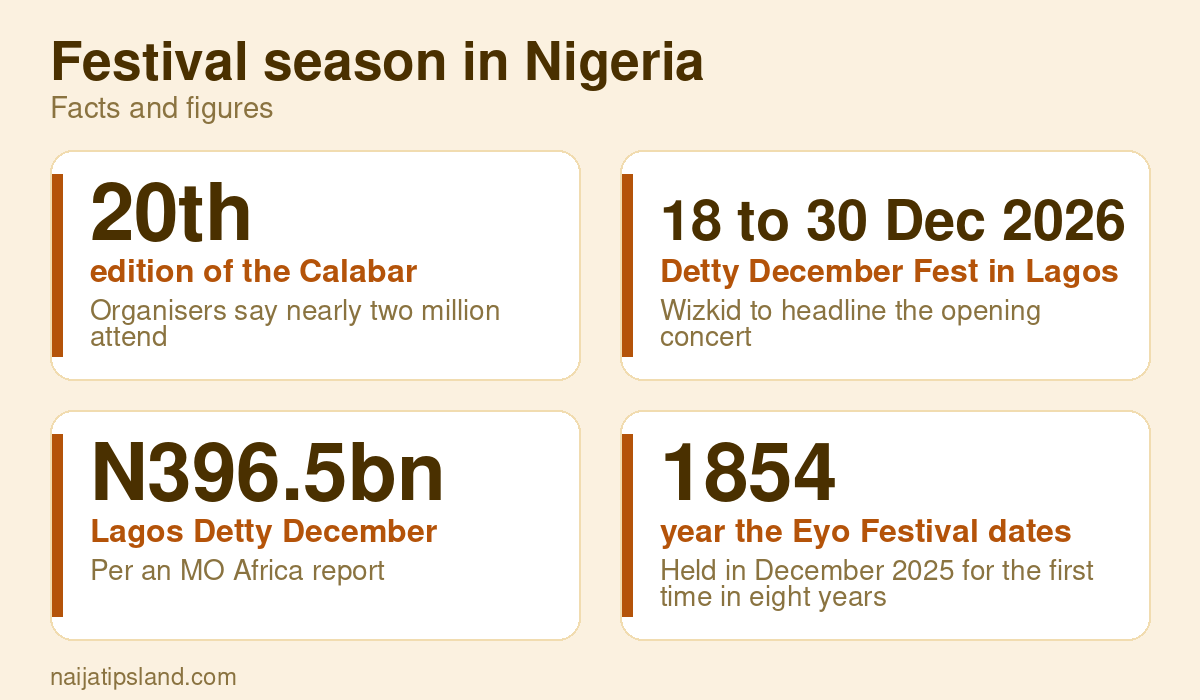
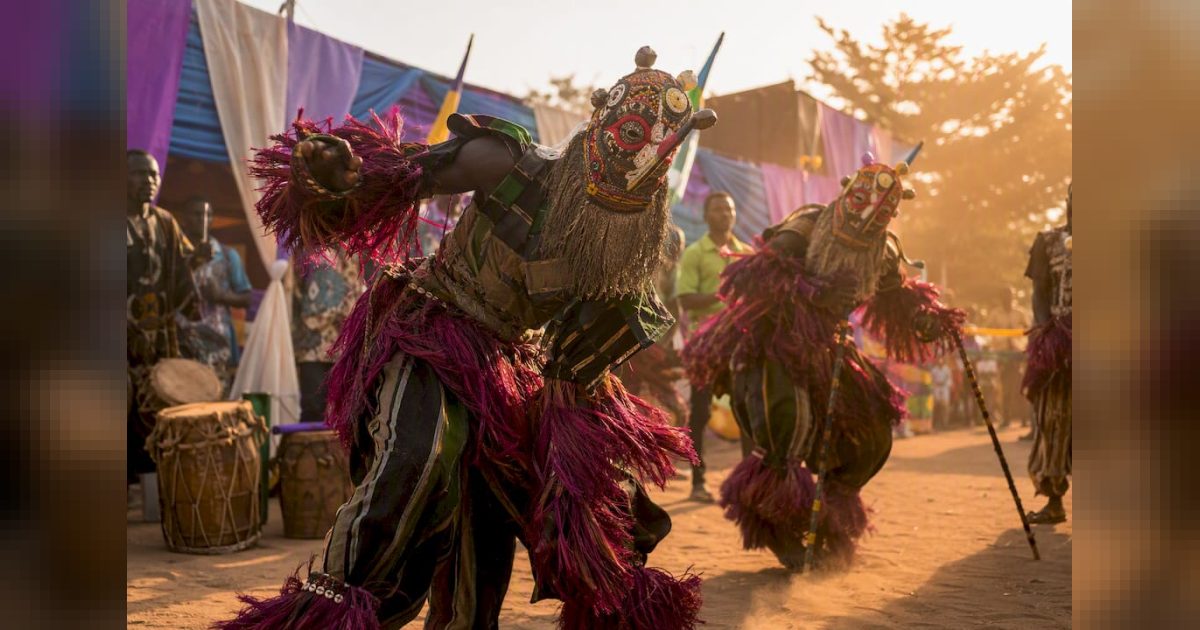
These are the 10 must-see festivals in Nigeria and what makes each one unmissable. The Nigerian Ministry of Information and Culture has confirmed that the country hosts more than 365 festivals every year, one for practically every day on the calendar. Naijatipsland tracks the ones that matter most to travelers and culture lovers, and this shortlist is where you start.
- Calabar Carnival (December, Cross River): Africa’s biggest street party, with costumed bands and live music through the streets of Calabar.
- Osun-Osogbo Festival (August, Osun): A two-week pilgrimage honoring the river goddess Osun, drawing devotees from across the diaspora.
- Argungu Fishing Festival (February/March, Kebbi): Thousands of fishermen race into the Sokoto River with hand nets and calabashes.
- Durbar (Kano, Katsina, Zaria): Horse-mounted royal processions marking Eid celebrations, led by emirs in full regalia.
- Eyo Festival (Lagos): White-robed masquerades parade Lagos Island streets to honor a departed monarch or mark a major civic event.
- Ojude Oba Festival (Ogun, after Eid-el-Kabir): Age-grade societies and horse riders parade before the Awujale of Ijebuland in extravagant traditional dress.
- New Yam Festival / Iri Ji (August/September, Igbo states): Communities give thanks for the harvest with yam pounding, masquerades, and feasting.
- Ikeji Arondizuogu (April/May, Imo): One of Igboland’s largest masquerade gatherings, celebrating ancestral spirits and lineage pride.
- Mmanwu Festival (Anambra, various dates): A showcase of Igbo masquerade artistry, costume craft, and spiritual performance.
- Port Harcourt Book Festival (Rivers, typically October/November): A literary gathering that brings Nigerian and African authors together for readings and panels.
Any one of these can anchor a trip. Together, they show why Nigeria’s cultural calendar rewards planning ahead rather than showing up and hoping.
Key Takeaways
Attending Nigeria’s major festivals rewards preparation: knowing the region, the timing, and the local etiquette turns a spectacle into a genuinely welcoming cultural experience.
| Point | Details |
|---|---|
| Start with the shortlist | Prioritize Calabar Carnival, Osun-Osogbo, and Durbar if you can only attend a few events. |
| Confirm dates locally | Lunar and ritual calendars shift Durbar, Eyo, and New Yam dates yearly, so check with organizers close to travel. |
| Book early for peak events | Calabar Carnival and Osun-Osogbo sell out hotel rooms fastest, so reserve months ahead. |
| Hire local guides for rituals | Sacred sites like the Osun grove require local guidance and permission before photography. |
| Support local vendors directly | Buy crafts and food from artisans on-site to channel income into the host community. |
Where to verify festival dates and details
Check these official pages before finalizing travel, since festival dates and programs can shift close to the event.
- The Federal Ministry of Information and National Orientation’s culture page lists official festival descriptions and cultural significance.
- The Nigerian Tourism Development Authority calendar tracks updated dates for major festivals like Osun-Osogbo and Calabar Carnival.
- The Osun-Osogbo Festival’s official site covers program details and pilgrimage logistics directly.
- For community discussion on planning a trip or sharing festival experiences, Naijatipsland’s guide on why participating in online discussions matters is a good place to connect with other travelers.
Table of Contents
- Why Festivals in Nigeria Matter More Than Entertainment
- Top 10 Nigerian Festivals: What to Expect at Each One
- Festivals by Region and by Type
- When to Visit Nigeria for Festival Season
- How to Attend a Nigerian Festival Respectfully and Safely
- How Festivals Power Local Economies Across Nigeria
- Frequently Asked Questions About Festivals in Nigeria
- Sources
Why Festivals in Nigeria Matter More Than Entertainment
Festivals function as cultural anchors, economic engines, and community glue all at once. That is the honest answer to why Nigeria treats festival planning as a national priority rather than a tourism afterthought. When a masquerade society trains a new generation of dancers for Mmanwu, it is passing down oral history that never made it into a textbook. When a river festival draws thousands to Osogbo, it channels real income into hotels, taxis, and craft stalls for weeks.
The Federal Ministry of Information and National Orientation documents dozens of these events precisely because they carry weight beyond spectacle, tracing lineage, resolving disputes, and marking agricultural cycles that predate colonial record keeping. Consider what a single festival cycle typically does for a host town:
- Preserves oral history through chants, praise poetry, and masquerade lore passed from elder to youth.
- Strengthens community identity by reuniting families and age-grade societies scattered across cities and abroad.
- Generates direct income for food vendors, seamstresses, drummers, and transport operators.
- Attracts domestic and international visitors who spend on lodging, guides, and souvenirs.
Nigeria’s more than 365 annual festivals reflect the sheer scale of the country’s ethnic diversity, with over 250 ethnic groups each maintaining distinct calendars, rites, and reasons to gather. No single festival speaks for Nigeria. That is the point.
Pro Tip: Spend ten minutes learning the origin story of a festival before you attend. Knowing that Osun-Osogbo honors a river deity, or that Eyo marks respect for the departed, changes how you dress, where you stand, and when you raise your camera.

Top 10 Nigerian Festivals: What to Expect at Each One
Each profile below gives you the essentials: where it happens, when, what you will see, why it matters, and how to attend without missing a beat.
Calabar Carnival
Calabar turns into a month-long party every December, culminating in a carnival parade that rivals anything in West Africa.
- Location and month: Calabar, Cross River State, throughout December.
- What to expect: Costumed carnival bands, live band competitions, street food, and fireworks over the Calabar waterfront.
- Cultural significance: Launched to boost tourism and civic pride, it now doubles as Nigeria’s answer to Rio’s Carnival, blending Christmas festivities with African carnival tradition.
- Quick tips: Book hotels in Calabar by October, since rooms sell out fast. Wear comfortable shoes for parade-watching, and expect heavy traffic on parade days.
Osun-Osogbo Festival
This is the festival most likely to appear on a UNESCO shortlist for good reason, a spiritual pilgrimage as much as a cultural event.
- Location and month: Osogbo, Osun State, typically late July into early August.
- What to expect: A two-week program of rituals culminating in a procession to the Osun sacred grove, where the Arugba (virgin priestess) carries offerings to the river goddess Osun.
- Cultural significance: Devotees travel from across Nigeria and the African diaspora, including Brazil and Cuba, to honor a deity tied to fertility and healing.
- Quick tips: Hire a local guide for the grove itself; the terrain and ritual protocol are easier to navigate with someone who knows the site. Crowds are dense on the main procession day, so arrive early.
Argungu Fishing Festival
Thousands of men wade into the Sokoto River at once, and the roar when the fish start jumping is unlike anything else on this list.
- Location and month: Argungu, Kebbi State, usually February or March.
- What to expect: A mass fishing competition using only hand nets and calabash gourds, alongside wrestling matches, canoe races, and a durbar-style horse display.
- Cultural significance: Originally marked peace between the Sokoto Caliphate and the Kebbi Kingdom, and it still functions as a symbol of that reconciliation.
- Quick tips: Riverbank footing gets muddy and crowded, so wear boots you don’t mind ruining. Confirm the exact date with local organizers, since it shifts based on river conditions and local scheduling.
Durbar (Kano, Katsina, Zaria)
The sight of hundreds of horses moving in formation behind an emir in embroidered robes is one of Northern Nigeria’s most photographed traditions.
- Location and month: Kano, Katsina, and Zaria, tied to Eid-el-Fitr and Eid-el-Kabir.
- What to expect: Mounted royal processions, praise singers, cannon salutes, and displays of horsemanship by the emirate’s traditional cavalry.
- Cultural significance: Durbar traces back to military reviews once used to demonstrate an emirate’s strength, now reframed as a celebration of Islamic feast days and royal heritage.
- Quick tips: Dates move with the Islamic lunar calendar, so check with local emirate councils close to the date. Dress modestly, and ask before photographing the emir’s inner procession.
Eyo Festival
If you see white-robed figures gliding through Lagos Island traffic with staffs in hand, you have found Eyo.
- Location and month: Lagos Island, held irregularly to honor a deceased chief or mark a major civic occasion.
- What to expect: Masquerades known as Eyo (or Adamu Orisha Play) parade in flowing white agbada and wide-brimmed hats called aga, weaving through closed-off streets.
- Cultural significance: Eyo is believed to be the origin of the modern carnival masquerade tradition in Lagos, and it carries deep spiritual meaning tied to ancestral respect.
- Quick tips: Because dates aren’t fixed annually, follow local Lagos news or the Oba of Lagos’s office for announcements. Never touch an Eyo masquerade’s staff or interrupt its walk.
Ojude Oba Festival
Ijebu families return home from across Nigeria and abroad for this one, and the fashion alone is worth the trip.
- Location and month: Ijebu-Ode, Ogun State, two days after Eid-el-Kabir.
- What to expect: Age-grade regberegbe groups and horse-riding chiefs parade in elaborate aso-oke and beadwork before the Awujale of Ijebuland.
- Cultural significance: What began as a courtesy visit to the monarch has grown into one of Yoruba culture’s largest heritage showcases, drawing tens of thousands.
- Quick tips: Arrive at the palace grounds early for a good vantage point. Bring cash for local food stalls, since card payment is rare at pop-up vendors.
New Yam Festival (Iri Ji)
Igbo communities call this the festival of gratitude, and it is impossible to attend without being handed a piece of roasted yam.
- Location and month: Igbo-speaking states, generally August or September.
- What to expect: Yam pounding, masquerade displays, communal feasting, and the ceremonial breaking of the first yam by a community elder or king.
- Cultural significance: Iri Ji marks the end of the farming season and reinforces yam’s status as a staple of wealth and manhood in Igbo tradition.
- Quick tips: Every town celebrates on a slightly different date, so confirm with the specific community you plan to visit. Bring an appetite; refusing food at a New Yam gathering can read as impolite.
Ikeji Arondizuogu
This is one of the largest masquerade gatherings anywhere in Igboland, and the scale of it surprises most first-time visitors.
- Location and month: Arondizuogu, Imo State, typically April or May.
- What to expect: Dozens of masquerade groups representing different lineages perform in sequence, each with distinct costumes, movement styles, and drumming patterns.
- Cultural significance: Ikeji celebrates ancestral spirits and lineage pride within the Aro sub-group of the Igbo, with families traveling from across Nigeria and abroad to represent their kindred.
- Quick tips: Space fills up fast around the main arena, so ask locals which vantage points are open to visitors. Photography is generally welcomed, but confirm with masquerade handlers first.
Mmanwu Festival
Anambra’s masquerade festival treats costume as high art, and no two performances look alike.
- Location and month: Various towns across Anambra State, dates vary by community.
- What to expect: Elaborately carved wooden masks, raffia and cloth costumes, acrobatic performances, and call-and-response chants between masquerades and the crowd.
- Cultural significance: Mmanwu embodies the belief that masquerades channel ancestral spirits, making the festival as much a spiritual event as a performance.
- Quick tips: Keep a respectful distance from the masquerade during ritual movements. Ask a local host which mmanwu characters are considered comic and which are treated as sacred, since etiquette differs by figure.
Port Harcourt Book Festival
If literature is your entry point into Nigerian culture, this is the one festival on the list built entirely around ideas rather than ritual.
- Location and month: Port Harcourt, Rivers State, usually October or November.
- What to expect: Author panels, poetry readings, book launches, and workshops featuring Nigerian and African writers.
- Cultural significance: It has become a meeting point for Nigeria’s literary community, giving emerging writers a platform alongside established names.
- Quick tips: Check the Nigerian Tourism Development Authority calendar closer to the date, since programming can shift. Sessions often run in English, making this one of the easiest festivals for international visitors to follow without a guide.
Pro Tip: For any festival tied to a lunar or ritual calendar (Durbar, Eyo, New Yam), treat the date you find online as a rough estimate. Confirm within a month of travel with a local contact or the Osun-Osogbo festival’s own site as a model for how organizers post updated dates.
Festivals by Region and by Type
Nigerian festivals cluster in patterns you can use to plan a trip: pick a region and you get a rhythm of harvest rites, royal processions, or river pilgrimages that repeat across nearby communities.
By region:
- North: Durbar in Kano, Katsina, and Zaria; Argungu Fishing Festival; various Sallah celebrations tied to Eid.
- South-South: Calabar Carnival; New Yam festivals across Rivers and Cross River communities; Ogun-inspired masquerade events in Bayelsa.
- South West: Osun-Osogbo Festival; Eyo Festival; Ojude Oba Festival; Egungun festivals across Yoruba towns.
- South East: New Yam Festival (Iri Ji); Ikeji Arondizuogu; Mmanwu Festival; Port Harcourt Book Festival (bordering the South-South region culturally and geographically).
By type:
- Ancestral and masquerade: Mmanwu, Eyo, Ikeji Arondizuogu, where costumed figures represent spirits or lineage.
- Harvest and thanksgiving: New Yam Festival, celebrated with feasting and communal gratitude.
- Religious: Durbar (Islamic feast days), various church-linked carnivals around Christmas.
- Carnival and street festival: Calabar Carnival, blending Christmas tradition with African carnival style.
- Arts and literature: Port Harcourt Book Festival, focused on ideas rather than ritual.
Wikipedia’s list of Nigerian festivals catalogs dozens more across music, film, and cultural categories, which is worth a scan if you want something beyond this shortlist. Accessibility varies significantly within a region too; Calabar’s parade routes are largely paved and wheelchair-navigable, while a rural masquerade ground in Imo State may have uneven paths and no formal seating, so ask organizers directly about terrain before committing to a specific event.
When to Visit Nigeria for Festival Season
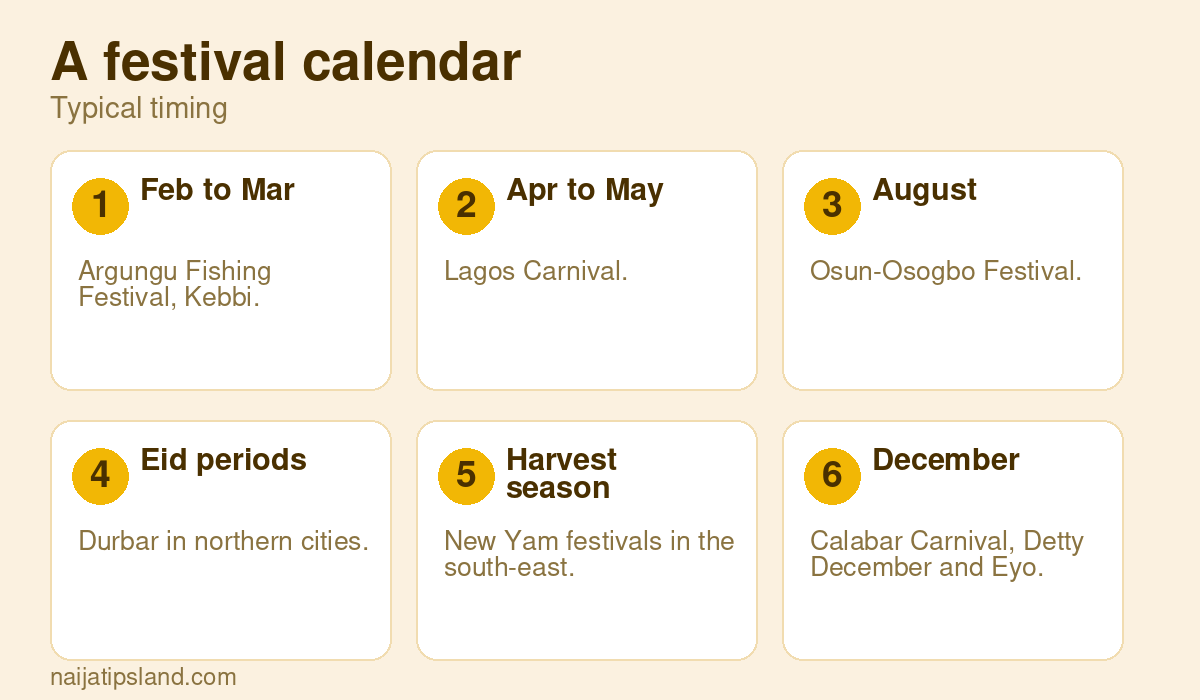
The short answer: August brings the Osun-Osogbo and New Yam festivals, December belongs to Calabar Carnival, and the months around Eid host Durbar and Ojude Oba. Beyond those anchors, Nigeria’s festival calendar runs nearly nonstop.
- February to March: Argungu Fishing Festival lights up Kebbi State.
- April to May: Ikeji Arondizuogu draws Igbo families home to Imo.
- Eid-el-Fitr and Eid-el-Kabir (dates shift yearly): Durbar processions in Kano, Katsina, and Zaria; Ojude Oba follows two days after Eid-el-Kabir.
- July to August: Osun-Osogbo Festival runs for two weeks in Osogbo.
- August to September: New Yam Festival celebrations spread across Igbo communities.
- October to November: Port Harcourt Book Festival brings writers together in Rivers State.
- December: Calabar Carnival closes out the year with a month of parades.
Islamic festivals like Durbar move roughly 10 to 11 days earlier each year on the Western calendar, since they follow the lunar Hijri calendar. Harvest festivals like New Yam shift with local farming cycles, and some masquerade events like Eyo happen only when a specific occasion calls for them, not on a fixed annual date. The Nigerian Tourism Development Authority’s event calendar posts updated dates as they’re confirmed each year, which beats relying on last year’s schedule.
Pro Tip: Book accommodation for Calabar Carnival and Osun-Osogbo at least two months out. These are the two events most likely to sell out hotel rooms across an entire city, not just near the festival grounds.
How to Attend a Nigerian Festival Respectfully and Safely
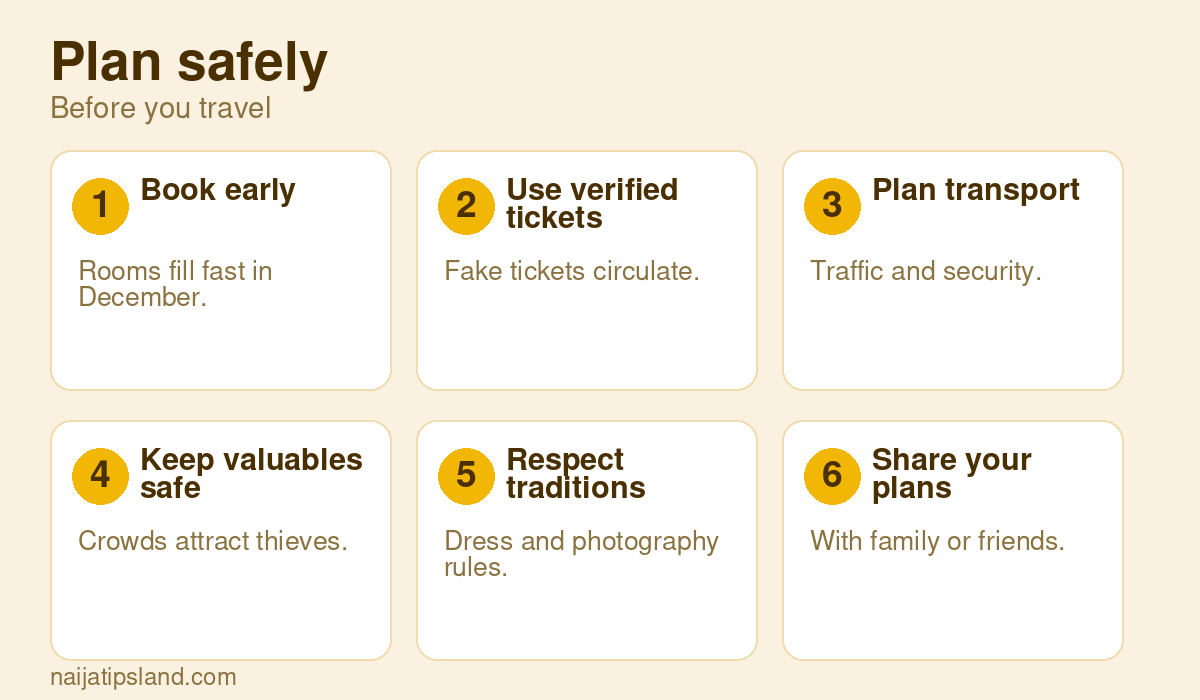
The short version: get your tickets or permissions sorted early, dress and photograph with cultural sensitivity, and lean on a local guide wherever rituals are involved.
- Tickets and registration: Most traditional festivals like New Yam or Ikeji Arondizuogu are free and open to the public, but carnivals like Calabar sell VIP viewing tickets for parade routes, so check organizer pages ahead of time.
- Transport: Book flights into the nearest state capital (Calabar, Kano, Osogbo, or Port Harcourt) and arrange ground transport in advance, since taxi availability drops sharply during major festival weeks.
- Accommodation: Reserve early in festival host cities; smaller towns like Argungu or Ijebu-Ode have limited hotel stock compared to Lagos or Abuja.
- Budgeting for vendors: Set aside cash for crafts, food, and small tips to performers, since card payment is uncommon at street-level stalls.
- Accessibility: Ask organizers directly about terrain and seating for differently-abled visitors, since rural festival grounds often lack ramps or paved access.
- Photography etiquette: Always ask permission before photographing a masquerade, a ritual at a shrine, or an elder up close. Some Eyo and Mmanwu figures are considered sacred and off-limits to casual photography.
- Shrine and ritual etiquette: Keep a respectful distance during active rites, hire a local guide for sacred sites like the Osun grove, and follow their instructions on where to stand.
- Language tips: Learning a basic greeting in the local language, “sannu” in Hausa, “ndewo” in Igbo, “bawo” in Yoruba, goes a long way with hosts and vendors. A local guide or interpreter is worth the cost for Durbar or shrine-based events where English isn’t the primary language spoken.
Pro Tip: If you are only attending one ritual-heavy festival, spend the extra money on a local guide. It is the single best way to avoid the two most common visitor mistakes: photographing something sacred without asking, and missing the cultural context that makes the event meaningful.
Understanding the deeper roots behind these celebrations, including their pre-colonial spiritual and community origins, adds real depth to the experience; background on festival traditions is worth reading before you travel.
How Festivals Power Local Economies Across Nigeria
Festivals function as one of Nigeria’s most consistent, grassroots economic engines. The FMACCE states plainly that festivals and carnivals empower local value chains, turning cultural preservation into direct income for craftspeople, food vendors, and hospitality workers.
Festivals and carnivals promote culture, empower local value chains, and attract both local and international tourists, positioning them as tools for cultural preservation and economic growth.
That framing from the Federal Ministry of Arts, Culture, and the Creative Economy reflects a broader policy shift: festivals aren’t just heritage exercises, they’re revenue lines for host communities. The main channels are straightforward:
- Vendor income: Food sellers, fabric traders, and craft artisans see spikes in sales during festival weeks.
- Hospitality boosts: Hotels, guesthouses, and short-let apartments in host cities often sell out during peak festivals like Calabar Carnival and Osun-Osogbo.
- Craft sales: Beadwork, wood carving, and textile sales tied to specific festivals (Mmanwu masks, Ojude Oba fabrics) generate income that lasts beyond the event itself.
- Long-term tourism development: Repeat visitors and international media coverage build a city’s profile for years after a single festival cycle, which is part of why entertainment and cultural events shape Nigeria’s broader cultural identity.
The most respectful way to support that chain as a visitor is simple: buy directly from local artisans instead of resellers, negotiate prices fairly rather than aggressively, and hire local guides instead of skipping that cost. Small choices like these are what turn a festival’s economic promise into something the host community actually feels. This kind of grassroots demand also opens doors for vendors and small operators building businesses around festival season itself.
What attending a Nigerian festival actually feels like
Attending a major Nigerian festival is immersive and communal in a way that’s hard to describe until you’re standing in the crowd. The drumming reaches your chest before you consciously register the sound, the smell of roasted corn and suya drifts through packed streets, and strangers pull you into conversation like you’ve always been part of the celebration. What sticks with most visitors afterward isn’t the spectacle, it’s the lesson in preparation: showing up informed about a festival’s meaning, and asking before you photograph, changes the entire experience from watching a show to being welcomed into one.

Frequently Asked Questions About Festivals in Nigeria
What is the biggest festival in Nigeria?
Calabar Carnival is widely regarded as Nigeria’s largest festival by attendance and scale, running through December with parades often called “Africa’s biggest street party.”
How many festivals does Nigeria celebrate each year?
Nigeria hosts more than 365 festivals annually, reflecting its ethnic and regional diversity.
When is the best time of year to visit Nigeria for festivals?
August covers Osun-Osogbo and New Yam festivals, while December brings Calabar Carnival. Durbar and Ojude Oba follow the Islamic calendar, so their dates shift yearly around Eid.
Do I need permission to photograph festivals in Nigeria?
Yes, for masquerade festivals like Eyo and Mmanwu, and for ritual sites like the Osun sacred grove. Always ask a local guide or organizer before photographing performers or shrine activity.
Are Igbo, Yoruba, and Hausa traditional weddings considered festivals?
Multi-day ceremonies like Igbo Igba Nkwu and Yoruba traditional weddings function as community festivals in practice, with elaborate attire, elder participation, and public celebration that mirror other cultural festivals in scale.
Is it safe for international tourists to attend festivals in Nigeria?
Most major festivals draw large domestic and international crowds without incident, though large gatherings warrant standard precautions: keep valuables secure, follow local guidance, and avoid isolated areas after dark. International visitors should also check Nigerian visa requirements well ahead of travel.
Sources
- Nigeria compiling list of festivals nationwide to boost tourism — minister
- Festivals – Federal Ministry of Information and National Orientation
- FMACCE | Festivals & Carnivals
- Osun Festival – Home
- Nigerian Tourism Development Authority event calendar