First published 9 January 2026. Rewritten on 13 October 2026. The prices below were listed in January 2026 and models change, so confirm every detail on the maker’s official website. We earn nothing from any of these companies.
If you hold more crypto than you could comfortably lose, leaving it on an exchange or in a phone app is a risk. A hardware wallet is a small device that keeps your private keys offline, so a hacker who breaches an exchange, or malware on your phone, cannot simply take your coins. It is not magic, though, and the most common way people lose money with them is through mistakes of their own.
The eight devices in our January list
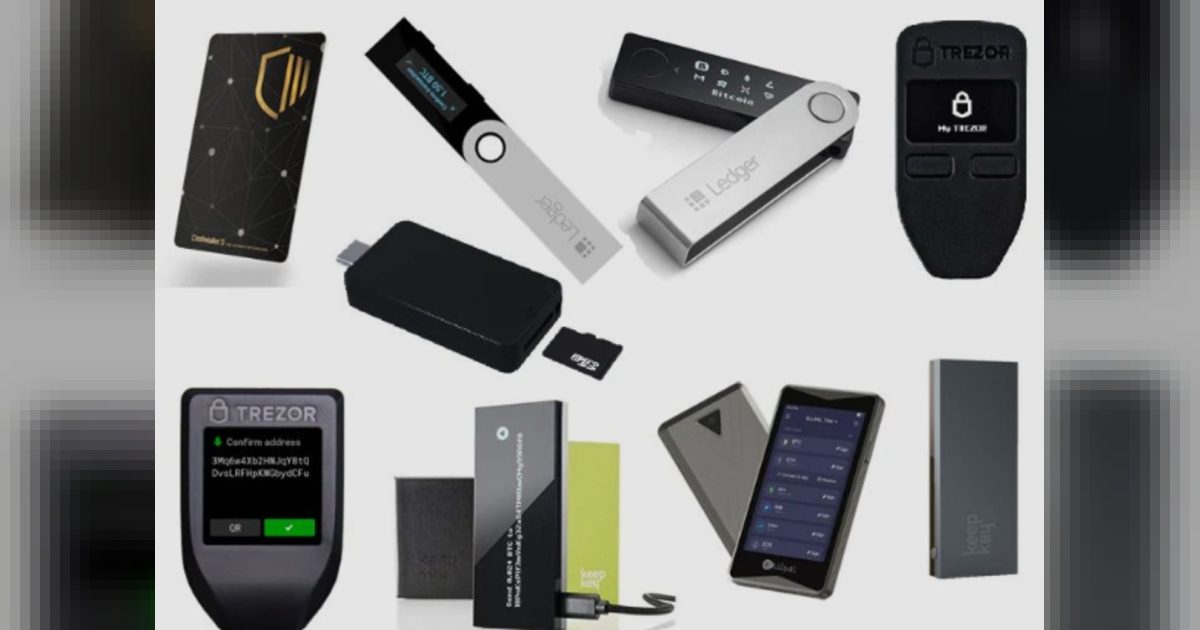
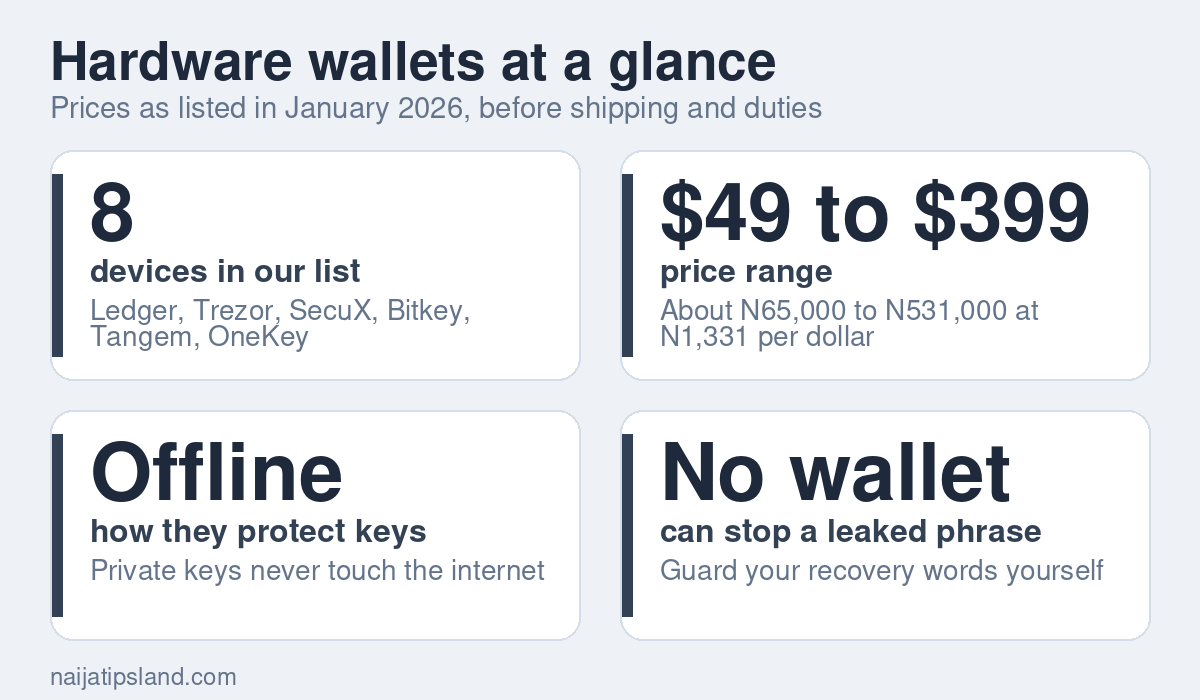
- Ledger Nano X, about $99: a Bluetooth wallet popular with mobile users, which works with the Ledger app.
- Ledger Stax, about $399: a premium touchscreen model with a modern design.
- Trezor Model T, about $129: an open-source wallet with a colour touchscreen.
- Trezor Model One, about $49: an affordable, beginner-friendly open-source option.
- SecuX V20, about $139: a touchscreen wallet with Bluetooth.
- Bitkey, about $215: a Bitcoin-only wallet that uses multisig and cloud-based recovery.
- Tangem, about $54 to $180: a card-style wallet that does not use a seed phrase, working over NFC.
- OneKey Pro, about $278: an advanced wallet with a touchscreen and wireless support.
At about ₦1,331 to the dollar, that range works out to roughly ₦65,000 to ₦531,000 before shipping, customs charges and any change in the exchange rate.
What has changed since January
The market has moved on. Several 2026 reviews now put newer models at the top: The Block’s ratings in August named the Trezor Safe 7 best overall, the Ledger Nano S Plus the best budget choice and Tangem best for beginners, and other lists feature the Ledger Flex and the Trezor Safe 3 and Safe 5. A June 2026 comparison suggested the Ledger Nano S Plus, at about $59, or the Trezor Safe 3 as first wallets for most buyers. Not every older device in our list may still be on sale, so check the current lineup before you order.
Buying safely from Nigeria
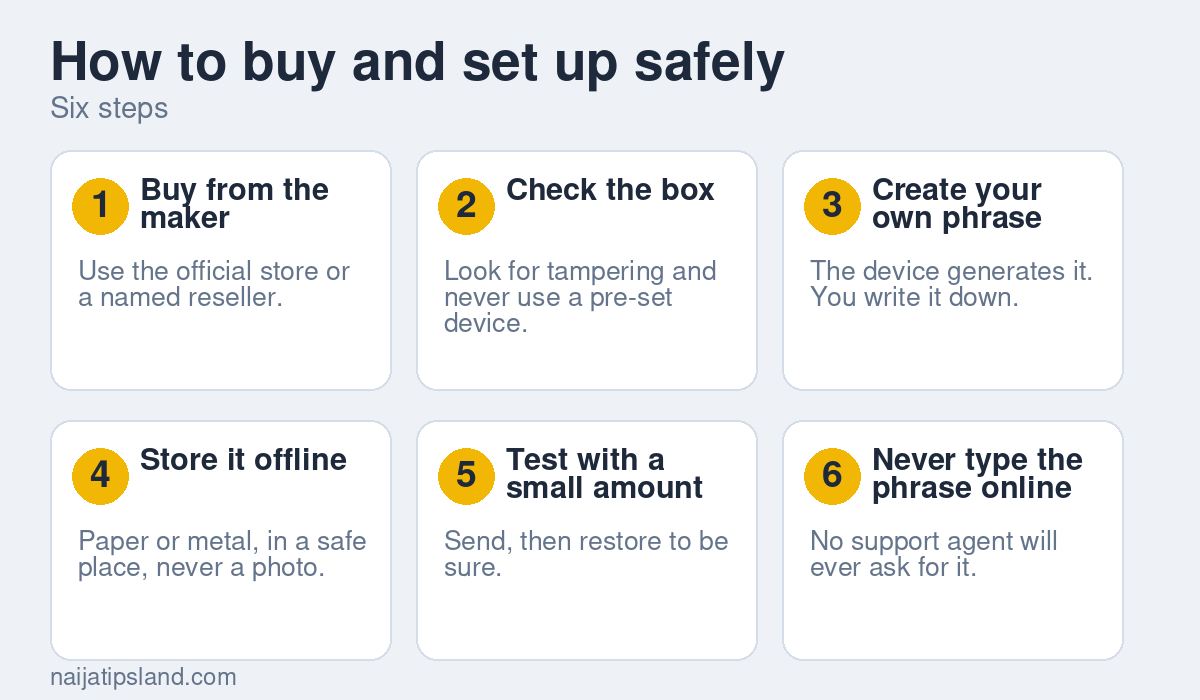
- Buy only from the maker’s official website or an authorised reseller. Counterfeit or tampered devices sold on marketplaces and social media are a known scam.
- Never use a device that arrives already set up or with a written recovery phrase in the box.
- Write down the recovery phrase yourself, store it offline in a safe place, and never photograph it or type it into a website. Nobody legitimate will ask for it.
- Test with a small amount first, including a restore, before moving your savings.
- Plan for delivery and duties. Order early, use a delivery address you trust and keep receipts.
Choosing one
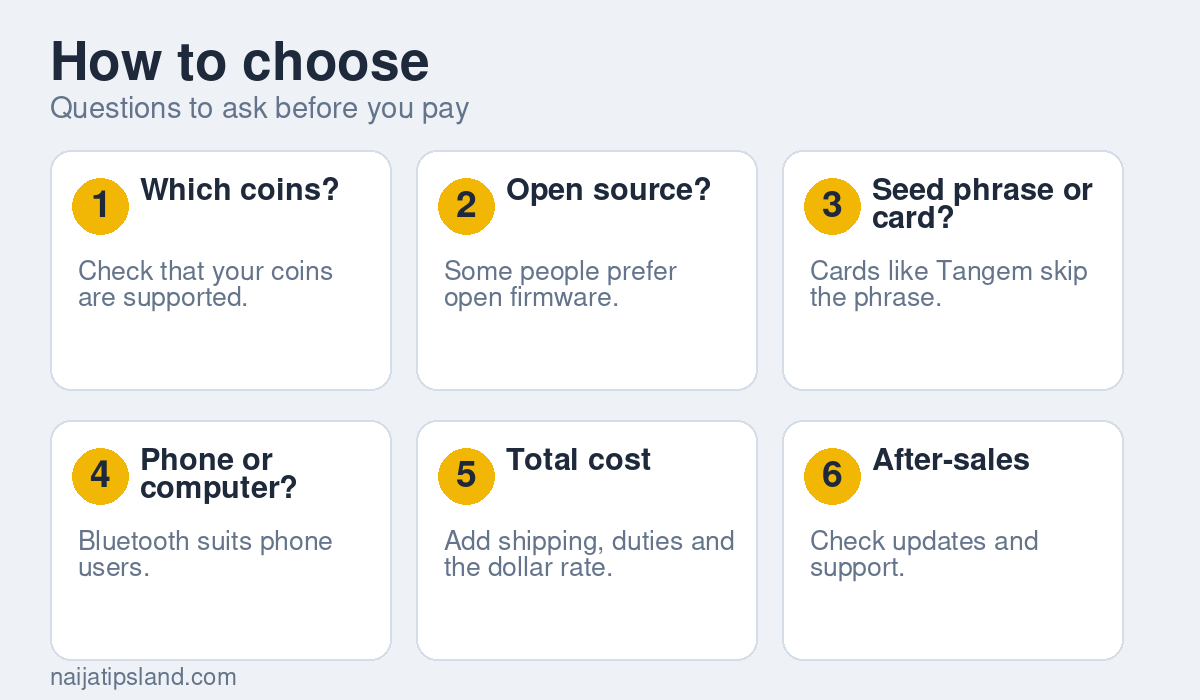
Think about which coins you hold, whether you prefer open-source firmware, whether you want a seed phrase or a card-style device, how you will connect it, and what it will really cost after shipping and duties. For beginners, simplicity and a reputable brand matter more than extra features.
What a hardware wallet cannot do
It cannot protect you from sending coins to a scammer, approving a malicious transaction or giving away your recovery phrase. Read our guides on avoiding internet scams and buying Bitcoin and USDT in Nigeria, and see how cryptocurrency works for the basics. This is general information, not investment advice.