
How to Make Moi Moi and Akara (2026): Bean Prep, Steaming, Frying and UK Substitutes

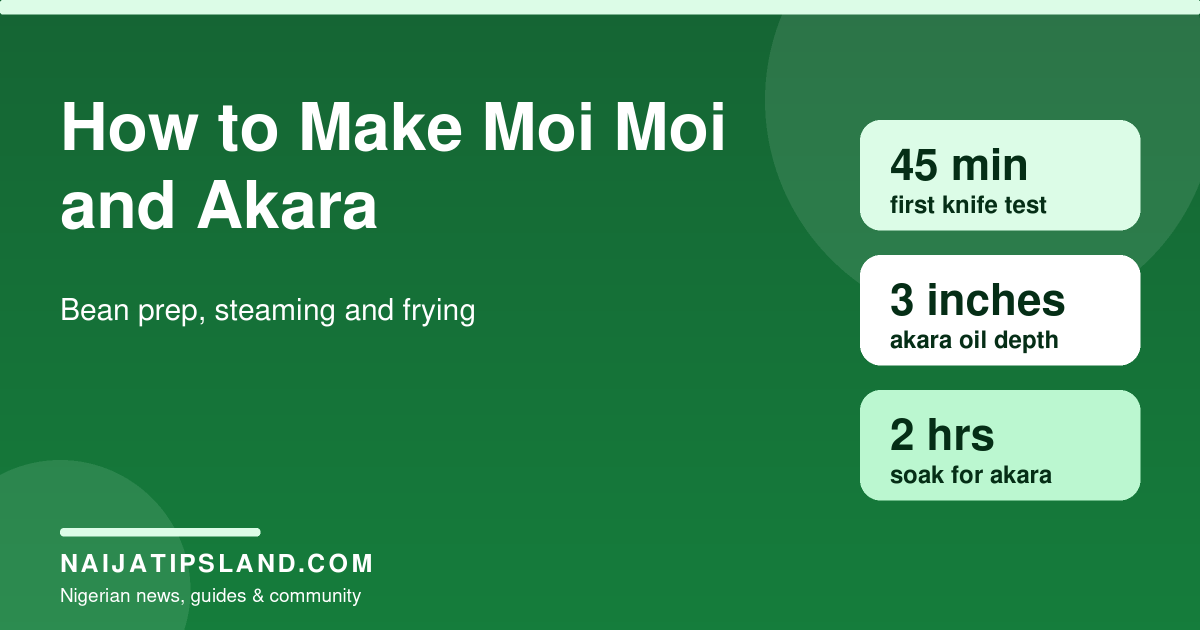
Last updated 17 November 2026. Bean prices and UK stock change, so check the shop or market before you buy.
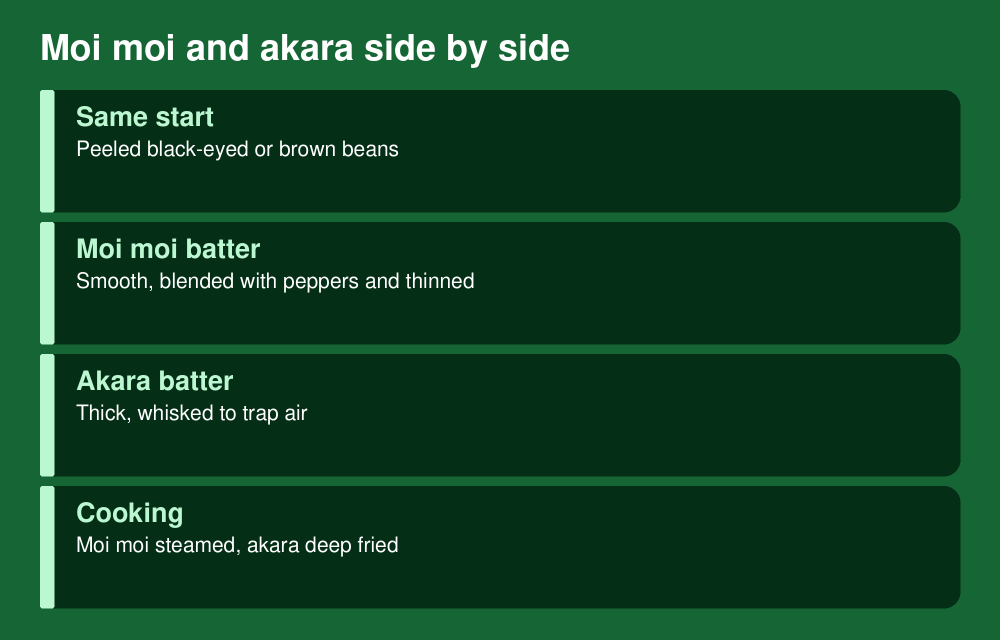
Moi moi and akara start with the same humble bean and end up as two very different foods. One is a soft, savoury steamed pudding that you cut with a spoon. The other is a crisp fried fritter you eat out of a paper bag at the roadside before work. If you grew up on both, you already know the smell. If you are learning, the good news is that the two share most of the prep, so once you can peel a pot of beans you can make either one on the same day.
This guide covers choosing and peeling the beans, a moi moi recipe with steaming times, an akara method with oil depth and tips, fixes for the usual problems, UK substitutes, what beans cost in Nigeria in 2026, and how to store leftovers. I compared methods from Nigerian Food TV, Guardian Nigeria and other cooks, and checked prices against 2026 market reports. The quantities are my scaling of published recipes, so treat them as a starting point and adjust to your blender and your taste.
Choose and peel the beans
Both dishes work with black-eyed peas, which are easy to find dried in UK supermarkets, or with brown beans such as ewa oloyin from African shops. Brown beans give a deeper flavour and a slightly darker colour. Use dried beans, not tinned. Tinned beans are already soft and will give you a watery batter that will not hold.
To peel, soak the beans in water, then rub them between your hands, or pulse them briefly in a blender with water and pour off the loosened skins. Rinse until the water runs clear and the beans look white. For moi moi, the Nigerian Food TV method suggests soaking for about an hour, or overnight if you prefer. For akara, one Guardian Nigeria recipe soaks the beans for about two hours, or skips soaking altogether if you have a heavy-duty market grinder.
If peeling feels like a chore, bean flour is a real shortcut. Mix it with water into a thick paste and carry on as with fresh batter. The texture is slightly different, but it saves an hour.
How to make moi moi
A published recipe uses about 700g of beans, roughly one large derica, for around 20 portions. For a family meal at home, this scaled version makes about eight small portions.
Ingredients
- 400g dried black-eyed or brown beans
- 1 red bell pepper (tatashe)
- 1 or 2 scotch bonnet peppers (ata rodo), to your heat level
- 1 medium onion
- 2 tablespoons ground crayfish
- 1 or 2 stock cubes
- 3 tablespoons vegetable oil
- About 300ml water, plus salt to taste
- Optional: boiled eggs, flaked fish, corned beef or minced meat
Method
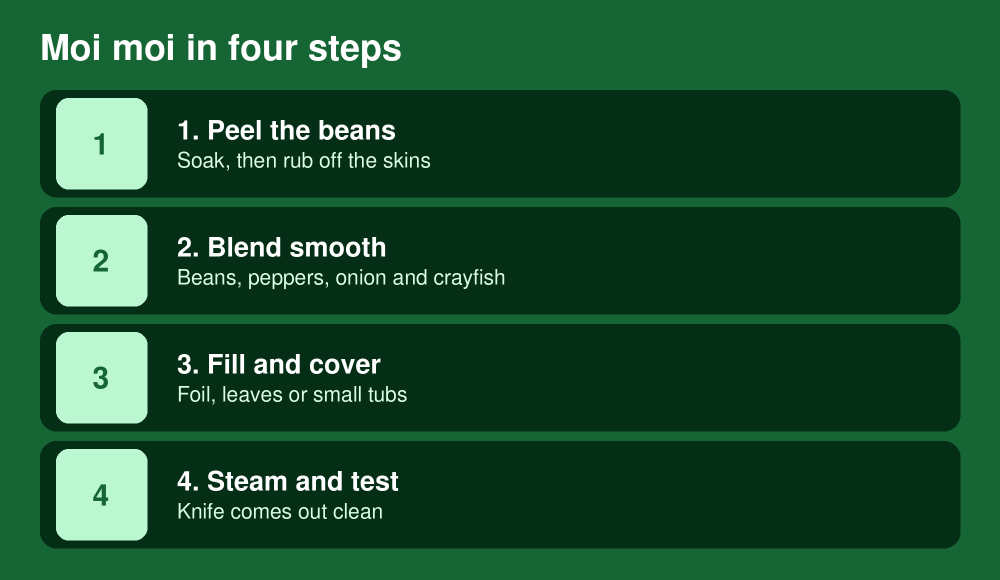
Soak and peel the beans. Blend them in batches with the peppers, onion, crayfish and stock cubes and a little of the water until the paste is completely smooth. Any lumps will show up in the finished moi moi, so keep blending. Pour the paste into a wide bowl and stir in enough water to make a batter that is light but not runny. It should fall off the spoon in a slow ribbon. Stir in the oil, then taste. Go easy on the salt, because the stock cubes and crayfish already carry plenty.
Grease small containers, or wash and dry banana or uma leaves. Spoon in the batter, add half a boiled egg or a spoon of flaked fish if you like, and cover or fold the wrap closed. Plastic tubs, foil trays and ramekins all work.
To steam, line a deep pot with foil or leaves, add a little water and bring it to the boil. Stand the portions in the pot, put the lid on and keep the heat at a steady simmer. Top up with a small amount of boiling water now and then so the pot does not dry out, but do not let water seep into the wraps. Start checking after about 45 minutes by pushing a knife into the middle of one. If it comes out clean, the moi moi is done. If not, keep steaming, up to about an hour and a half in total. Foil and leaves cook faster than plastic, and small batches finish sooner than big ones.
If you do not have a deep pot, you can set a colander over a little simmering water in a covered pan so the wraps stay above the water. Let the moi moi cool slightly before you unwrap it. It firms up as it cools.
If your moi moi goes wrong
Watery or soft in the middle: it needs longer steaming, or the batter was too thin. Steam it again and let it cool before cutting. Pale colour: add a spoon of tomato paste when blending. Heavy or rubbery: the batter may have been too thick, or the portions were steamed too hard. Bland: add more crayfish and a pinch of salt next time, and blend the peppers with the beans so the flavour goes all through.
How to make akara
Akara needs a thicker batter than moi moi and a lot more air. The method matters more than the recipe here.
Peel the beans right before you cook, because peeled beans stored in the fridge or freezer tend to spatter in the oil. Keep salt away from them until you are ready to fry. Cooks say salt weakens the beans’ ability to hold together. Grind the beans with as little water as you can get away with, just enough to keep the blades turning. Put nothing else in the grinder at this stage.
Tip the paste into a bowl or a mortar, and stir it hard in a circle with a wooden spoon or pestle for several minutes. This whisks air into the batter, which is what makes akara light inside. The batter should turn paler and look fluffy. Add a splash of water if it is too stiff to scoop.
Heat vegetable oil to about 3 inches deep in a heavy pan. A drop of batter should sizzle straight away, but the oil should not be so hot that it browns before the inside cooks. Stir finely chopped onion and pepper into the batter, add salt, and fry right away. Dip your spoon in the hot oil before each scoop and lower the batter in gently. Fry until the underside is golden brown, flip, and fry the other side. Drain on a sieve lined with kitchen paper.
If your akara goes wrong
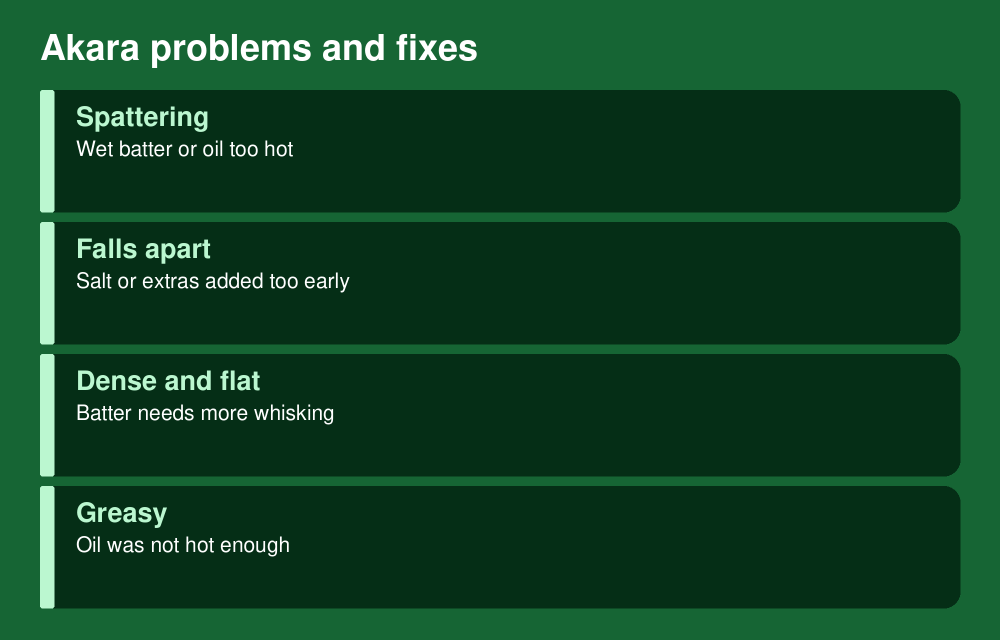
Spattering usually means wet batter, unpeeled bits of skin, or oil that is too hot. Akara that falls apart is often down to salt or extras going in too early. Dense, flat akara needs more whisking. Greasy akara means the oil was not hot enough when the batter went in.
Serving ideas
Akara is classic with pap (ogi) or custard for breakfast, or stuffed into soft bread. Moi moi goes with pap, with jollof rice, or on its own as a lunchbox portion. If you are cooking for a crowd, our guide to party jollof rice pairs well with a tray of moi moi. For more dishes to cook for guests who have not tried Nigerian food before, see Nigerian food recipes foreigners will love.
UK substitutes
Dried black-eyed peas are sold in most supermarkets. African and Caribbean grocers stock brown beans, bean flour, ground crayfish, scotch bonnet peppers and frozen uma or banana leaves. Foil trays or silicone cupcake moulds do the job of leaves. If you cannot find tatashe, a fresh red pepper and a small amount of tomato paste gives the colour. Our guide to cooking Nigerian food abroad with local ingredients has more swaps for UK kitchens.
What beans cost in Nigeria in 2026
A 1 September 2026 market report priced a 100kg bag of brown beans at ₦85,000 to ₦115,000 and white beans at ₦85,000 to ₦125,000. A derica measure cost ₦1,000 to ₦1,600. A Legit.ng guide to starting an akara business from July 2026 put half a bag of beans at about ₦65,000 and 10 litres of groundnut oil at about ₦21,000, and said you would need at least ₦200,000 for equipment, ingredients and gas. Prices differ by city and by bean type, so use these as a guide rather than a quote.
If you are thinking of selling, Nigerian snacks to make and sell from home covers NAFDAC rules and packaging, and our catering and small chops business guide shows how to price and find clients.
Health and storage
The NHS Eatwell Guide describes pulses such as beans as low in fat and a good source of fibre and protein. Steamed moi moi is the lighter dish. Akara soaks up oil in the pan, so drain it well and eat it as part of a balanced meal. Both dishes often contain crayfish, fish, egg or meat, so if anyone eating has a food allergy, check every ingredient. If you have a medical condition that limits what you can eat, ask your doctor or dietitian.
Cool leftovers quickly, keep them covered in the fridge and eat them within about two days. Reheat until steaming hot all the way through. Moi moi freezes well in portions. Akara is best fresh, but you can crisp leftover pieces in a hot oven. The Food Standards Agency publishes a home food fact checker with full storage guidance.
A little history
Akara came to the Americas with enslaved West Africans. In Brazil the same fritter is called acaraje, and cooks there still split it open and fill it with shrimp and other flavours. A July 2026 radio feature on Lagos street sellers shows how much the fritter still matters to people who make a living from it.
Frequently asked questions
Do I have to peel the beans?
For smooth moi moi and light akara, yes. You can use bean flour if you want to skip peeling.
How long does moi moi take to steam?
Start checking at about 45 minutes. It can take up to around an hour and a half depending on the container and batch size. It is done when a knife comes out clean.
Why is my akara flat?
The batter probably needed more whisking, or salt and extras went in too early.
Why is my moi moi watery?
The batter was too thin, or it needed more steaming. Cool it fully before you cut it.
Can I make both from the same beans?
Yes. Peel one big batch, then blend part of it smooth for moi moi and part of it thick for akara.
Can I use tinned beans?
Dried beans give the right texture. Tinned beans are already cooked and make a loose batter.
How much oil does akara need?
About 3 inches deep in a heavy pan, hot enough that the batter sizzles when it goes in.
Sources
- Nigerian Food TV: How to make Nigerian moi moi
- Guardian Nigeria: How to make akara (bean cakes)
- Naija News: Price of bag of rice, beans, tomatoes and other food commodities this week (1 September 2026)
- Legit.ng: How to start an akara business in Nigeria and cost in 2026 (12 July 2026)
- KBIA / NPR: A Nigerian breakfast reveals centuries of history (25 July 2026)
- NHS: The Eatwell Guide
- Food Standards Agency: Home food fact checker








Editor note: moi moi and akara are the kind of food where everybody’s aunty has the one true method. How do you make yours, with egg, fish or corned beef, and do you peel the beans by hand or use flour? Tell us in the comments. – Ade