
How to Make Ofada Stew and Ayamase (2026): Ingredients, Steps and Where to Buy in the UK

Last updated 16 November 2026. Prices and stock change, so treat the UK figures below as a guide and check the shop before you order.
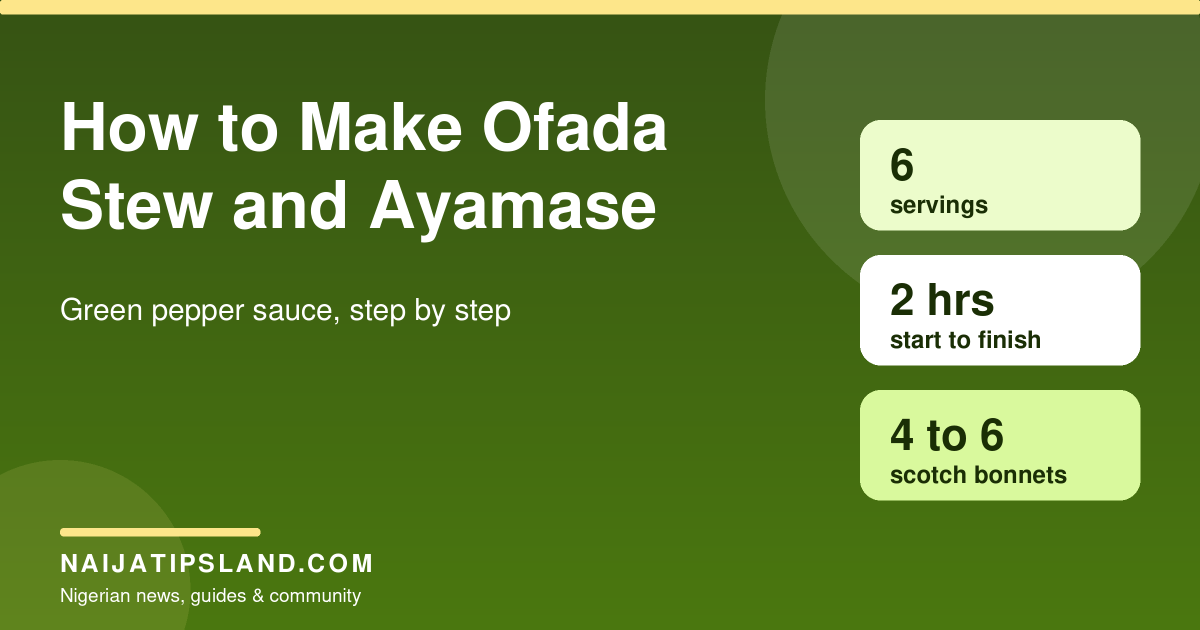
If you have been to a Lagos wedding or a Sunday party in Ogun State, you have seen it: a pot of dark green-brown sauce shining with palm oil, a pile of rice wrapped in a leaf, and a plate of mixed meat on the side. Ofada stew, also called ayamase or “designer stew”, is one of those dishes that people cook with confidence once they have done it twice. The first time, the smoky oil and the pile of peppers can feel like a lot. This guide takes you through it slowly, with quantities for six people and notes for cooking in a UK kitchen.
Ofada stew and ayamase: is there a difference?
In practice, no. Ayamase is the Yoruba name for the green pepper sauce, and “ofada stew” is what many people call it because it is traditionally served with ofada rice. “Designer stew” is a nickname that caught on because the mix of meats and offal is cooked in whatever combination the cook likes. The defining features are the same everywhere: green peppers, fermented locust beans (iru) and palm oil that has been heated until it loses its raw red colour and rawness.
Ofada rice is a local, unpolished Nigerian rice named after Ofada in Ogun State. It is brownish, a little speckled and has a strong earthy smell, which is normal. It is part-husked, so it needs more washing than ordinary rice.
Ingredients for six people
Sources vary on exact quantities, which is a good sign: the sauce is forgiving. This is the mix I use after comparing several well-known recipes, including African Vibes, 9jafoodie and Zena’s Kitchen.
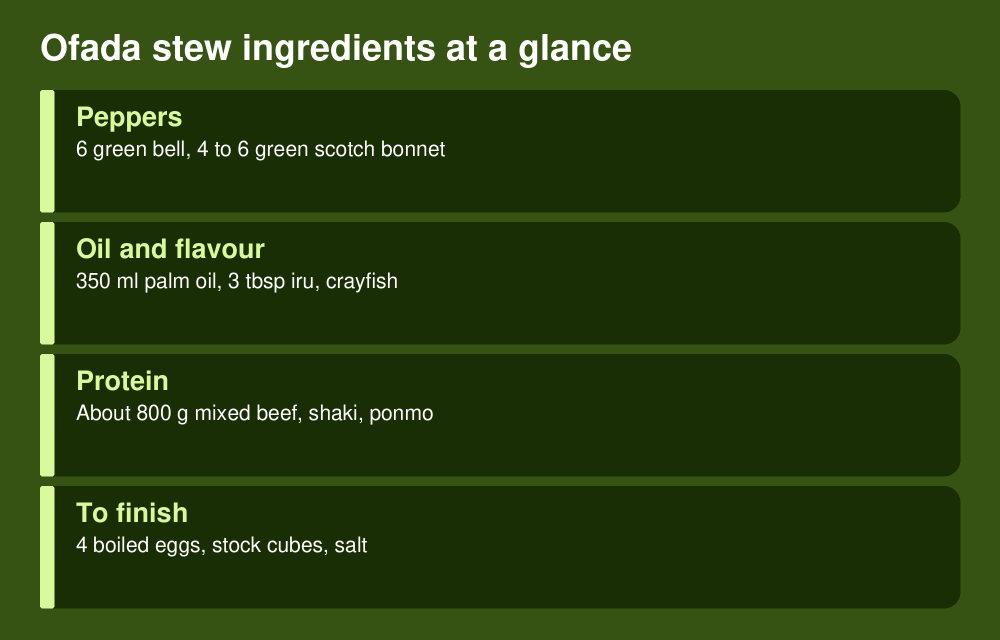
- 6 large green bell peppers (about 1 kg), seeds removed
- 4 to 6 green scotch bonnet peppers, depending on how much heat you can take
- 2 large onions, one blended with the peppers and one chopped
- 350 ml red palm oil (about one and a half cups)
- 3 tablespoons iru (fermented locust beans), rinsed
- 3 tablespoons ground crayfish
- About 800 g assorted meat: beef, shaki (tripe), ponmo (cow skin) and goat or turkey if you like
- 4 hard-boiled eggs, peeled
- 2 stock cubes and salt to taste
If you cannot find green scotch bonnets, the orange or red ones work. The sauce will be browner and a bit sweeter, but still very good.
How to make ofada stew, step by step
1. Cook the meat
Put the beef, shaki and ponmo in a pot with a chopped half onion, a stock cube, salt and enough water to cover. Simmer until tender. Beef usually takes 45 to 60 minutes and shaki can take longer, so put the tougher cuts in first. A pressure cooker cuts this to roughly 25 minutes. Keep the stock, because you will use a few spoonfuls later. You can fry the cooked pieces in a little of the oil for extra colour, though this is optional.
2. Blend and reduce the peppers
Blend the bell peppers, scotch bonnets and half the onion into a coarse paste. Use as little water as you can, because wet peppers make a watery sauce. Then either pour the paste into a sieve and press out the liquid, or boil it in a pot for 10 to 15 minutes until most of the water has cooked off. Both methods work. Boiling keeps more of the flavour, while sieving is quicker.
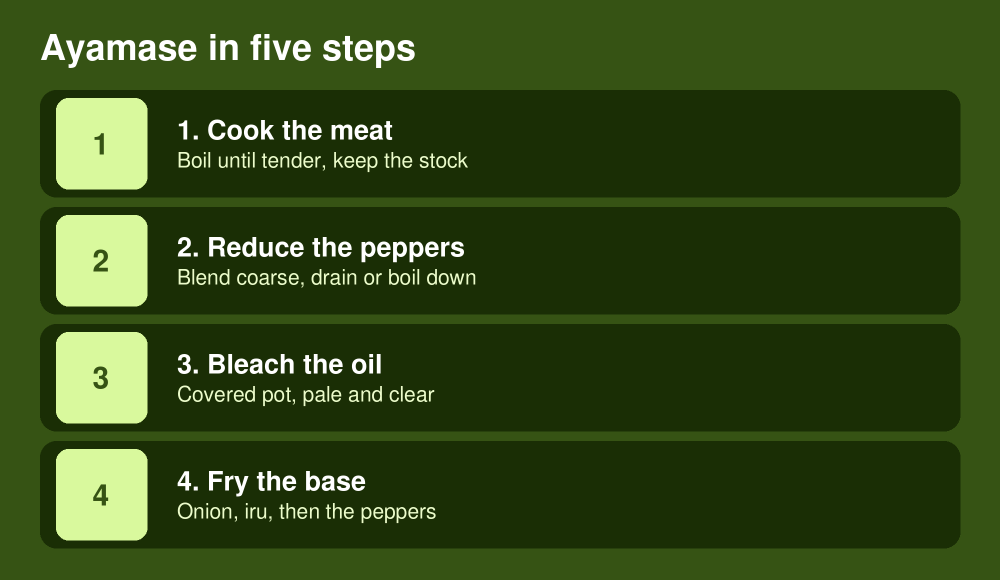
3. Bleach the palm oil
This is the step that frightens people, and it should be done with respect. Pour the palm oil into a clean, dry pot, cover it and heat on medium-low for about 10 to 15 minutes, until the oil turns from deep red to pale yellow. It will smoke. Keep the lid on, turn on the extractor fan and open a window. When it looks right, switch off the heat and leave the pot covered for a few minutes until the smoke settles. Never leave hot oil unattended, and never add water to it. If you have young children in the kitchen, do this when they are elsewhere.
Some cooks pour the oil into a clean pan at this point to leave behind the sediment. That is a good habit if you see dark bits at the bottom.
4. Fry the base
Return the oil to a medium heat. Add the chopped onion and cook for two or three minutes, then add the iru and fry for another minute until the smell fills the kitchen. Pour in the reduced pepper mix and cook it on a low-to-medium heat for 25 to 30 minutes, stirring often so it does not catch on the bottom. You will know it is ready when the colour changes from bright green to a deeper olive-brown and the oil rises to the top.
5. Add the meat and finish
Stir in the crayfish, stock cube and cooked meat, along with a few spoonfuls of the stock if the sauce looks too dry. Cook for 5 to 10 minutes, then add the boiled eggs and salt. Let it rest for 5 minutes before serving. Many cooks spoon off a little of the excess oil from the top, because the large amount of oil is there to fry the peppers rather than to be eaten.
How to cook ofada rice
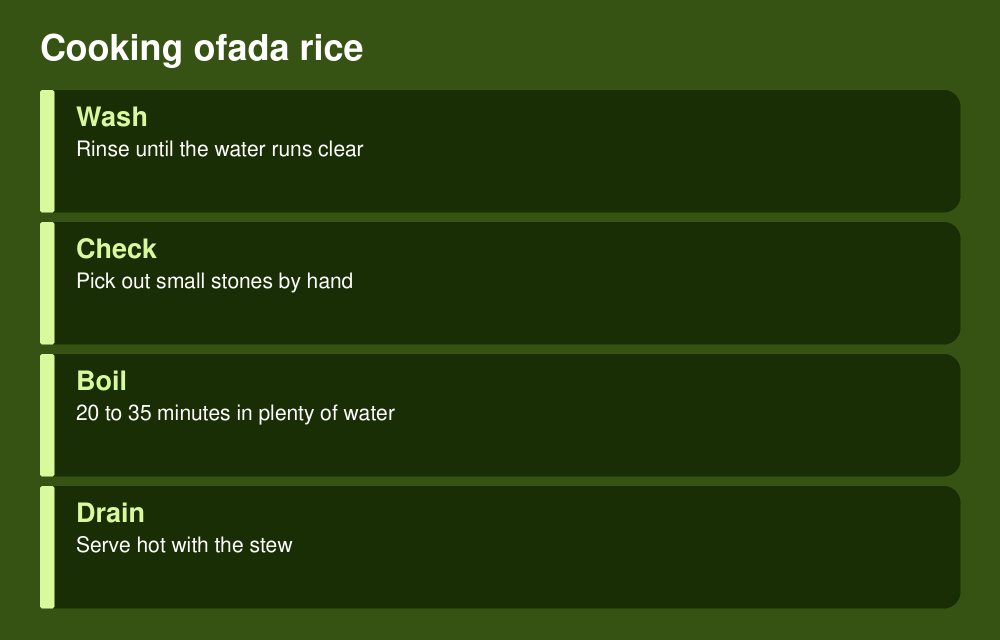
Ofada rice needs more care than basmati. Rinse it in several changes of water until the water runs clear, and pick through it for small stones. Bring a large pot of water to a boil, add a pinch of salt and the rice, and cook for 20 to 35 minutes depending on the brand, until the grains are soft with a slight chew. Drain well. The rice is traditionally served wrapped in uma leaves. They are hard to find in the UK, but banana leaf from an Asian supermarket gives the same look and a mild aroma, even if the flavour is not identical.
No ofada rice? What to use instead
Zena’s Kitchen suggests jasmine rice as a substitute because it is slightly sticky and holds up to a rich sauce. Other cooks use any medium or long grain rice, and the stew goes well with boiled yam, plantain and white rice. You lose the nutty smell of ofada, but the sauce does most of the talking.
Where to buy the ingredients in the UK
African and Caribbean food shops stock the lot: red palm oil, green and scotch bonnet peppers, iru, ground crayfish, shaki and ponmo. Look for ofada rice labelled “local rice” or “brown local rice”. Online, Beeola Foods lists a 1 kg bag of ofada rice at £5.50, and Etsy UK sellers list 5 kg bags at around £18 to £20, with some charging separately for delivery. Many sellers now sell it “stone free”, which saves you the picking. If you are building a Nigerian pantry from scratch, our guide to Nigerian foods you can cook abroad with local ingredients explains the swaps that work, and the Nigerian recipes foreigners will love list is a good place to go next.
Storing, reheating and a note on health
Ayamase keeps well. Cool it, store it in a covered container in the fridge for up to four days, or freeze it in portions for a few weeks. Reheat it thoroughly until it is steaming hot all the way through, and do not reheat it more than once. Palm oil is high in saturated fat, and the dish is rich, so it suits an occasional meal better than a daily one. If you have high cholesterol, high blood pressure or another condition that affects what you eat, talk to your doctor or a registered dietitian before making it a regular part of your diet. Our piece on foods that lower cholesterol has more on balancing richer meals with lighter ones, and the traditional Nigerian foods and their health benefits article looks at what the evidence says about local staples. If you enjoy comparing recipes, the Nigerian versus Ghanaian jollof debate is another good one to read with a plate in front of you.
Frequently asked questions
Is ofada stew the same as ayamase?
Yes. Ayamase is the Yoruba name for the green pepper stew, and ofada stew is the name used when it is served with ofada rice. Some people also call it designer stew.
Why do you bleach palm oil for ofada stew?
Heating the oil until it turns pale removes the raw taste and gives the sauce a cleaner, slightly smoky flavour. Keep the pot covered, ventilate the kitchen and never leave it unattended.
Can I make ayamase without iru?
You can, but it will taste flatter. Iru, or fermented locust beans, adds the savoury depth people expect. Some cooks use a little more crayfish and stock cube to make up the difference.
How spicy should ayamase be?
It is traditionally quite hot. Use fewer scotch bonnets and remove the seeds if you prefer something milder. Start with four and add more next time.
Can I use jasmine rice instead of ofada rice?
Yes. Jasmine rice is a common substitute because it is slightly sticky and holds the sauce well, though it will not have the earthy taste of ofada.
How long does ofada stew last?
Four days in the fridge in a covered container, or a few weeks in the freezer. Reheat until piping hot.









Editor note: every family has its own way with ayamase, and some people will say ours is too mild or too oily. Tell us how you make yours in the comments, and how many scotch bonnets you can take. – Ade