

Last updated: 14 November 2026 · By Naijatipsland Editorial Team · Editorial policy
A few months ago almost nobody searched for the word hantavirus. Then, in May 2026, a cluster of severe chest infections on the Dutch cruise ship MV Hondius was traced to the Andes strain of the virus, and the word was suddenly everywhere. Even now the story is not over: on 12 November 2026 the journal Science published two studies on where the virus came from. So the question keeps coming back. What is hantavirus, how do you catch it, and should you be worried? This guide is written from the UK for Nigerian and diaspora readers. It sets out what the UK Health Security Agency (UKHSA), the NHS, the US Centers for Disease Control and Prevention (CDC) and the World Health Organization (WHO) say, as of 14 November 2026.
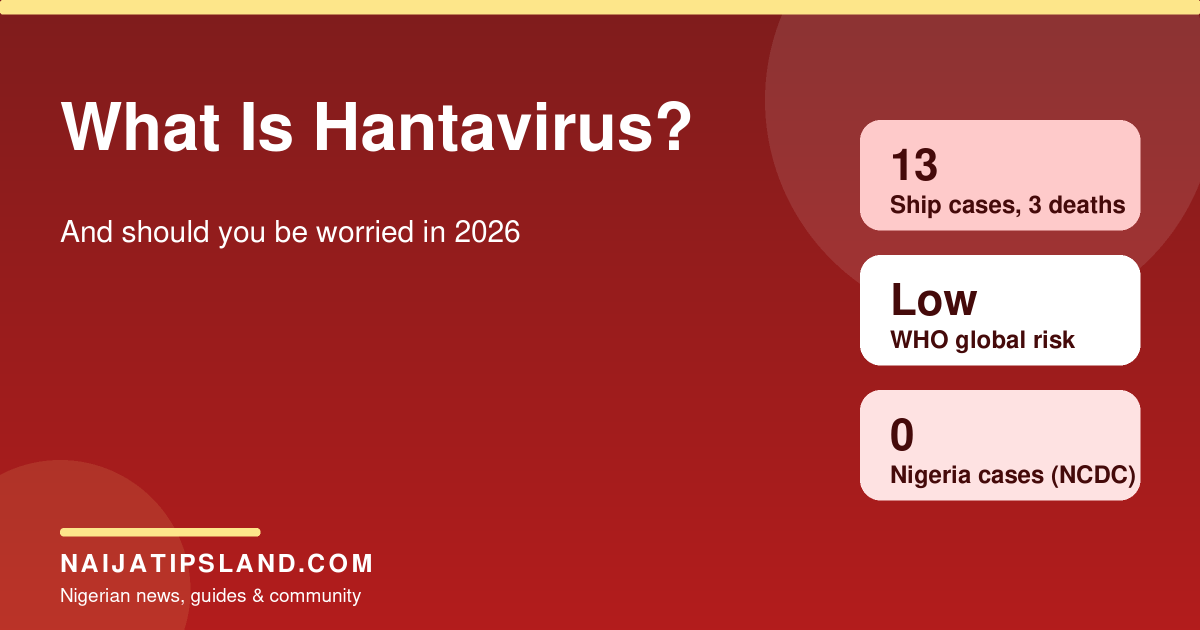
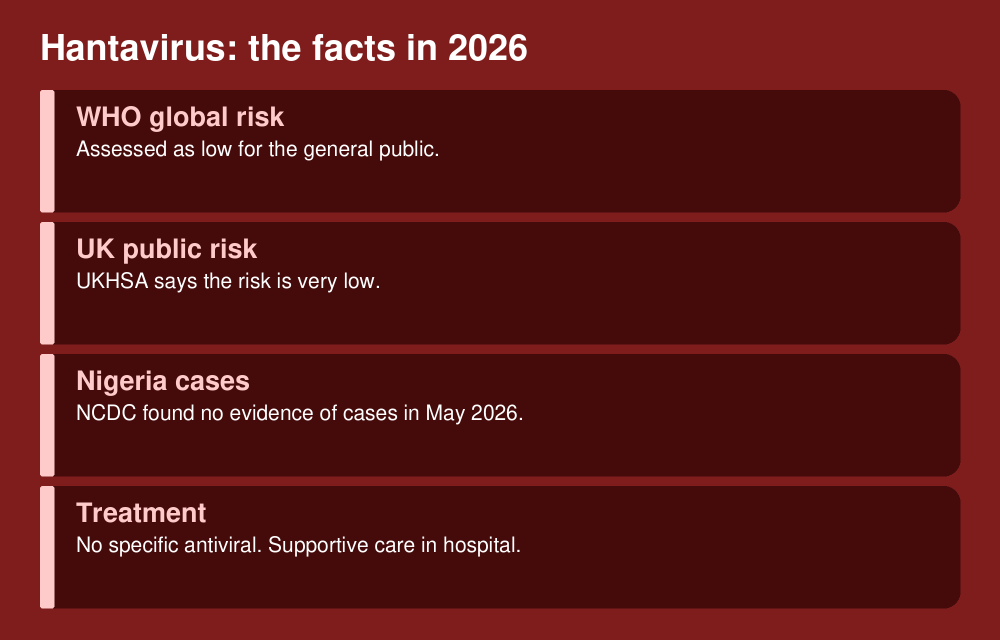
The short answer: hantavirus is a real and sometimes serious infection, but it is rare, it is caught mainly from rodents, and it does not spread through everyday contact. The WHO rates the global risk as low and the UKHSA rates the risk to the UK public as very low.
What is hantavirus?
Hantaviruses are a group of viruses carried mainly by rodents such as rats, mice and voles. The UKHSA says they are found throughout the world and can cause anything from a mild, flu-like illness to severe lung disease or a bleeding illness with kidney damage. More than 40 hantaviruses have been identified and at least 21 are known to infect people. The UKHSA estimates there are between 10,000 and 100,000 cases a year worldwide, which makes it an uncommon infection.
Doctors usually describe two main types of disease:
- Haemorrhagic fever with renal syndrome (HFRS): mostly seen in Europe and Asia. It affects the kidneys.
- Hantavirus pulmonary syndrome (HPS), also called hantavirus cardiopulmonary syndrome: seen in the Americas. It affects the lungs and heart and can become life-threatening quickly.
Which disease you get, and how severe it is, depends on the strain. The infected rodent itself usually looks perfectly healthy, which is why the virus can go unnoticed in homes, barns and storerooms.
How do you catch hantavirus?
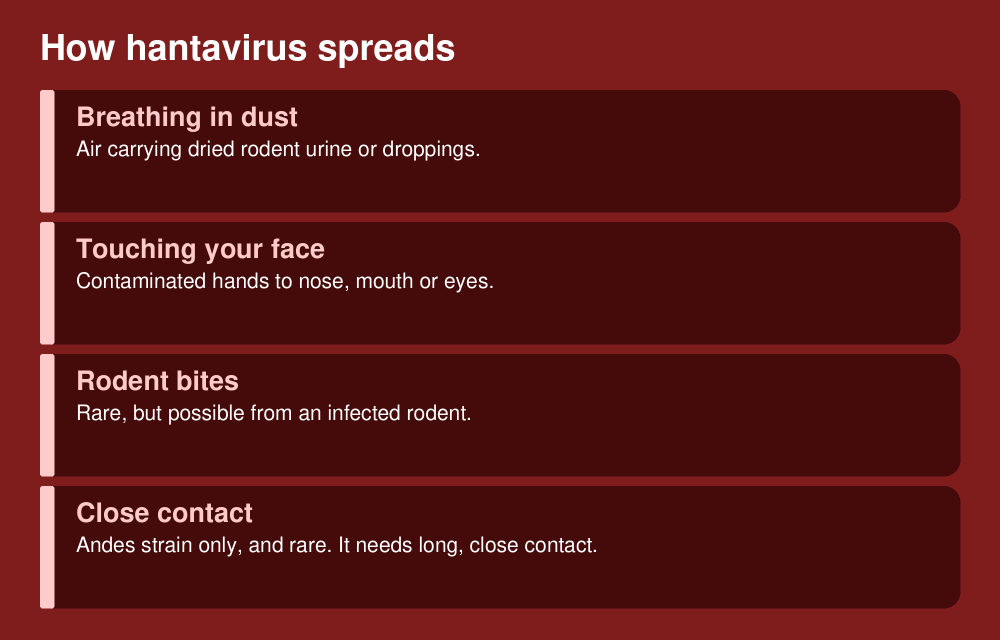
The NHS says hantavirus is usually spread by breathing in or touching the poo, pee or saliva of infected rats, mice or voles. When dried droppings or urine are disturbed, for example by sweeping, tiny particles can float in the air and be breathed in. You can also pick the virus up on your hands and then touch your nose, mouth or eyes. A bite from an infected rodent is a rare route.
You are more likely to be infected if you live or work close to rodent droppings and urine, handle rats, mice or voles, or have been bitten by one. Farmers, forestry workers, people who clean abandoned or little-used buildings and, in the UK, owners and breeders of pet rats are the groups the UKHSA highlights.
Most hantaviruses do not spread from person to person. The one exception is the Andes virus, found in South America, mainly Argentina and Chile. The CDC calls it the only hantavirus known to spread between people, and says this usually needs close, prolonged contact with someone who is ill. The UKHSA stresses that hantavirus is not spread through everyday social contact such as walking past someone in a shop, workplace or school.
Hantavirus symptoms and how long they take to appear
The early symptoms are easy to mistake for flu, malaria or a stomach bug. The NHS lists:
- a high temperature
- body aches and pains
- feeling or being sick
- diarrhoea and tummy pain
- headache
- shortness of breath
Timing. Symptoms usually start 2 to 4 weeks after exposure, but the CDC says they can appear anywhere from 1 to 8 weeks later. For the Andes virus, the UKHSA reports symptoms up to 40 days after exposure, and researchers reviewing the cruise ship cases found a median of about 18 days.
Lung disease (HPS). After 3 to 5 days of fever and muscle aches, a dry cough and shortness of breath can follow, with fluid filling the lungs. This can progress quickly and may need intensive care. The CDC notes that diagnosis in the first 72 hours is difficult, so doctors often repeat the test.
Kidney disease (HFRS). Symptoms usually appear within 1 to 2 weeks of exposure, and can include intense headache, back and tummy pain, fever, blurred vision and, later, low blood pressure and kidney failure. Some patients need dialysis.
How dangerous is hantavirus?
It depends heavily on the strain, and many infections are mild and are never diagnosed. The main figures from official sources are:
- Hantavirus pulmonary syndrome in the Americas: the CDC says about 38% of people who develop respiratory symptoms may die.
- Andes virus outbreak on the MV Hondius: 13 cases and 3 deaths, a fatality rate of 23%, according to the WHO. This is a small outbreak, so the percentage should be read with care.
- Severe HFRS (Hantaan and Dobrava viruses): mortality of up to 15%, according to the UKHSA.
- Seoul virus, the strain found in the UK: mortality below 1%, according to a UK risk assessment.
The MV Hondius cruise ship outbreak: what happened
On 2 May 2026 the UK told the WHO about a cluster of severe respiratory illness, including two deaths, on the Dutch-flagged cruise ship MV Hondius, which had left Ushuaia in Argentina on 1 April. Laboratories in South Africa and Switzerland confirmed the Andes virus within days. In total 13 people were infected and 3 died. All the cases were passengers or crew on the ship.
Health authorities then tracked more than 600 people from at least 33 countries. In the UK, passengers were monitored at Arrowe Park Hospital and the UKHSA reported that every test on contacts was negative. In the United States the CDC followed 88 residents who may have been exposed and found no secondary infections. Everyone completed the 42-day follow-up, and on 2 July 2026 the WHO declared the outbreak over.
The Science papers published on 12 November 2026 sequenced the virus from 10 patients in seven countries. The genomes were almost identical, which supports the explanation that the virus entered the ship once, from an infected rodent to one traveller, and then spread briefly from person to person on board. The virus is closely related to a natural lineage in Argentine Patagonia, not an engineered or unusual strain. Where and when the first person was infected is still not fully settled, because the timeline does not fit the known incubation period, so researchers are considering a hidden link in the chain.
The WHO’s conclusion has stayed the same since May: the risk to the global population is low, because Andes virus spreads only through close and prolonged contact and the ship was a confined space where that contact was easy.
Is hantavirus a risk in the UK?
The UKHSA says the risk to the UK public is very low. The only strain ever identified in the UK is the Seoul virus, which is carried by wild brown rats and pet rats and has not been shown to pass between people. Since 2012 there have been 9 confirmed and 6 probable UK-acquired cases of kidney disease linked to Seoul virus, according to the UKHSA risk assessment, mostly connected with rat breeders, pet owners and wild rat colonies. The Andes virus has never been detected in rodents in the UK.
If you keep pet rats, the UK advice is simple: wash your hands with soap and water after handling the rats, their bedding or their cage. People returning from a trip to rural Argentina or Chile who develop a fever and breathing problems should tell a doctor where they have been.
Is hantavirus a risk in Nigeria?
On 8 May 2026 the Nigeria Centre for Disease Control and Prevention (NCDC) said there was no evidence of hantavirus cases in Nigeria, that it had stepped up surveillance as a precaution and that the public should keep their surroundings clean and avoid contact with rodents. Nigerian doctors quoted in the press have raised one practical concern: hantavirus and Lassa fever both start with fever and body aches, so testing capacity matters.
For most people in Nigeria and in the diaspora with family there, the rodent-borne disease that deserves attention is Lassa fever, not hantavirus. The two are unrelated viruses. The NCDC says Lassa fever occurs throughout the year but more cases appear in the dry season, from November to May, which is starting now. It is carried by the multimammate rat, it can spread between people through blood and body fluids, and it has a specific treatment that works best when started early. The NCDC advises that any fever that has not improved after 48 hours of treatment for malaria or with antibiotics should raise suspicion of Lassa fever. To understand how fevers are separated in practice, read our guides to malaria symptoms Nigerians ignore and typhoid versus malaria symptoms.
The prevention advice for both diseases is the same: keep rodents out of the home, store food in sealed containers, and clean up safely.
What is in the news in November 2026?
- Argentina: the UK’s travel health body NaTHNaC reported on 12 November 2026 that 64 confirmed hantavirus cases had been recorded in Argentina in 2026 up to 31 October, above the annual number for 2022 to 2025. If you are travelling to rural parts of Argentina or Chile, avoid rodent-infested cabins and campsites.
- Russia: media reports in early November say 1,512 cases of the kidney form of the disease (HFRS) were recorded in five regions this year, while the Russian health regulator says the situation is stable. Autumn is the usual peak because rodents move closer to people’s homes as the weather cools.
Neither of these changes the UK or Nigerian risk, but they are a reminder that hantavirus is a seasonal, rodent-driven infection, not a new pandemic virus.
Is there a treatment or a vaccine?
There is no specific antiviral medicine for hantavirus, according to the CDC, and no widely available vaccine. Treatment is supportive: rest, fluids, treating symptoms, and in severe lung disease intensive care and breathing support such as a ventilator. In kidney disease, dialysis may be needed. The CDC says early supportive care matters, which is why it is important to get help quickly if you become unwell after possible exposure.
How to protect your home and family
- Seal up: block holes and gaps in walls, floors, roofs and around pipes.
- Trap up: use traps and keep rubbish in closed bins.
- Clean up food sources: store food, rice and grains in sealed containers and do not leave cooked food open overnight.
- Do not dry sweep or vacuum droppings: this puts the virus in the air.
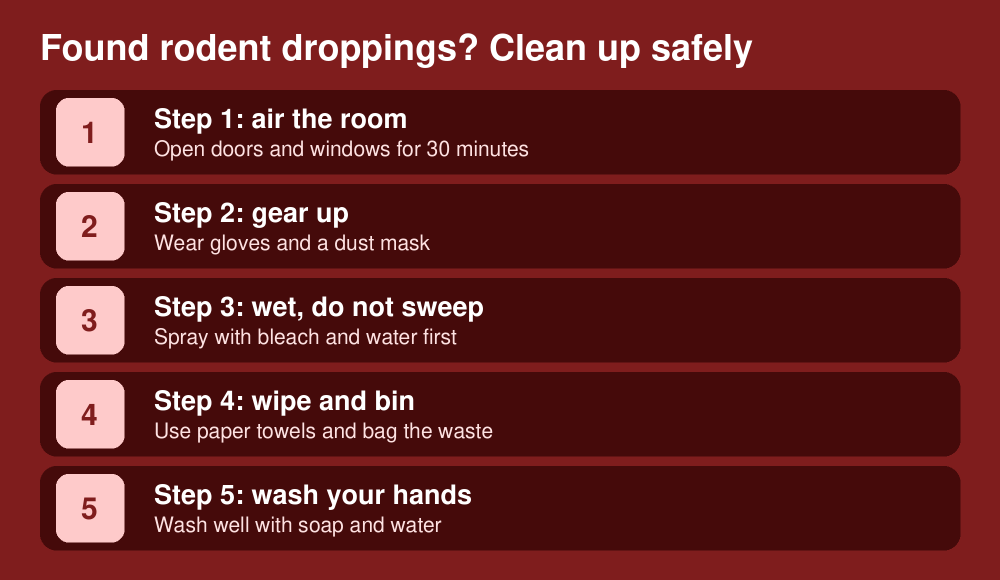
- Disinfect first: ventilate the room for at least 30 minutes, wear gloves and a dust mask, spray droppings with a bleach and water mix, wipe with paper towels, bag the waste, then wash your hands thoroughly.
- Care with storerooms: take extra care when opening barns, sheds, holiday homes, shops and stores that have been shut for a long time.
When to see a doctor
See a doctor if you develop a fever, aches and tiredness, especially followed by a cough or shortness of breath, within about 8 weeks of rodent exposure or travel to an area where hantavirus occurs. Say clearly that you have been around rodents or have travelled. In the UK call NHS 111 for advice, and call 999 if you have difficulty breathing. In Nigeria go to the nearest health facility, and mention rodent exposure so that Lassa fever can also be considered. If you are worried about your health, your insurance or the cost of care back home, see our guide to health insurance options in Nigeria.
FAQ
What is hantavirus in simple words?
It is a group of viruses carried by rodents. People catch it mainly by breathing in dust contaminated with rodent urine, droppings or saliva. It can cause lung or kidney disease, depending on the strain.
Can you catch hantavirus from another person?
Almost never. Only the Andes virus from South America has been shown to spread between people, and it needs close, prolonged contact with someone who is ill. The UKHSA says it does not spread through everyday social contact.
Is hantavirus the next pandemic?
The WHO assesses the global risk as low. The 2026 outbreak was contained, and the WHO declared it over on 2 July 2026 after more than 600 contacts completed their monitoring.
Is hantavirus the same as Lassa fever?
No. They are different viruses that both come from rodents. Lassa fever is common in Nigeria and has a specific treatment. Hantavirus has no specific treatment, and no cases have been confirmed in Nigeria according to the NCDC.
Is there a hantavirus vaccine?
No widely available one. Prevention depends on keeping rodents out of your home and cleaning up safely.
Can you get hantavirus from pet rats?
In the UK, yes in rare cases. The Seoul virus has been found in pet rats and can cause a kidney illness in people. Wash your hands after handling rats, bedding and cages.
This article is general information and not medical advice. It does not diagnose any condition. Speak to a doctor, NHS 111 or your local health facility about symptoms or exposure, and seek urgent help for breathing difficulty.
Sources
- UKHSA: Hantaviruses (GOV.UK guidance)
- UKHSA blog: What is hantavirus, how is it transmitted and what are the symptoms?
- UKHSA blog: What you need to know about the hantavirus outbreak linked to the Dutch cruise ship
- UKHSA update on the hantavirus cruise ship outbreak
- UK HAIRS: Qualitative assessment of the risk to the UK population of Andes virus infection
- NHS: Hantavirus
- CDC: About hantavirus
- CDC MMWR: Hantavirus outbreak caused by Andes virus linked to international cruise ship travel, United States, 2026
- WHO Disease Outbreak News: Hantavirus outbreak linked to cruise ship travel
- WHO Rapid Risk Assessment: Hantavirus outbreak caused by Andes virus (17 May 2026)
- University of Geneva and HUG: Human-to-human hantavirus spread confirmed on M/V Hondius (Science study)
- Le Monde: Andes hantavirus outbreak examined by scientists through its genome
- TravelHealthPro (NaTHNaC): Hantavirus in Argentina
- The ICIR: No evidence of hantavirus in Nigeria, NCDC
- Channels TV: NCDC issues safety guidelines as doctors raise concerns
- NCDC: Lassa fever public health advisory
- Maine CDC: Hantavirus prevention and clean-up
- UNN: Hantavirus (HFRS) cases recorded in Russia, November 2026
Join the discussion
Have you tried this, or do you have a question we did not answer? 1 reader has already shared their view. Naijatipsland members help each other with real, first-hand experience.






Editor’s note: this article is general information based on UKHSA, NHS, CDC and WHO guidance, and it is not medical advice. Hantavirus is rare, and the risk to the public in the UK and Nigeria is currently assessed as low. If you have a fever with a cough or breathlessness after rodent exposure or travel, get medical advice promptly. – Ade