Dating Advice for Nigerian Singles in Their 30s: Handling Pressure, Money and Finding the Right Person


Last updated: 23 October 2026 · By Naijatipsland Editorial Team · Editorial policy
If you are single and in your 30s in Nigeria, you probably know the questions by heart. “When are we coming to eat rice?” “Don’t you want children?” “Wait till you are 35 and see.” The pressure is real, and it can push even confident people into rushing, settling or giving up.
This guide offers practical dating advice for Nigerian singles in their 30s, grounded in what Nigerians themselves say in recent surveys. It is not about finding a partner by a deadline. It is about dating with clarity so that the person you choose, if you choose someone, is right for you.

The pressure is real, and it is not only you
A BusinessDay report from May 2025, based on its Women’s Choice poll, described how the pressure to marry intensifies as women approach 30, with unmarried women sometimes labelled “leftover”. Many respondents said they were frustrated by the assumption that their lives are incomplete without a husband, and described judgment, loneliness and shame. Women who coped well often pointed to career goals, therapy, self-help resources and strong friendships.
The Zikoko State of Love 2026 survey of more than 10,000 Nigerians (October to November 2025) shows the same tension. About 64 percent still see marriage as necessary for fulfilment, while about one in four no longer do. And about four in ten married Nigerians say they have felt regret at some point, with women more likely to report it. In other words, being married is no guarantee of happiness, and being single is not a failure.
Dating in Nigeria today: what the numbers show
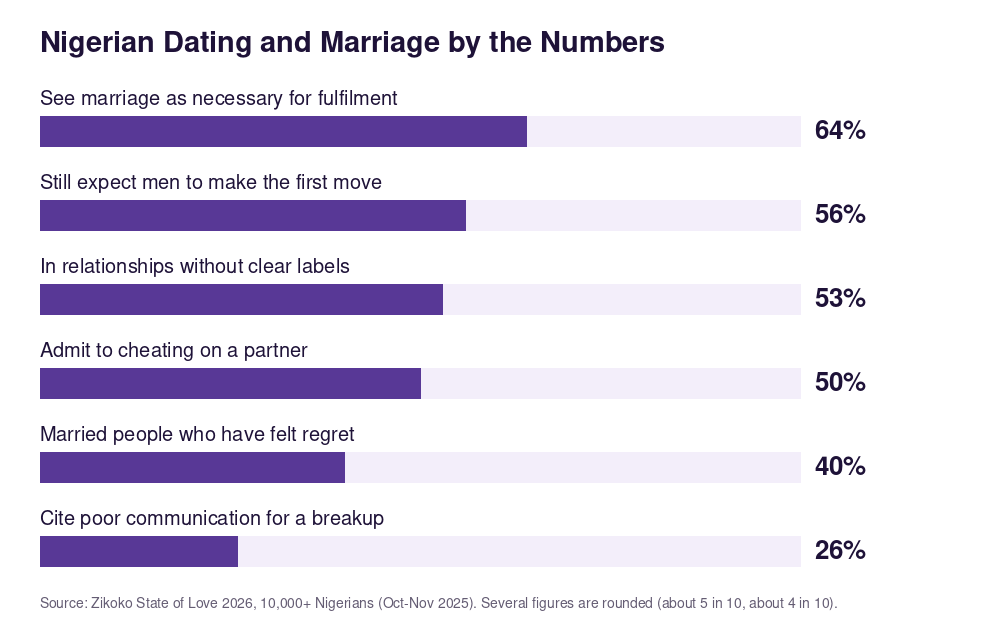
- About 53 percent of Nigerians are in relationships without clear labels, and situationships now outnumber labelled relationships.
- About 56 percent still expect men to make the first move, though roughly four in ten say gender shouldn’t decide.
- Social media is the third most common way people meet partners, after events and friends.
- Kindness ranks highest for both men and women, followed by attractiveness and financial stability. Women place more weight on financial stability than men do.
- Breakups: incompatibility is the leading cause, and poor communication is second, cited by 26 percent.
- About five in ten Nigerians admit to cheating on a partner, a reminder to look at behaviour and track record, not just words.
- About eight in ten say the economy has affected their love life.
Decide what you want before you start
Your 30s are a good time to get specific. Write down, for yourself, the answers to these questions:
- Do I want marriage, children, both or neither?
- What are my non-negotiables (values, faith, honesty, fidelity) and what are just preferences (height, tribe, job title)?
- Where do I want to live, and how flexible am I?
- What can I realistically offer a partner in time, energy and money?
People who know what they want tend to date more efficiently and are less likely to drift into a relationship just because it is available.
Six questions before getting serious
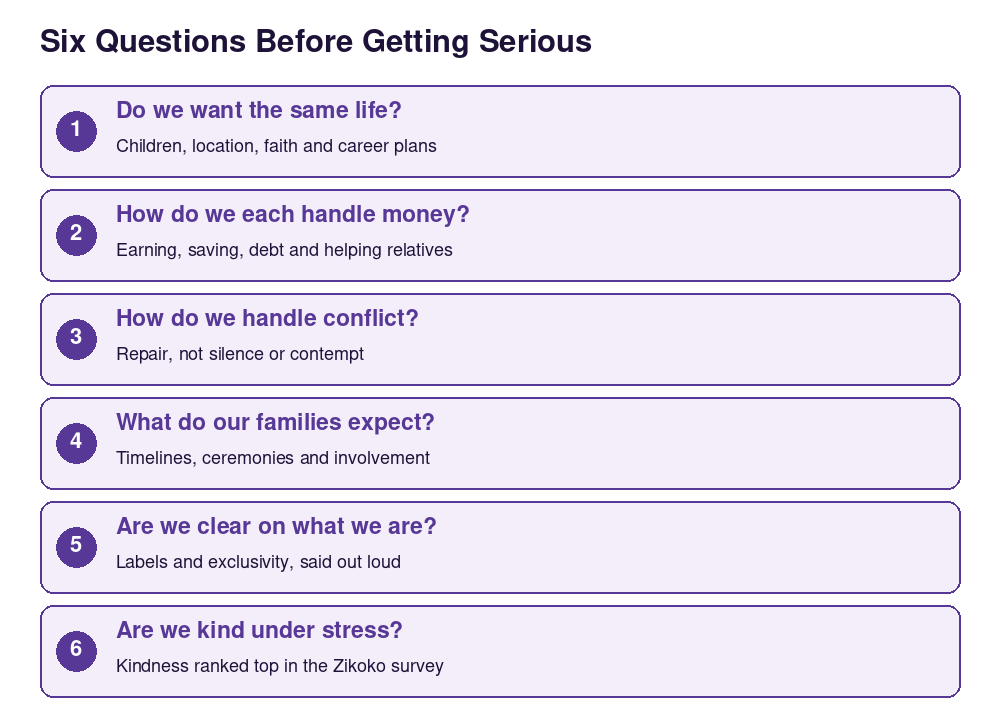
- Do we want the same life? Children, location, faith and career plans.
- How do we each handle money? Earning, saving, debt and helping relatives. Only 17 percent of couples split expenses equally, so there is no single right model. What matters is that you agree.
- How do we handle conflict? Look for repair, not silence or contempt.
- What do our families expect? Timelines, ceremonies and involvement.
- Are we clear on what we are? Say the label out loud, including exclusivity.
- Are we kind to each other under stress? Kindness is the quality Nigerians in the survey valued most.
A calm first 90 days
There is no rule about how fast to go, but a simple structure helps you avoid both rushing and drifting.
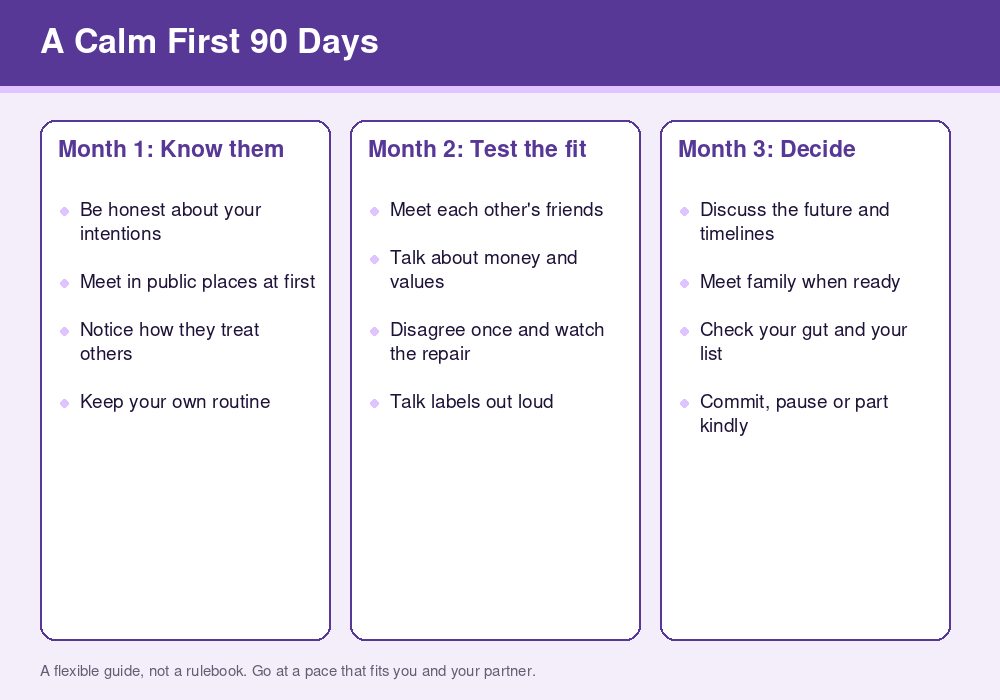
- Month 1, know them: be honest about your intentions, meet in public places at first, notice how they treat others, and keep your own routine.
- Month 2, test the fit: meet each other’s friends, talk about money and values, disagree once and watch how you both repair, and talk about labels.
- Month 3, decide: discuss the future and timelines, meet family when you are both ready, check your gut against your list, and commit, pause or part kindly.
Money talk without the awkwardness
With about eight in ten Nigerians saying the economy has affected their love life, avoiding money talk is no longer realistic. A simple approach:
- Be honest about your situation early: your job, your debts, and who depends on you.
- Ask, rather than assume, how your partner thinks about splitting costs. About three in ten men in the survey say they cover most expenses, compared with about one in ten women, so expectations are far from uniform.
- Watch for red flags: secrecy about money, pressure to lend or give early, or an expectation that you will fund a lifestyle.
Handling family and community pressure
- Prepare a short, kind answer. “I am open to it, and I will tell you when there is news” ends most conversations.
- Set limits on matchmaking. It is fine to accept an introduction without accepting a timeline.
- Find your people. Friends, mentors and, if you need it, a counsellor can help you hold your ground.
- Don’t date to silence people. Choosing a partner to stop questions rarely ends well.
Online dating and meeting people safely
Since social media is a leading way Nigerians meet, a few safety habits are worth following:
- Video-call before meeting in person.
- Meet in a public place, tell a friend where you are, and arrange your own transport.
- Never send money to someone you have not met in person, however convincing the story. Romance scams are common.
- Be cautious with intimate photos and personal documents.
Situationships: how to get clarity
If you are in a relationship without a label, ask directly: “What are we, and where is this going?” You deserve a clear answer. If the response is vague, avoidant or keeps changing, that is an answer too. Decide how long you are willing to wait before you ask for more or walk away.
Green flags and red flags
Green flags: consistent communication, kindness to waiters and relatives, accountability when they are wrong, respect for your boundaries, and actions that match their words.
Red flags: controlling behaviour, constant criticism, secrecy about relationships or money, pressure to rush intimacy or commitment, a history of broken promises, and any violence or intimidation. If you feel unsafe, leave and talk to someone you trust.
If you want children
If children are important to you, talk about it early and honestly, and speak to a doctor about your own health and timelines rather than relying on rumours. Having a clear plan reduces panic. If you are unsure, give yourself permission to take time and get proper medical advice.
Frequently asked questions
Is 30 too late to find a partner in Nigeria?
No. Many people meet their partners in their 30s and beyond. Pressure from family and culture can make it feel late, but compatibility matters more than age.
Should I be the one to make the first move?
About 56 percent of Nigerians still expect men to make the first move, but about four in ten say gender shouldn’t decide. Do what feels right for you.
What do Nigerians value most in a partner?
In the Zikoko survey, kindness ranked highest for both men and women, followed by attractiveness and financial stability.
How do I stop family from pressuring me?
Use calm, repeated, consistent answers and set limits on matchmaking. If it is affecting your mental health, consider speaking to a counsellor.
How do I know if I should move on from a situationship?
If you have asked for clarity and the answers stay vague or keep changing, or if you feel anxious and unsure all the time, it is reasonable to step away.
This article is general guidance, not a substitute for professional counselling or medical advice.
Sources
- Zikoko, The State of Love 2026 (10,000+ Nigerians, October to November 2025)
- BusinessDay, Nigerian women reject marriage as the ultimate measure of their worth (15 May 2025)
Join the discussion
Have you tried this, or do you have a question we did not answer? Be the first to share your experience. Leave a comment below. Every comment is read by the editor before it appears.