
First published 11 January 2026. Rewritten on 13 October 2026 from several outlets’ reports. We have not tracked every later twist in the bill, so check a current source for its latest status.
It is unusual for an industry to say it would rather have no law than a particular one. That is roughly where parts of the crypto world found themselves in January 2026, over a single question: should companies be allowed to pay customers rewards, effectively interest, for holding stablecoins?
What set it off
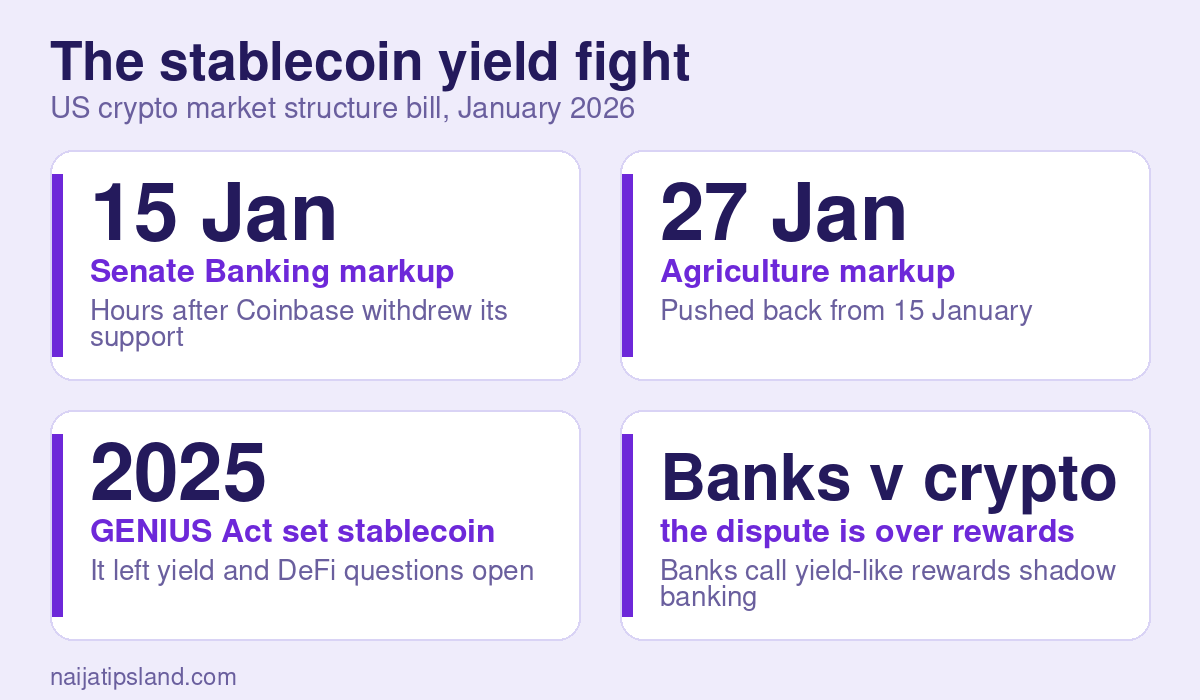
Lawmakers in Washington were negotiating a market structure bill that would settle which agencies oversee crypto and how. Reports in early January said senators were open to a demand from traditional banks to limit what stablecoin platforms can pay holders. Banks worry that yield-like rewards will pull deposits out of the banking system, and some call such programmes shadow banking. The 2025 GENIUS Act had set baseline rules for issuing stablecoins but left the yield question and several decentralised finance issues unresolved, so they landed in this bill.
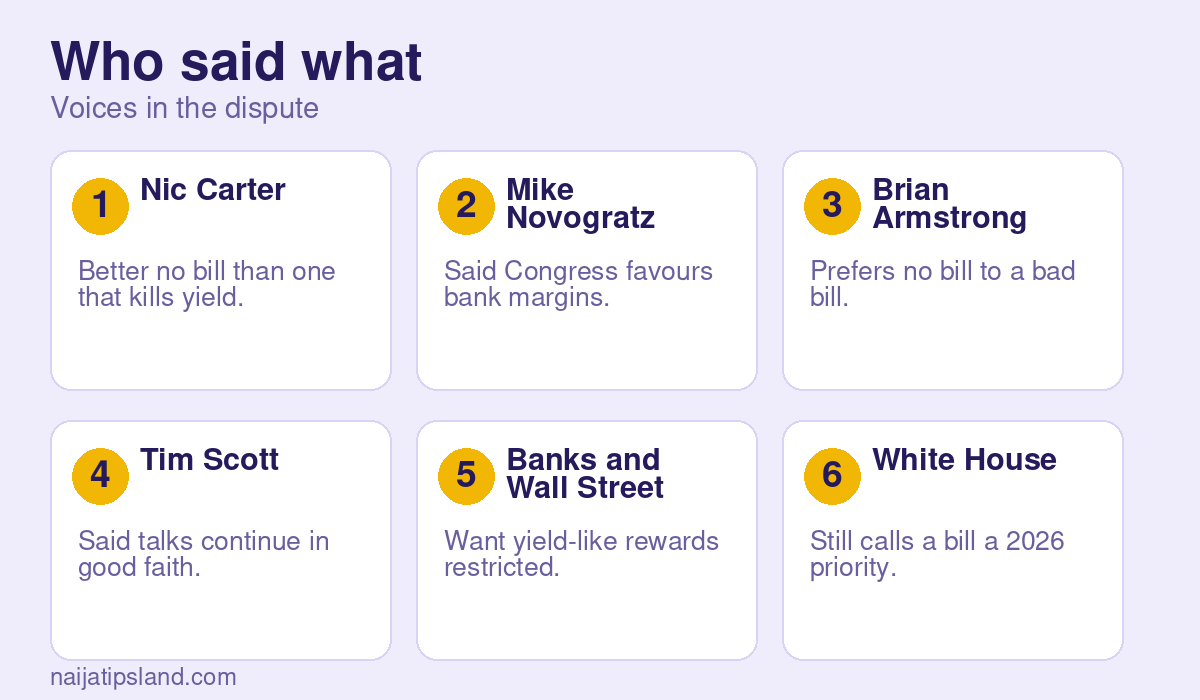
The reaction from crypto was sharp. Galaxy’s chief executive, Mike Novogratz, called it a sad state that Congress seemed to care more about banks’ margins than consumers. Nic Carter, a partner at Castle Island Ventures, argued the sector would be better off with no bill at all if stablecoin rewards were restricted, which is where the headline came from.
The week it came apart
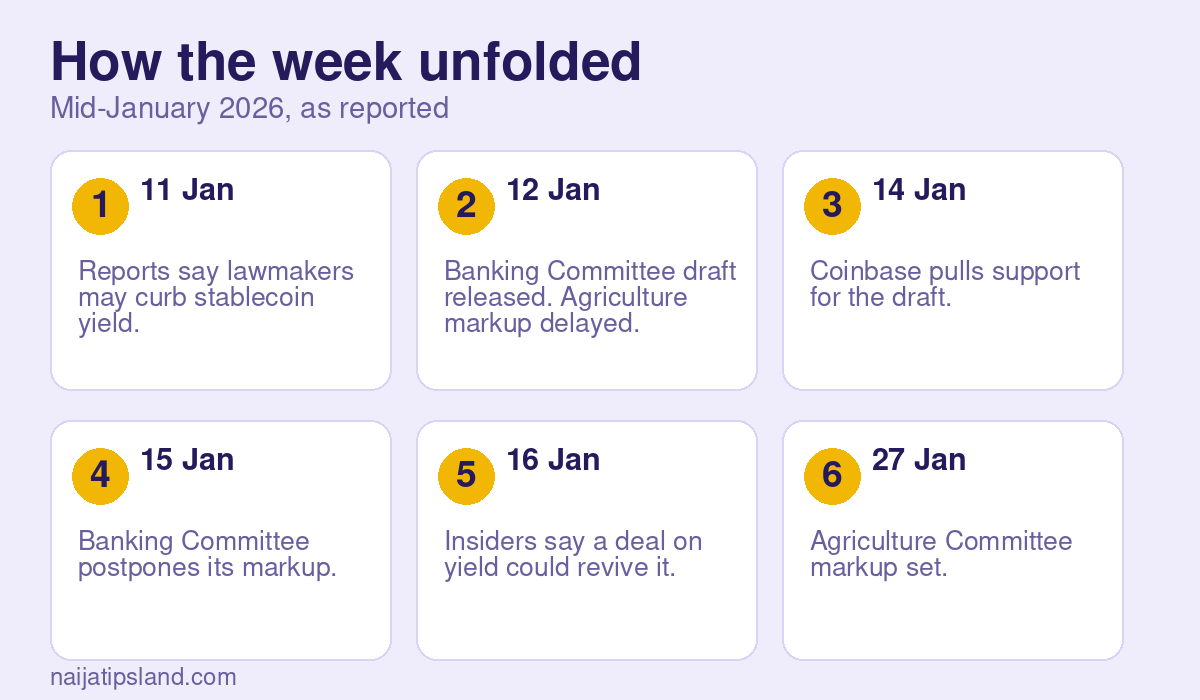
On Monday 12 January the Banking Committee released its draft, which would limit certain stablecoin yield payments by third-party platforms such as exchanges, and the Agriculture Committee postponed its own markup. On Wednesday Coinbase withdrew its support. Chief executive Brian Armstrong said the draft would be materially worse than the current situation and that the company would prefer “no bill than a bad bill”. On Thursday 15 January, hours later, Banking Committee chairman Tim Scott postponed the markup, which was due that day, without setting a new date.
Not dead, but delayed
Industry insiders and committee staff told Benzinga the bill could still move if banks, Coinbase and Senate Democrats found a compromise on yield. Major firms and groups, including a16z, Circle, Paradigm, Kraken, Ripple, Coin Center and the Digital Chamber, publicly urged lawmakers to keep negotiating instead of abandoning the bill. Scott said talks were continuing in good faith, and the Agriculture Committee was reported to have moved its markup to 27 January.
Why a Nigerian reader might care
Stablecoins such as USDT and USDC are widely used in Nigeria to hold dollars and to send money. A US law that changes what platforms can pay on them could change what products are offered to you, and it may push platforms to shift where they operate. It is also a reminder that “yield” on stablecoins is not a bank interest rate, and it carries platform and regulatory risk. Before you use any platform, read our guide to buying Bitcoin and USDT in Nigeria, and verify that it is registered with the SEC. See also our guide to passive income for the warning signs of high-yield promises. This is general information, not investment advice.
Sources
- Cointelegraph: US crypto market structure bill in limbo as industry pulls support
- Benzinga: Crypto market structure bill can still pass if a compromise is reached
- Bloomberg: Senate committee delays crypto market-structure markup
- Decrypt: Markup of Senate crypto market structure bill pushed to late January
- AMBCrypto: the original report this story was first based on