Business News Today, 13 November 2026: Petrol Dips to N1,215 at Gantry, T-Bills Draw N1.08tn, NGX Rebounds

Last updated: 13 November 2026 · By Naijatipsland Editorial Team · Editorial policy
Morning roundup · Friday 13 November 2026 · By Ade Adeniyi, Founder and Editor
Good morning. The naira held roughly steady at the official window on Thursday while the street rate stayed above ₦1,400. Petrol got a little cheaper at depots and some pumps, investors rushed into one-year Treasury bills, and the stock market ended a two-day slide. We also look at bank profits versus bank lending, and what analysts expect from next week’s October inflation figure.
Today at a glance
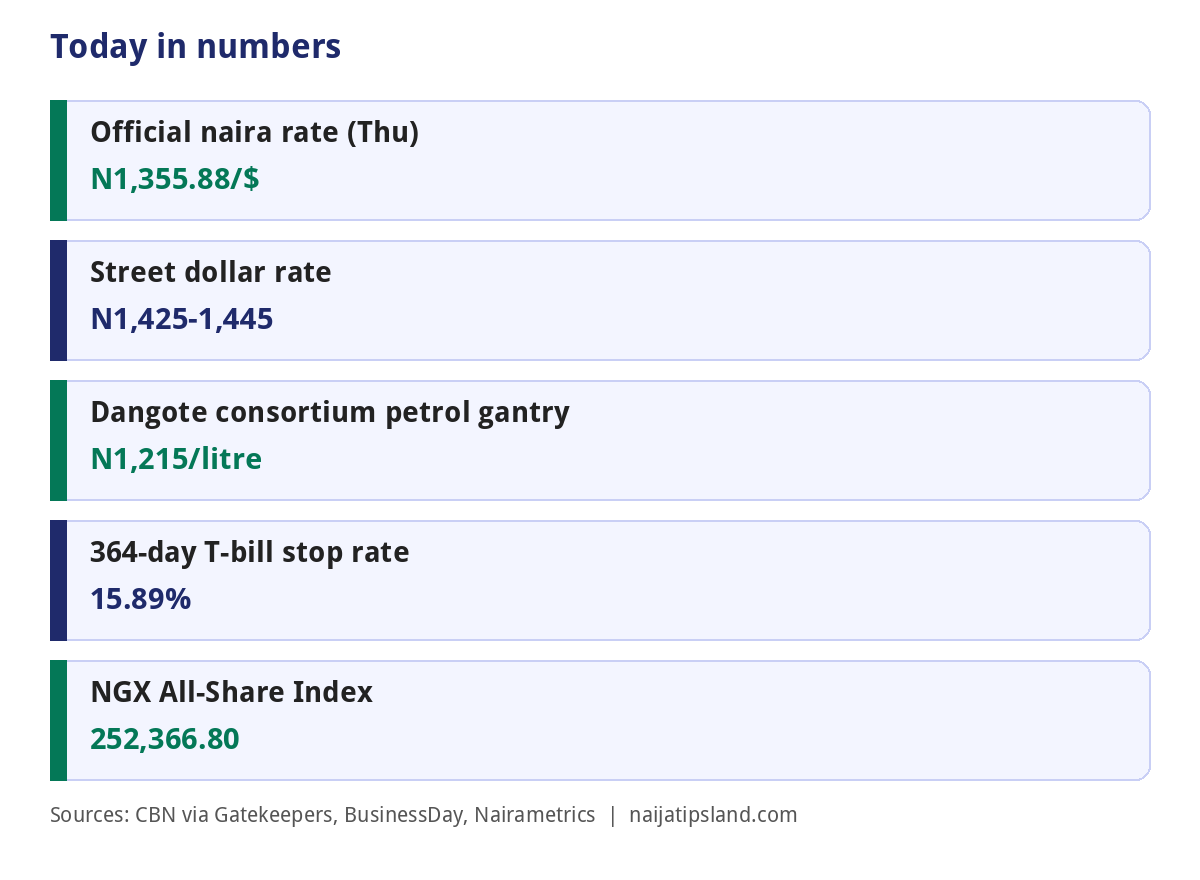
- Naira: ₦1,355.88/$ officially on Thursday; ₦1,425 to ₦1,445 on the street.
- Dangote-linked marketers cut petrol gantry price to ₦1,215 a litre; MRS pumps drop to ₦1,399 in Abuja.
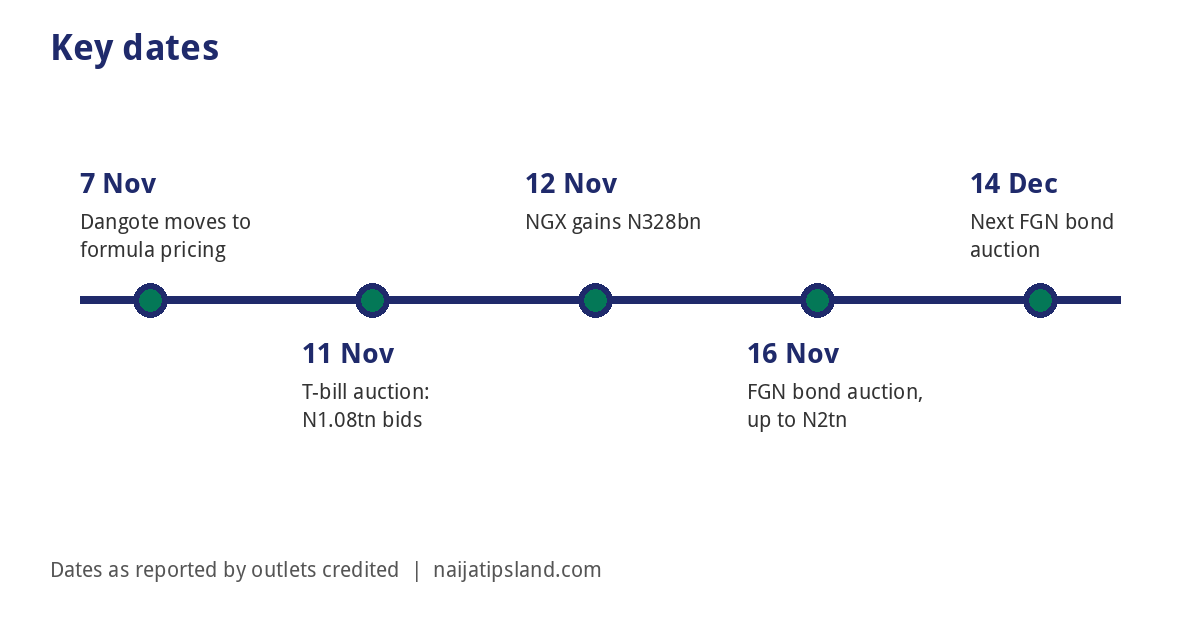
- One-year T-bill draws ₦1.08 trillion in bids at 15.89%; ₦4 trillion of bond sales planned.
- NGX All-Share Index rises 0.20% to 252,366.80; investors gain ₦328 billion.
- Big banks’ nine-month profits climb, but customer loans grow only 2.4%.
- Analysts expect October inflation to ease to around 14%.
1. Naira steady officially, still weak on the street
What happened
CBN data show the naira closed Thursday at ₦1,355.88 to the dollar at the official market, slightly firmer than ₦1,358.33 on Wednesday. On the parallel market, dealers in Lagos and Abuja quoted between about ₦1,380 and ₦1,445 depending on location, keeping a gap of roughly ₦30 to ₦90 over the official rate. Traders blame year-end demand for imports, school fees and travel.
Why it matters
A wide gap encourages people to chase street dollars and pushes up import prices. December demand usually adds pressure, so watch the rate if you need forex soon. Check our daily dollar to naira rate today page.
Source: Vanguard; Gatekeepers News.
2. Petrol prices dip at depots and some pumps
What happened
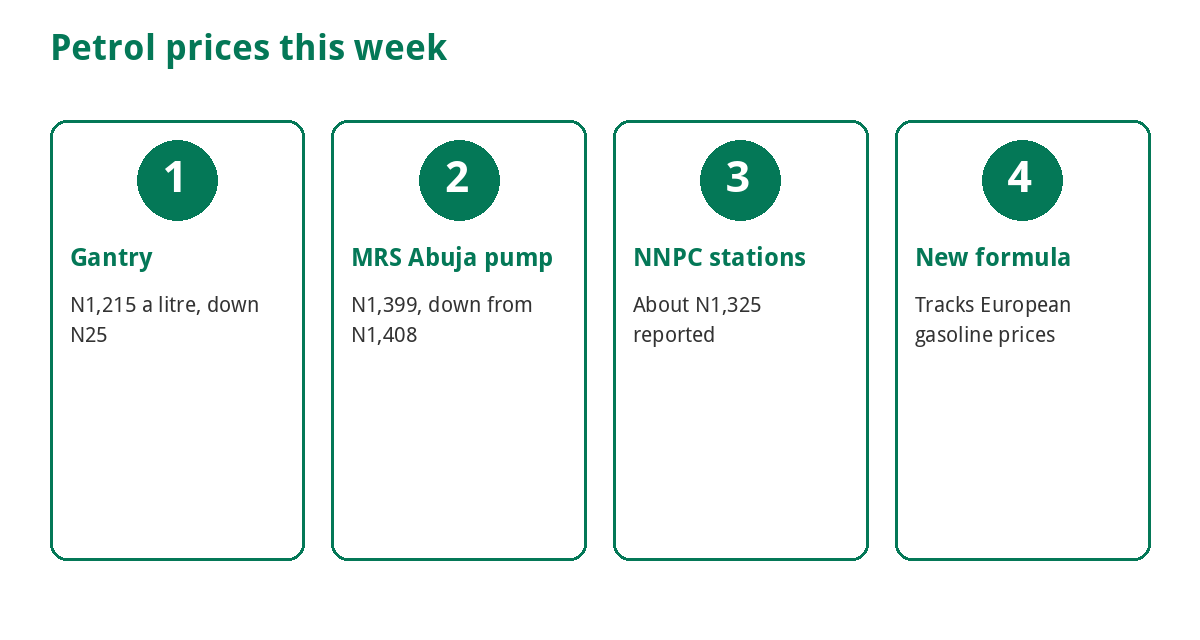
The marketers that buy petrol directly from the Dangote refinery cut their gantry price by ₦25 to ₦1,215 a litre, after the refinery trimmed its direct-buyer group from 37 firms to 25 and moved to a price formula linked to European gasoline benchmarks. MRS filling stations in Abuja reduced their pump price from ₦1,408 to ₦1,399, and depot owners lowered ex-depot prices to around ₦1,215 from as high as ₦1,290. NNPC stations were reported selling at ₦1,325. Pump prices still vary by city because of transport costs and dealer margins.
Why it matters
Small cuts help transport and food costs, but under the new formula pump prices can now move up as quickly as they come down when global gasoline prices change.
Source: BusinessDay; Daily Post; Billionaires.Africa.
3. Investors pile into one-year Treasury bills
What happened
At Wednesday’s Treasury bill auction, investors bid ₦1.08 trillion for the 364-day bill against ₦600 billion on offer. The DMO sold ₦672.91 billion of it at 15.89%, up nine basis points. Demand for the 91-day and 182-day bills was weak, at about ₦19 billion and ₦23 billion, with rates unchanged at 15.40% and 15.79%. The government also plans to raise ₦2 trillion at each of its 16 November and 14 December bond auctions, while the CBN keeps soaking up excess bank cash through OMO sales.
Why it matters
Yields near 16% make T-bills attractive for savers and fund managers, but heavy government borrowing keeps loan rates high for businesses and households.
Source: BusinessDay; Headtopics; Kanyi Daily.
4. Stocks rebound after two days of losses
What happened
The NGX All-Share Index rose 0.20%, or 505.56 points, to 252,366.80 on Thursday, and market value grew ₦328 billion to about ₦163.86 trillion. Buying in Seplat, First HoldCo and Stanbic IBTC led the gain; the oil and gas index climbed 1.90%. Fidson Healthcare, SUNU Assurances and Champion Breweries were the top percentage gainers, while International Breweries led the losers. The index is up about 62% this year but still slightly below Monday’s close.
Why it matters
Firmer oil prices tend to lift energy stocks. For retail investors, the year’s big gains mean day-to-day swings are worth watching rather than chasing.
Source: Nairametrics; Daily Post.
5. Bank profits rise, but lending barely moves
What happened
Six of Nigeria’s largest listed banks reported combined after-tax profit of ₦3.11 trillion for January to September 2026, up 7.5% from a year earlier, with total assets of about ₦195 trillion, according to their unaudited results. Separately, BusinessDay’s review of eight major lenders found customer loans grew just 2.4% to ₦55.66 trillion, while deposits rose 13.4% to ₦149.67 trillion. The CBN said 33 banks met the new capital rules by March 2026 after raising ₦4.65 trillion in total, but analysts say lenders remain cautious about extending more credit.
Why it matters
Recapitalisation was meant to help banks fund bigger projects and small businesses. So far, the extra capital is showing up in profits more than in new loans to the real economy.
Source: IBTimes Nigeria; BusinessDay.
6. October inflation expected to ease again
What happened
Ahead of the NBS release of October inflation data, United Capital Research projects headline inflation will fall to about 14.01% from 14.63% in September, helped by lower food prices. It warns that higher petrol and crude prices and a weaker naira are risks. In September, food inflation stood at 19.59%, well above the headline rate. Separately, BusinessDay reports that prices of some staples rose in major markets in October.
Why it matters
Slower inflation means prices are rising more slowly, not falling. The figure will also shape the CBN’s next interest rate decision and the returns on savings and T-bills.
Source: CNBC Africa; TG News; BusinessDay via urgent.news.
What to watch next
- NBS release of October inflation figures.
- 16 November: FGN bond auction of up to ₦2 trillion.
- Whether other marketers and NNPC follow the petrol price cuts.
- Year-end dollar demand and the parallel-market rate.
- Oil prices after Trump’s comments on Iran, and their effect on Nigeria’s reserves.
Frequently asked questions
What is the difference between the official and black market dollar rate?
The official rate is set by trading among banks and authorised dealers on the CBN-run market. The parallel rate is what street dealers charge and is usually higher because of limited supply outside banks.
Are Treasury bills safe for small savers?
They are backed by the Federal Government and usually seen as low-risk, but returns can lose value if inflation is higher than the yield. This is general information, not financial advice.
Why do pump prices differ from the Dangote gantry price?
The gantry price is what marketers pay at the refinery or depot. Pump prices add transport, storage and dealer margins, so they differ by station and city.
This roundup summarises reporting by the outlets credited under each story, in our own words. Follow Naijatipsland Updates on WhatsApp for the next edition. Spotted an error? Tell us and we will correct it under our editorial policy.