
How to Ship Goods From the UK to Nigeria (2026): Air vs Sea Cargo Prices, Barrels, Customs Rules and Christmas Deadlines

Last updated 29 November 2026. Prices are taken from UK shippers’ own published rate lists in October and November 2026. They are guides, not quotes, and they change, so always get a written quote before you pay.
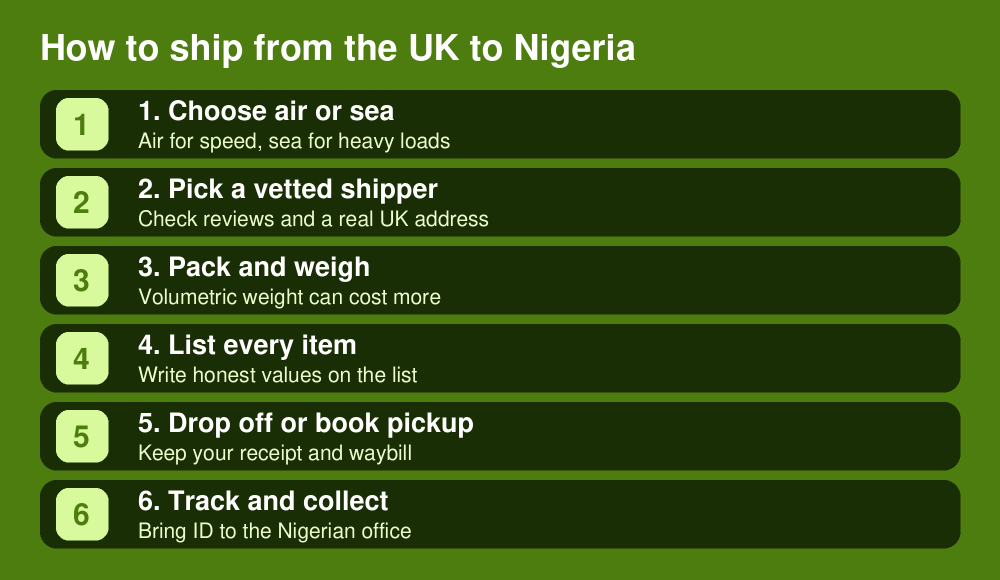
Every year, thousands of us in the UK send boxes, barrels and Ghana Must Go bags home to Nigeria. Clothes for the children, provisions for the parents, a laptop for a cousin, building materials for the house in the village. Doing it well saves you money and stress. Doing it badly can mean goods stuck at Apapa for weeks, surprise duty bills, or worse, a fake cargo agent who disappears with your money.
This guide covers what it costs to ship by air and by sea, how weight is worked out, what Nigerian Customs will charge or stop, the April 2026 prohibition list, Christmas deadlines and how to choose a shipper you can trust.
Air or sea: which should you choose?
The short answer is air for small, light or urgent things and sea for anything heavy or bulky.
Air cargo
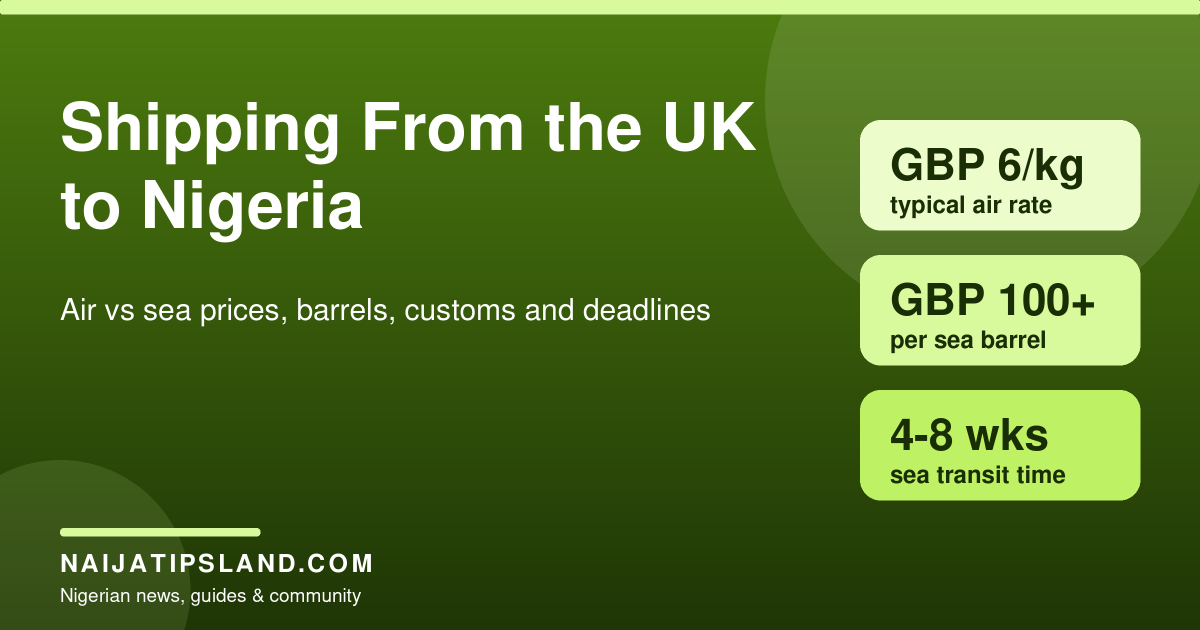
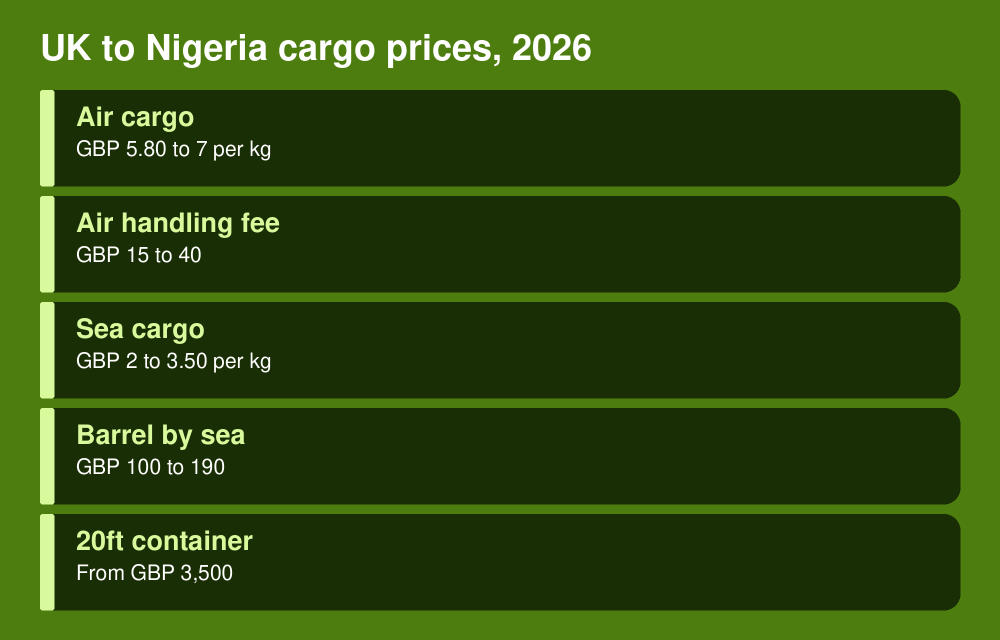
Air cargo usually reaches Lagos in about 5 to 10 working days. Most UK cargo companies on the Nigeria route charge roughly £5.80 to £7 per kilo, plus a handling fee per shipment. Some examples from published price lists:
- County Cargo lists £6 a kilo to Lagos and £6.50 to Abuja, plus a £15 handling fee.
- R-Zone and Precebol list £5.80 a kilo plus a £20 handling fee, with Precebol setting a 10kg minimum.
- GBAS Worldwide lists £6 a kilo with no minimum weight, plus £20 handling, to its Lagos office.
- NaijaCargo Express lists door-to-door air from £6.50 a kilo to Lagos and £7 to other states.
So a 20kg box by air usually lands somewhere around £135 to £180 all in. Express couriers like DHL are faster, often 3 to 5 working days, but cost much more per kilo.
Sea cargo
Sea cargo takes longer, usually 4 to 8 weeks to Apapa or Tin Can Island, plus any port delays. It is much cheaper for heavy goods. Published rates on the corridor run from about £2 to £3.50 a kilo, often with a minimum of 30kg. Fixed prices are common too:
- A barrel (45 to 55 gallons) costs around £100 to £190 to ship depending on the company and whether they supply the drum. GBAS lists £100 for your own drum, Precebol £120, and County Cargo £190 for a jumbo drum with Apapa clearing included.
- A Ghana Must Go bag is about £50 to £70 and a large box £70 to £100.
- A full 20ft container starts from about £3,500 with some firms and £6,500 with others, so shop around.
How your price is worked out
Cargo companies charge on whichever is greater: the actual weight or the volumetric weight. Volumetric weight is how much space your box takes up. For air cargo, it is usually length times width times height in centimetres, divided by 6,000. So a light but bulky box, say a big duvet or a pram, can cost more than you expect.
A few tips that save money:
- Pack tightly and fill gaps so you aren’t paying to ship air.
- Send heavy, non-urgent things like foodstuff, toiletries and household items by sea.
- Keep phones, laptops and documents for air or carry them yourself.
- Ask if the price is to the shipper’s Lagos office or to the door. Door delivery and delivery outside Lagos usually cost extra.
- Ask whether customs clearance is included. Many firms include it for ordinary personal goods but charge duty separately.
Customs duty: what you might pay in Nigeria
Everything that arrives in Nigeria passes through the Nigeria Customs Service. How much you pay depends mostly on what you send and who it is for.
- Used personal effects of a returning resident: under the Nigeria Customs Service Act 2023, used personal and household belongings of a Nigerian coming home after living abroad for at least nine months can be cleared duty free, as long as they are for the household’s own use and not for sale.
- Gifts and goods for other people: these are not personal effects. A carton for your aunt’s shop or several identical new items will be treated as commercial and assessed for duty.
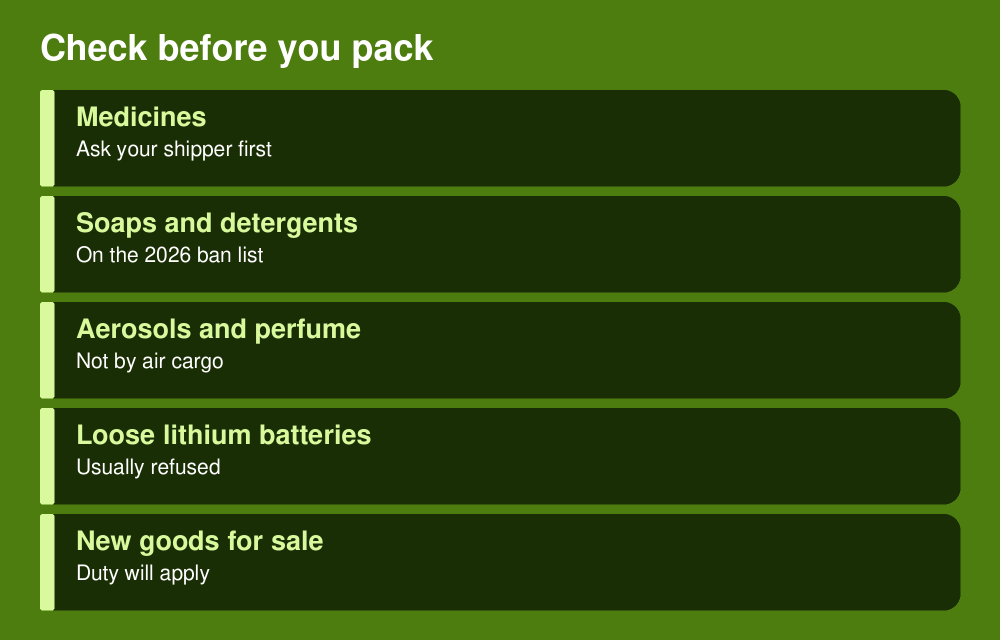
- New items in original packaging: customs often treat these as commercial goods, even inside a personal shipment.
- Phones and laptops: many shippers charge a flat handling fee per device to cover clearance.
The safest habit is an honest, itemised packing list. Write what is in each box, whether it is new or used and a fair value. Under-declaring to save money is the fastest way to get a whole shipment held.
The 2026 import prohibition list
On 1 April 2026 the Federal Government brought in a revised import prohibition list under the 2026 Fiscal Policy Measures. It covers 17 categories of goods from countries outside ECOWAS, and the UK is outside ECOWAS. The list, as published by the Ministry of Finance and reported by TheCable, BusinessDay and Punch, includes:
- frozen poultry, pork, beef and bird eggs
- refined vegetable oil
- flavoured or coloured sugar in retail packs
- cocoa butter and cocoa powder
- tomatoes and tomato paste
- sweetened or flavoured water and soft drinks
- bagged cement
- medicines under several headings, and waste pharmaceuticals
- NPK fertiliser
- soaps and detergents
- corrugated cartons and boxes
- glass bottles over 150ml
- some coated steel roofing sheets
- ballpoint pens and refills
The list is aimed at trade, so it bites hardest on goods in commercial quantities. Even so, this is exactly the kind of thing people pack into barrels: soap, detergent, tomato paste, vegetable oil, sweets and medicine. Ask your shipper what they will accept before you pack, keep quantities clearly personal, and leave out medicines unless you have checked first. Weapons, counterfeit goods and drugs are banned whatever the quantity.
On the UK side, airlines restrict dangerous goods in air cargo. Aerosols, perfumes, nail polish, gas canisters and loose lithium batteries are usually refused by air. Some can go by sea, so ask.
Christmas and January deadlines
December is the busiest season on the UK to Nigeria route. Warehouses fill up and ports get congested. If you want goods to arrive before Christmas:
- Sea cargo should already be on its way by now. Anything booked in late November or December is likely to arrive in January or later.
- Air cargo cut-offs are usually in the first half of December. GBAS Worldwide, for example, has told customers to book Christmas air cargo by 11 December 2026. Check your own shipper’s date and book early.
- Expect some delay at Lagos airport and the ports in December and early January.
If you are sending money for Christmas too, our guide to sending money to Nigeria at Christmas explains the best times and how to avoid scams.
How to choose a shipper you can trust
Most cargo companies on this route are small family businesses, and many are reliable. A few are not. Before you hand over goods or money:
- Check the company on Companies House and make sure it has a real UK warehouse address, not just a WhatsApp number.
- Read recent reviews on Google and Trustpilot, and ask friends who have used them.
- Pay into a business bank account in the company’s name, never a personal account belonging to an “agent”.
- Get a written quote and a receipt or waybill with your tracking number.
- Ask about insurance. Basic cover is often limited, so declare high-value items and pay for extra cover if needed.
- Be wary of prices far below everyone else’s, and of anyone who asks for an extra “customs release” payment by bank transfer after your goods have left.
Fake shipping and customs messages are a common scam. If someone claims your goods are held and asks you to pay a fee to a personal account, call the shipper on the number from their website, not the one in the message. If a transfer you made goes wrong, our guide on delayed or frozen UK to Nigeria transfers may help.
Shipping building materials and bigger items
If you are building at home, it is tempting to ship tiles, sanitary ware or fittings from the UK. Do the maths first. Many items are cheaper in Nigeria once you add shipping, duty and port charges, and some, like cement and certain roofing sheets, are on the prohibition list. For a fuller picture of building from abroad, read how Nigerians in the diaspora can build a house in Nigeria.
Cars and full household moves need a proper freight forwarder and a licensed clearing agent in Nigeria. Budget for duty, port charges and storage, and never let goods sit at the port waiting for you, because storage charges build up daily. If you are planning a bigger move the other way, our relocation cost guide covers what to budget.
Frequently asked questions
What is the cheapest way to send goods from the UK to Nigeria?
Sea cargo, especially a barrel or boxes charged per kilo. Rates start from about £2 to £3.50 a kilo, or about £100 for a barrel, against about £6 a kilo by air.
How long does cargo take from the UK to Nigeria?
Air cargo usually takes 5 to 10 working days. Sea cargo usually takes 4 to 8 weeks, and longer in December and January.
Do I pay duty on gifts I send to family?
Often yes. Duty-free relief is mainly for used personal effects of a returning resident. Gifts and new goods can be assessed for duty, though small, clearly personal parcels are often cleared by the shipper for a set fee.
Can I send food to Nigeria from the UK?
Packaged, non-perishable food is commonly sent. Fresh produce, meat and anything on the prohibition list, such as tomato paste and refined vegetable oil, can be refused or seized. Check with your shipper.
Can I send medicine?
Medicines are on the 2026 prohibition list under several headings, and NAFDAC controls their import. Don’t pack medicines without checking with your shipper first, and keep any prescription medication for personal use in its original packaging with a copy of the prescription.
What happens if my shipment is held by customs?
Your shipper or their clearing agent will usually contact you with the reason and any duty to pay. Pay only through the official shipper and ask for a customs duty notice or receipt.
Sources
- County Cargo: Shipping rates to Nigeria from the UK (2026 price list)
- R-Zone Enterprises: Shipping to Nigeria from the UK, 2026 guide
- Precebol Logistics: UK to Nigeria shipping rates
- GBAS Worldwide: Shipping to Nigeria price list
- NaijaCargo Express: UK to Nigeria shipping prices (2026)
- TheCable: FG bans importation of cement, poultry and pharmaceutical products from outside ECOWAS (April 2026)
- BusinessDay: Full list of products under Nigeria’s non-ECOWAS import ban (April 2026)
- Punch: FG reviews tariffs on 192 import product categories (July 2026)
- Impresship: Personal effects and Nigeria Customs, NCS Act 2023 sections 165 and 166
- Nigeria Customs Service
Join the discussion
Have you tried this, or do you have a question we did not answer? Be the first to share your experience. Leave a comment below. Every comment is read by the editor before it appears.






Editor note: which cargo company have you used from the UK to Nigeria, and did your goods arrive on time and complete? Share your experience below, good or bad, so other readers can choose wisely. – Ade