Business News Today, 19 November 2026: Naira at 18-Day Low, NGX Sheds N642bn, Petrol Falls to N1,289


Last updated: 19 November 2026 · By Naijatipsland Editorial Team · Editorial policy
Morning roundup · Thursday 19 November 2026 · By Ade Adeniyi, Founder and Editor
Good morning. The naira slipped to its weakest official level in 18 days, the stock market lost another ₦642 billion, and petrol is finally getting cheaper at some pumps. The CBN and NNPC signed a deal on oil dollars, and FAAC shared ₦2.44 trillion. Here is the money news of the last 24 hours and what it means for your pocket.
Today at a glance
- Naira closes at ₦1,363.23/$ officially and around ₦1,460 on the street; reserves dip to $54.76 billion.
- NGX All-Share Index falls 0.40% as Aradel drops the daily maximum of 10%.
- Pump prices fall to ₦1,289 at some Lagos NNPC stations after Dangote cuts its gantry price to ₦1,159.
- CBN and NNPC sign an agreement on oil and gas proceeds and FX inflows.
- FAAC shares ₦2.441 trillion from October revenue.
- National Assembly passes a BOFIA amendment that puts big fintechs under tighter CBN supervision.
1. Naira at an 18-day low as reserves slip
What happened
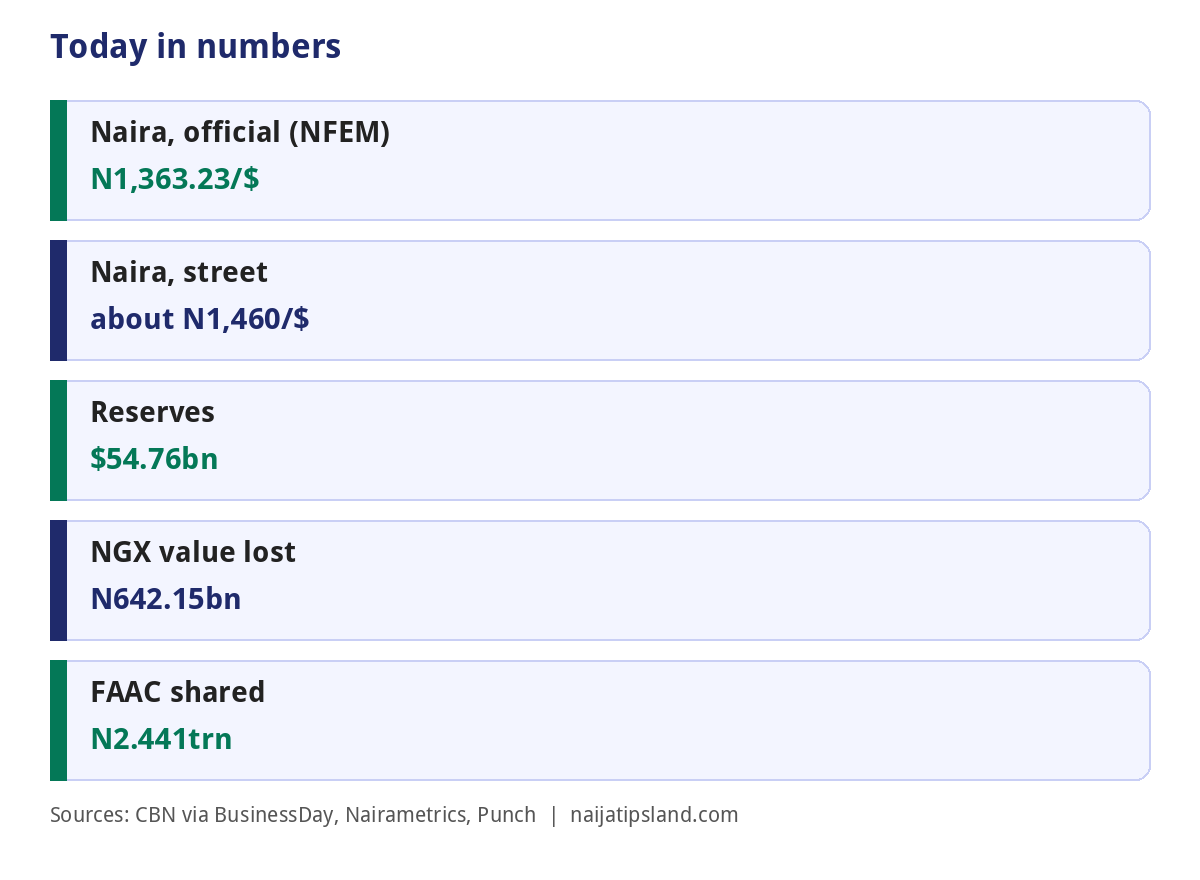
CBN data showed the naira weakened 0.55% on Wednesday to ₦1,363.23 per dollar at the Nigerian Foreign Exchange Market, its weakest close in 18 days, from ₦1,355.80 on Tuesday. On the parallel market the dollar rose by ₦15 to about ₦1,460, according to BusinessDay, so the gap between the two markets widened to around ₦97. Other trackers quoted street rates between ₦1,440 and ₦1,453. External reserves have fallen by about $500 million from their October peak of $55.26 billion to $54.76 billion as of 17 November.
Why it matters
December brings school fees abroad, holiday travel and import orders, all of which need dollars. With inflows slowing ahead of the election, expect the street rate to stay under pressure. If you need to send money or pay fees in dollars, check the latest figures on our dollar to naira page before you move.
Source: BusinessDay; Arbiterz.
2. NGX loses ₦642 billion as Aradel hits its daily limit
What happened
The All-Share Index fell 989 points, or 0.40%, to 248,329.65 on Wednesday, wiping ₦642.15 billion off market value, which now stands at about ₦161.23 trillion. Aradel Holdings fell the maximum 10% to ₦1,166.40, dragging the oil and gas index down 3.47%. Zenith Bank, UBA and GTCO also slipped, and the banking index lost 0.46%. Critical Minerals Financing Corp, McNichols, Chellarams and LivingTrust Mortgage Bank were among the top gainers. Volume dropped about 20% to 451 million shares.
Why it matters
The market is still up more than 60% this year, so some investors are taking profits before year-end. If you hold oil or bank stocks, a few rough sessions are normal after a run like this; it is a reason to review your plan, not to panic.
Source: Nairametrics; GovBusiness Journal.
3. Petrol prices start to fall at the pump
What happened
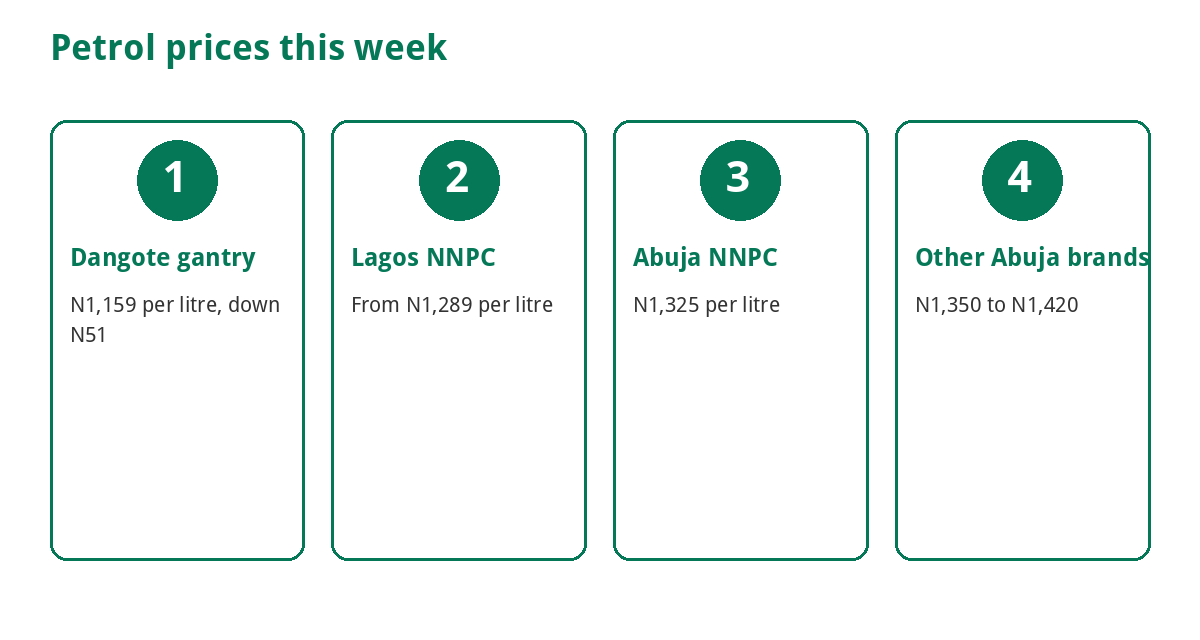
Dangote Refinery cut its petrol gantry price by ₦51 to ₦1,159 a litre, and Lagos depot prices were reported near ₦1,150 on Wednesday. Some NNPC stations in Lagos now sell at ₦1,289, down from about ₦1,370, while NNPC outlets in Abuja were at ₦1,325. Other brands still charge more: MRS, Ranoil and Empire Energy were between ₦1,399 and ₦1,420 in Abuja, according to a Legit.ng survey. The Guardian found many marketers slow to pass on the cuts. Import parity is estimated at about ₦1,063, below Dangote’s price.
Why it matters
Shop around. The gap between the cheapest and dearest stations in Abuja is close to ₦100 a litre. Lower fuel costs should, in time, ease transport fares and food prices, but only if marketers keep cutting.
Source: Legit.ng; The Guardian; Lagos Metropolitan.
4. CBN and NNPC sign a deal on oil dollars
What happened
CBN Governor Olayemi Cardoso and NNPC chief Bayo Ojulari signed a memorandum of understanding in Abuja on Wednesday. Cardoso said it formalises decades of working together and will improve how oil and gas proceeds are settled and how predictably dollars flow into the FX market. The agreement covers energy financing, gas projects, linking the two treasury systems, payment automation and cybersecurity, with joint steering and working committees. NNPC’s finance chief Adedapo Segun said the company will align contractor payments and FX conversions with CBN rules to support the naira. NNPC also tied the deal to its goal of lifting crude output from about 1.8 million to 3 million barrels a day.
Why it matters
When oil money reaches the official market on a steady schedule, the CBN has more room to defend the naira. The test is in the numbers: watch whether reserves and FX inflows improve in the coming months.
Source: TheCable; BusinessDay.
5. FAAC shares ₦2.441 trillion
What happened
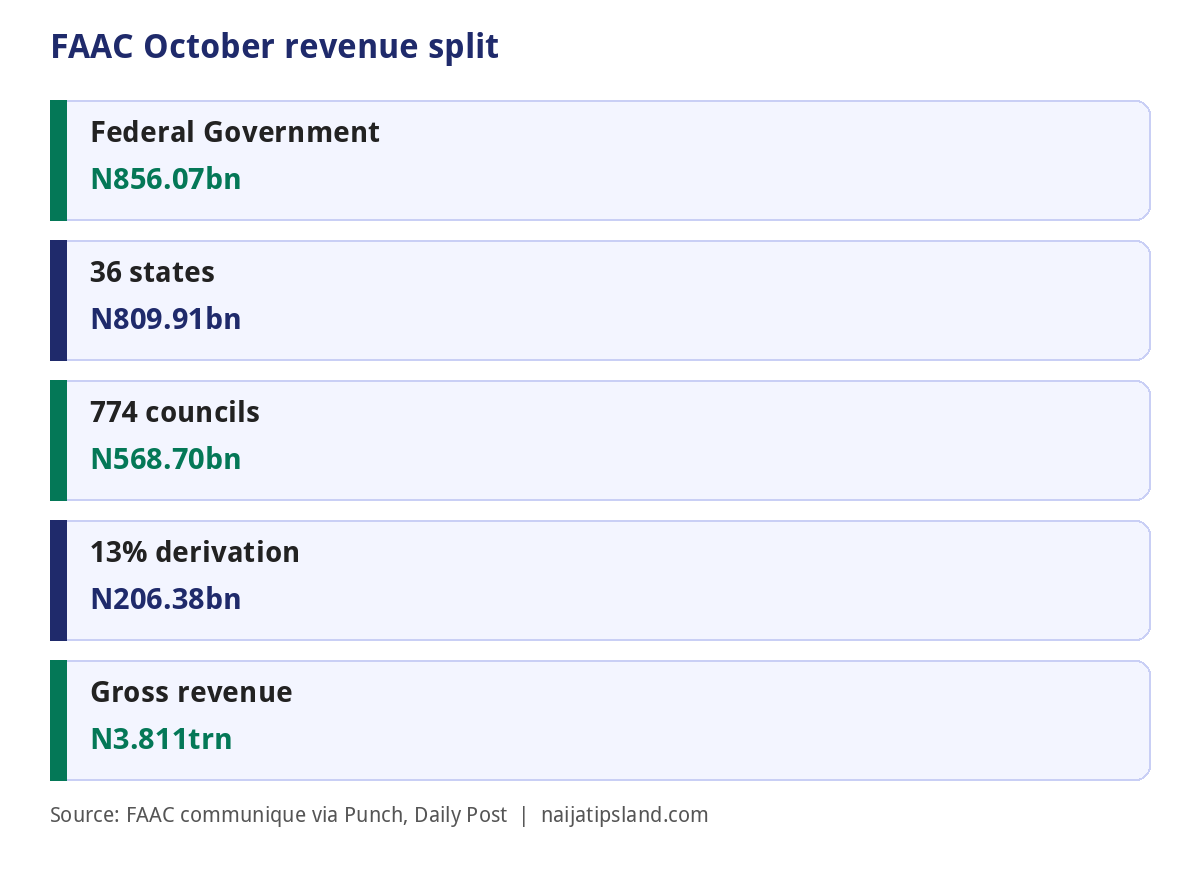
The Federation Account Allocation Committee shared ₦2.441 trillion from October revenue at its November meeting. The Federal Government got ₦856.07 billion, the 36 states ₦809.91 billion and the 774 councils ₦568.70 billion, with ₦206.38 billion going to oil-producing states as 13% derivation. VAT made up ₦752.49 billion of the pool. Punch noted the total was ₦13 billion more than last month even though gross revenue fell 2.6% to ₦3.811 trillion, and it remains well below August’s record ₦3.007 trillion.
Why it matters
FAAC money pays salaries and funds roads and clinics in your state and council. With a campaign season on, it is worth asking your governor and chairman how this month’s share is being spent.
Source: Punch; Daily Post.
6. Big fintechs face tighter CBN supervision
What happened
The House of Representatives on Wednesday passed a bill amending the Banks and Other Financial Institutions Act 2020, sponsored by House Leader Julius Ihonvbere. BusinessDay reports that the Senate has also passed it, so it now goes to the President. It lets the CBN label large non-bank institutions, including fintechs, as Systemically Important Institutions based on their size, number of users, transaction values or links to banks and payment systems. Those named would face stricter governance, cybersecurity and reporting rules, stress tests and direct CBN access to their systems, and a public register would list them.
Why it matters
Millions of Nigerians now keep money on apps rather than in traditional banks. Tighter rules could make outages and failures less likely, though fintechs may pass some compliance costs to users through fees.
Source: BusinessDay.
What to watch next
- Whether the CBN steps up dollar sales to hold the official rate near ₦1,360.
- Weekly reserves data and any sign of new FX inflows from the NNPC deal.
- Further petrol price cuts from depots and big marketers.
- Presidential assent to the BOFIA amendment.
- NGX trading as fund managers close their books for the year.
Frequently asked questions
Why is the naira weakening again?
Demand for dollars rises in the last quarter for imports, travel and school fees, while foreign investors are holding back before the 2027 elections. Reserves have also dipped slightly from their October peak.
Why are petrol prices different from station to station?
Marketers buy at different times and prices, then add transport and running costs. Some pass on cuts quickly and others wait, so it pays to compare.
What does the CBN-NNPC agreement change for ordinary Nigerians?
Nothing overnight. The aim is a steadier flow of oil dollars into the official market, which over time can help keep the exchange rate more stable.
This roundup summarises reporting by the outlets credited under each story, in our own words. Follow Naijatipsland Updates on WhatsApp for the next edition. Spotted an error? Tell us and we will correct it under our editorial policy.