Business News Today, 17 November 2026: Inflation Eases to 14.06%, NGX Buys Nairobi Stake, Pump Prices Fall

Last updated: 17 November 2026 · By Naijatipsland Editorial Team · Editorial policy
Morning roundup · Tuesday 17 November 2026 · By Ade Adeniyi, Founder and Editor
Good morning. The October inflation number is out, and it fell again, to 14.06%. That puts the spotlight on next week’s CBN rate meeting, even as the naira slips on year-end dollar demand. On the stock market, NGX Group has bought into Kenya’s exchange, and petrol buyers are finally seeing cheaper pumps. Here is the business news that matters this morning.
Today at a glance
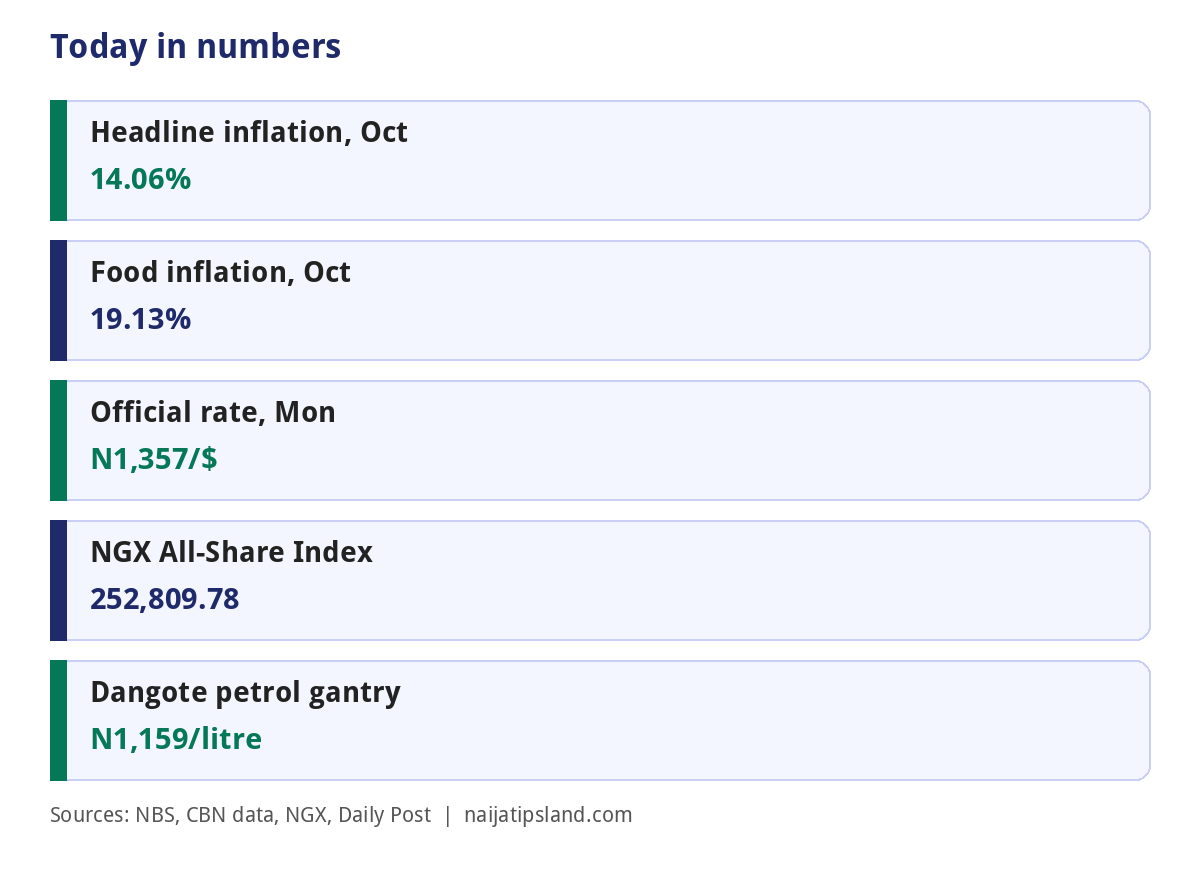
- Headline inflation eases to 14.06% in October; food inflation 19.13%.
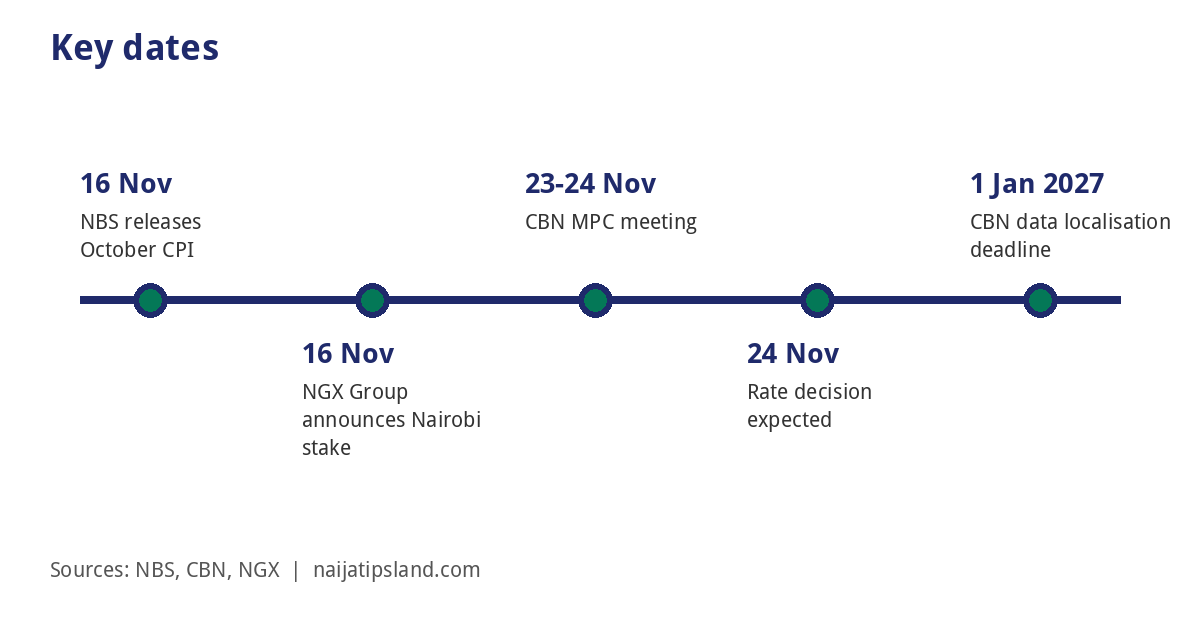
- CBN’s MPC meets 23 to 24 November; analysts lean towards a hold at 23%.
- Naira weakens to about ₦1,357/$ officially; parallel market up to ₦1,425.
- NGX gains ₦351 billion as NGX Group buys 10% of the Nairobi exchange.
- Pump prices fall as Dangote and import costs come down.
- CBN: no grace period on the 1 January data localisation deadline; banks report stronger loan demand.
1. Inflation falls to 14.06% in October
What happened
The National Bureau of Statistics said on Monday that headline inflation eased to 14.06% in October from 14.63% in September, and well below 18.97% a year earlier. Food inflation also slowed, to 19.13% from 19.59%. The catch is the monthly figure: prices rose 0.43% in October compared with 0.06% in September, which means the pace of price increases picked up during the month. The index uses the rebased 2024 CPI.
Why it matters
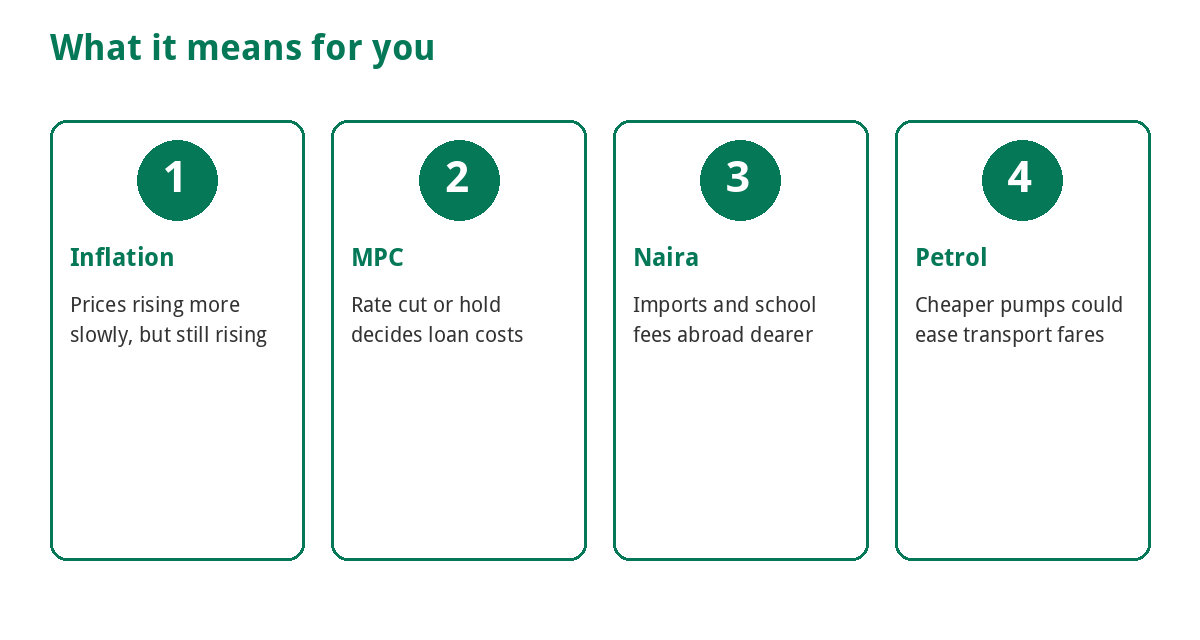
Year-on-year inflation is still falling, which supports the case for cheaper loans. But the faster monthly rise is a warning sign, and many households will say the price of food at the market does not feel lower yet.
Source: Peoples Gazette; Blueprint; Economic Confidential.
2. CBN rate meeting set for 23 and 24 November
What happened
The Central Bank has scheduled its 308th Monetary Policy Committee meeting for 23 and 24 November. The monetary policy rate stands at 23%. Coronation Research expects the committee to hold the rate while it judges how lasting the slowdown in inflation is, and other investment firms say pressure on the naira and expected pre-election spending argue for caution, even though falling inflation strengthens the case for a cut.
Why it matters
A cut would lower borrowing costs for businesses and could lift share prices, but it might add to pressure on the naira. A hold keeps returns on savings and treasury bills higher for now.
Source: Market Forces Africa; TVC News; Daily Post.
3. Naira slips on year-end dollar demand
What happened
The naira weakened to about ₦1,357.19 per dollar in the official Nigerian Foreign Exchange Market on Monday, from ₦1,353.97 at Friday’s close, according to CBN data reported by Market Forces Africa. Interbank trades ranged between about ₦1,353.50 and ₦1,360. In the parallel market, Lagos and Abuja dealers quoted between ₦1,390 and ₦1,425 to sell, depending on the source. Dealers blame import bills and corporate payments that typically rise towards year-end.
Why it matters
A weaker naira makes imported goods, school fees abroad and foreign travel dearer, while it gives a little more to families receiving money from relatives overseas. See live rates on our dollar to naira exchange rate today page.
Source: Market Forces Africa; Osun Defender.
4. NGX gains ₦351 billion; NGX Group buys into Nairobi exchange
What happened
The NGX All-Share Index rose 0.21% on Monday to 252,809.78 points, adding about ₦351 billion to market value, which closed at ₦164.15 trillion. Consumer goods (up 0.80%) and industrial stocks (up 0.60%) led, while banking slipped 0.25%. Nigerian Exchange Group itself topped the gainers, up 10% to ₦182.60, on the day it announced it had bought a 10% stake in the Nairobi Securities Exchange. NGX did not disclose the price; Kenya’s Business Daily estimated it at about KSh900 million. The deal follows NGX’s 2024 investment in the Ethiopian Securities Exchange.
Why it matters
The Nairobi stake gives the Nigerian exchange earnings outside Nigeria and could, over time, make it easier for investors to trade across African markets. Trading volume fell sharply on Monday, though, so the rally was not broad.
Source: Nairametrics; TheCable; Business Daily Africa.
5. Pump prices come down as refinery and import costs fall
What happened
Following Dangote Refinery’s cut of its gantry price to ₦1,159 a litre from ₦1,210, depot owners are now selling petrol at about ₦1,175 to ₦1,215, and MRS stations dropped their pump price to ₦1,399. In Abuja, pump prices range from about ₦1,325 to ₦1,420. NNPC and other retailers have cut prices by between ₦9 and ₦80 in under two weeks. The landing cost of imported petrol fell to about ₦1,063 on 13 November, cheaper than Dangote’s price, which could push prices lower still. Brent crude traded below $92 on Tuesday morning.
Why it matters
Fuel feeds into transport fares and food prices. If the cuts hold, they could help keep inflation falling in the months ahead.
Source: MSME Africa (Daily Post survey); The Gazelle News; The Economic Times.
6. CBN: no grace period on data rule; banks see stronger loan demand
Data localisation deadline stands
In updated answers on its payment data localisation circular, the CBN said banks and fintechs may use cloud and other third-party providers, but must keep payment transaction data, including backups and disaster-recovery copies, inside Nigeria. It said the 1 January 2027 compliance date stands, with no automatic grace period, and that licensed firms remain fully responsible even when a vendor fails.
Household borrowing appetite rises
Separately, the CBN’s third-quarter Credit Conditions Survey showed demand for consumer loans to households rose, with lenders also reporting more credit available across secured, unsecured and corporate lending.
Why it matters
Fintechs relying on offshore cloud servers have about six weeks to comply or face sanctions. More credit can help businesses and households, but only if borrowers can handle the repayments at today’s interest rates.
Source: The Sun; ThisDay via AllAfrica.
What to watch next
- The MPC decision on 24 November: hold at 23% or a first cut in months.
- Whether year-end dollar demand pushes the naira further this week.
- Further petrol price cuts if import costs stay below Dangote’s gantry price.
- Any price or detail on NGX Group’s Nairobi deal.
- Fintech readiness for the 1 January data localisation deadline.
Frequently asked questions
If inflation fell, why are prices still rising?
The 14.06% figure compares prices with a year ago, so prices are still going up, just more slowly. October’s monthly rise of 0.43% shows prices climbed faster than in September.
When will the CBN announce its rate decision?
The MPC meets on 23 and 24 November, and the decision is usually announced at a press briefing at the end of the second day.
Why is the parallel market rate higher than the official rate?
Street dealers serve people who cannot easily get dollars through banks, and they price in that demand and risk, so they usually charge more than the official window.
This roundup summarises reporting by the outlets credited under each story, in our own words. Follow Naijatipsland Updates on WhatsApp for the next edition. Spotted an error? Tell us and we will correct it under our editorial policy.