

Last updated: 14 November 2026 · By Naijatipsland Editorial Team · Editorial policy
A late period, a strange taste in your mouth or sudden tiredness can leave you wondering whether you could be pregnant. Once you know, the next question is almost always the same: when is the baby due? This guide sets out the early signs of pregnancy listed by the NHS, when a pregnancy test will be reliable, how a due date is worked out (with a worked example you can copy), why scans can change the date and what to do next. It is written for women in Nigeria and for Nigerians in the UK and diaspora, and it is general information, not medical advice.
Early signs of pregnancy
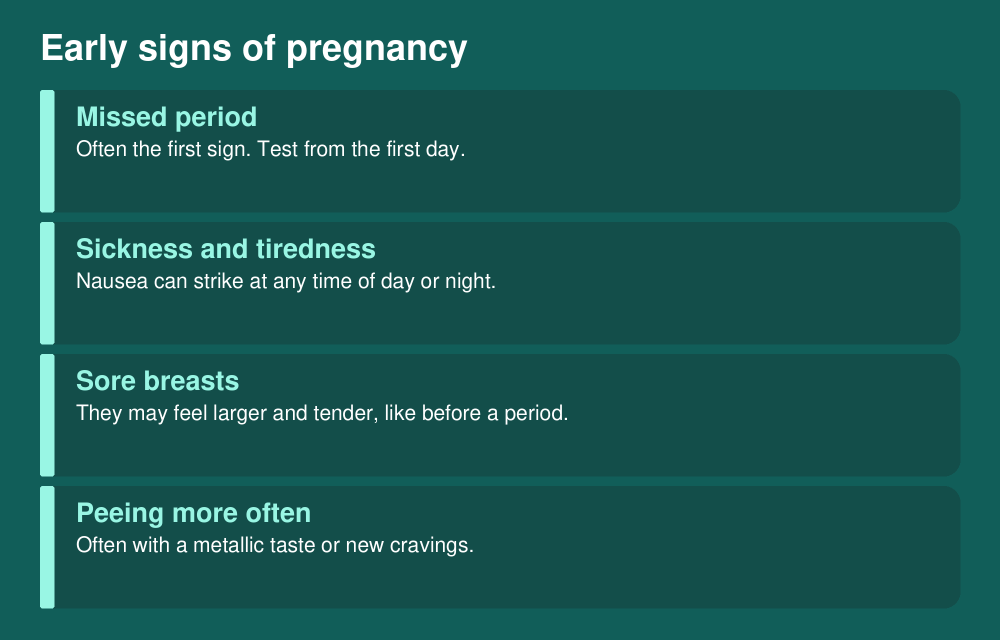
The NHS says symptoms and early signs of pregnancy usually start when you are around 4 to 6 weeks pregnant, and that not everyone has all of them. Signs to look out for include:
- a missed period
- light bleeding or spotting around the time your period is due, known as implantation bleeding
- feeling or being sick, which can happen at any time of the day or night, not only in the morning
- extreme tiredness after your usual daily activities
- sore breasts, which may feel larger and tender
- needing to pee more often without pain or discomfort
- constipation
- more vaginal discharge without soreness or irritation
- a metallic taste in your mouth
- sensitivity to smells, and cravings or dislikes for foods you normally enjoy
- mood changes
Many of these signs can also be caused by other things, such as an approaching period, stress or illness, so they cannot confirm a pregnancy on their own. NHS Best Start in Life also points out that in the first weeks you may have no symptoms at all and still be pregnant.
When to take a pregnancy test
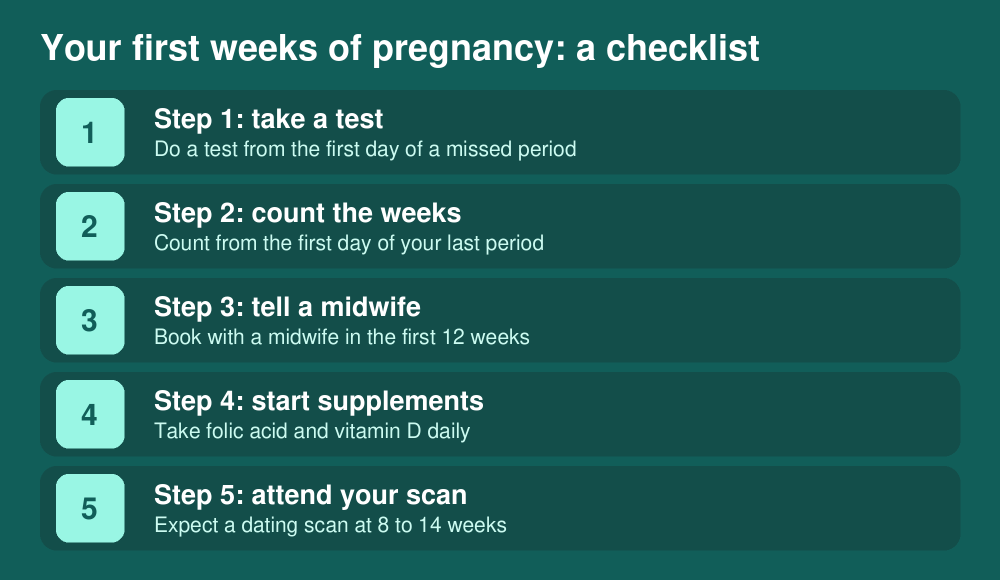
A home pregnancy test is a reliable way to check. All pregnancy tests detect the hormone hCG (human chorionic gonadotrophin), which starts to be produced around 6 days after fertilisation. The NHS says most tests can be used from the first day of a missed period. If you do not know when your next period is due, do the test at least 21 days after you last had unprotected sex. You can use urine collected at any time of day, not only the first wee of the morning. Some very sensitive tests can be used even before a period is missed.
If you get a negative result but still think you are pregnant, the NHS advises waiting a few days and trying again. Speak to your GP if a second test is negative but your period has still not arrived. If you have had assisted conception such as IVF, your clinic will tell you when to test, usually about 2 weeks after the embryo transfer.
How pregnancy weeks are counted
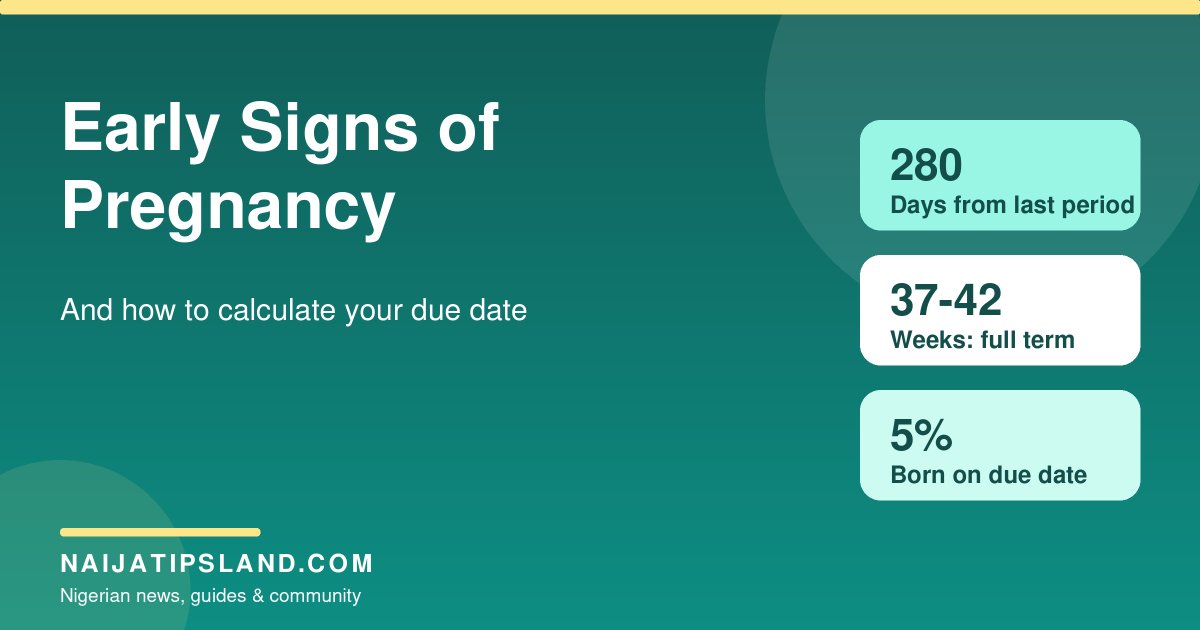
This is the part that surprises most people. Pregnancy is dated from the first day of your last period, not from the day you conceived. Conception usually happens about 2 weeks later, so by the time you miss a period you are already around 4 weeks pregnant if you have a 28-day cycle, according to NHS inform. That is why the NHS says pregnancy normally lasts from 37 to 42 weeks from the first day of your last period, with 40 weeks as the standard length.
How to calculate your due date
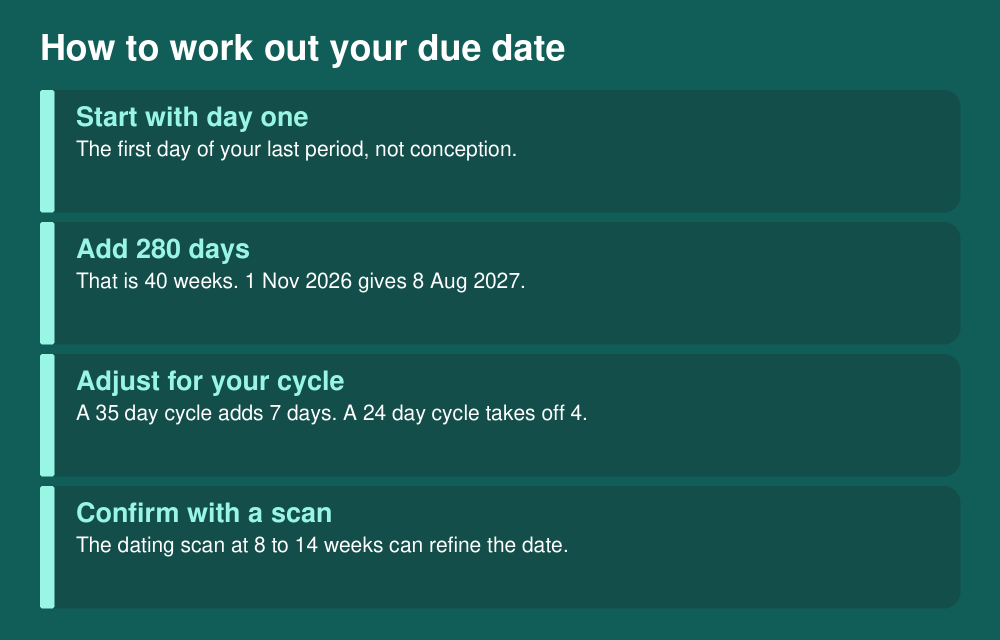
The estimated due date (EDD) is usually worked out with a simple method called Naegele’s rule: take the first day of your last menstrual period and add 280 days, which is exactly 40 weeks. The rule assumes a 28-day cycle with ovulation around day 14.
Worked example. Suppose your last period began on 1 November 2026. Adding 280 days gives 8 August 2027. You can get the same answer by adding 1 year, taking away 3 months and adding 7 days to the first day of your last period: 1 November 2026 becomes 1 November 2027, then 1 August 2027, then 8 August 2027.
If your cycle is not 28 days. Ovulation does not always happen on day 14. If your cycle is longer, ovulation is later and your due date moves later; if it is shorter, the date moves earlier. The usual adjustment is the difference between your cycle length and 28 days. In the example above, a 35-day cycle moves the date forward by 7 days to about 15 August 2027, and a 24-day cycle moves it back by 4 days to about 4 August 2027. The NHS due date calculator lets you enter your cycle length to do this for you.
If you do not know your last period date. The NHS says to speak to a midwife or GP, because the calculator needs the first day of your last period. Irregular cycles, recent hormonal contraception or breastfeeding can all make the date unreliable, and a scan can settle it.
Why your scan date may replace your calculated date
Your midwife will offer a dating scan, usually between 8 and 14 weeks, often around 12 weeks. The NHS says this scan can estimate how many weeks pregnant you are more accurately than the calendar can. The sonographer measures the baby from head to bottom and compares it with standard growth charts. In practice, when the scan date and the calendar date differ by more than about a week, maternity services generally use the scan date for your records, screening tests and appointments. Your midwife will tell you which date is yours.
The World Health Organization (WHO) also recommends one ultrasound scan before 24 weeks of pregnancy to estimate gestational age, to detect twins and to spot some problems early.
How likely is it that your baby arrives on the due date?
Not very. A due date is a midpoint, not a promise. Estimates suggest only around 5 in 100 babies are born on their exact due date. NHS inform says most babies are born in the 2 weeks before or after the due date, and the NHS treats anything from 37 to 42 weeks as the normal range. Babies born before 37 weeks are classed as premature, so tell your midwife straight away if you have signs of labour before then.
What to do next: booking your antenatal care
In the UK (England). You do not usually need to see a GP first. You can refer yourself for NHS pregnancy care through the NHS website by choosing a local maternity service. The maternity service will contact you to book your first midwife appointment, which should happen by the time you are 10 weeks pregnant where possible. If you are further along, refer yourself anyway as soon as you can. The first appointment, often called the booking appointment, is generally between 8 and 12 weeks and takes about an hour. The NHS says a first-time mother is offered at least 10 antenatal appointments and 2 ultrasound scans. If you have a long-term health condition or take regular medicine, you should also see your GP or specialist to discuss any changes. Scotland, Wales and Northern Ireland have their own local routes, so check your health board or trust website.
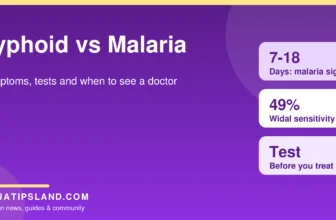
In Nigeria. Register for antenatal care at a primary health centre, general hospital or other facility you trust as early as possible. The WHO recommends at least 8 antenatal contacts, with the first in the first 12 weeks and the others at 20, 26, 30, 34, 36, 38 and 40 weeks. The contacts include blood tests, tetanus vaccination, advice on diet and physical activity, and prevention of malaria and HIV. Where malaria is common, the WHO advises that pregnant women start preventive treatment early in the second trimester, so ask your midwife or doctor about it and about sleeping under an insecticide-treated net. For a plain-English guide to the illness, read our article on 12 malaria symptoms Nigerians ignore, and see how doctors tell it apart from typhoid in our guide to typhoid vs malaria symptoms.
Vitamins and supplements to start now
- Folic acid: the NHS recommends 400 micrograms a day, ideally starting 3 months before conceiving or as soon as you find out you are pregnant, and continuing until the end of week 12. It lowers the chance of neural tube defects such as spina bifida. A higher 5 mg dose, prescribed by a GP, is recommended for women with certain risk factors, including diabetes, a family history of neural tube defects and blood conditions such as sickle cell anaemia, so tell your GP or midwife if this applies to you.
- Vitamin D: 10 micrograms a day between early October and late March. The NHS says people with dark skin, for example those of African, African-Caribbean or south Asian background, should consider taking it all year because their skin makes less vitamin D from sunlight, and NICE guidance gives the same advice.
- Avoid: NICE advises pregnant women not to take cod liver oil or supplements containing vitamin A (retinol), which can include ordinary multivitamins. Check labels and ask a pharmacist.
- Free vitamins: women on certain income-related benefits may qualify for free Healthy Start vitamins in the UK.
You do not need a special diet to start with, but our guide to traditional Nigerian foods and their health benefits is a good place to see how everyday meals fit into healthy eating.
When to get medical advice quickly
The NHS says some early pregnancy symptoms are usually nothing to worry about, but vaginal bleeding, stomach pain and pelvic pain can be signs of something more serious. Get medical advice promptly if you have these, and contact maternity services at any time if you are worried about your health or the baby’s. In an emergency, call 999 in the UK or go to the nearest emergency unit in Nigeria.
FAQ
What is the very first sign of pregnancy?
For most women it is a missed period. Other early signs include nausea, tiredness, sore breasts and needing to pee more often, but these are not specific, so take a test to be sure.
Can I be pregnant and still get a negative test?
Yes, if you test too early. The NHS suggests waiting a few days and testing again, and seeing your GP if a second test is negative but your period has not come.
How do I calculate my due date from my last period?
Take the first day of your last period and add 280 days, or add 1 year, subtract 3 months and add 7 days. Adjust by the difference between your cycle length and 28 days, or use the NHS due date calculator.
Is the due date from my scan or my period more accurate?
An early dating scan is generally more accurate than the calendar, especially if your periods are irregular or you are unsure of the date. Your midwife will confirm which date to use.
How many weeks is a full-term pregnancy?
The NHS says pregnancy normally lasts 37 to 42 weeks from the first day of your last period.
When should I tell a midwife or doctor?
As soon as you get a positive test. In England you can self-refer online, and the first appointment should happen by 10 weeks where possible. In Nigeria, start antenatal care in the first 12 weeks if you can.
This article is general information and not medical advice. It does not diagnose any condition. Speak to a midwife, GP or doctor about your own pregnancy, medicines and supplements, and seek urgent help for bleeding, pain or any symptom that worries you.
Sources
- NHS: Signs and symptoms that might mean you’re pregnant
- NHS: Doing a pregnancy test
- NHS: Pregnancy due date calculator
- NHS inform: First signs of pregnancy
- NHS Best Start in Life: Week 4 of pregnancy
- NHS: Refer yourself for NHS pregnancy care
- NHS: Your antenatal care and appointments
- NHS: Pregnancy vitamins and supplements
- NICE NG247: Nutrition and weight management in pregnancy
- WHO: New guidelines on antenatal care for a positive pregnancy experience (2016)
- WHO recommendations on antenatal care for a positive pregnancy experience
Join the discussion
Have you tried this, or do you have a question we did not answer? 1 reader has already shared their view. Naijatipsland members help each other with real, first-hand experience.




Editor’s note: this guide is general information based on NHS, NICE and WHO guidance, and is not medical advice. Every pregnancy is different, and a due date is an estimate. If you think you are pregnant, speak to a midwife or GP, and get urgent medical advice for bleeding or pain. – Ade