
Best Vitamins and Foods for Hair Growth (2026): What the Evidence Says, Nigerian Foods to Eat and When to See a Doctor

Last updated: 12 November 2026 · By Naijatipsland Editorial Team · Editorial policy
Hair matters to most of us, and hair growth products are everywhere: gummies, oils, “hair, skin and nails” capsules and imported supplements sold on Instagram. Many promise faster growth and thicker hair. The honest answer from dermatologists and health services is more modest: vitamins help hair mainly when you are short of something, and a good diet does more than most bottles.
This guide explains what the evidence says about the main hair vitamins, the everyday Nigerian foods that supply them, the common causes of hair loss, and when you should see a doctor. It is general information, not medical advice. If you are worried about hair loss, please see a doctor or dermatologist.
Do hair vitamins actually work?
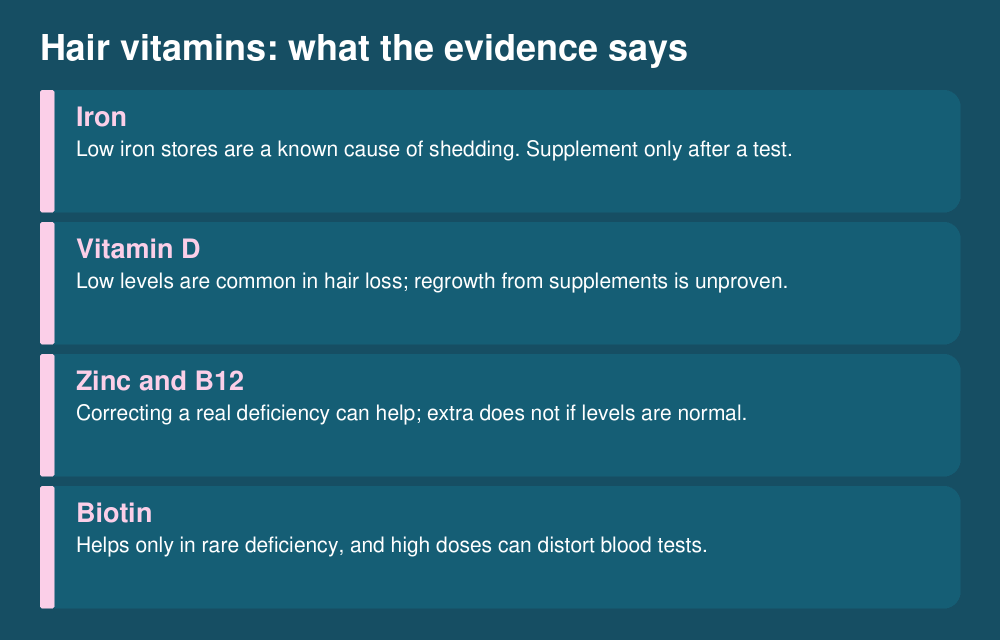
Only if you are deficient. Reviews of the research, including a 2022 systematic review in JAMA Dermatology, found that most studies of hair supplements are small, short and low quality. The consistent finding is that correcting a real deficiency can reduce shedding, but taking extra vitamins when your levels are already normal has not been shown to make hair grow faster or thicker.
The American Academy of Dermatology advises taking biotin, iron or zinc only when a blood test shows you are deficient, and warns that taking them when your levels are normal can be harmful. The UK’s NHS lists iron deficiency among the common causes of temporary hair loss.
The nutrients that matter, and what the evidence says
Iron
Iron is the best-documented nutritional link to hair shedding. Hair follicle cells divide quickly and need a steady oxygen supply, which depends on iron. Low iron stores (measured by a blood test called ferritin) are common in women with heavy periods, people who eat little meat, and frequent blood donors, and can affect hair even before anaemia shows up. Do not take high-dose iron without a test: too much iron is harmful. The NHS says 17mg or less a day from supplements is unlikely to cause harm; higher doses are for people a doctor has found to be low.
Vitamin D
Low vitamin D is often found in people with hair loss, especially alopecia areata (patchy hair loss) and female pattern hair loss. A 2024 analysis found low levels in about half of people with these conditions. But that is an association, and trials have not proven that vitamin D supplements regrow hair. Correcting a deficiency is still sensible for your bones and general health. Darker skin makes less vitamin D from sunlight, so Nigerians in the UK are at higher risk: the NHS advises everyone to consider 10 micrograms a day from October to March, and people with dark skin to consider it all year.
Zinc, vitamin B12 and folate
Low zinc, B12 or folate can contribute to shedding. People on plant-based diets are more likely to be low in B12. As with iron, supplements help if you are deficient, and high-dose zinc taken for long periods can lower copper levels.
Biotin
Biotin (vitamin B7) is the star of most hair gummies, but true deficiency is rare and mostly linked to certain genetic conditions, some anti-seizure medicines, heavy alcohol use or eating raw egg whites regularly. A 2017 review found that every reported case of biotin improving hair involved a person with an underlying deficiency or rare condition. There is no good evidence it helps healthy people. Importantly, high doses can distort blood tests, including thyroid tests and a heart-attack test called troponin. The NHS says 0.9mg or less a day from supplements is unlikely to cause harm. Always tell your doctor if you take biotin before a blood test.
Protein
Hair is made mostly of a protein called keratin. When you do not eat enough protein or calories, the body protects vital organs and hair growth slows. Crash diets, fasting for long periods and rapid weight loss can trigger noticeable shedding two to three months later.
Everyday foods that feed your hair
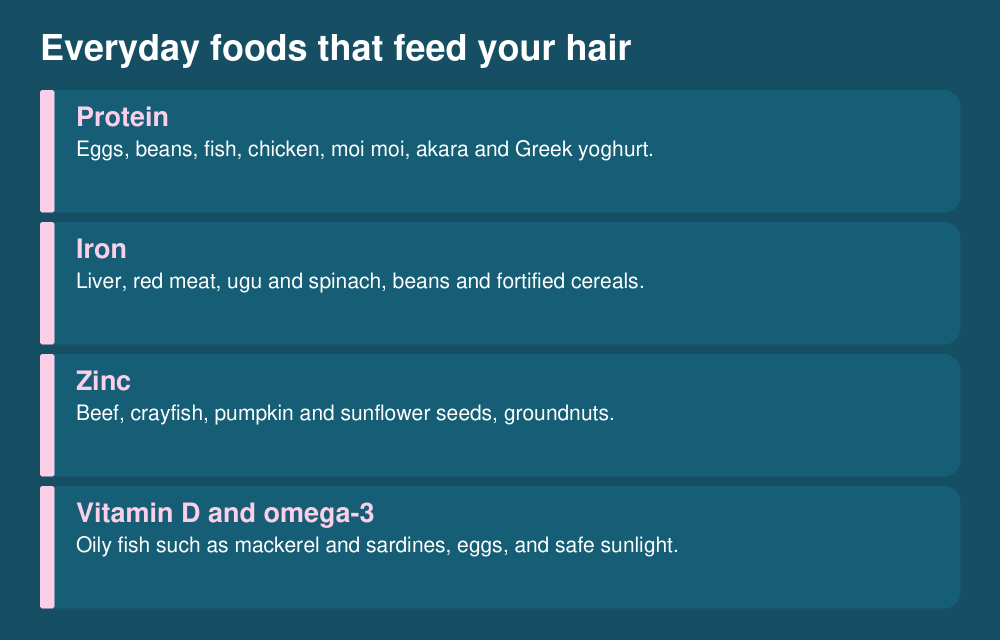
A varied diet supplies most of what hair needs. Many of the best sources are ordinary Nigerian foods:
- Protein: eggs, beans (moi moi and akara), fish, chicken, turkey, beef, milk and yoghurt. Try to include some protein at each meal.
- Iron: liver, red meat, fish, ugu (fluted pumpkin leaves), spinach, beans and lentils, and fortified breakfast cereals. Eating vitamin C foods such as oranges, tomatoes or peppers with plant iron helps your body absorb it; tea and coffee with meals reduce absorption.
- Zinc: beef, crayfish and shellfish, pumpkin and sunflower seeds, groundnuts and whole grains.
- Vitamin D and omega-3 fats: oily fish such as mackerel (titus), sardines and salmon, and eggs. Safe sun exposure also helps your body make vitamin D.
- Vitamin B12: meat, fish, eggs and dairy. People who avoid animal foods may need fortified foods or a supplement.
- Fruit and vegetables: for vitamins A and C and other nutrients. But too much vitamin A from supplements can itself cause hair loss.
For more on the nutrition in traditional dishes, see our guide to traditional Nigerian foods and their health benefits, and our look at food myths Nigerians believe.
Common causes of hair loss that vitamins will not fix
- Traction alopecia: hair loss from constant pulling by tight braids, weaves, wigs glued at the hairline, cornrows and tight ponytails. It often starts at the edges and temples. Caught early it can recover; left for years it can become permanent. Loosen styles, rest between installations and avoid heavy extensions.
- Telogen effluvium: heavy shedding two to three months after a shock to the body, such as childbirth, a high fever, malaria or typhoid, surgery, severe stress or a crash diet. It usually settles within six to nine months.
- Female and male pattern hair loss: gradual thinning driven mainly by genes and hormones. Vitamins do not reverse it; licensed treatments such as minoxidil can help, so see a doctor or pharmacist.
- Medical conditions: thyroid problems, polycystic ovary syndrome (PCOS), alopecia areata and scalp infections all need proper diagnosis.
- Chemical damage: relaxers, bleaching and heat styling can break hair. This looks like hair loss but is breakage along the strand.
- Some medicines can cause shedding. Do not stop a prescribed medicine without talking to your doctor.
Should you take a hair supplement?
A sensible approach:
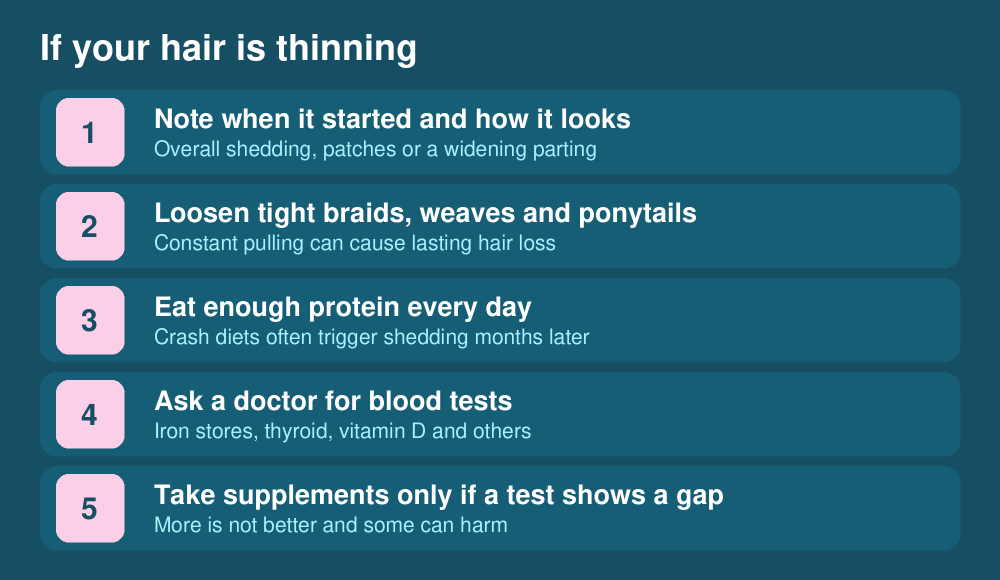
- Start with your diet. Make sure you eat enough protein and a variety of the foods above.
- If you are shedding a lot, see a doctor first. Blood tests commonly include a full blood count, ferritin, thyroid function and vitamin D, and sometimes B12, folate or zinc.
- Treat what the test finds. If you are low in something, your doctor will advise the dose and how long to take it.
- Be cautious with “hair, skin and nails” blends. Many contain high doses of biotin and other nutrients. If you want a general supplement, dermatologists often prefer a standard multivitamin.
- Be wary of miracle claims. Products promising to “regrow hair in two weeks” are not backed by evidence. In Nigeria, check that supplements carry a NAFDAC registration number.
Pregnant and breastfeeding women, and anyone with a long-term condition or on regular medicines, should check with a doctor or pharmacist before taking any supplement.
When to see a doctor
See a doctor or dermatologist if you notice:
- sudden or heavy shedding, or round bald patches
- a widening parting or receding hairline
- hair loss with tiredness, heavy periods, feeling cold, weight changes or a racing heart
- an itchy, scaly, sore or red scalp
- hair loss after starting a new medicine
Getting the cause right early gives you the best chance of keeping your hair. Good sleep and lower stress help your body overall; see our guide to natural ways to improve sleep and reduce stress.
Frequently asked questions
Which vitamin is best for hair growth?
The best vitamin is the one you are actually short of. Iron, vitamin D, zinc and vitamin B12 are the ones most often found to be low in people with shedding. If your levels are normal, no vitamin has been shown in good trials to make hair grow faster.
Does biotin make hair grow faster?
Not in healthy people. Biotin helps only in rare true deficiency, and high doses can interfere with blood tests, including thyroid and heart tests. Tell your doctor if you take it.
What Nigerian foods are good for hair?
Eggs, beans, fish (especially oily fish like mackerel), chicken, liver, beef, ugu and other leafy greens, crayfish, groundnuts and seeds. Together they supply protein, iron, zinc, vitamin D and B vitamins.
Can braids and weaves cause hair loss?
Yes. Tight or heavy styles that pull constantly can cause traction alopecia, often at the edges. Choose looser styles, take breaks between installations and see a doctor early if your edges are thinning.
This article is for general information and is not a substitute for medical advice. Please see a doctor, pharmacist or dermatologist about your own health.








Editor’s note: this guide is general health information, not a diagnosis. Hair loss has many causes, and some need treatment. If you are losing hair suddenly, in patches, or alongside tiredness or other symptoms, please see a doctor or dermatologist before buying supplements. – Ade