


TL;DR:
- Digital activism enables Nigerian youth to organize, protest, and demand accountability through coordinated online actions.
- It combines various methods like social campaigns, petitions, and real-time documentation, often linking online efforts to offline pressure.
Digital activism is the organized use of internet and digital media platforms to advance social and political goals by amplifying voices and mobilizing collective action. For Nigerian youth, this definition carries real weight. From the #EndSARS movement that shook the country in 2020 to ongoing campaigns against fuel subsidy removal and electoral fraud, digital tools have become the primary arena where young Nigerians organize, protest, and demand accountability. Understanding what digital activism is, how it works, and where it falls short gives you a sharper edge as a participant or leader in these movements.
What is digital activism and how does it work?
Digital activism, also called online activism or internet activism, is internet-mediated organizing that transforms information into coordinated collective claims and actions. It is not simply posting political content. The distinction matters because posting alone rarely moves institutions. Coordinated action does.
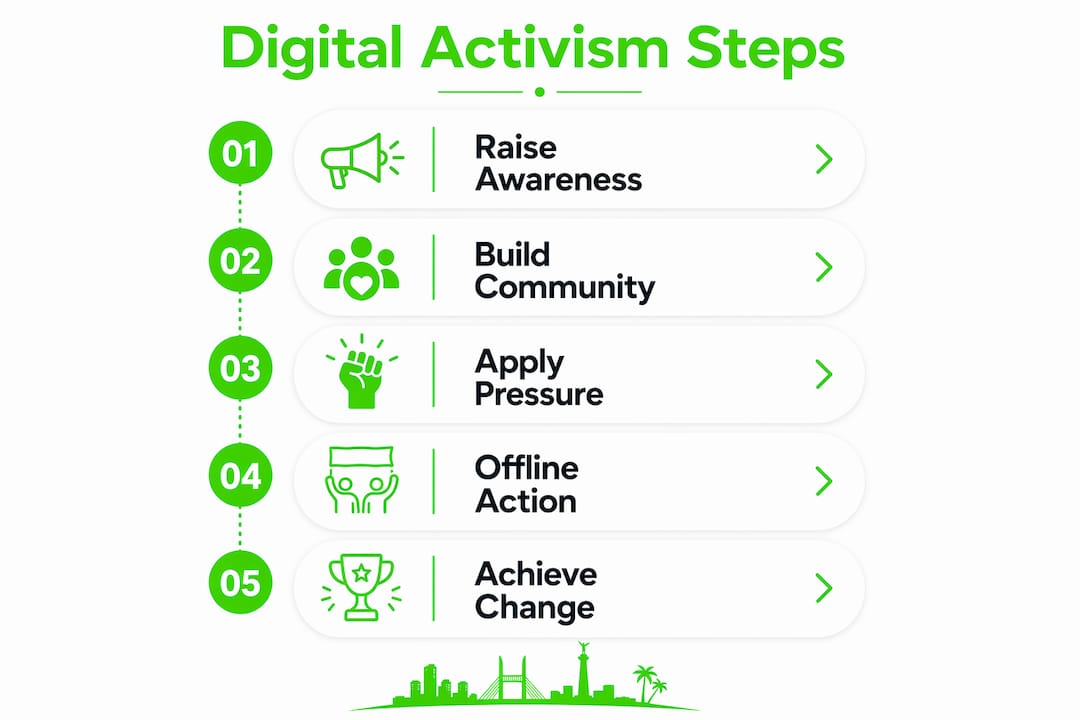
At its core, digital activism works through a sequence: raise awareness, build a community around a shared demand, apply pressure through volume and visibility, and connect that online energy to real-world consequences. Platforms like Twitter (now X), Instagram, WhatsApp, and Telegram serve as the primary infrastructure for Nigerian activists. Tools like Change.org for petitions, Flutterwave for fundraising, and Google Forms for data collection extend that infrastructure into practical organizing.
The term “clicktivism” describes the low-effort end of this spectrum, where someone signs a petition or shares a hashtag with minimal personal investment. “Commitivism” describes the higher-effort end, where activists dedicate sustained time, resources, and personal risk to a cause. Both exist on the same spectrum of digital activism methods, and understanding where you sit on that spectrum helps you set realistic expectations for impact.
What methods and tools do digital activists use?
The methods available to Nigerian youth activists range from simple to sophisticated. Here is a breakdown of the most common approaches:
- Social media campaigns: Coordinated hashtag campaigns on X, Facebook, and Instagram create visibility at scale. #EndSARS trended globally because thousands of Nigerians posted simultaneously, forcing international media coverage.
- Online petitions: Platforms like Change.org allow activists to collect signatures and present verified public demand to institutions or governments.
- Fundraising: Tools like GoFundMe and Flutterwave have been used to fund legal fees for arrested protesters, medical bills, and logistics for ground-level organizing.
- Live streaming and documentation: Activists use Instagram Live and YouTube to document police brutality, government inaction, and protest events in real time, creating an evidence record that is difficult to suppress.
- WhatsApp and Telegram groups: These serve as coordination hubs where Nigerian activists share verified information, organize logistics, and maintain communication outside algorithm-controlled feeds.
- Email campaigns: Targeted emails to lawmakers, corporate sponsors, and media organizations apply direct institutional pressure beyond public-facing social media.
The most effective campaigns combine several of these methods rather than relying on one. Diversifying digital channels and scheduling recurring action days converts one-time viral spikes into sustained engagement. A hashtag that trends for one day and disappears rarely changes policy. A campaign that resurfaces weekly with new evidence and new demands builds the kind of pressure that institutions cannot ignore.
Pro Tip: Always pair your online campaign with a specific, verifiable demand. “End police brutality” is a sentiment. “Disband SARS and prosecute officers documented in the Lekki Toll Gate incident” is a demand. Specific demands are harder for governments to deflect.
What are the impacts and challenges of digital activism for Nigerian youth?
Digital activism gives Nigerian youth three advantages that traditional activism struggled to provide: speed, scale, and documentation. A protest that would have taken weeks to organize through flyers and word of mouth can now be coordinated in hours through WhatsApp broadcasts and Twitter threads. Faster mobilization and broader visibility are the clearest benefits, but they come with serious risks that every young activist should understand before diving in.
The challenges are real and specific:
- Misinformation spreads faster than corrections. During #EndSARS, false casualty figures and fabricated government statements circulated widely, undermining the movement’s credibility at critical moments.
- Harassment and doxxing target visible activists. Nigerian activists who became public faces of campaigns faced coordinated harassment, threats, and in some cases, physical danger.
- Algorithmic bias shapes what gets seen. Platforms like Facebook and X reward moral outrage and certainty, which means nuanced, policy-focused content gets buried while inflammatory posts go viral. This pulls campaigns toward spectacle and away from durable institutional impact.
- Burnout is a documented risk. Constant exposure to injustice, harassment, and the emotional weight of activism without visible results depletes young activists quickly.
- Symbolic activism without follow-through. Sharing a hashtag or signing a petition is helpful, but without sustained offline action, online energy dissipates and fails to translate into change.
“The real test of digital activism is not how many people shared the post. It is whether the campaign created a sequence from awareness to verified demand to institutional pressure.” This distinction separates movements that reshape policy from those that trend for a week and disappear.
Understanding how digital communities shape social change in Nigeria helps you see these challenges in context and build strategies that outlast a single news cycle.
How does digital activism differ from traditional activism and slacktivism?
This is where many young Nigerians get confused, and the confusion matters because it affects how you invest your time and energy.
Slacktivism describes online actions that feel meaningful but carry no real cost or commitment. Changing your profile picture to a flag, sharing a post without reading it, or signing a petition and forgetting about it are all examples. The term is not entirely negative. Research shows that clicktivism can act as a gateway to deeper political engagement, including voting, by lowering the initial barrier to participation. The problem arises when slacktivism becomes the ceiling rather than the floor.
Traditional activism involves physical presence: street protests, sit-ins, community organizing, and direct engagement with institutions. It carries higher personal risk and requires more resources, but it also creates the kind of visible pressure that governments and corporations cannot easily dismiss.
Digital activism sits between these two poles and, at its best, connects them. The table below clarifies the key differences:
| Type | Commitment level | Risk level | Typical impact |
|---|---|---|---|
| Slacktivism | Very low | Minimal | Awareness only |
| Digital activism | Low to high | Low to moderate | Awareness, mobilization, pressure |
| Traditional activism | High | Moderate to high | Direct institutional pressure |
| Combined activism | High | Moderate to high | Systemic and policy change |
Resource mobilization theory, a framework used by political scientists, argues that movements succeed when they efficiently convert available resources (time, money, networks, skills) into organized pressure. Digital activism lowers the cost of entry but does not eliminate the need for sustained resource investment. A movement that stays entirely online never fully mobilizes its resources.
Pro Tip: Use digital tools to recruit, coordinate, and document. Use offline action to apply the pressure that actually moves institutions. Neither works as well alone.
How can Nigerian youth effectively engage in digital activism?
Moving from awareness to impact requires a deliberate approach. Here are practical steps you can take:
Define a specific, verifiable demand. Vague campaigns generate sympathy but rarely produce change. Identify one concrete policy, law, or institutional behavior you want to change, and make that the center of your campaign.
Build information verification habits. Before sharing any claim, check it against two independent sources. Tools like Google Reverse Image Search, Snopes, and Africa Check help you avoid spreading misinformation that can discredit your campaign. Verification workflows and curated spokespeople are among the most effective tools for maintaining campaign credibility.
Diversify your platforms. Do not build your entire campaign on one platform. X can suspend accounts, Facebook can suppress posts, and WhatsApp groups can be infiltrated. Maintain a presence across multiple channels and keep an email list as a direct line to your supporters.
Connect online action to offline pressure. A successful digital activism campaign requires a pipeline from online awareness to verified demands and offline or institutional pressure. Schedule physical meetups, write letters to lawmakers, and show up at public hearings.
Protect your mental health. Set boundaries around how much time you spend consuming activist content. Designate rest days. Build a support network of fellow activists who can share the emotional load. Burnout ends more campaigns than government opposition does.
Build digital literacy within your community. Teach others how to use privacy tools like Signal, how to document incidents safely, and how to recognize coordinated disinformation. A digitally literate network is harder to suppress and more credible to outside observers.
The importance of digital activism grows when communities develop the capacity to translate online participation into visible decision impact. That capacity is built deliberately, not accidentally. You can also explore online trends shaping Nigerian youth to understand the broader digital environment you are operating in.
Key takeaways
Digital activism works when it moves beyond symbolic online gestures to create a verified sequence from awareness to offline institutional pressure.
| Point | Details |
|---|---|
| Core definition | Digital activism is organized internet use to advance social and political goals, not just posting content. |
| Methods spectrum | Ranges from low-effort clicktivism to high-commitment commitivism involving offline mobilization. |
| Key challenges | Misinformation, algorithmic bias, harassment, and burnout are the four main risks for Nigerian youth activists. |
| Effectiveness factor | Campaigns that combine specific demands, verified information, and offline action produce durable change. |
| Gateway effect | Low-cost online actions can build political awareness and lead to deeper engagement, including voting. |
Naijatipsland’s take on digital activism in Nigeria
What strikes me most about digital activism in Nigeria is not its power. It is how often that power gets wasted on performance rather than pressure. #EndSARS proved that Nigerian youth can move faster and louder than any previous generation of activists. What it also revealed is that speed and noise are not enough when institutions are willing to wait out a news cycle.
The uncomfortable truth is that most digital campaigns in Nigeria peak within 72 hours and fade without producing a single verifiable policy change. That is not a failure of passion. It is a failure of structure. Movements that last build organizations, not just audiences. They maintain pressure through recurring action days, legal strategies, and community organizing that continues long after the hashtag stops trending.
I am genuinely optimistic about what Nigerian youth can do with digital tools. The infrastructure exists. The energy exists. What needs to be built is the discipline to convert that energy into sustained, structured pressure on specific targets. The activists who figure that out will not just trend. They will change things.
— Naijatipsland
Stay informed and engaged with Naijatipsland
Naijatipsland covers the Nigerian digital and civic space closely, from trending political campaigns to community-driven social movements. If you want to go deeper on how young Nigerians are using digital tools to shape their communities, explore our resource on digital identity and community trends for a broader view of the forces shaping online activism in Nigeria. For practical guidance on engaging in political conversations without escalating conflict, our guide on respectful political discourse is a useful next step. Naijatipsland is built for Nigerian youth who want to stay informed, stay connected, and stay effective.
FAQ
What is the simple definition of digital activism?
Digital activism is the use of internet and digital media platforms to organize collective action and advance social or political goals. It includes social media campaigns, online petitions, fundraising, and digital coordination that connects to real-world pressure.
Is sharing a hashtag considered digital activism?
Sharing a hashtag is the lowest-effort form of digital activism, often called clicktivism or slacktivism. Research shows it can serve as a gateway to deeper engagement, but it only produces change when paired with sustained, specific demands and offline action.
What are the biggest risks of digital activism for Nigerian youth?
The four main risks are misinformation spread, online harassment and doxxing, algorithmic bias that rewards outrage over policy work, and activist burnout from sustained exposure to injustice without visible results.
How does digital activism lead to real change?
Digital activism leads to real change when it follows a verified sequence from online awareness to specific demands to offline or institutional pressure. Campaigns that stay entirely online rarely move governments or corporations to act.
What tools do Nigerian activists commonly use?
Nigerian activists commonly use X (formerly Twitter) and Instagram for visibility, WhatsApp and Telegram for coordination, Change.org for petitions, and Flutterwave or GoFundMe for fundraising. Combining multiple tools across platforms strengthens campaign resilience.