


You’ve probably opened Twitter or Facebook to share a thoughtful take on Nigeria’s latest political issue, only to watch the conversation explode into insults and accusations within minutes. Research on Nigerian Online Political Discussions reveals that 60% of online political threads devolve into hostility due to common mistakes like emotional reactions and unverified info. This guide offers clear, actionable strategies to help Nigerian young adults engage respectfully and effectively in online political discussions, turning toxic spaces into productive civic conversations.
Table of Contents
- Why Discussing Politics Online Matters For Nigerian Youths
- Prerequisites: What You Need Before Starting Political Discussions Online
- Core Steps To Engage Effectively In Political Discussions Online
- Common Pitfalls In Online Political Discussions And How To Avoid Them
- Expected Results And Positive Outcomes From Respectful Online Political Discussions
- Discover More Resources To Elevate Your Online Political Discussions
Key Takeaways
| Point | Details |
|---|---|
| Evidence and respect work | Using evidence-based arguments and respectful language increases positive engagement by 47%. |
| Preparation prevents misinformation | Research and fact-checking before posting reduces misinformation spread by 60%. |
| Ignore trolls strategically | Not engaging with inflammatory comments reduces hostility and escalations by 70%. |
| Set boundaries early | Clear discussion goals and respectful boundaries foster constructive dialogue from the start. |
| Consistency creates change | Regular respectful engagement builds safer, more productive online political spaces over time. |
Why Discussing Politics Online Matters for Nigerian Youths
Political engagement strengthens democracy and amplifies community voices across Nigeria. For young Nigerians, online platforms serve as the primary space for political expression, debate, and organizing. Why Participate In Online Discussions: Impact In Nigeria shows how political discussions shape public opinion and civic participation in Nigeria.
Yet these digital spaces present serious challenges. Young Nigerians navigate misinformation, ethnic tensions, and aggressive hostility daily. The anonymity of social media often encourages behavior people would never display face to face.
The stakes are high. Poor online political discourse can:
- Spread false information that influences voting decisions
- Deepen ethnic and religious divisions
- Discourage thoughtful people from participating
- Create echo chambers that resist facts
Positive political dialogue online increases informed civic participation and reduces social divisions. When you engage respectfully and thoughtfully, you model behavior that others follow. Your contribution to the impact of online political discussions shapes Nigeria’s democratic future more than you realize.
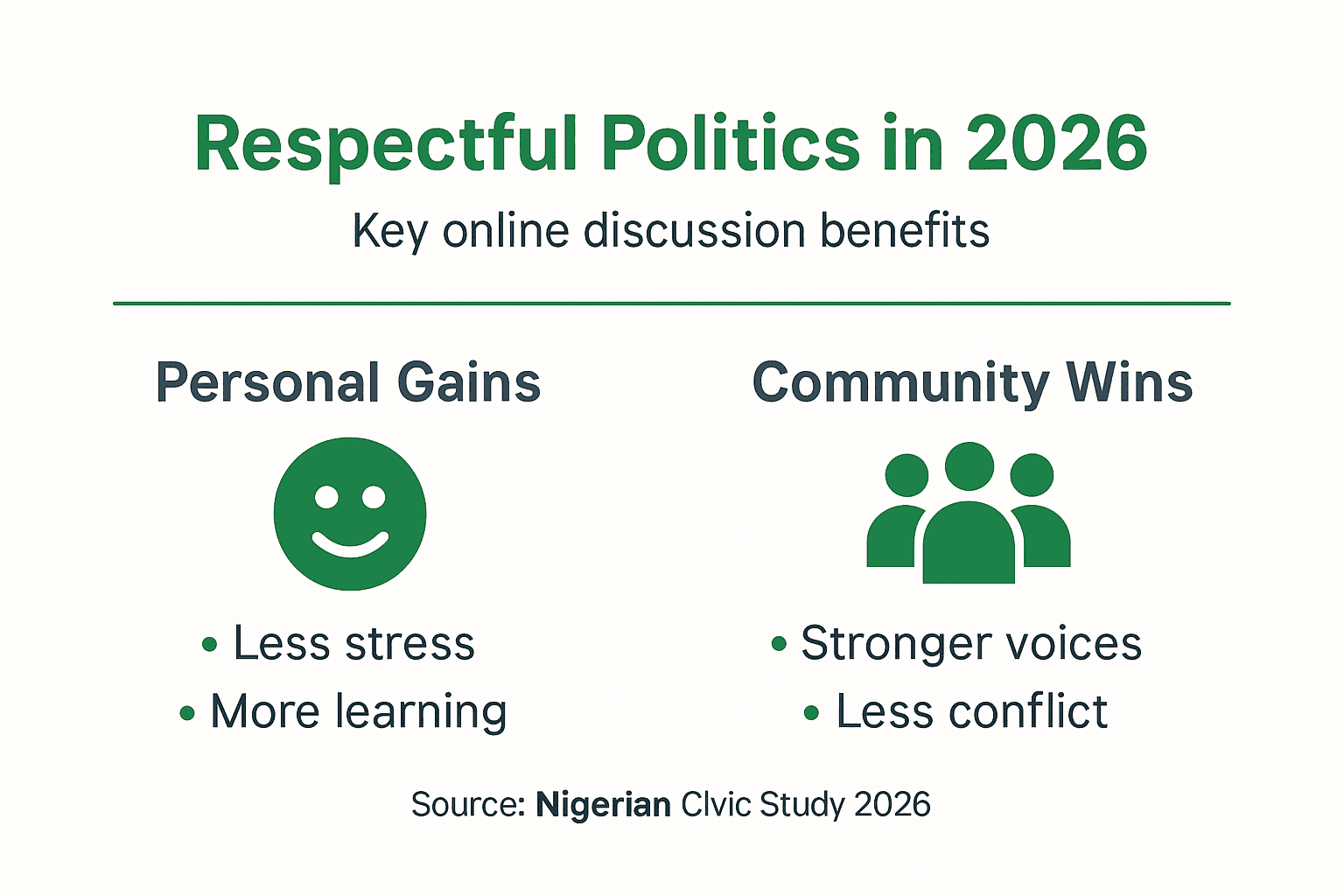
The quality of online political conversations directly affects offline outcomes. Elections, policy decisions, and social movements all begin with conversations happening right now on your phone.
Prerequisites: What You Need Before Starting Political Discussions Online
Successful political engagement requires preparation. You wouldn’t walk into a debate without knowing the topic. Online discussions deserve the same respect.
Start by understanding recent Nigerian political issues and key players. Know the basics of current controversies, major political parties, and influential figures. This foundation prevents you from making easily corrected mistakes that undermine your credibility.
Access reliable fact-checking platforms before you post. Fact-checking Impact Studies demonstrate that fact-checking reduces misinformation spread by 60%. Bookmark several trusted fact-checking resources and use them habitually.

Pro Tip: Create a simple checklist on your phone with three verification questions: Is this from a credible source? Can I find two other sources confirming this? Am I sharing this because it’s true or because it confirms what I already believe?
Familiarize yourself with Nigeria’s ethnic and cultural diversity. Understanding regional perspectives, religious sensitivities, and historical contexts helps you communicate respectfully across differences. What seems obvious in Lagos may offend in Kano without this awareness.
Choose moderated platforms that enforce community guidelines. Spaces with active moderation reduce harassment and keep discussions constructive. Review the basics of online discussions to understand platform-specific norms.
| Preparation Area | Specific Action | Expected Outcome |
|---|---|---|
| Knowledge base | Follow 3-5 credible Nigerian news sources daily | Stay informed on current issues |
| Fact-checking tools | Bookmark fact-checking websites | Quick verification before sharing |
| Cultural awareness | Learn about Nigeria’s major ethnic groups and histories | Avoid unintentional offense |
| Platform selection | Join moderated communities | Reduced exposure to harassment |
Your mindset matters as much as your knowledge. Approach discussions with genuine curiosity rather than a determination to win. This shift transforms confrontations into conversations.
Core Steps to Engage Effectively in Political Discussions Online
Follow these specific steps to participate in political discussions that inform rather than inflame.
Research before you post. Spend five minutes verifying facts and checking sources. This small investment protects your credibility and prevents spreading misinformation. Search for the claim on fact-checking sites and read beyond headlines.
Set clear goals and boundaries. Decide what you want to achieve before typing. Are you sharing information, asking questions, or challenging misinformation? State your intention early: “I’m sharing this to understand different perspectives” or “I want to correct a common misconception about this policy.”
Use evidence-based arguments. Link to credible sources supporting your points. Avoid statements like “everyone knows” or “it’s obvious.” Instead, write “According to [source], this policy affects X% of Nigerians because…”
Choose culturally sensitive language. Avoid ethnic stereotypes, religious insults, or regional generalizations. Criticize policies and actions, not people or groups. Replace “Those people always” with specific, fact-based observations.
Ignore trolls completely. Research on Online Troll Engagement shows ignoring trolls reduces hostility and escalation by 70%. Don’t respond to obvious bait. Block, mute, or report if necessary.
Pro Tip: Before responding to an inflammatory comment, wait 10 minutes. Most heated responses you’d regret happen in the first emotional reaction. This pause protects both your reputation and mental health.
Key practices for maintaining quality discussions:
- Ask clarifying questions instead of making assumptions
- Acknowledge valid points from people you disagree with
- Admit when you don’t know something or made a mistake
- Thank people for sources or perspectives you hadn’t considered
- Take breaks when discussions become emotionally draining
Learn the art of starting online political discussions that invite participation rather than combat. Frame topics as questions rather than declarations when possible.
| Approach | Typical Response | Better Alternative |
|---|---|---|
| Aggressive | “You’re completely wrong about this!” | “I see this differently. Here’s why…” |
| Dismissive | “That’s ridiculous.” | “Can you share your source for that?” |
| Generalizing | “All politicians are corrupt.” | “Corruption is a serious problem affecting X% of public projects.” |
Take regular mental health breaks. Political discussions are emotionally taxing. Step away when you notice yourself getting angry or anxious. Your long-term effectiveness depends on sustaining your energy and perspective.
Common Pitfalls in Online Political Discussions and How to Avoid Them
Even well-intentioned participants fall into traps that derail productive conversations. Recognizing these patterns helps you avoid them.
Sharing unverified information destroys trust fast. One false claim shared in good faith can undermine months of credible contributions. Always verify before sharing, especially if information confirms your existing beliefs or provokes strong emotions.
Emotional reactions reduce discussion quality immediately. When someone attacks your position, the instinct to counterattack is strong. Resist it. Emotional escalation never convinces anyone and often attracts more trolls.
Responding to trolls wastes your time and energy. Online Discussion Dynamics Research confirms engaging aggressively with trolls leads to derailment and hostility in about 70% of cases. Their goal is disruption, not discussion. Don’t give them what they want.
“The best response to a troll is no response. They feed on attention, and your silence starves them while preserving the quality of conversation for others who came to learn and share.”
Ignoring cultural sensitivities alienates potential allies. A comment that seems neutral to you may carry heavy historical or ethnic baggage for others. Learn these sensitivities or ask respectfully when you’re unsure.
Common mistakes to avoid:
- Using all caps or excessive punctuation (appears aggressive)
- Assuming bad faith in people who disagree
- Bringing up someone’s post history to discredit them
- Changing topics when losing an argument
- Playing “whataboutism” instead of addressing the actual issue
Burnout from constant political engagement is real. Many passionate young Nigerians exhaust themselves arguing online daily. This leads to cynicism, anger, and eventually withdrawal. Review common mistakes to avoid in discussions to maintain healthy boundaries.
Recognize when a discussion has run its course. Not every conversation reaches resolution. Sometimes the best outcome is agreeing to disagree while maintaining mutual respect.
Expected Results and Positive Outcomes from Respectful Online Political Discussions
Applying these strategies produces measurable improvements in your online political engagement and broader community impact.
Study on Language and Political Engagement documents that respectful language increases positive engagement in political debates by nearly 47%. When you model respectful behavior, others reciprocate more often than you’d expect.
You’ll notice several positive changes:
- More people engage with your posts thoughtfully instead of dismissively
- Discussions continue longer without devolving into insults
- Others start citing sources and asking questions instead of making declarations
- You gain reputation as someone worth listening to, even among those who disagree
Your personal experience improves too. Respectful engagement is less emotionally draining than constant combat. You’ll feel more energized and hopeful about Nigeria’s political future.
| Metric | Improvement | Timeframe |
|---|---|---|
| Positive engagement rate | 40-47% increase | 2-3 months of consistent practice |
| Misinformation spread reduction | 60% decrease | Immediate when fact-checking becomes habit |
| Sustained conversations | 30% more discussions stay constructive | 1-2 months |
| Diverse viewpoint exposure | 50% more cross-perspective dialogue | 3-4 months |
Broader community benefits emerge over time. As more people adopt respectful practices, entire platforms shift. Trolls lose audiences. Quality contributors attract followers. Misinformation spreads slower.
You contribute to improved community engagement across Nigerian online spaces. Each respectful interaction creates a small ripple. Collectively, these ripples become waves of positive change.
Your influence extends beyond individual conversations. When lurkers see productive political discussions, they’re more likely to participate themselves. You’re not just improving one thread but modeling behavior for hundreds of silent observers.
Discover More Resources to Elevate Your Online Political Discussions
Ready to put these strategies into practice? Naijatipsland provides dedicated spaces for respectful political engagement and community learning.
Join our online forum for Nigerian news and discussions where thousands of young Nigerians debate current events daily. Our moderated environment encourages the evidence-based, respectful dialogue this guide teaches.
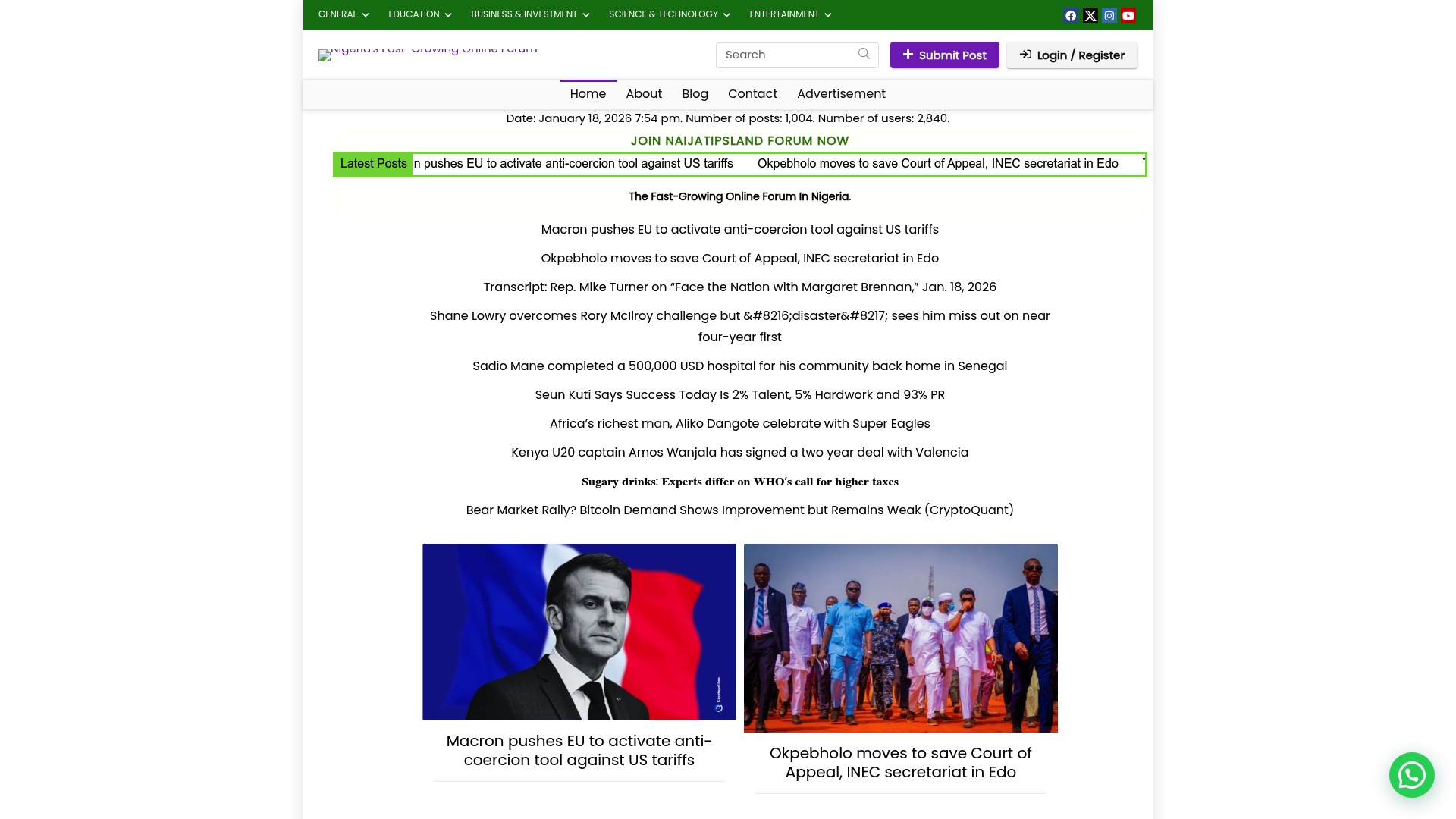
Learn how to start online discussions successfully and attract thoughtful participants. Master forum etiquette and respect to become a valued community member. Access fact-checking resources and connect with others committed to improving Nigeria’s online political discourse.
FAQ
How can I verify political information quickly before sharing online?
Use trusted local and international fact-checking websites like Africa Check or Dubawa for Nigerian content. Cross-reference claims across at least two credible news sources before sharing. WPCTO Fact-checking Services provides access to trusted fact-checking platforms that prevent misinformation. Quick verification takes under five minutes but protects your credibility and fact-checking services help reduce misinformation spread by 60%.
What should I do if someone attacks me personally during a political discussion?
Do not respond in kind or match their aggression. Redirect the conversation back to the topic with a calm statement like “Let’s focus on the policy issue rather than personal attacks.” Use platform moderation tools to report abusive behavior if the attacks continue. Sometimes the best response is no response, allowing their behavior to speak for itself while you maintain dignity.
How can I balance passion and respect when discussing sensitive political issues online?
Focus on evidence and respectful language rather than volume or aggression. Research on Effective Political Discussion confirms evidence-based arguments and respectful communication yield better outcomes than passion alone. Acknowledge diverse perspectives explicitly, even when disagreeing strongly. Channel passion into thorough research and clear articulation rather than inflammatory remarks that alienate potential allies.
Why do online political discussions in Nigeria become hostile so quickly?
Anonymity removes social accountability, ethnic and religious tensions run deep, and misinformation spreads faster than corrections. Many participants lack preparation or enter discussions to vent rather than learn. The platform algorithms often reward conflict with visibility, encouraging aggressive behavior. Understanding these dynamics helps you avoid contributing to the problem.
How long does it take to see improvement in my online political discussions?
You’ll notice immediate personal benefits like reduced stress and better reception from thoughtful participants. Broader community shifts take two to three months of consistent respectful engagement. Your individual influence grows as others recognize your credibility and begin modeling your behavior. Patience and consistency matter more than dramatic gestures.
Recommended
- Forum Etiquette: Why Respect Matters Online
- Why Participate In Online Discussions: Impact In Nigeria
- How To Start Online Discussion Successfully On Forums
- Beginner’s Guide To Online Discussions For Nigerians
- Pasos para mejorar reputación online y captar más pacientes – YellowRock Marketing: Posicionamiento Local TOP 3 en Google
- 7 arbetsmiljöförbättring 2025 tips för HR-chefer – DISTANSUTBILDNING