Global News Today, 16 November 2026: Russia Rejects Donbas Deal, Hormuz Supertanker Sinks, Ebola Still Spreading

Last updated: 16 November 2026 · By Naijatipsland Editorial Team · Editorial policy
Morning roundup · Monday 16 November 2026 · By Ade Adeniyi, Founder and Editor
Good morning. Moscow has poured cold water on the latest US idea for ending the war in Ukraine, Iran says a fully loaded supertanker has gone down near Hormuz, and American airports are still clearing a weekend of cancellations. Closer to home, Ebola in Congo is still spreading and a Home Office blunder involving a Nigerian pensioner in the UK has drawn attention to tougher settlement rules. Here is the world this morning, and why it matters to us.
Today at a glance
- Russia rejects a reported Donbas-for-NATO trade and says its war aims have not changed.
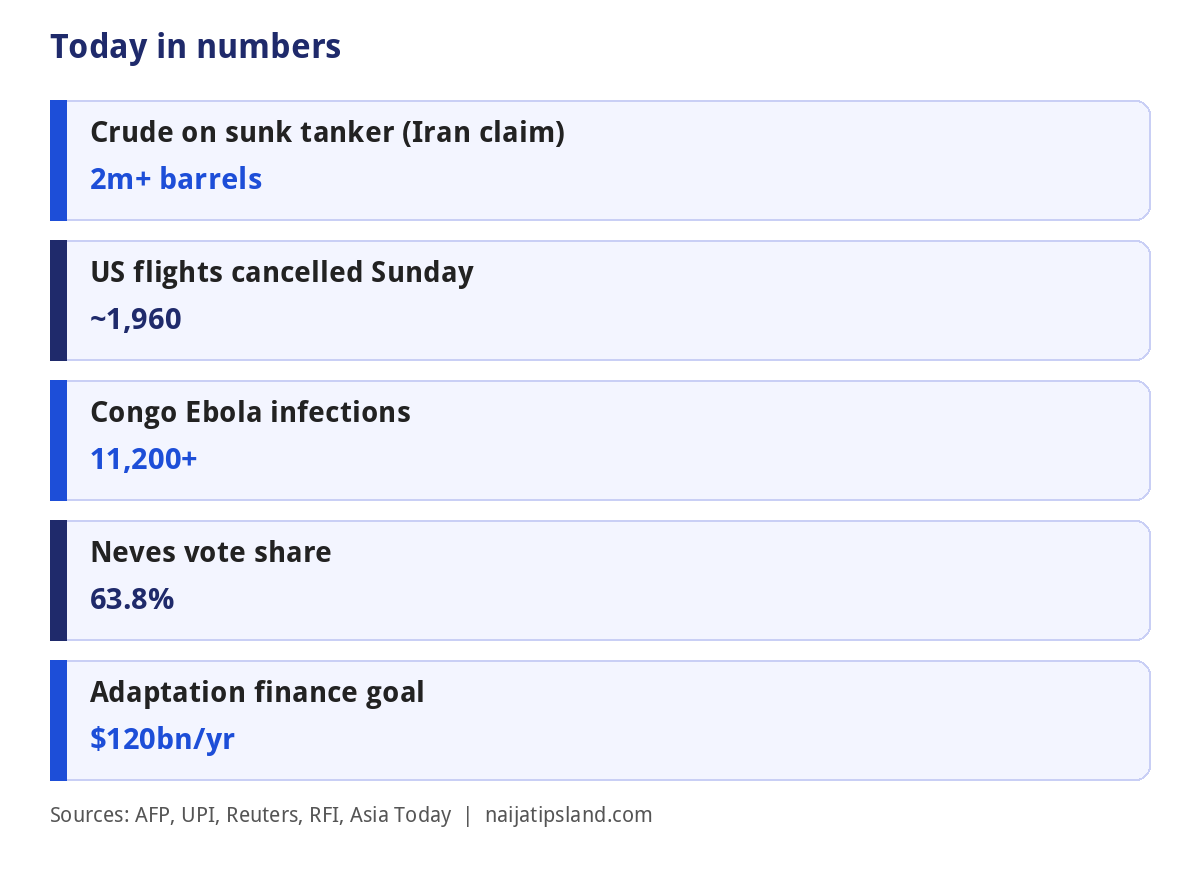
- Iran says a supertanker carrying over two million barrels of crude sank after hitting a mine.
- US flights recover after a rare nationwide ground stop; Trump blames the Biden administration.
- Africa CDC says Congo’s Ebola outbreak is still out of control after six months.
- UK Home Office to correct a refusal letter that told a blind Nigerian pensioner to seek treatment in India.
- Cape Verde re-elects President José Maria Neves with 63.8%.
- COP31 moves into its ministerial week with Africa pushing for adaptation money.
1. Russia rejects the Donbas-for-NATO idea
What happened: A day after President Zelensky said US negotiators had floated Ukrainian NATO membership in return for Kyiv giving up the rest of the Donbas, Russian Foreign Minister Sergei Lavrov said Moscow’s goals are the same ones Vladimir Putin set out in June 2024. Those include Ukrainian withdrawal from Donetsk, Luhansk, Zaporizhzhia and Kherson and a permanent end to NATO plans. Kremlin officials also warned that Russia could use force if there is no new European security deal. Zelensky said intelligence points to fresh Russian strikes and that allies meeting in Ramstein should focus on air defence. Kyiv says it hit more Russian refineries over the weekend.
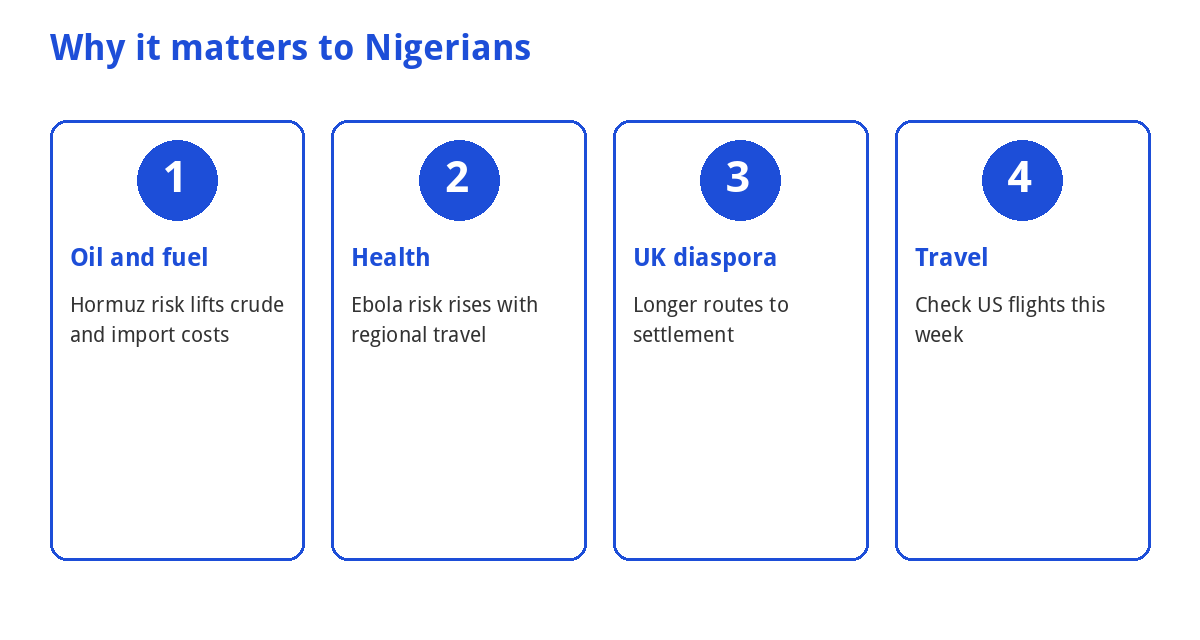
Why it matters: This war still moves global oil, wheat and fertiliser prices, all of which feed into what Nigerians pay at the pump and in the market. A stalled peace process means that pressure is not going away soon.
Source: La Repubblica; The Independent.
2. Iran says a supertanker sank near the Strait of Hormuz
What happened: Iran’s Revolutionary Guards said on Sunday that two tankers using what Tehran calls an unauthorised route in the southern strait struck mines, and that one, a supertanker carrying more than two million barrels of crude, sank. The claim has not been independently confirmed, and the ships were not named. The UK Maritime Trade Operations centre separately reported an attack on a tanker heading towards Hormuz, saying the crew were safe. The US says it has cleared mines from the main routes and has been escorting ships since the summer.
Why it matters: Higher risk in the Gulf tends to lift crude prices, which helps Nigeria’s oil earnings but also keeps imported fuel and shipping costs high. Nigerian seafarers working on Gulf routes are also exposed.
3. US airports recover after a nationwide ground stop
What happened: Nearly 2,000 more flights were cancelled in the US on Sunday after Friday’s rare order stopping all take-offs, which officials blamed on a botched upgrade of air traffic control cables. Transportation Secretary Sean Duffy said engineers were examining routers at sites in Arkansas and Texas, that there was no sign of a cyberattack, and asked Congress for $50 billion to rebuild the network. President Trump blamed the Biden administration for the state of the system. Democratic Senator Chris Van Hollen replied that Congress had already approved $12.5 billion, only about a third of which has been spent. Monday cancellations had fallen to a few dozen by Sunday evening.
Why it matters: If you or family are flying to or through the US this week, check your booking before heading to the airport, as crews and planes are still being repositioned.
Source: UPI; AP via WOOD TV; AFP via news.com.au.
4. Congo’s Ebola outbreak is still out of control, says Africa CDC
What happened: Six months after the outbreak was declared on 15 May, Africa CDC head Jean Kaseya said it remains serious and not under control. Government figures show more than 11,200 infections and about 5,500 deaths. He said over 80% of new cases come from outside known contact lists and about 65% of deaths happen at home rather than in treatment centres. Attacks on health workers, unpaid staff and slow aid are making things worse. About $2.9 billion has been pledged, and Kaseya urged donors to release roughly $1.6 billion of it.
Why it matters: Nigeria recorded an imported Ebola case in October, so the risk is not distant. Travellers to and from Central and East Africa should follow screening rules and report symptoms early.
5. Home Office error puts UK settlement rules in the spotlight
What happened: A 67-year-old blind Nigerian woman who has lived in Britain for 26 years was refused early indefinite leave to remain, and her refusal letter said treatment could be available in India, a country she has no link to. Home Office sources told The Guardian a corrected letter is being prepared. Her lawyers at Migrant and Refugee Justice say new settlement rules from Home Secretary Shabana Mahmood could leave her renewing visas for another 20 years. The Home Office said it does not comment on individual cases. Separately, the UK has published lists of in-country visa routes eligible for five-day priority and next-day super priority decisions, including Skilled Worker, Health and Care Worker, Student and Graduate visas.
Why it matters: Nigerians are one of the largest groups on UK work and study visas. Longer routes to settlement change family plans, costs and timelines, so it is worth checking how the new rules apply to your own route.
Source: Metro; BizWatch Nigeria; Legit.ng.
6. Cape Verde re-elects President Neves
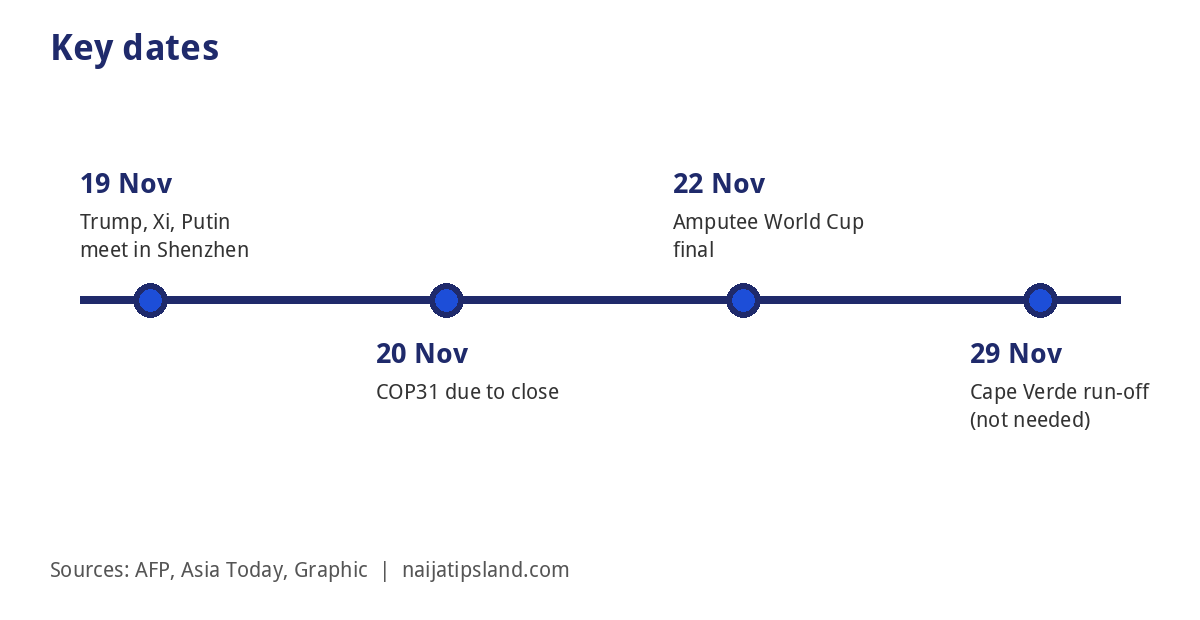
What happened: José Maria Neves won a second five-year term in the first round on Sunday with 63.8% of votes, according to provisional results, avoiding a run-off planned for 29 November. His challengers included Joana Rosa Amado, the country’s first woman presidential candidate. About 420,000 people were registered, including some 76,000 abroad, and around 150 ECOWAS, AU and EU observers watched the vote, which passed peacefully.
Why it matters: A calm, quickly counted election in an ECOWAS member is a useful reference point as Nigeria heads into its own January polls, and Cape Verde’s large diaspora vote is a model many Nigerians abroad would like to see at home.
Source: RFI (AFP); Ground News.
7. COP31 enters its ministerial week
What happened: Ministers take over the climate talks in Antalya, Türkiye, this week, with the summit due to end on Friday 20 November. A draft on adaptation proposes tripling adaptation finance to at least $120 billion a year by 2035, but also includes an option to revisit that target. The African Group wants the tripling made a firm commitment with yearly milestones. Carbon Brief estimates public climate finance pledges are down about 70% on 2025, and the US has again sent no delegation.
Why it matters: Adaptation money pays for flood defences, drought-resistant farming and early warning systems. After repeated flooding seasons, Nigeria has a direct stake in how much actually gets pledged.
Source: Asia Today; The Economic Times.
What to watch next
- The Ramstein meeting of Ukraine’s allies and any reply from Washington to Moscow’s stance.
- Independent confirmation, or not, of the tanker sinking, and how oil prices react.
- The Trump, Xi and Putin meeting in Shenzhen on 19 November.
- The first COP31 cover text and the final deal on Friday.
- Whether the Home Office publishes transition rules for people already on settlement routes.
Frequently asked questions
Is Nigeria at risk from the Congo Ebola outbreak?
Nigeria recorded an imported case in October and health authorities isolated contacts. The risk rises with travel, so screening at entry points and early reporting of symptoms remain important.
Why does trouble in the Strait of Hormuz affect fuel prices in Nigeria?
About a fifth of the world’s oil normally passes through Hormuz. Disruption pushes up crude and shipping costs, which feed into the landing cost of imported products and global petrol prices.
Can I get a faster UK visa decision from inside the UK?
Some in-country routes qualify for priority (five working days) or super priority (next working day) decisions, depending on your route and how you verify your identity. Places are limited, so the option may not always be offered.
This roundup summarises reporting by the outlets credited under each story, in our own words. Follow Naijatipsland Updates on WhatsApp for the next edition. Spotted an error? Tell us and we will correct it under our editorial policy.