Business News Today, 11 November 2026: FCCPC pushes petrol cuts, fintech bill passes, N30bn for meters

Last updated: 11 November 2026 · By Naijatipsland Editorial Team · Editorial policy
Morning roundup · Wednesday 11 November 2026 · By Ade Adeniyi, Founder and Editor
Good morning. Crude has fallen below $92 and the competition regulator now wants that to show up at the pump. The naira held steady officially while the street rate widened, stocks slipped on bank profit-taking, and the Senate moved to bring the biggest fintechs under tighter Central Bank supervision. Here is your money briefing.
Today at a glance
- FCCPC warns refiners and marketers to pass on falling crude prices.
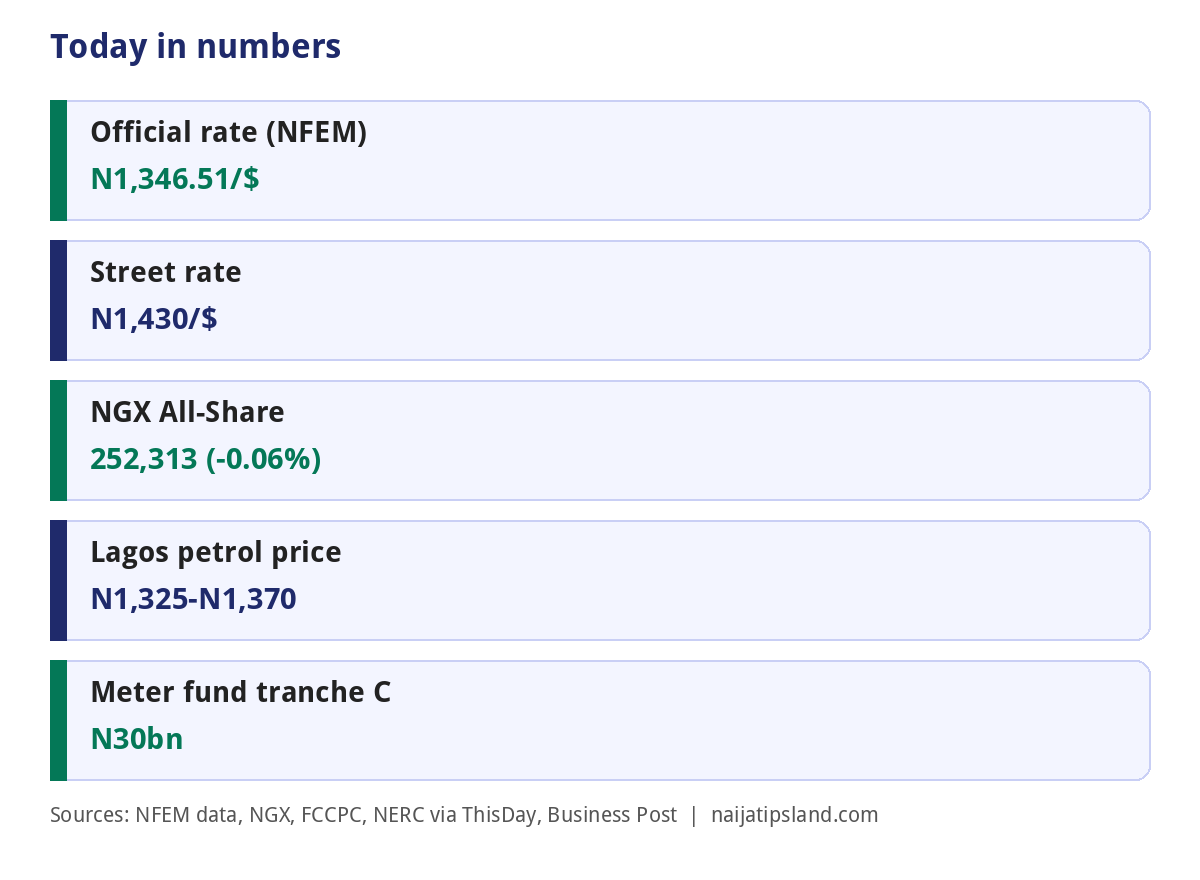
- Naira: about ₦1,346.51/$ official, ₦1,430/$ on the street.
- NGX All-Share Index dips 0.06% as banks lose ground.
- Senate passes bill letting the CBN designate systemically important fintechs.
- NERC releases ₦30 billion for free meters, with a 31 May 2027 deadline.
- CBN says public money alone cannot fund farming; lending rates may ease in 2027.
- IFAD warns El Niño could cut Sahel staple yields by up to 30%.
1. Petrol: regulator says cheaper crude must reach the pump
What happened
The Federal Competition and Consumer Protection Commission (FCCPC) said on Tuesday it is tracking wholesale and retail fuel prices with the downstream regulator, NMDPRA, as Brent fell from a September peak of about $115 to under $92. Petrol still sells for ₦1,405 to ₦1,420 a litre in Abuja and ₦1,325 to ₦1,370 in Lagos, against ₦839 to ₦925 before the Iran war began in late February. Chief executive Tunji Bello said there would be “no justification” for high prices if the fall lasts, and promised action on proven anti-competitive conduct. Marketers have blamed the earlier rise on global crude swings and supply disruption.
Why it matters
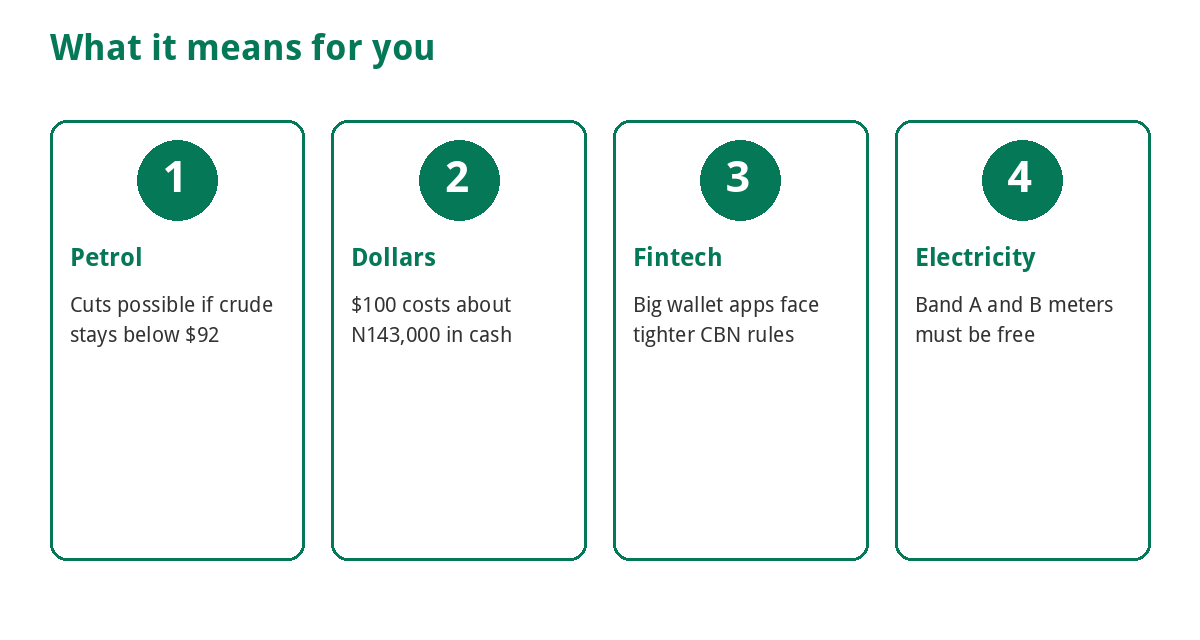
Fuel drives transport fares and food prices. Pump prices usually lag crude because of stock bought at higher cost, so watch for cuts over the next few weeks.
Source: ThisDay; Voice of Nigeria; The Sun.
2. Naira steady officially, street gap widens
What happened
The dollar averaged ₦1,346.51 at the official Nigerian Foreign Exchange Market (NFEM) on Tuesday, within a tight ₦1,343 to ₦1,347 band. Parallel-market dealers quoted ₦1,410 to buy and ₦1,430 to sell, a premium of roughly ₦83, up from about ₦1,390 to ₦1,400 last Friday. Separately, the Association of Bureaux De Change Operators of Nigeria asked the CBN to clear licence backlogs and give licensed dealers real access to NFEM, warning that the industry could shrink.
Why it matters
At these rates, $100 costs about ₦134,650 officially but ₦143,000 in cash. Follow daily moves on our dollar to naira exchange rate today tracker.
Source: TechEconomy; WithinNigeria; Legit.ng.
3. Stocks: banks drag NGX slightly lower
What happened
The NGX All-Share Index fell 143.58 points, or 0.06%, to 252,313.16 on Tuesday, trimming market value by about ₦93 billion to ₦163.82 trillion. The banking index lost 0.67%, with UBA and Zenith down, while insurance rose 1.33%. Champion Breweries and Honeywell Flour led gainers; NAHCO fell almost 10%. More stocks rose than fell (32 to 21), and the index is still up about 62% this year, ThisDay reported.
Why it matters
A small dip after Monday’s rally is normal profit-taking; breadth suggests investors are still buying.
Source: Business Post; ThisDay.
4. Senate passes bill to supervise big fintechs
What happened
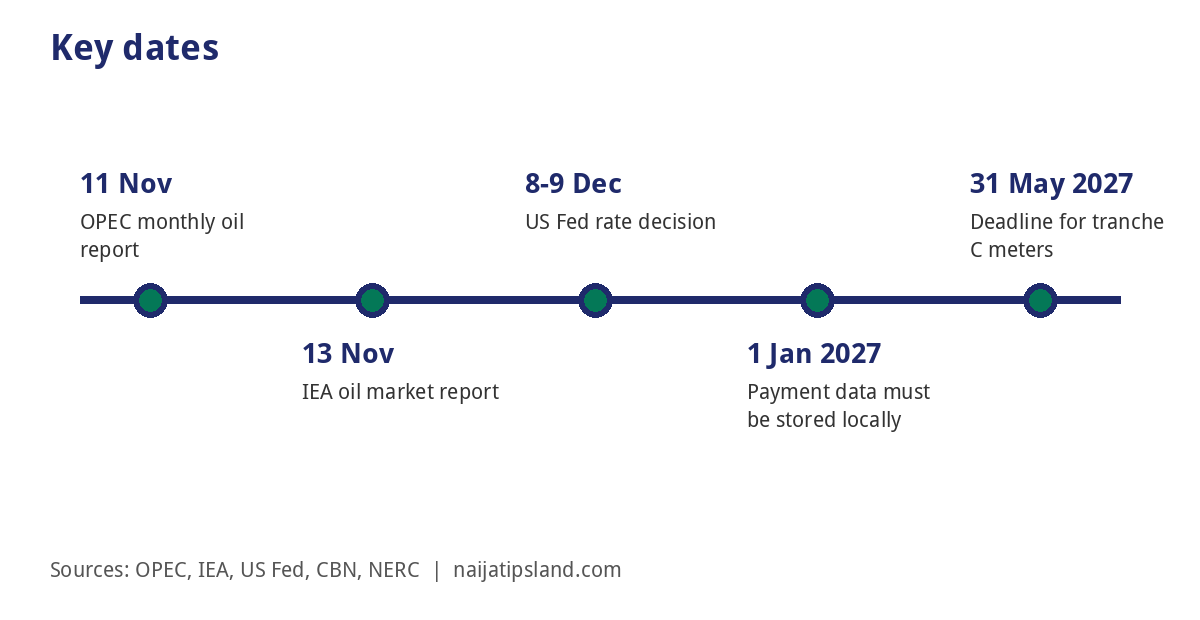
The Senate on Tuesday passed, at third reading, an amendment to the Banks and Other Financial Institutions Act that lets the CBN designate large fintechs and other non-bank lenders as “systemically important”. Designated firms would face stress tests, cybersecurity and governance rules, ownership disclosure and sanctions. The CBN backed the bill at a March hearing. It still needs House concurrence and presidential assent. Separately, banks and payment firms face a 1 January 2027 deadline to store payment data in Nigeria; a NITDA survey found 22 of 44 respondents had not started.
Why it matters
Millions of Nigerians now keep money in mobile wallets. Stronger rules should make large apps safer, though compliance costs may squeeze smaller players.
Source: ThisDay; NALTF; MarketingEdge.
5. ₦30 billion for free electricity meters
What happened
NERC approved ₦30 billion for the third tranche of the Meter Acquisition Fund, effective 2 November, to meter all remaining Band A customers and speed up Band B. The 11 DisCos must finish installations by 31 May 2027, and every meter must be free and marked “NOT FOR SALE”. Suppliers get 70% on delivery and 30% after installation. The fund has now approved ₦79 billion; NERC data show about 4.7 million of 12.75 million active customers remain unmetered.
Why it matters
A meter ends estimated billing. If you are on Band A or B without one, ask your DisCo, and never pay for a fund meter.
Source: Nigeria Info; Daily Trust.
6. CBN: private money must fund farming
What happened
Speaking through Deputy Governor Lamido Yuguda at an Abuja roundtable, CBN Governor Olayemi Cardoso said public funds cannot meet agriculture’s financing needs and that the Agricultural Credit Guarantee Scheme Fund will be repositioned to draw in banks and investors rather than return to direct intervention lending. New Telegraph reported he expects lending rates to decline in 2027. Bank data show the average maximum lending rate rose to 32.62% in September even after the policy rate was cut to 23%.
Why it matters
Cheaper, guaranteed loans for farmers could lift output and help cool food prices, but only if banks actually lend.
Source: Punch; New Telegraph; ThisDay.
7. El Niño threat to food prices
What happened
A report from the UN’s International Fund for Agricultural Development (IFAD), released at COP31, warned of a possible drought corridor from Senegal through Nigeria to Ethiopia. It said past strong El Niño events cut Sahel rainfall by 20 to 35%, which could reduce yields of millet, sorghum and maize by 15 to 30%, though confidence in the West Africa forecast is lower. Poultry farmers told Daily Independent that any grain shortfall would quickly raise feed, egg and chicken prices.
Why it matters
Food takes the biggest share of most household budgets, so early investment in irrigation and storage matters for 2027 prices.
Source: MSME Africa; Daily Independent.
What to watch next
- Any pump price cuts by Dangote, NNPC retail and major marketers.
- OPEC monthly report on Wednesday and IEA report on Friday.
- House of Representatives action on the fintech supervision bill.
- US Fed decision on 8-9 December, which could pressure the naira.
Frequently asked questions
Why are petrol prices still high if crude has fallen?
Retailers are often selling stock bought at higher prices, and costs also depend on the exchange rate, freight and refining margins. Cuts usually come with a delay.
Do I have to pay for a meter under the NERC fund?
No. NERC says meters under the Meter Acquisition Fund are free. Report any demand for payment to your DisCo and to NERC.
What is a systemically important fintech?
A non-bank payments or lending firm large or connected enough that its failure could hurt the wider financial system. The bill would let the CBN place such firms under closer supervision.
This roundup summarises reporting by the outlets credited under each story, in our own words. Follow Naijatipsland Updates on WhatsApp for the next edition. Spotted an error? Tell us and we will correct it under our editorial policy.