

Last updated: 31 October 2026 · By Naijatipsland Editorial Team · Editorial policy
Updated 31 October 2026. If you live in the UK and need a Nigerian visa, the application is done online through the official Nigerian Immigration Service (NIS) e-Visa portal, followed by a biometrics step and an approval you print and carry. This guide explains who needs a visa, which documents officers usually ask for, how the process works from London or anywhere else in the UK, and how to avoid the copycat websites that charge extra. Fees, processing times and rules change, so always confirm the current figures on the official portal before you pay.
Who Needs a Nigerian Visa From the UK?
Most British passport holders who were not born in Nigeria and have no Nigerian citizenship need a visa to enter Nigeria. A UK passport does not give visa-free entry. Nigerian citizens travelling on their Nigerian passport do not need a visa, and that includes many British-Nigerians who have kept or obtained a Nigerian passport (see our guide to getting a Nigerian passport from abroad and the Nigerian passport application guide).
The grey area is people of Nigerian origin who now hold only a foreign passport, including British-born children of Nigerian parents. Whether you count as a Nigerian citizen by birth or by descent depends on your parents and your own circumstances, and the rules for dual nationality are set out in Nigerian law. If you are unsure, get advice from the Nigerian High Commission in London before you book flights. Do not assume that a Nigerian-sounding surname changes your status at the airport.
The Two Routes: Online e-Visa or the High Commission
The main route today is the online e-Visa system run by the Nigerian Immigration Service. You create an account, fill in the form, upload documents, pay online and track the application. Some applicants are also directed to complete their biometrics at a Nigerian mission, and the Nigerian High Commission in London publishes guidance for UK-based applicants. Because the process has been updated several times, read the current instructions on the official sites rather than relying on an old forum post or a video from a few years ago.
Whatever you do, start from the official government website. Many look-alike sites rank high in search results, copy the logo and charge a service fee on top of the real visa fee. If a site asks you to pay through a personal account, a gift card or a money-transfer app, it is not the government.
Documents You Should Prepare
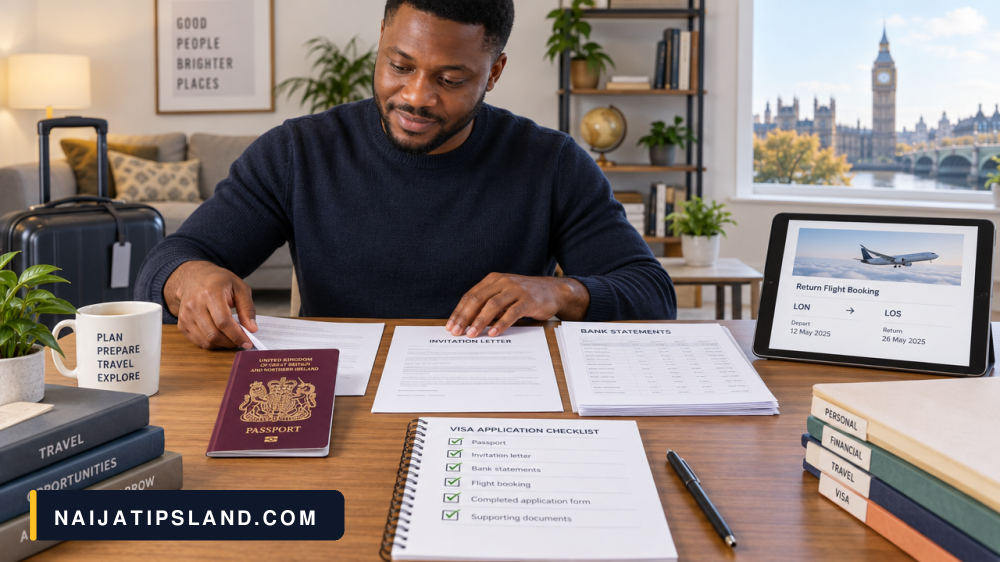
Requirements differ by visa type, but UK applicants should expect to need most of the following:
- A passport valid for at least six months beyond your travel dates, with blank pages.
- A recent passport-style photograph that meets the portal specification.
- A return or onward flight booking, or a travel itinerary.
- Proof of where you will stay: a hotel booking or an invitation letter from your host.
- Bank statements, commonly the last three to six months, to show you can fund the trip.
- Proof of ties to the UK, such as an employer letter, payslips or a residence document.
- A yellow fever vaccination certificate where required for your travel history.
The invitation letter
If you are visiting family, the Nigerian host usually writes an invitation letter confirming who you are, your relationship, the dates, and where you will stay. Ask them to attach a copy of their ID and proof of address, and to confirm that they will be responsible for your stay. Keep the letter accurate and consistent with the dates on your flight booking, because mismatched details are a common reason for delays.
Step-by-Step: How to Apply From the UK
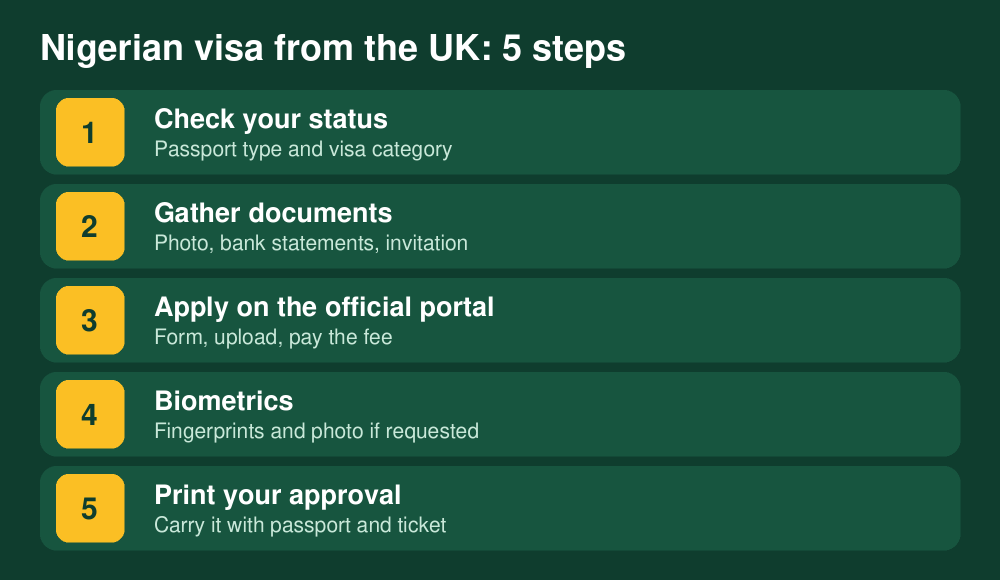
1. Choose the right visa type
Pick the category that matches your reason for travel, such as tourism, visiting family, business or work. Applying under the wrong category is a frequent cause of rejection and can cost you the fee.
2. Create your account on the official portal
Use an email address you check daily, because status updates and requests for more information arrive there. Fill in your name exactly as it appears on your passport.
3. Complete the form and upload documents
Answer every question truthfully and upload clear scans. Blurry photos, cropped passport pages and expired documents slow things down.
4. Pay the fee on the portal
Fees are set by the government and shown on the portal at the point of payment, usually in US dollars, and they vary by visa type and duration. Treat any number quoted in blogs, including this one, as a guide only. If your card is declined, do not switch to a different website; contact the card issuer or the portal support channel. For tips on moving money cheaply, see our guide to money transfer apps for Nigerians in the UK.
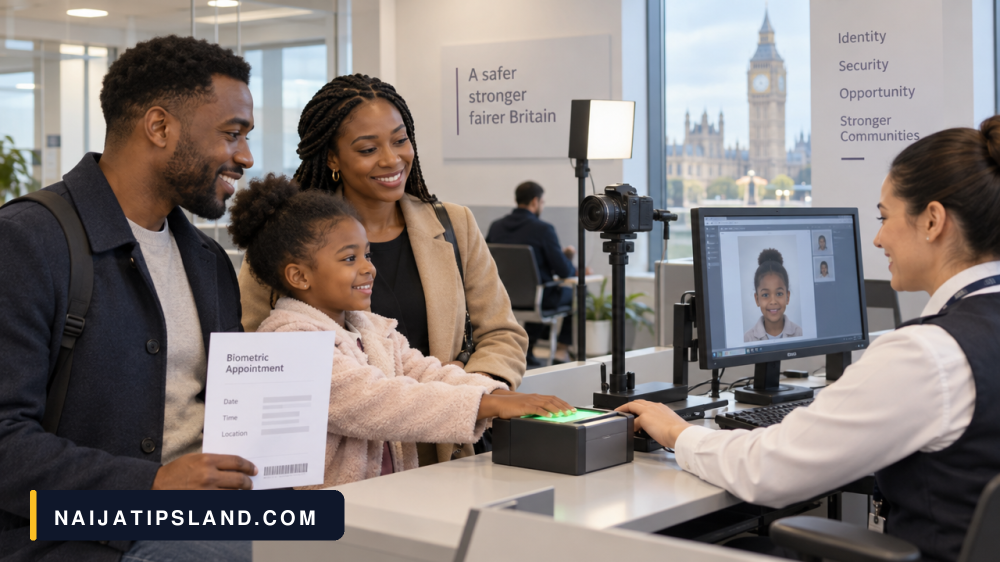
5. Attend biometrics if requested
Applicants are generally asked to provide fingerprints and a photo. Book the slot as soon as the portal allows it and bring the confirmation, your passport and your documents.
6. Wait for approval and print it
Processing times are reported by third-party sources as roughly ten working days, but this is not guaranteed, and busy periods such as December can be slower. Do not book non-refundable flights until the approval is in your inbox. Print it and carry it with your passport and return ticket.
Visa on Arrival: Can You Get One?
Do not plan to buy a visa when you land. Visa on arrival in Nigeria is not a general option for tourists. It is limited to specific pre-approved cases, usually business travellers whose sponsor arranged approval in advance. Airlines can refuse boarding if you cannot show a valid visa, so treat the online approval as non-negotiable.
How Long Should You Allow?
Aim to apply at least four to six weeks before travel. That gives you time for biometrics, corrections and any request for extra documents. If you are travelling for a funeral, a wedding or the Christmas period, start even earlier.
Common Mistakes That Delay or Sink Applications
- Using a third-party website that is not the official portal.
- Names that do not match the passport, or a passport expiring too soon.
- An invitation letter that does not match your flight dates.
- Bank statements that look inconsistent or show no regular income.
- Choosing the wrong visa category.
Money and Safety Tips for Your Trip
Carry some naira for arrival costs, tell your UK bank you are travelling so your card is not blocked, and check the current rate before you convert. Our daily guide to the dollar to naira exchange rate explains the gap between official and street rates, and how to send money to Nigeria safely covers moving funds without being scammed. If you plan to stay connected after you return, see staying informed about Nigeria from abroad. If you are still deciding where to go next, compare visa-free destinations for Nigerians and the UK visa rules for Nigerians for the reverse journey.
Frequently Asked Questions
Can I apply for a Nigerian visa in the UK without visiting the High Commission?
Most of the application is online. You may still be asked to complete biometrics, so check the current instructions on the official portal.
How long does a Nigerian visa take for UK applicants?
Third-party sources report around ten working days, but timelines vary. Apply early and do not book non-refundable travel first.
Do British-Nigerians need a visa?
It depends on your citizenship status and which passport you travel on. A Nigerian passport holder does not need a visa. If you hold only a British passport, ask the High Commission about your category.
Is there a Nigerian visa on arrival for UK citizens?
Not for ordinary tourists. It is restricted to pre-approved cases.
How much does a Nigerian visa cost?
The fee is set by the government and shown on the portal at payment, so confirm it there. Never pay a site that adds an unexplained service charge.
This guide is general information, not legal or immigration advice. Always check the official Nigerian Immigration Service and High Commission pages for current rules.







Look-alike visa websites charge extra on top of the real fee. Have you applied for a Nigerian visa from the UK, and how long did yours take?