Cost of Living in the UK for Nigerians in 2026: Rent, Bills, Food, Transport and a Sample Budget

Last updated: 28 October 2026 · By Naijatipsland Editorial Team · Editorial policy
Moving to the UK on a Skilled Worker, student or family visa is exciting until the first rent invoice arrives. Many Nigerians are surprised that the salary figure on a job offer is not the money they can spend, and that rent can swallow half of it. This guide breaks down the real monthly costs using official figures, shows what a minimum-wage worker takes home, and gives you ways to cut costs. Checked 28 October 2026. Prices vary a lot by city, so treat the budgets here as planning guides, not guarantees.
The headline numbers
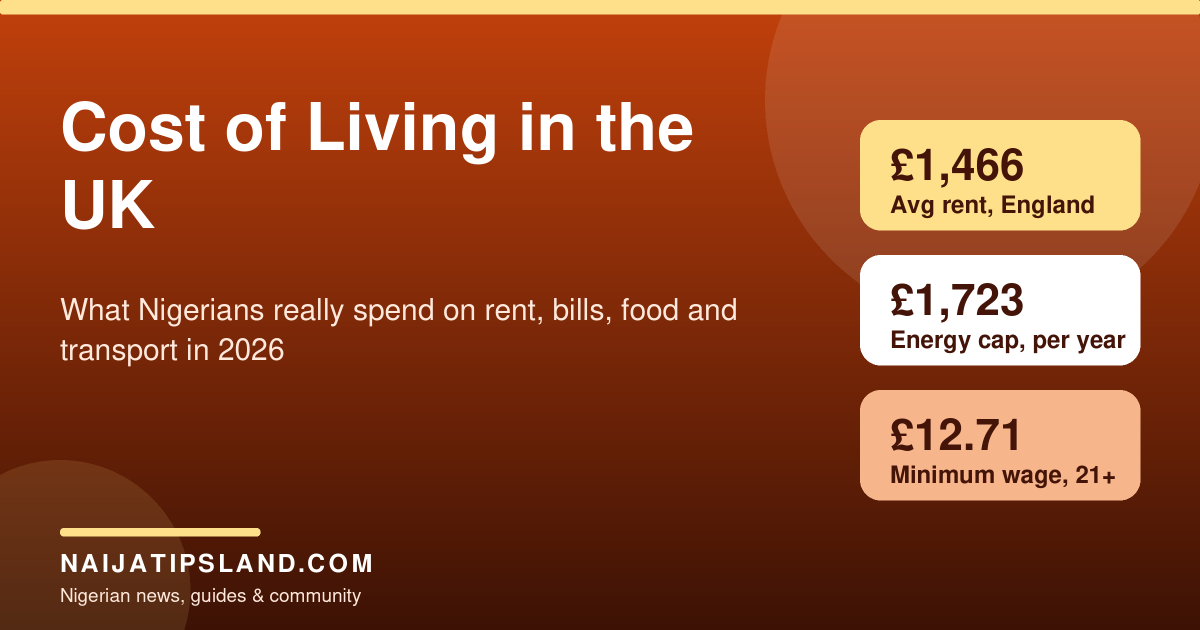
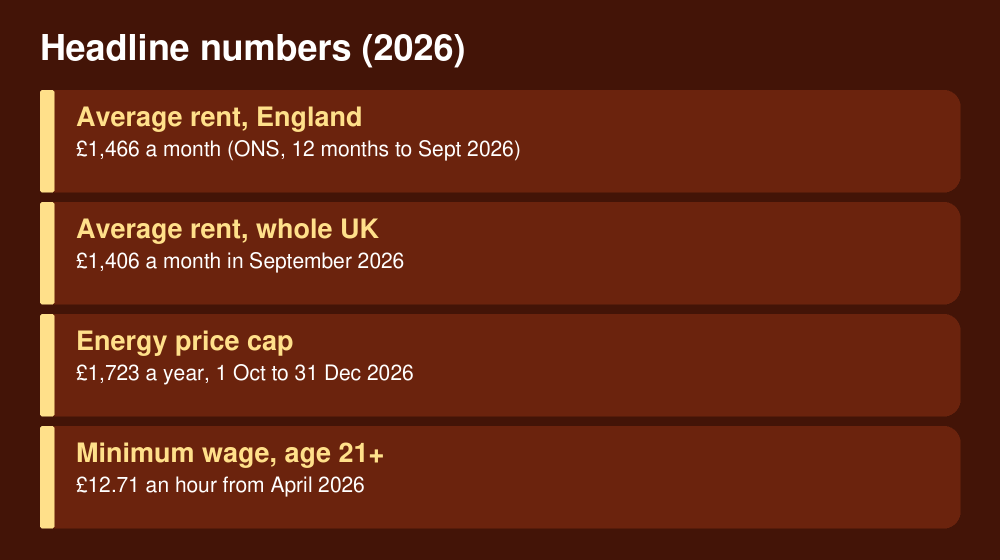
The Office for National Statistics reports that average private rents in England were £1,466 a month in the 12 months to September 2026, up 4.0%, while the average across the whole UK was £1,406. Wales averaged £848 and Scotland £1,011. London is far higher than the national figures, so check the latest London number before you commit. Ofgem set the typical household energy bill at £1,723 a year for 1 October to 31 December 2026, a 4% rise, and the National Living Wage for workers aged 21 and over is £12.71 an hour since April 2026.
What you take home
Pay is taxed through PAYE, with income tax and National Insurance deducted before you see it. Independent calculators put full-time work at the National Living Wage at roughly £1,800 to £1,900 a month after tax, depending on hours and pension. That means a whole-flat average rent would be most of a minimum-wage worker’s pay, which is why most newcomers share. On a Skilled Worker visa, the required salary is much higher; our guide to the UK Skilled Worker visa explains the thresholds.
Housing: your biggest bill
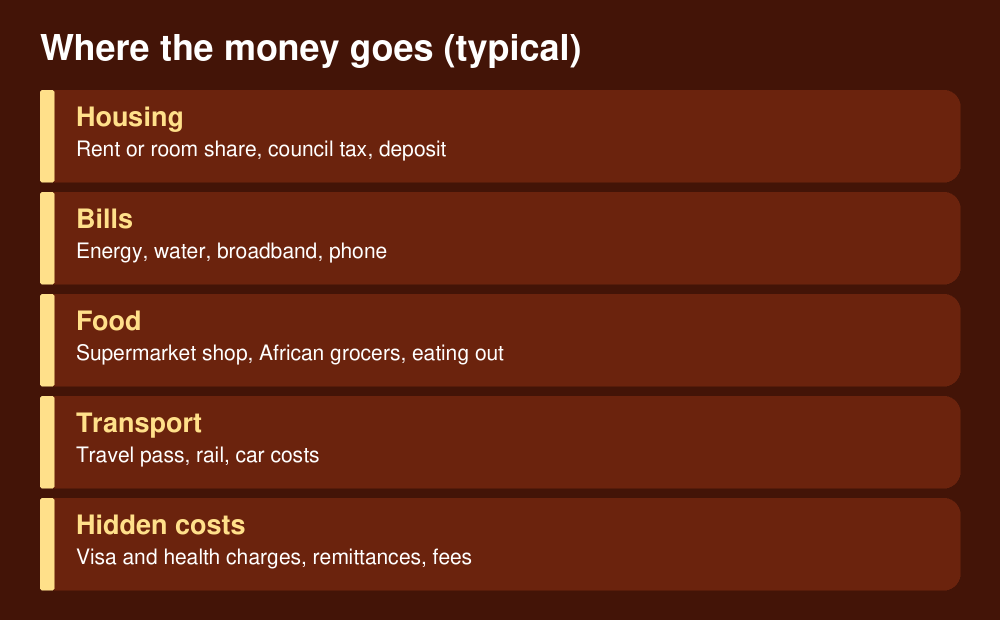
Expect to pay a deposit (capped in England at five weeks’ rent for most tenancies) plus the first month in advance, so budget for several thousand pounds on arrival. Many landlords and agents also check your right to rent, so bring your visa or share code. A room in a shared house is much cheaper than renting alone, and living outside the big cities can cut rent sharply if you can handle the commute. Tenants usually also pay council tax unless exempt, and students are exempt in many cases. Council tax varies by area and property band, and a single adult in a home can often claim a discount, so check your local council.
Bills and utilities
Energy is the big one. The price cap means a typical household using gas and electricity pays about £1,723 a year, which is a little under £145 a month, but you may pay less in a small flat or share it with housemates. Add water, broadband, a mobile contract (SIM-only deals are cheap) and, if you watch live television, a TV licence. Many room rents include bills; ask first.
Food and groceries
Supermarket prices are higher than in Nigeria for the staples most families miss, such as yam, ugwu, palm oil and garri, but African and Caribbean grocers in most cities sell them, often cheaper than mainstream shops. Discount chains keep everyday shopping affordable. Cooking at home, batch cooking and avoiding delivery apps will save more than any coupon.
Transport
Public transport is expensive in London and varies elsewhere. Monthly or annual travel passes beat pay-as-you-go. Railcards give a third off some rail fares for eligible people. Owning a car adds insurance, tax, MOT, fuel and parking, so most newcomers wait. Compare the cost of living near work against commuting from a cheaper area.
Hidden costs newcomers forget
- Visa and health charges: the Immigration Health Surcharge is paid in advance; see our UK spouse visa guide and UK visa fees guide.
- Remittances: many Nigerians send money home each month; set a fixed amount before you budget.
- Phone, ID and banking: opening a UK bank account can take time without proof of address.
- Winter clothing and heating: a coat and a heating plan are real costs in your first months.
- Student costs: read our guide to the cheapest UK universities if you are coming to study.
A sample monthly budget
This is a planning illustration, not a measured average. Suppose you earn about £2,000 a month take-home and rent a room outside London. A sensible split is housing and bills around half, food a sixth, transport a tenth, and the rest for savings, remittances and fun. If your rent is more than half your take-home, look for a cheaper area or a flatmate. Compare with our guide to Nigeria’s cost of living to see what you are trading off.
How to cut your costs
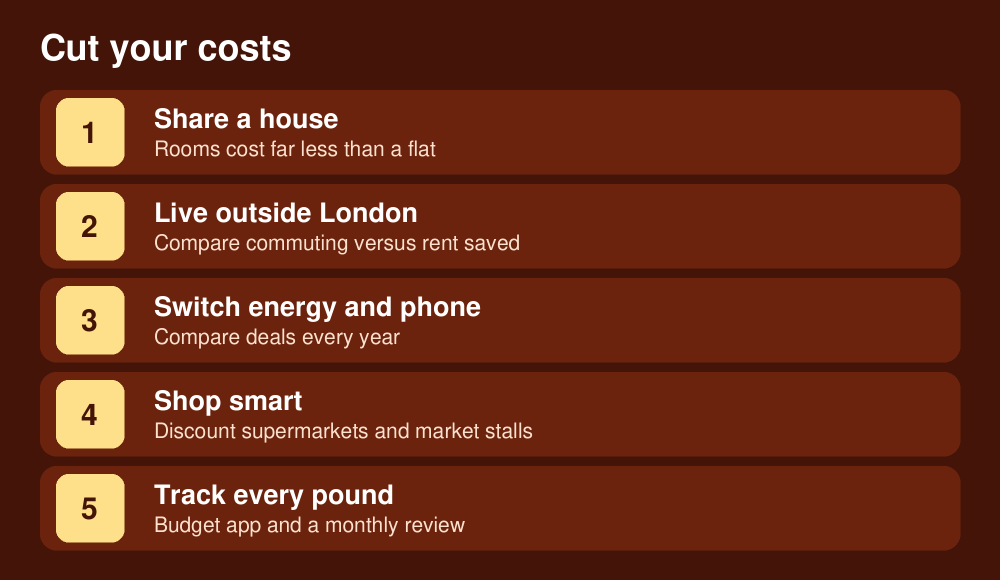
- Share a house for the first year, then reassess.
- Check whether bills are included before you sign.
- Compare energy, broadband and phone deals each year.
- Use discount supermarkets and African grocers for staples.
- Track every pound with a free budgeting app and review monthly.
- Keep an emergency fund of at least one month of rent.
Never pay a deposit to someone you have not met or a property you have not seen; rental scams target newcomers. See our guide to internet scams. And if you are still choosing a destination, compare our guides to the best countries to move to for work and the easiest work visas.
Frequently asked questions
How much do I need to live in the UK as a Nigerian?
It depends on city and household. As a guide, plan for rent plus about £800 to £1,200 a month for a single person on bills, food and transport outside London, more in London. Treat this as an estimate.
Is the UK more expensive than Nigeria?
In raw pounds yes, but wages are also higher. Compare take-home pay, not exchange rates.
Can I live on minimum wage?
Only if you share housing and budget tightly. Renting alone at average rents is out of reach.
Bottom line
The UK can be affordable if you plan: share housing, avoid pricey cities until you have a salary that supports them, and budget every cost, including the ones that disappear into visa charges. Check current figures before you move.