


TL;DR:
- Fintech has expanded financial access for Nigerians through mobile apps and digital platforms.
- It uses technologies like APIs and AI to provide faster, inclusive financial services.
- Nigeria’s fintech growth addresses basic needs, promoting social inclusion and innovation.
Fintech has quietly reshaped how millions of Nigerians send money, get loans, and save for the future. Less than a decade ago, a large share of Nigerians had no access to formal financial services. Today, a smartphone and a data connection are often all you need to open an account, pay bills, or secure credit. Fintech drives financial inclusion for underserved groups including women, low-income earners, and small business owners across Nigeria. This article breaks down exactly what fintech means, how it works, and why it matters specifically to you as a Nigerian consumer or entrepreneur.
Table of Contents
- Defining fintech: Beyond the buzzword
- How fintech works: Key technologies and mechanics
- Why fintech matters in Nigeria: Inclusion, innovation, and impact
- Challenges and the road ahead: Regulation, risks, and rapid growth
- Why Nigeria’s fintech journey is unlike any other
- Start exploring Nigeria’s digital transformation
- Frequently asked questions
Key Takeaways
| Point | Details |
|---|---|
| Fintech explained | Fintech uses technology to make financial services simpler, faster, and more accessible for Nigerians. |
| Transforming inclusion | New solutions help unbanked, women, and small businesses join the financial system. |
| Game-changing impact | Nigerian fintechs process billions in payments and lead Africa in digital finance innovation. |
| Ongoing challenges | Fintech must navigate both enabling policies and compliance risks to keep delivering safe services. |
Defining fintech: Beyond the buzzword
Fintech is short for financial technology. At its core, it refers to any software, application, or digital platform that delivers financial services electronically. But calling it just a buzzword would be selling it short. Fintech is a fundamental shift in how money moves, how credit is assessed, and how savings are managed.
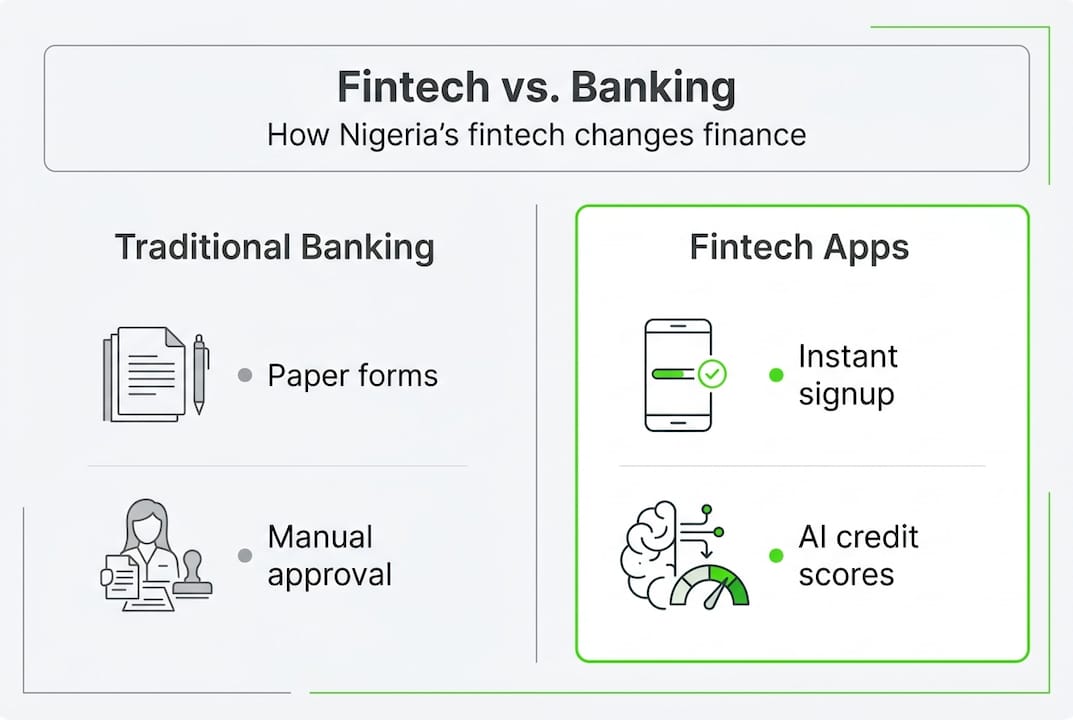
Traditional banking requires you to walk into a branch, fill out forms, and wait days for approvals. Fintech flips that process entirely. You can open a bank account in minutes, transfer funds instantly, or apply for a loan without ever speaking to a human agent. Fintech enables digital access, management, and insights for your finances in ways that were previously reserved for people with formal employment or existing bank relationships.
Here is what fintech looks like in everyday Nigerian life:
- Mobile payment apps like OPay and PalmPay that let you pay for goods and services directly from your phone
- Digital lending platforms like Carbon and FairMoney that approve loans based on your phone data and transaction history
- Neobanks like Kuda that offer full banking services without a physical branch
- Investment platforms that allow you to buy treasury bills or mutual funds with as little as ₦1,000
- Remittance services that make receiving money from abroad faster and cheaper
Fintech is not a replacement for money. It is a smarter, faster, and more accessible way to manage it. For millions of Nigerians who were previously shut out of formal finance, it is a genuine lifeline.
The difference between fintech and traditional banking is not just speed. It is about who gets served. Traditional banks historically required collateral, a salary account, and a credit history. Fintech companies use alternative data to assess creditworthiness, opening the door for traders, artisans, and gig workers who never had a chance before.
How fintech works: Key technologies and mechanics
With a clear understanding of what fintech is, the next step is to uncover how it actually works in practice. The magic behind fintech is a combination of several technologies working together seamlessly.
Here is a numbered breakdown of the key components:
- APIs (Application Programming Interfaces): These are digital bridges that allow different financial systems to communicate. When you link your bank account to a fintech app, an API is doing the connecting securely in the background.
- Artificial intelligence and machine learning: These systems analyze your spending patterns, income flows, and behavior to personalize offers. Your loan limit on a lending app is not random; AI calculated it based on your data.
- Mobile applications: The front-end experience most users interact with. A well-designed app makes complex financial operations feel simple.
- Open banking: A framework where banks share customer data (with your permission) with third-party fintech providers to offer better services.
- Data analytics: Fintech companies process enormous amounts of data to detect fraud, predict defaults, and improve user experience.
Fintech relies on APIs for secure connections, AI and machine learning for personalization, and data aggregation for financial insights that traditional banks simply cannot match in speed or scale.
| Feature | Traditional banking | Fintech ||
|—|—|—|
| Account opening | Days to weeks | Minutes |
| Loan approval | Weeks | Hours or less |
| Operating hours | Business hours only | 24/7 |
| Credit assessment | Formal salary/collateral | Alternative data |
| Branch requirement | Often required | Fully digital |
These tech trends in Nigeria are not isolated. They connect to broader shifts in how Nigerians interact with digital infrastructure, including blockchain technology in Nigeria which is increasingly relevant to digital finance.
Pro Tip: When a fintech app offers you a loan or savings product, the interest rate and limit are often shaped by AI analyzing your transaction history. Keeping your account active and maintaining consistent inflows can improve the offers you receive over time.
Why fintech matters in Nigeria: Inclusion, innovation, and impact
Now that the technical side is clear, the Nigerian fintech story comes to life through real impacts and numbers. Nigeria is Africa’s largest economy and its most active fintech market. The numbers behind this growth are striking.
Key fintech inclusion data:
| Segment | Fintech customer share |
|---|---|
| MSMEs (micro, small, and medium enterprises) | 57% |
| Low-income earners | 47% |
| Women | 41% |
Fintech drives inclusion among MSMEs at 57%, low-income earners at 47%, and women who make up 41% of fintech customer bases. These figures show that fintech is not just a product for tech-savvy professionals. It is actively reaching people who traditional banks consistently failed.
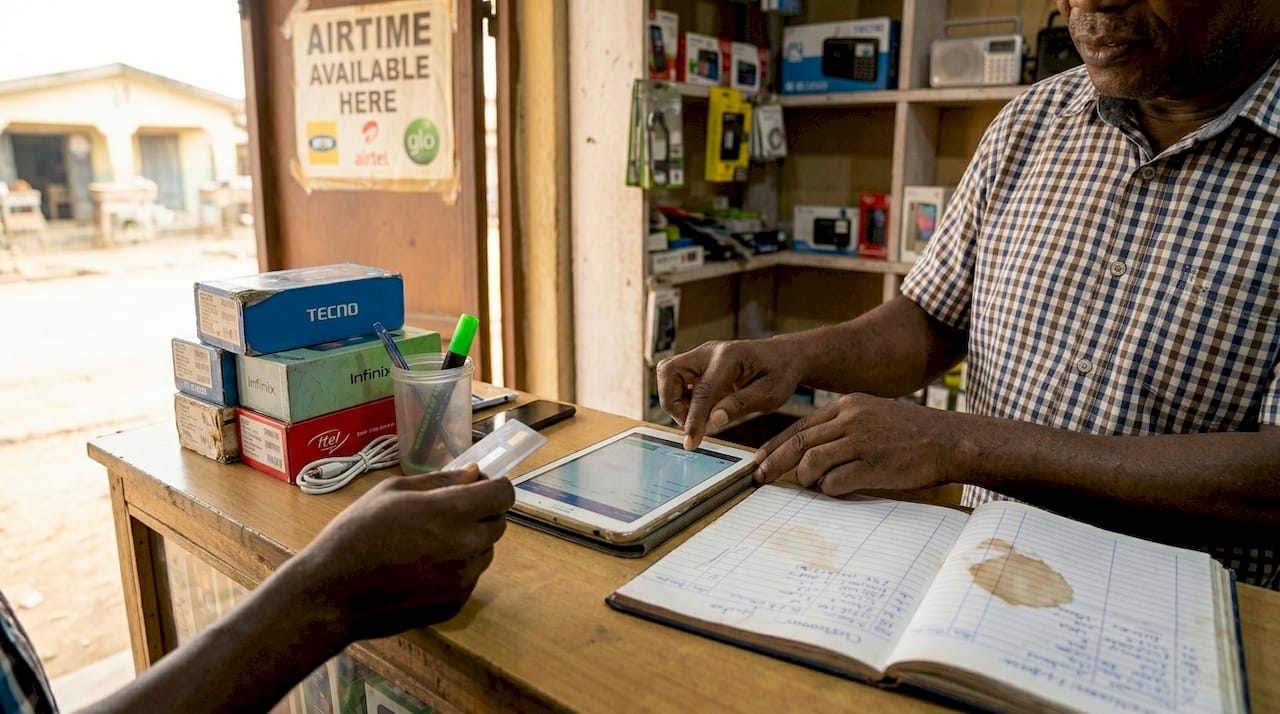
Nigeria’s National Instant Payment (NIP) platform is another proof point. Nigeria’s NIP platform processed approximately 11 billion instant payments in 2024, and 80% of Nigerian fintechs have adopted AI in their operations. These are not small numbers.
Some of the most recognized Nigerian fintech startups driving this growth include:
- Flutterwave: A payment infrastructure company processing billions in transactions across Africa
- Kuda Bank: A fully digital bank offering zero-fee transactions and instant credit
- OPay: A super-app combining payments, savings, and agent banking
- Carbon: A digital lending and banking platform using alternative credit scoring
- Interswitch: A veteran payments company that laid the groundwork for Nigeria’s digital payments ecosystem
Nigeria’s high mobile phone penetration rate gives fintech a natural distribution channel. Even in rural areas, people with basic smartphones can access financial services. Microfinance in Nigeria has also benefited, as digital tools lower the cost of serving low-income clients. The Nigeria digital economy continues to expand, and fintech is one of its most powerful engines.
Alternative credit scoring is one of Nigeria’s most important fintech innovations. Instead of requiring a payslip or collateral, platforms analyze mobile data, airtime top-up frequency, and transaction patterns to determine creditworthiness. This approach has unlocked credit for millions of Nigerians who were previously invisible to formal lenders.
Challenges and the road ahead: Regulation, risks, and rapid growth
Nigeria’s fintech boom isn’t without its hurdles. Here’s what’s keeping the sector on its toes and where solutions are emerging.
Regulation is the most debated topic in Nigerian fintech circles. 50% of Nigerian fintechs view regulation as enabling, while the other 50% see it as restrictive. Compliance costs and infrastructure gaps remain the top barriers to growth. This split reflects the genuine tension between protecting consumers and allowing innovation to flourish.
Key challenges facing Nigerian fintech today include:
- Compliance costs: Licensing fees and regulatory requirements are expensive, especially for early-stage startups
- Infrastructure gaps: Unreliable internet connectivity and power supply affect service delivery in many areas
- Predatory lending: Some digital lenders charge extremely high interest rates and use aggressive debt collection tactics
- Fraud and cybersecurity: As more money moves digitally, the risk of scams and data breaches increases
- KYC (Know Your Customer) gaps: Verifying user identities at scale remains a challenge, especially without widespread digital ID adoption
The CBN has shifted toward an innovation-enabling stance but maintains serious concerns over KYC compliance, digital identity verification, and consumer protection. Regulatory sandboxes, where startups can test products under supervised conditions, are one promising reform being explored.
The conversation around digital currency in Nigeria and cryptocurrency and digital finance also intersects with regulation, as the CBN works to balance innovation with financial system stability.
Pro Tip: Before using any fintech app, check whether it is licensed by the Central Bank of Nigeria (CBN) or the Securities and Exchange Commission (SEC). A licensed platform gives you a formal channel to report issues and seek recourse if something goes wrong.
Why Nigeria’s fintech journey is unlike any other
Understanding challenges brings us to what truly sets Nigeria’s fintech journey apart. Most global fintech narratives focus on Silicon Valley startups solving first-world convenience problems. Nigeria’s story is different. Here, fintech is solving survival-level problems: how to feed a family when you can’t access credit, how to receive money from a relative abroad without losing 15% to fees, how to save when no bank will open an account for you.
What makes Nigeria’s model genuinely instructive for the world is the combination of mass mobile adoption, community trust networks, and local innovation. Nigerian entrepreneurs did not wait for perfect infrastructure. They built around it.
Nigeria leads African fintech, and the WEF notes a sustainable growth phase driven by AI acceleration and regulatory streamlining. But the real advantage is cultural. Nigerians are early adopters who share financial tools through word-of-mouth at a speed no marketing budget can replicate. That social distribution is a fintech superpower.
Global fintech companies entering Africa would do well to study Nigeria’s model of inclusion-first design. The Nigeria tech trends shaping this space are not just local stories. They are blueprints for what inclusive financial technology can look like anywhere in the world.
Start exploring Nigeria’s digital transformation
Inspired by Nigeria’s fintech story? Here’s how you can get more involved in the conversation.
Naijatipsland.com is your go-to community for staying ahead of Nigeria’s fast-moving tech and finance landscape. Whether you want to understand how digital payments are reshaping commerce or discuss the latest CBN policy changes, the platform brings together informed Nigerians who are actively engaged in these conversations. Explore topical issues for Nigerian youth or start online discussions on fintech, digital finance, and innovation. Join the community, share your perspective, and stay informed as Nigeria’s digital economy continues to grow.
Frequently asked questions
What does fintech mean for everyday Nigerians?
Fintech means easier access to financial services like payments, transfers, loans, and savings through your phone or computer, without needing a traditional bank account or branch visit.
Which fintech companies are leading in Nigeria?
Popular Nigerian fintechs include Flutterwave, OPay, Kuda, FairMoney, Carbon, and Interswitch, each leading in specific areas like payments, lending, and digital banking.
How does fintech make financial services more inclusive?
Fintech uses alternative data and digital platforms to help people without traditional bank access get loans, make payments, and build savings records.
What risks should I watch out for when using fintech apps?
Risks include scams, data privacy breaches, and predatory lending practices, so always verify an app is CBN-licensed and read the loan terms carefully before signing up.