

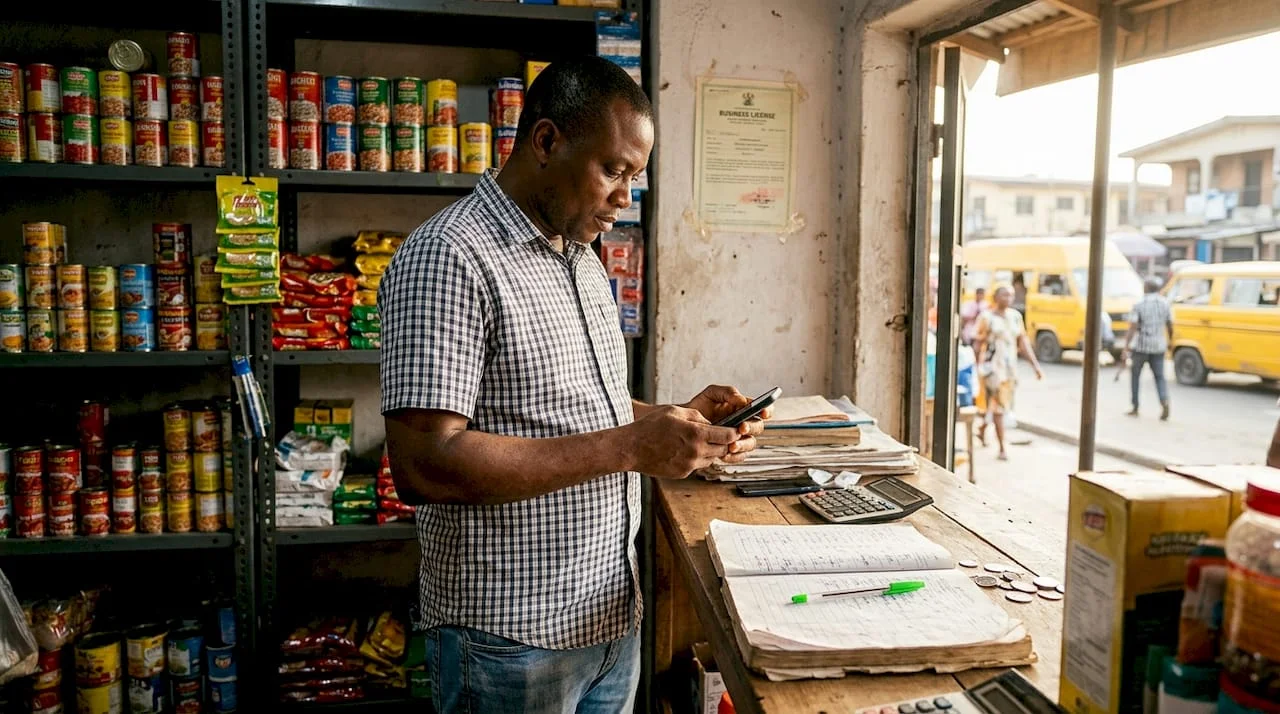
Many Nigerians see microfinance as the answer to poverty, but outcomes are mixed. While microfinance supports small businesses and poverty alleviation by enabling business startups, job creation, and income improvement, the reality is more complex than the promise. This article explores how microfinance works, real-world results, and the ongoing challenges. You’ll get clarity on its true impact and practical tips for making microfinance work in your life or business.
Table of Contents
- What is microfinance and why does it matter?
- Microfinance’s impact on livelihoods and small businesses
- A nuanced reality: limitations and risks of microfinance
- Microfinance in the digital era: trends and innovations
- Actionable steps for Nigerians: maximizing the benefits of microfinance
- Connect your next step: resources to support your financial journey
- Frequently asked questions
Key Takeaways
| Point | Details |
|---|---|
| Microfinance boosts inclusion | Microfinance extends financial services to Nigerians who otherwise lack access, supporting both individuals and small businesses. |
| Mixed results for SME growth | Microfinance drives job creation and poverty reduction, but poor management can limit or reverse business benefits. |
| Tech drives future progress | Digital innovations like mobile banking are expanding microfinance reach, though rural gaps remain. |
| Skills and planning matter | Financial literacy and solid business planning help individuals and SMEs maximize microfinance advantages and avoid pitfalls. |
What is microfinance and why does it matter?
Microfinance refers to financial services designed for low-income individuals and small businesses who lack access to traditional banking. Microfinance banks (MFBs) provide small loans, savings accounts, and insurance products to populations typically excluded from commercial banks. Unlike commercial banks that require substantial collateral and credit history, MFBs focus on character-based lending and group guarantees. They differ from informal lenders by offering regulated, transparent services at lower interest rates.
The main populations served include:
- Low-income urban workers seeking capital for small trades
- Rural farmers needing seasonal financing
- Women entrepreneurs building home-based businesses
- Small and medium enterprises (SMEs) requiring working capital
Microfinance emerged as a development tool because traditional banking systems failed to reach the majority of Nigerians. Nigeria has positioned itself as a regional microfinance innovator, with the Central Bank of Nigeria (CBN) establishing regulatory frameworks that balance growth with consumer protection. Nigeria tracks microfinance progress via CBN statistics and Global Findex, revealing advances and persistent gaps, especially for rural MSMEs.
Pro Tip: Before choosing a microfinance bank, verify its CBN license and check customer reviews to ensure you’re working with a legitimate, well-managed institution.
Understanding financial literacy for Nigerians is essential when navigating microfinance options. The more you know about interest rates, repayment terms, and loan structures, the better equipped you’ll be to make smart borrowing decisions.
Microfinance’s impact on livelihoods and small businesses
Evidence shows microfinance creates measurable improvements in poverty levels, job creation, and income stability across Nigeria. Microfinance supports SMEs, which drive about 75% of new job creation in Nigeria. Access to microcredit, savings products, and skills training lifts families and communities by providing capital for income-generating activities.
Research findings demonstrate strong correlations between microfinance access and poverty reduction, with R² values up to 93% in some studies. This means microfinance explains a significant portion of poverty variation in communities where it operates effectively. The mechanism works through multiple channels:
- Business startups and expansions that create employment
- Income diversification for vulnerable households
- Asset accumulation through savings programs
- Skills development through financial literacy training
The World Bank’s $500M project will reach 250,000 MSMEs, powering financial inclusion and private-sector growth. This investment signals international confidence in Nigeria’s MSME sector and the role microfinance plays in economic development.
| Impact Area | Measured Effect | Beneficiary Group |
|---|---|---|
| Job Creation | 75% of new jobs | SMEs, entrepreneurs |
| Poverty Reduction | Up to 93% correlation | Low-income households |
| Income Growth | 15-30% average increase | Microloan recipients |
| Women’s Empowerment | 60% of borrowers | Female entrepreneurs |
Microfinance particularly empowers women, who represent approximately 60% of microfinance borrowers in Nigeria. Women-led businesses show higher repayment rates and reinvest profits into family welfare, education, and health. This creates multiplier effects that extend beyond individual borrowers to entire communities.
“Microfinance doesn’t just provide money. It provides dignity, choice, and the power to build a better future for your family.”
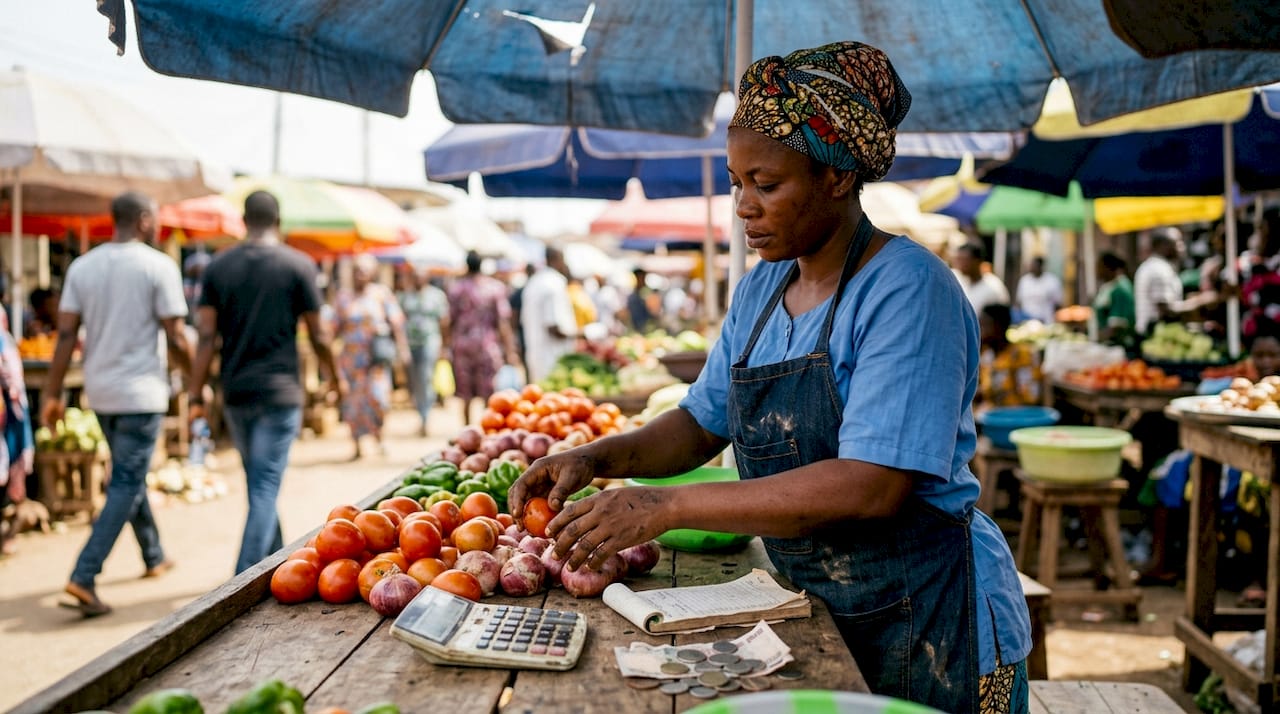
The success stories are compelling. Market traders expand inventory, tailors purchase equipment, farmers buy quality seeds, and tech entrepreneurs launch digital services. Each loan becomes a stepping stone toward financial independence. For inspiration on entrepreneurial success, explore Nigerian startup success stories that demonstrate what’s possible with proper financing and determination.
A nuanced reality: limitations and risks of microfinance
However, the story isn’t all positive. There’s important nuance in microfinance’s true effect which we need to address. Nigeria’s microfinance sector faces structural and operational challenges that limit effectiveness and sometimes harm borrowers.
Empirical studies show that microfinance sometimes has negative impacts on SME growth if loans are mismanaged or interest rates are too high. The main challenges include:
- High interest rates: Some MFBs charge 20-40% annual rates, making repayment difficult
- Over-indebtedness: Borrowers take multiple loans from different sources, creating debt traps
- Mission drift: MFBs shift focus to wealthier clients for lower risk and higher profits
- Poor targeting: Funds don’t always reach the poorest or most vulnerable populations
- Inadequate financial literacy: Borrowers lack skills to manage loans effectively
- Weak regulatory enforcement: Some MFBs operate with minimal oversight
| Scenario | Outcome | Key Factor |
|---|---|---|
| Proper loan use + training | Positive growth | Financial literacy, business planning |
| High interest + poor planning | Negative impact | Excessive rates, no support |
| Multiple loans + no monitoring | Over-indebtedness | Lack of coordination |
| Mission drift | Exclusion of poorest | Profit prioritization |
When borrowers use loans for consumption rather than investment, or when interest rates exceed business profit margins, microfinance can worsen financial situations. A trader who borrows ₦50,000 at 35% annual interest needs to generate at least ₦17,500 in additional profit just to break even. Without proper business planning, this becomes impossible.
Pro Tip: Calculate your expected profit before taking any loan. Your business must generate enough income to cover loan repayment, interest, and still leave profit for growth and personal needs.
The importance of financial literacy cannot be overstated. Borrowers who understand cash flow management, profit calculation, and debt-to-income ratios make better decisions and achieve better outcomes. Monitoring and support from MFBs also play crucial roles in success rates.
Did you know? Studies show that borrowers who receive business training alongside loans are 40% more likely to successfully grow their businesses compared to those who receive loans alone.
For broader context on how policy affects small businesses, check out tax reform for SME growth to understand the regulatory environment shaping Nigerian entrepreneurship.
Microfinance in the digital era: trends and innovations
These limitations are driving innovation. Technology is transforming Nigerian microfinance in exciting ways. Mobile banking, digital wallets, and fintech solutions are expanding microfinance access to previously unreachable populations. Digital platforms reduce operational costs, speed up loan processing, and enable real-time monitoring of borrower activities.
Key technological advances include:
- Mobile money integration: Loan disbursement and repayment via phone
- Digital credit scoring: Alternative data replaces traditional credit history
- Blockchain for transparency: Immutable records reduce fraud
- AI-powered risk assessment: Better prediction of borrower success
- Agent banking networks: Physical touchpoints in remote areas
Global Findex highlights Nigeria’s digital financial progress, though rural and MSME gaps persist. While urban areas enjoy robust digital infrastructure, rural North and women-led MSMEs still face connectivity and literacy barriers. The digital divide means technology benefits are unevenly distributed.
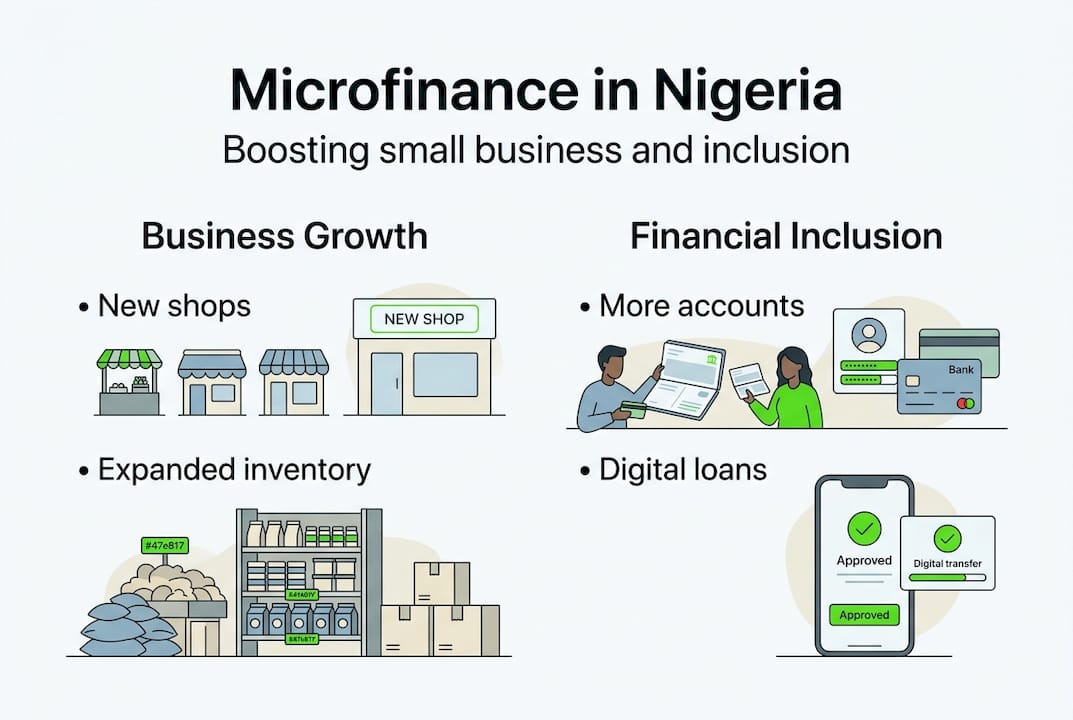
Progress is measurable. Mobile money accounts have grown by 300% since 2020, and digital loan products now reach customers in all 36 states. Fintech partnerships with traditional MFBs create hybrid models that combine digital efficiency with human support. This is particularly important for first-time borrowers who need guidance navigating financial products.
Pro Tip: When using digital microfinance platforms, protect your personal information by using strong passwords, enabling two-factor authentication, and never sharing your PIN or OTP codes with anyone, including customer service representatives.
Stay informed about fintech trends in Nigeria and understand the impact of Nigeria’s digital economy to position yourself for opportunities in this rapidly evolving landscape.
Actionable steps for Nigerians: maximizing the benefits of microfinance
With a firm grasp on how microfinance works and its challenges, here are the most important takeaways and action steps for you. Microfinance effectiveness improves with financial literacy, proper rate analysis, and clear planning.
Follow these steps to engage microfinance safely and successfully:
- Research and compare MFBs: Check CBN licensing, interest rates, repayment terms, and customer reviews before choosing a provider.
- Calculate your true borrowing cost: Add all fees, insurance, and interest to understand the total amount you’ll repay.
- Create a detailed business plan: Outline how you’ll use the loan, expected revenue, and repayment schedule.
- Start small: Take a smaller loan first to test your business model and build a positive credit history.
- Attend financial literacy training: Many MFBs and NGOs offer free workshops on money management and business skills.
- Keep detailed records: Track all income, expenses, and loan payments to maintain financial clarity.
- Build an emergency fund: Set aside small amounts regularly to handle unexpected expenses without defaulting on loans.
- Join a savings group: Peer support and accountability improve financial discipline and provide backup resources.
When evaluating loan options, ask these critical questions:
- What is the effective annual interest rate, including all fees?
- What collateral or guarantees are required?
- What happens if I need to reschedule a payment?
- Does the MFB offer business training or mentorship?
- How quickly can I access funds after approval?
- Are there penalties for early repayment?
Pro Tip: Mobile-accessible MFIs offer convenience, but always verify their legitimacy through the CBN website before providing personal information or making financial commitments.
For entrepreneurs, the key is matching loan size to genuine business needs. Borrowing more than necessary increases interest costs and repayment pressure. Borrowing too little may not achieve your business goals. Calculate precisely what you need for inventory, equipment, or working capital, then add a 10-15% buffer for unexpected costs.
Individuals seeking personal development loans should focus on income-generating skills. A loan for vocational training, professional certification, or equipment that enables freelance work offers better returns than consumption loans. Invest in yourself strategically.
Learn from others by avoiding financial mistakes that commonly derail borrowers and entrepreneurs in Nigeria.
Connect your next step: resources to support your financial journey
Ready for the next step? Here’s where you can connect and grow further. Making microfinance work requires more than just accessing loans. It demands community, knowledge, and ongoing support.
Join online discussion forums where Nigerian entrepreneurs share experiences, challenges, and solutions. These communities provide peer mentorship, accountability partnerships, and real-world advice that complements formal financial education. You’ll find people who’ve walked the path you’re on and can guide you through common pitfalls.
Building your business visibility is equally important. Learn how to boost your brand online through strategic digital marketing that attracts customers and grows revenue. The more effectively you market your business, the better your loan investment performs.
Naijatipsland.com offers a wealth of resources tailored to Nigerian entrepreneurs and individuals pursuing financial independence. Our community discusses everything from microfinance experiences to business growth strategies, policy changes, and success stories. Engage with fellow Nigerians who understand your context and can offer relevant, practical guidance.
Frequently asked questions
How does microfinance differ from regular banking in Nigeria?
Microfinance targets low-income, underserved communities often excluded from traditional banks, offering smaller loans and accessible services. Regular banks require substantial collateral, credit history, and minimum account balances that most Nigerians cannot meet.
What are the main risks of microfinance for borrowers?
Main risks include high interest rates, over-indebtedness, and loan mismanagement, which can worsen financial problems if not handled carefully. Borrowers may also face aggressive collection practices or hidden fees from unscrupulous lenders.
Who benefits most from microfinance programs in Nigeria?
Microfinance mainly benefits small businesses, women, and low-income households with limited access to traditional banking. Women entrepreneurs show particularly strong outcomes due to higher repayment rates and community reinvestment patterns.
Has microfinance reduced poverty in Nigeria?
Evidence shows microfinance contributes to poverty reduction and job creation, but effects vary depending on how funds are managed. Up to 93% of poverty variation can be explained by microfinance access in well-implemented programs, though mixed results occur when borrowers lack financial literacy or face excessive interest rates.
Recommended
- FG Constitutes Funding Committee For Nutrition Interventions / Naijatipsland
- Nigeria To Launch National Single Window For Economic Growth — Trade Minister, Oduwole / Naijatipsland
- Residents Appeal For Immediate Resumption Of Mpape Road Project / Naijatipsland
- How SMEs Can Leverage New Tax Reform For Growth – Experts / Naijatipsland