

TL;DR:
- Community journalism emphasizes collaborative, trust-based reporting tailored to specific communities. It involves active resident participation and balances accountability with fostering social cohesion. Its civic impact is measurable through behavioral signals like participation, contribution, connection, and local action.
Community journalism is defined as a form of reporting that prioritizes the information needs of a specific geographic or interest-based community through collaborative, trust-centered engagement. Unlike national or broadcast news, it treats the audience not as passive consumers but as active participants in shaping what gets covered. The American Press Institute describes this practice as “engaged journalism,” a framework built on building and preserving trusting relationships. Researchers like Lindsay Green-Barber and institutions like Duke’s News Measures Research Project have developed tools to measure its civic impact. Understanding what is community journalism means understanding a practice that holds local democracy together.
What is community journalism and how does it work?
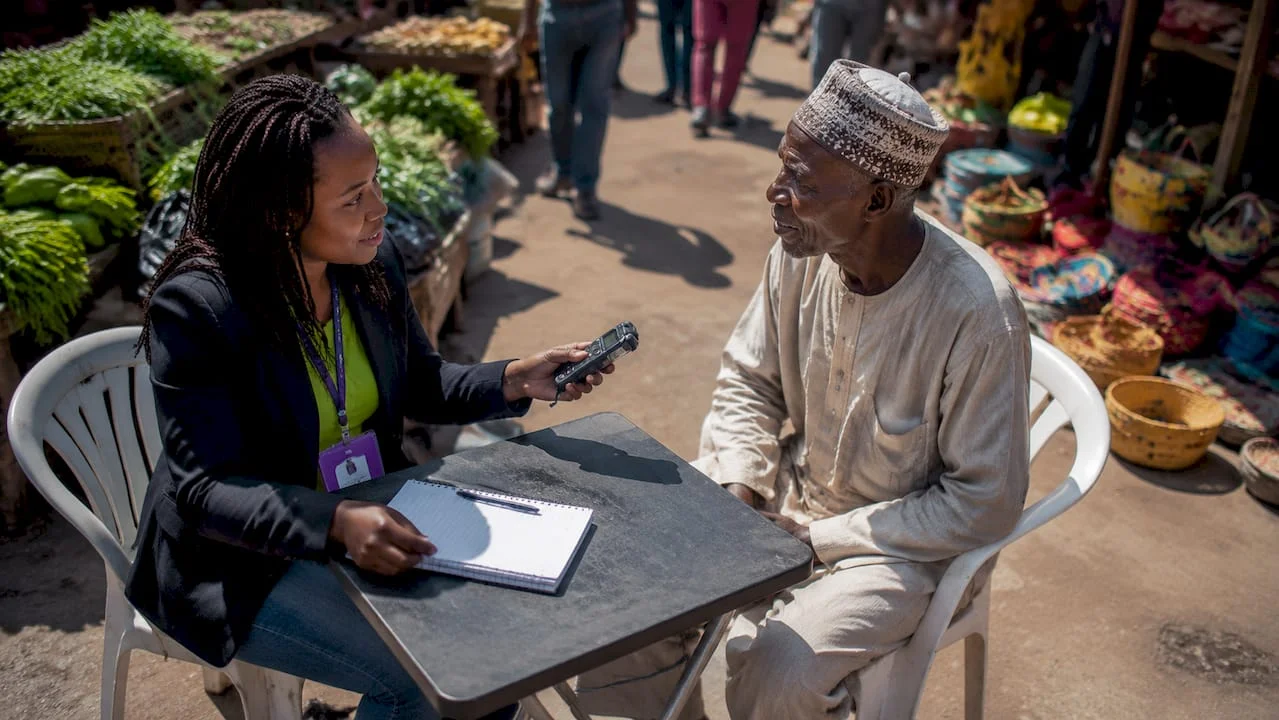
Community journalism is journalism done with a community, not merely for it. That distinction is the foundation of the entire practice. The American Press Institute defines engaged journalism as an inclusive practice dedicated to building and preserving trusting relationships between journalists and the people they serve. This moves the reporter’s role from gatekeeper to collaborator.
In practice, community journalists use structured tools to bring residents into the reporting process:
- Surveys and polls that identify which local issues matter most to residents
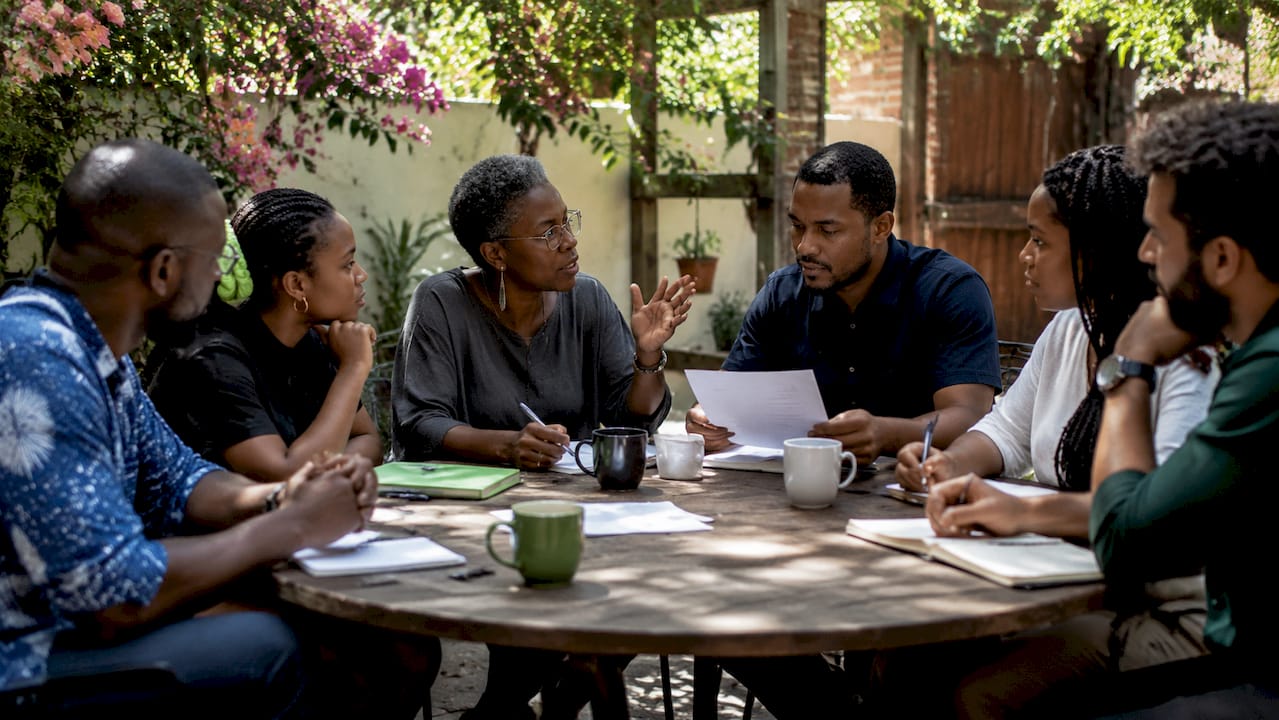
- Listening sessions where community members share concerns directly with reporters
- Advisory boards made up of local residents who help guide editorial priorities
- Live community events that create two-way conversation between journalists and audiences
These mechanisms are not optional extras. They are how story selection aligns with actual community needs rather than editorial assumptions. A reporter covering a neighborhood school closure, for example, would consult parents, teachers, and students before deciding the angle, not after.
Community journalism also differs from traditional journalism in its relationship to geography. Most community journalists live inside the communities they cover. That proximity builds credibility but also creates pressure. A reporter who attends the same church as the mayor faces different professional challenges than a correspondent parachuting in from a national outlet.
Pro Tip: If you want to understand whether a local outlet practices genuine community journalism, check whether it publishes reader-submitted questions, hosts public forums, or credits community members as contributors. These are reliable signals of the practice in action.
How do community journalists differ from traditional reporters?
The roles community journalists play are broader and more complex than those of traditional reporters. Peer-reviewed research published in Taylor and Francis journals identifies two core tensions: the watchdog role and the good neighbor role. Both are real. Both create friction.
The watchdog role requires community journalists to hold local officials, businesses, and institutions accountable. This is standard journalism. The good neighbor role requires something different.
- Amplifying underrepresented voices: Community journalists actively seek out residents who are ignored by mainstream coverage, including low-income neighborhoods, minority communities, and non-English speakers.
- Solution-oriented reporting: Rather than only documenting problems, community journalists often report on community-led responses and local resources.
- Fostering social cohesion: Coverage is designed to help residents recognize shared interests and build collective identity.
- Managing professional boundaries: Embedded journalists face pressure balancing aggressive accountability reporting with the relationships they depend on to do their jobs.
This dual role explains why community journalism is frequently misunderstood. Critics sometimes accuse community outlets of being too soft on local power. Practitioners argue that trust-building is a prerequisite for the access that makes accountability reporting possible. Both points have merit. The tension is not a flaw in the model. It is a feature of working inside a community rather than observing it from the outside.
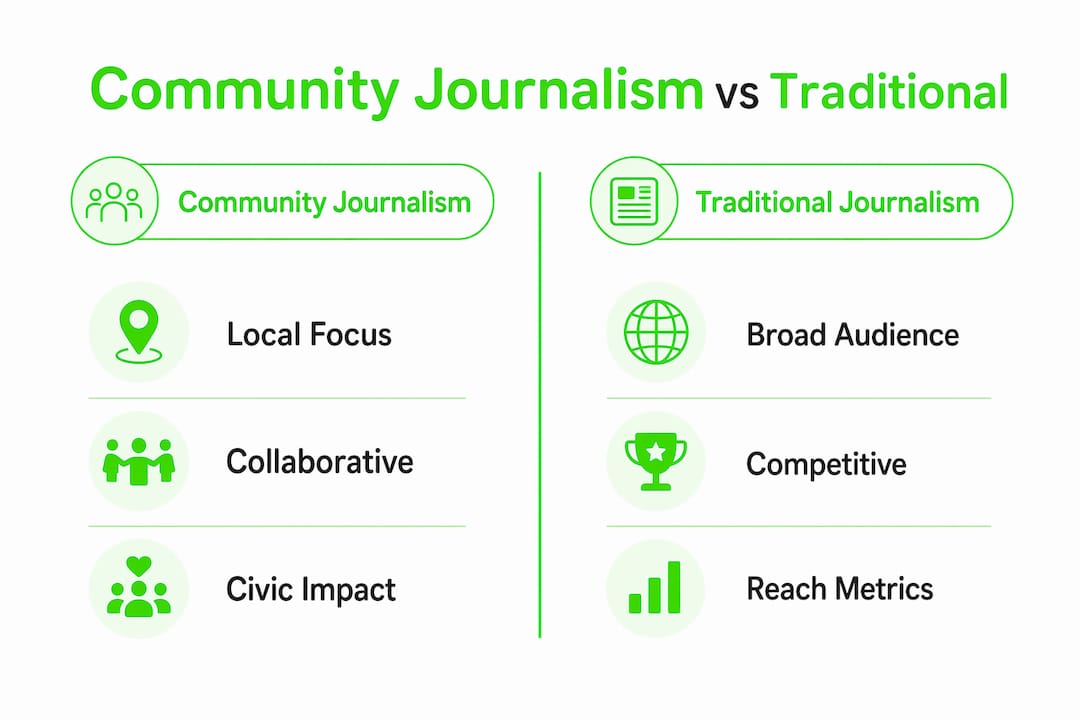
Traditional journalism tends to measure success by audience size, reach, and clicks. Community journalism measures success differently. The question is not how many people read the story. The question is whether the story changed something in the community.
Why does community journalism matter for civic life?
Local journalism acts as civic infrastructure, helping communities see themselves and increasing participation among residents. That is not a metaphor. It is a measurable function. When a community loses its local news outlet, voter turnout drops, municipal bond costs rise, and civic participation declines. Research consistently links sustained local news engagement to four behavioral outcomes.
“Civic impact is shown through behavioral signals: participation, contribution, connection, and civic action linked to sustained local news engagement.” — American Press Institute
These four signals form the core of how researchers now measure civic impact in community journalism. Each one matters:
| Civic Signal | What It Looks Like in Practice |
|---|---|
| Participation | Residents attending town halls or school board meetings after coverage |
| Contribution | Community members submitting letters, tips, or corrections to local outlets |
| Connection | Neighbors recognizing shared concerns through local reporting |
| Civic Action | Organized responses to local issues covered by community journalists |
Duke’s News Measures Research Project builds measurement frameworks that assess content quality, audience needs, and the overall health of local news infrastructure. This matters because it shifts the conversation from “did we publish stories?” to “did those stories produce civic outcomes?” That shift is significant. It holds community journalism accountable to a higher standard than page views.
Pro Tip: When evaluating a local news outlet’s impact, look beyond its social media following. Ask whether its coverage has led to policy changes, community meetings, or public responses. Those outcomes are the real measure of community journalism’s value.
What are real examples of community journalism in practice?
Community journalism takes many forms across different contexts. Understanding the examples makes the definition concrete.
- Neighborhood newsletters: Hyperlocal publications like Block Club Chicago cover individual neighborhoods with reporters assigned to specific zip codes. Coverage includes zoning decisions, school news, and local business openings that national outlets ignore entirely.
- Tribal and Indigenous news outlets: Publications like ICT (Indian Country Today) serve specific cultural communities with reporting that reflects their values, languages, and governance structures.
- University-community partnerships: Journalism schools at institutions like Northwestern University and the University of Missouri operate community news labs that serve underserved local areas while training students.
- Digital community platforms: Online forums and news aggregators that allow residents to submit news articles and participate in discussions represent a growing form of community journalism in the digital age.
Collaborations with civic partners also define the practice. Libraries, nonprofits, faith organizations, and local governments often work alongside community news outlets to distribute information and host listening sessions. These partnerships expand reach without requiring large budgets.
The comparison between community journalism and traditional journalism becomes clearest at the structural level:
| Feature | Community Journalism | Traditional Journalism |
|---|---|---|
| Primary audience | Specific geographic or interest community | General or national audience |
| Story selection | Co-created with community input | Editor-driven editorial judgment |
| Success metric | Civic outcomes and engagement | Audience size and advertising revenue |
| Reporter relationship | Embedded, long-term community member | Assigned, often rotating beat coverage |
| Accountability model | Relational trust plus watchdog reporting | Institutional independence |
The role of digital journalism has expanded what community journalism can do. Digital tools allow small outlets to reach diaspora communities, publish in multiple languages, and gather community input at scale. For Nigerian communities, platforms that aggregate local news and enable user participation represent this model in action.
Key takeaways
Community journalism is the practice of reporting built on collaborative trust, civic accountability, and direct community participation rather than audience size or editorial independence alone.
| Point | Details |
|---|---|
| Core definition | Community journalism prioritizes a specific community’s information needs through collaborative, trust-centered reporting. |
| Collaboration is structural | Tools like surveys, advisory boards, and listening sessions are how story selection aligns with community needs. |
| Dual journalist roles | Community reporters balance watchdog accountability with good neighbor responsibilities inside the communities they cover. |
| Civic impact is measurable | Participation, contribution, connection, and civic action are the four behavioral signals that prove community journalism’s value. |
| Measurement goes beyond content | Duke’s News Measures Research Project evaluates content quality, audience alignment, and local news infrastructure health together. |
Naijatipsland’s take on what community journalism really demands
Community journalism is harder than it looks, and most people underestimate it for the wrong reasons. The challenge is not finding stories. Stories are everywhere in any community. The real challenge is earning the trust that makes people tell you the stories that matter.
I have seen outlets that publish daily and still have no relationship with the communities they claim to serve. The content exists. The connection does not. That gap is exactly what columnists and community reporters who build lasting audiences understand that others miss. Audience-building in community journalism is relationship-building first.
The accountability tension is real too. When you live in the same neighborhood as the people you cover, every story has a social cost. That does not mean you avoid hard stories. It means you do the relational work before and after publication that national reporters never have to think about. Embedded journalism research confirms this: proximity creates both access and pressure simultaneously.
What gives me confidence in community journalism’s future is the measurement shift. When outlets start tracking civic outcomes instead of page views, they stop optimizing for the wrong things. That is a structural change, not a trend. And for platforms like Naijatipsland, where community participation is built into the product itself, the principles of community journalism are not a separate practice. They are the operating model.
— Naijatipsland
Stay informed and get involved with local news
Naijatipsland covers trending topics, current affairs, and community discussions that matter to Nigerians at home and across the diaspora. Whether you want to follow local news, understand how digital media shapes communities, or participate directly in the conversation, this platform is built for you.
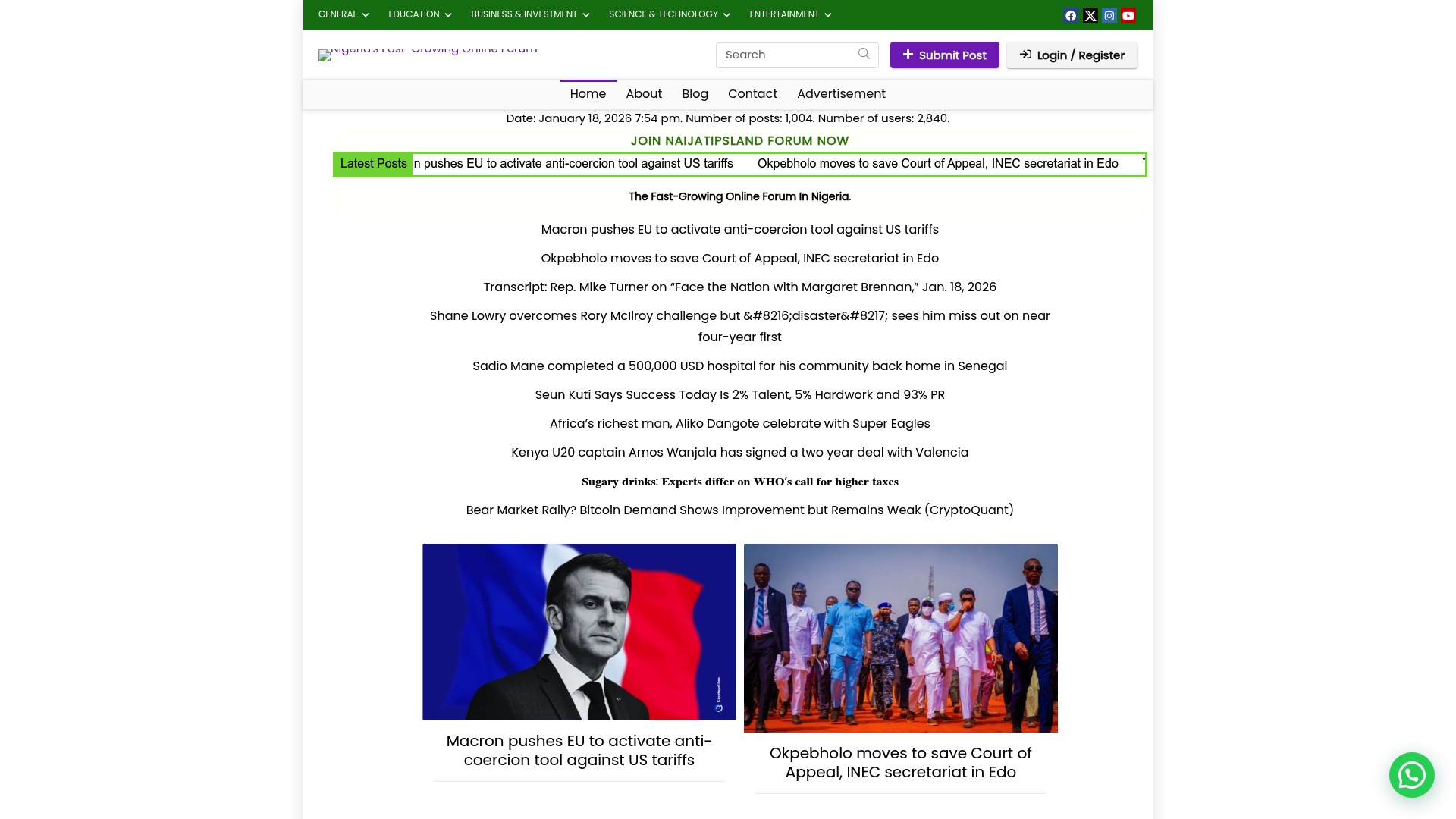
You can follow local news to stay connected with what is happening in your community, or explore how digital ads impact Nigeria and the broader media ecosystem. If you want to go deeper, Naijatipsland’s user registration guide walks you through how to join the platform, submit posts, and become part of a growing community of engaged Nigerian readers and contributors.
FAQ
What is the community journalism definition in simple terms?
Community journalism is reporting that focuses on the specific information needs of a local or interest-based community, built on collaboration and trust between journalists and residents.
How does community journalism differ from traditional journalism?
Traditional journalism targets general audiences and measures success by reach. Community journalism targets a specific community, co-creates story selection with residents, and measures success by civic outcomes like participation and local action.
What are the main benefits of community journalism?
Community journalism increases civic participation, amplifies underrepresented voices, and strengthens local democracy by connecting residents to the decisions and events that directly affect their lives.
What makes community journalism unique compared to other reporting?
The collaborative engagement model makes it unique. Community journalists use surveys, advisory boards, and listening sessions to let residents shape coverage, not just consume it.
How is the impact of community journalism measured?
Duke’s News Measures Research Project measures impact through three lenses: content quality, alignment with audience needs, and the overall health of local news infrastructure in a given community.