


Young Nigerians spend hours daily scrolling through feeds, yet community participants report 40% higher social trust compared to passive observers. Real engagement transforms lives through genuine connection, mental wellness, and personal growth. This article reveals how meaningful community involvement builds networks, strengthens identity, and creates lasting social impact far beyond digital likes.
Table of Contents
- Introduction: The Importance Of Community Engagement For Youth
- How Community Engagement Builds Social Capital And Networks
- Community Engagement’s Role In Mental Health And Personal Identity
- Common Misconceptions About Community Involvement
- Frameworks To Understand The Benefits Of Community Engagement
- Real-World Examples Of Nigerian Youth-Led Community Initiatives
- How To Apply Community Engagement For Personal And Social Growth
- Explore More About Nigerian Community Life And Engagement
- Frequently Asked Questions
Key Takeaways
| Point | Details |
|——-|———||
| Social Networks Expand | Active participation increases social connections by 25% and trust by 40%. |
| Mental Health Improves | Community engagement reduces anxiety by 30% and depression by 25%. |
| Small Efforts Count | Just one hour weekly boosts well-being by 15% over six months. |
| Identity Strengthens | Regular involvement nurtures leadership skills and personal purpose. |
| Misconceptions Block Progress | Social media likes alone cannot replace meaningful community bonds. |
Introduction: The Importance of Community Engagement for Youth
Community engagement means actively participating in collective activities that improve social bonds and address shared challenges. For Nigerian youth, this involves both online discussions and offline initiatives that tackle unemployment, social fragmentation, and civic disconnection.
Nigeria’s youth population exceeds 60 million, with over 70% using social media daily. Despite this digital connectivity, many young adults experience isolation and diminished social trust. The paradox reveals a critical gap: digital presence does not equal meaningful engagement.
Traditional face-to-face interactions once built strong community ties through family compounds, age-grade associations, and neighborhood gatherings. Modern urbanization and digital distraction have weakened these bonds. Understanding why online forums matter in Nigeria helps bridge this divide by combining digital convenience with substantive interaction.
Young Nigerians face specific challenges requiring community solutions:
- High unemployment rates demand collaborative job networks and skill-sharing
- Social fragmentation reduces collective problem-solving capacity
- Political disengagement weakens youth influence on policy decisions
- Mental health stigma isolates individuals needing peer support
Addressing these issues requires structured engagement that builds social capital. Participating in online discussions offers accessible entry points, while offline volunteering deepens impact. Both approaches complement each other when strategically combined.
Community forums in Nigeria serve as digital town squares where ideas circulate and collective action emerges. Social media’s role in Nigerian communities extends beyond entertainment to facilitate civic organizing and information sharing. News forums similarly enable informed citizenship through dialogue about current affairs.
The stakes are clear: engaged youth build stronger communities, while disengaged populations struggle with recurring social problems. The remainder of this article explores exactly how participation generates measurable personal and collective benefits.
How Community Engagement Builds Social Capital and Networks
Social capital represents the collective value created through relationships, trust, and reciprocal norms. It functions as invisible infrastructure enabling cooperation and mutual assistance. Three core components drive social capital: bonding ties within groups, bridging connections across groups, and institutional linkages that amplify impact.
Research demonstrates that active community participants report 40% higher social trust and 25% more social connections than non-participants. These gains compound over time as networks expand and deepen.
Consider how engagement builds these benefits:
- Regular interaction creates familiarity that reduces suspicion and increases cooperation
- Shared activities establish common ground across different backgrounds
- Collaborative problem-solving demonstrates mutual reliability
- Reciprocal assistance builds expectation of future support
Nigerian examples illustrate these dynamics clearly. Youth-led savings groups in Lagos enable members to access capital through rotating credit arrangements built on trust. Online tech communities connect developers across states, facilitating job referrals and skill exchange. Environmental cleanup initiatives bring diverse neighborhood residents together around shared goals.
| Engagement Type | Primary Network Benefit | Time to Benefit |
|---|---|---|
| Online forums | Weak ties across geography | 1 to 3 months |
| Volunteer groups | Strong local bonds | 3 to 6 months |
| Professional associations | Career advancement networks | 6 to 12 months |
| Neighborhood councils | Civic influence channels | 6 to 18 months |
Internet communities in Nigeria excel at creating bridging capital by connecting people who would never meet offline. A software developer in Enugu can mentor a student in Kano through coding forums. A fashion designer in Abuja can collaborate with a marketer in Port Harcourt through creative communities.
Pro Tip: Balance your engagement between online and offline spaces. Digital platforms offer scale and convenience, while face-to-face interactions build deeper trust and emotional bonds. Allocate 60% of your community time to one primary platform or group, then spread the remaining 40% across complementary channels to maximize network diversity.
The network effects multiply as connections introduce you to their connections. Each new relationship potentially opens doors to opportunities, information, and support unavailable through isolated living. This exponential growth explains why early engagement investment yields outsized long-term returns.
Community Engagement’s Role in Mental Health and Personal Identity
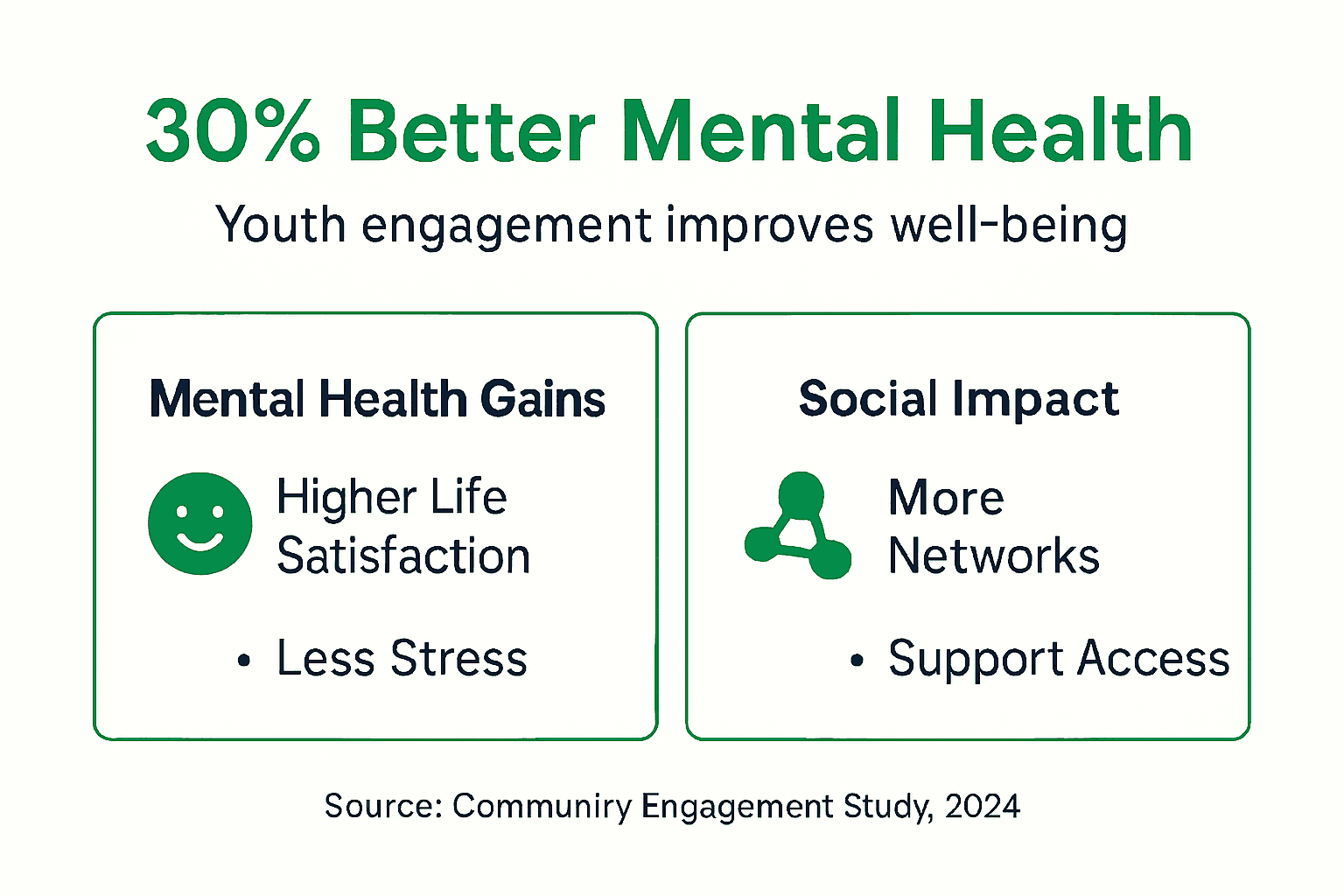
Beyond social networks, community participation directly improves psychological wellbeing. Studies show engagement in community activities reduces symptoms of anxiety and depression by about 30% and 25%, respectively, among young adults.
These mental health gains emerge through several mechanisms:
- Belonging satisfies fundamental human need for social connection
- Purpose provides direction and meaning beyond individual pursuits
- Recognition affirms self-worth through positive feedback from peers
- Routine structures time and creates healthy behavioral patterns
For young Nigerians navigating identity formation amid rapid social change, community spaces offer crucial mirrors for self-discovery. You test leadership styles, explore interests, and receive honest feedback in supportive environments. This iterative process builds authentic identity grounded in real relationships rather than curated online personas.
Engagement also buffers against stress by providing emotional support networks. When facing job loss, family conflict, or academic pressure, community members offer perspective, practical assistance, and encouragement. These mental health benefits accumulate with consistent participation.

Emotional resilience strengthens through repeated experiences of contributing to collective success. Completing a neighborhood cleanup, organizing a fundraiser, or moderating productive online discussions builds confidence in your ability to effect change. This self-efficacy transfers to other life domains, improving overall coping capacity.
Mental Health Stat: Young adults who volunteer at least monthly report 22% higher life satisfaction and 18% better emotional regulation compared to non-volunteers, according to longitudinal wellness research.
Pro Tip: When stress peaks, resist isolation instincts and instead attend a community meeting or online discussion. The social connection and purpose distraction provide immediate mood boosts while building long-term support systems for future challenges.
Identity development particularly benefits from engagement across diverse groups. Exposure to different perspectives challenges assumptions, expands worldviews, and cultivates empathy. You learn to see yourself through others’ eyes while maintaining core values, achieving the balanced identity crucial for adult psychological health.
Common Misconceptions About Community Involvement
Several myths discourage young Nigerians from meaningful engagement. Correcting these misconceptions removes barriers to participation.
Myth 1: Social media engagement equals real community involvement. Liking posts and sharing memes creates minimal social capital. Genuine engagement requires dialogue, collaboration, and reciprocal relationships. Passive scrolling cannot substitute for active participation in solving collective problems.
Myth 2: Effective engagement demands huge time commitments. Research reveals many young adults mistakenly believe community engagement requires large time commitments, yet even 1 hour weekly volunteering boosts well-being by 15% over 6 months. Small, consistent contributions compound into substantial impact.
Myth 3: Only large-scale projects create meaningful change. Individual actions within community forums spark conversations that shift perspectives and inspire others. Mentoring one person, organizing one cleanup, or answering one question in an online forum creates ripples extending far beyond immediate visibility.
Myth 4: Community work offers no personal career benefits. Engagement develops transferable skills employers value: communication, teamwork, project management, and leadership. Many job opportunities emerge through community networks before public posting. Volunteer experience often compensates for formal credential gaps.
Myth 5: Young people lack expertise to contribute meaningfully. Communities need diverse contributions, not just technical expertise. Fresh perspectives, energy, and willingness to learn often prove more valuable than credentials. Your unique combination of skills, interests, and social networks creates contribution opportunities others cannot replicate.
The time commitment myth particularly discourages potential participants. People imagine engagement requires 10+ hours weekly. Reality shows strategic involvement of 2 to 4 hours weekly generates most benefits while remaining sustainable alongside work and study obligations.
Another damaging misconception suggests only naturally extroverted individuals thrive in community spaces. Introverts contribute uniquely through thoughtful analysis, careful listening, and one-on-one relationship building. Online forums particularly accommodate diverse participation styles without requiring constant verbal performance.
Frameworks to Understand the Benefits of Community Engagement
Conceptual frameworks help organize how engagement creates sustained value across social, personal, and economic domains.
The Engagement Cycle operates through four reinforcing stages:
- Trust Building: Initial participation establishes credibility and reliability through consistent small contributions.
- Active Participation: Increased involvement as comfort and competence grow, taking on more significant responsibilities.
- Reciprocity: Benefits flow both ways as you give and receive support, information, and opportunities.
- Sustainability: Deep integration into community fabric ensures long-term mutual benefit and continued growth.
This cycle explains why early engagement feels effortful but later becomes naturally rewarding. Initial trust investment pays dividends through subsequent reciprocity and sustainability phases.
Community engagement frameworks distinguish between bonding and bridging engagement. Bonding strengthens ties within homogeneous groups, while bridging connects across different groups. Optimal strategies balance both for maximum social capital.
| Engagement Mode | Primary Strength | Primary Limitation |
|---|---|---|
| Online forums | Geographic reach and convenience | Shallow relationship depth |
| Offline volunteering | Deep trust and emotional bonds | Limited scale and time flexibility |
| Hybrid approaches | Combines scale with depth | Requires coordination complexity |
Experts emphasize sustained involvement matters more than intensity bursts. As one community organizer notes, “The person who shows up reliably for a year with modest contributions builds more trust and impact than someone volunteering 40 hours one month then disappearing.”
Effective community frameworks incorporate three core elements: clear purpose that motivates participation, inclusive processes that welcome diverse contributors, and visible impact that demonstrates collective efficacy. Without these elements, engagement efforts fizzle as participants lose motivation.
Real-World Examples of Nigerian Youth-Led Community Initiatives
Concrete examples demonstrate how young Nigerians translate engagement principles into impactful projects.
The Clean Lagos Initiative mobilized thousands of youth volunteers for monthly environmental cleanups across the state. Participants removed tons of waste from public spaces while building networks and skills. Organizers reported 65% of volunteers made new friendships and 40% gained leadership experience through the initiative.
Tech community meetups in major cities connect developers, designers, and entrepreneurs for skill-sharing and collaboration. These gatherings have spawned numerous startups, mentorship relationships, and job placements. One Lagos group documented over 200 job referrals and 50 business partnerships emerging from their network over three years.
| Initiative Type | Participants | Documented Impact | Key Success Factor |
|---|---|---|---|
| Environmental cleanup | 5,000+ youth | 120 tons waste removed | Regular scheduling |
| Tech community | 2,000+ members | 200+ job placements | Skill-sharing focus |
| Reading clubs | 800+ youth | 85% literacy improvement | Peer mentorship |
| Civic education | 1,500+ youth | 60% voter registration increase | Partnership with NGOs |
Reading clubs in northern states pair literate youth with struggling readers for free tutoring. Beyond academic improvement, participants report stronger community bonds and increased civic engagement. Success factors include:
- Peer-to-peer model reducing stigma and building relatability
- Flexible scheduling accommodating school and work obligations
- Recognition systems celebrating volunteer contributions
- Clear impact metrics maintaining motivation through visible progress
Civic education initiatives use online forums to disseminate voter information and facilitate political discussions among youth. These digital spaces complement offline voter registration drives and town halls, creating integrated engagement strategies.
These examples share common patterns: clear goals, low barriers to entry, regular activities building routine, and celebration of contributions. Any young Nigerian can replicate these elements within their own community context.
How to Apply Community Engagement for Personal and Social Growth
Translating understanding into action requires strategic approach balancing ambition with sustainability.
Getting Started (Months 1 to 3):
- Identify interests: List social issues you care about and skills you want to develop.
- Research options: Find existing groups addressing those issues through online discussions or local organizations.
- Start small: Commit to one activity requiring 1 to 2 hours weekly, establishing sustainable rhythm.
- Observe and learn: Understand group dynamics, norms, and needs before proposing changes.
Building Momentum (Months 4 to 9):
- Increase contribution: Take on small leadership tasks like coordinating meetings or managing communication.
- Expand network: Connect with members individually, learning their stories and building relationships.
- Bridge online and offline: Use social media to amplify offline activities and maintain engagement between meetings.
- Document impact: Track contributions and outcomes to maintain motivation and demonstrate value.
Sustaining Growth (Months 10+):
- Mentor newcomers: Welcome new members, helping them integrate and find contribution opportunities.
- Initiate projects: Propose and lead initiatives addressing unmet community needs you’ve identified.
- Build coalitions: Connect your group with complementary organizations for greater collective impact.
- Reflect and adjust: Regularly assess whether engagement still serves your growth goals and community needs.
Balance prevents burnout while maximizing benefits. Apply the 60/30/10 rule: 60% time on your primary community involvement, 30% on secondary interests, and 10% exploring new opportunities. This distribution provides depth, breadth, and growth potential.
Pro Tip: Schedule community activities like work appointments. Block calendar time weekly for engagement, treating it as non-negotiable commitment. This prevents gradual drift as other obligations accumulate. After six months of consistent participation, the routine becomes self-sustaining habit requiring less willpower to maintain.
Social media amplifies offline engagement when used strategically. Share photos from volunteer events, discuss community issues in online forums, and use platforms to coordinate logistics. Avoid treating digital activity as substitute for face-to-face collaboration that builds deeper bonds.
Career benefits emerge naturally from sustained community engagement through expanded networks, demonstrated skills, and enhanced reputation. Many employers specifically seek candidates with volunteer experience showing initiative and teamwork capacity.
Optimizing community interactions requires balancing speaking and listening, contributing and receiving, leading and following. This reciprocity sustains healthy community dynamics while preventing exploitation or resentment.
Explore More About Nigerian Community Life and Engagement
You’ve discovered how community engagement transforms individual lives and collective futures through measurable mental health improvements, expanded networks, and strengthened identity. The next step involves applying these insights within your own context.
Naijatipsland serves as your hub for staying informed about community developments and engaging with fellow Nigerians around shared interests. Our news forums keep you updated on current affairs affecting your communities, while our blog explores topics from entertainment to civic engagement. Community forums enable you to participate in discussions shaping Nigerian social discourse. Join thousands of young Nigerians building stronger communities through informed, active participation. Your voice matters, and your contributions create ripples extending far beyond immediate visibility.
Frequently Asked Questions
What Are the Primary Benefits of Community Engagement for Young Nigerians?
Community engagement delivers three core benefit categories. Social benefits include 40% higher trust levels and 25% more connections, creating support networks for opportunities and assistance. Mental health improves through 30% anxiety reduction and 25% depression decrease, while purpose and belonging satisfy fundamental psychological needs. Personal development gains encompass leadership skills, identity clarity, and practical capabilities transferable to career contexts. These benefits compound over time as engagement deepens and networks expand.
Can Small Time Commitments Really Make a Difference in Community Engagement?
Absolutely. Research shows just one hour weekly volunteering boosts well-being by 15% over six months. Consistency matters more than intensity, with regular small contributions building trust and impact more effectively than sporadic large efforts. Strategic involvement of 2 to 4 hours weekly generates most benefits while remaining sustainable alongside other obligations.
How Can Social Media Be Used Effectively for Community Engagement?
Social media works best amplifying offline engagement rather than replacing it. Use platforms to share event photos, coordinate logistics, and maintain connections between face-to-face gatherings. Participate in substantive online discussions addressing community issues, avoiding passive scrolling or superficial interactions. The goal involves combining digital reach and convenience with offline depth and trust building for maximum impact.
What Are Some Challenges Young Adults Face in Community Engagement?
Common challenges include overreliance on social media creating illusion of connection without substance. Unrealistic expectations about immediate impact cause premature discouragement before benefits accumulate. Time management struggles emerge when engagement lacks clear boundaries, leading to burnout. Social anxiety prevents some from initiating participation despite interest. Addressing these requires realistic goal-setting, starting small, using hybrid online and offline approaches, and recognizing diverse contribution styles all create value.