Last updated: 29 October 2026 · By Naijatipsland Editorial Team · Editorial policy
A large waist is not just a clothing problem. Fat stored around the middle is linked to a higher risk of type 2 diabetes, high blood pressure and heart disease, which are already common in Nigeria. The good news is that you do not need expensive supplements or imported “diet foods”. Everyday Nigerian food, a little planning and regular exercise can shrink your waist safely. This guide gives a realistic plan. This is general health information, not medical advice. If you are pregnant, are under 18, have a medical condition (such as diabetes, high blood pressure or a heart problem), take regular medicine, or have a history of disordered eating, talk to a doctor or registered dietitian before changing your diet or exercise. Checked 29 October 2026.
Why belly fat matters
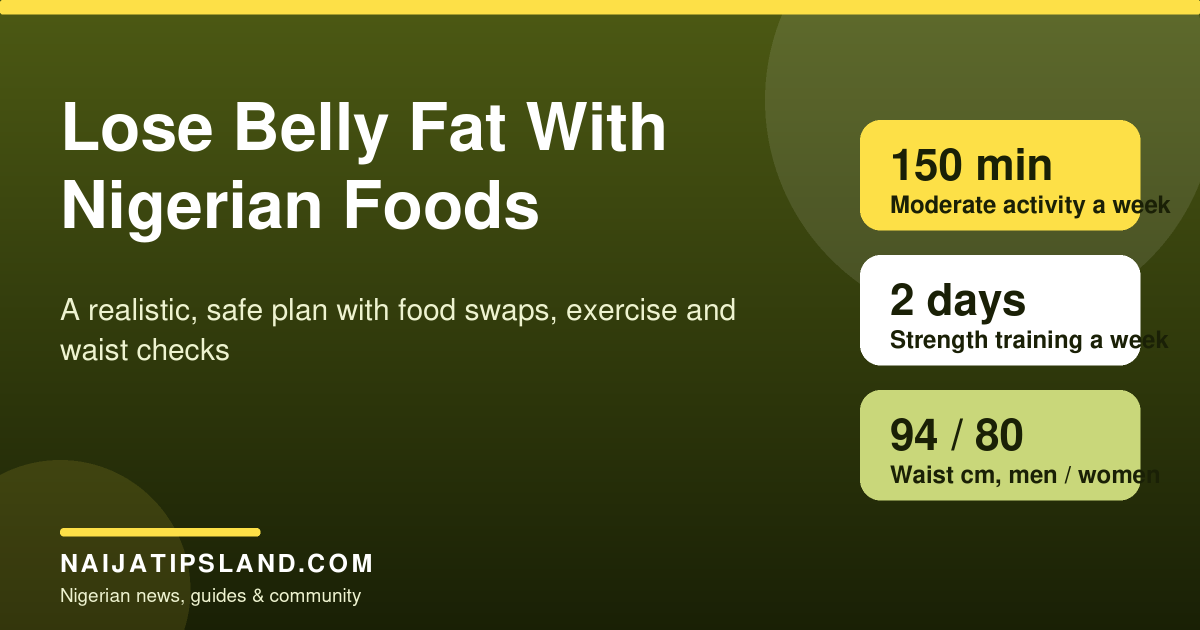
Studies reviewed in 2022 estimated that about 27.6% of Nigerian adults are overweight and 14.5% are living with obesity, with the numbers rising over time. Fat around the abdomen is a particular concern. Health services such as the UK’s NHS suggest that a waist of 94 cm (37 inches) or more in men, or 80 cm (about 31.5 inches) or more in women, signals increased health risk, and 102 cm in men or 88 cm in women signals high risk. These thresholds are general guides and can vary by ethnic background, so ask a clinician what is right for you. Our guide on how Nigerian food culture affects diabetes and hypertension explains the wider picture.
The truth about “spot reduction”
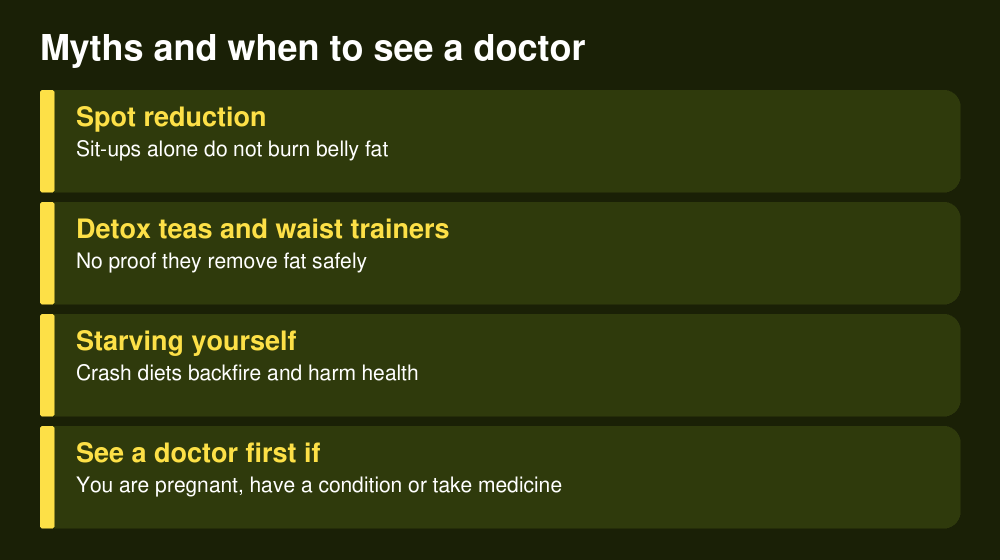
You cannot choose where your body loses fat. Hundreds of sit-ups strengthen your stomach muscles but do not burn the fat on top of them. Fat comes off the whole body when you consistently use more energy than you take in, and belly fat often reduces along with the rest. That is why the plan below focuses on food, general activity and strength training, not on one magic exercise.
Eat well with Nigerian food
You do not need to give up jollof, swallow or soup. You need better balance and portions.
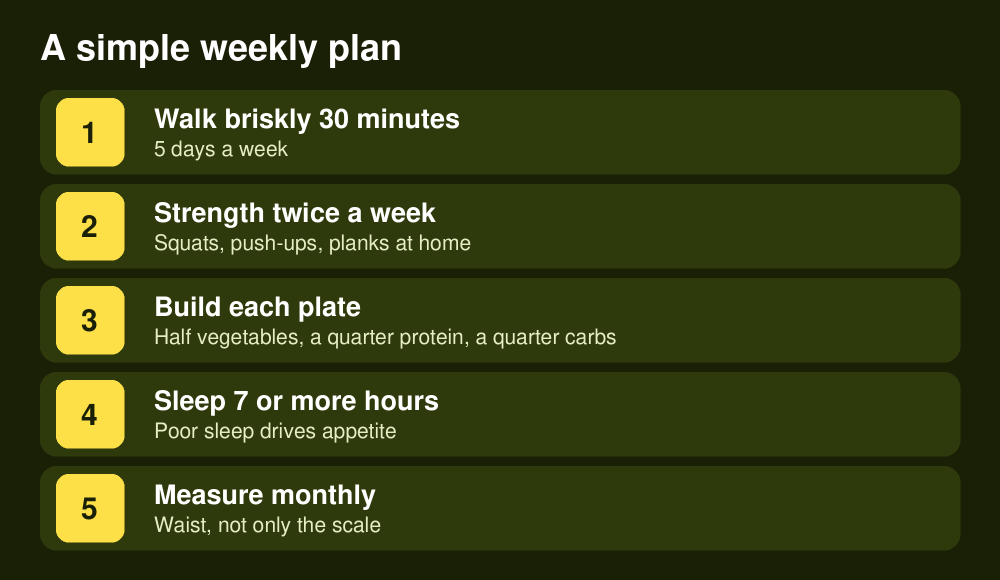
- Build the plate: aim for about half vegetables, a quarter protein (fish, eggs, beans, chicken, lean meat) and a quarter starch (rice, yam, garri, plantain). This keeps you full and controls calories without counting.
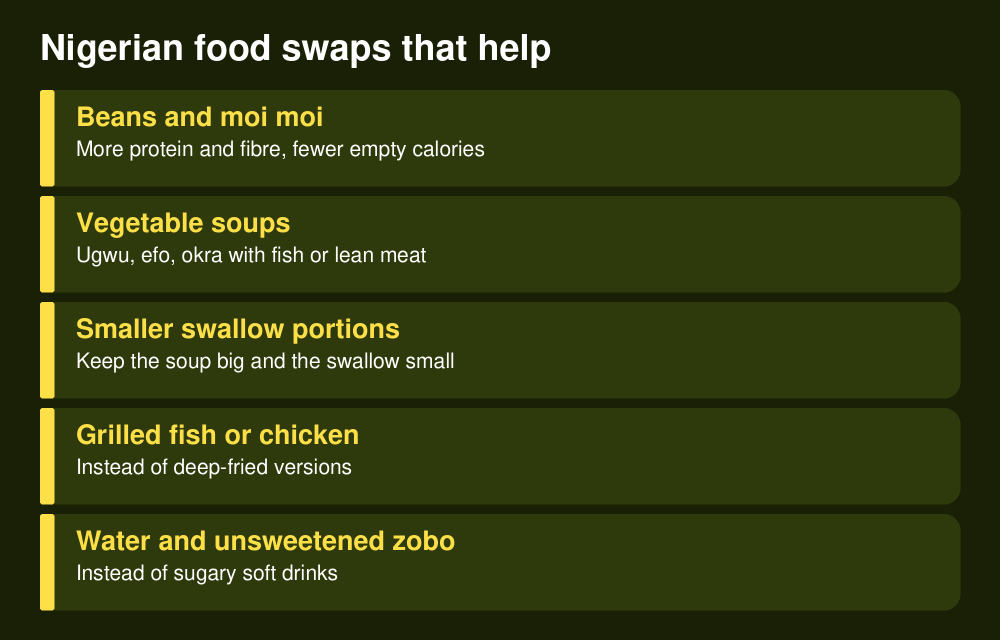
- Make soups work for you: ugwu, efo riro, okra, bitterleaf and egusi are rich in nutrients and fibre. Keep the soup portion generous and the swallow portion smaller. Watch palm oil and the amount of meat and stockfish.
- Choose protein and fibre: beans, moi moi, akara (baked or air-fried if you can), eggs, grilled fish and groundnuts help you feel full longer.
- Cut liquid calories: sugary soft drinks, packaged juices, malt drinks, sweetened tea and large amounts of alcohol add up quickly. Water, unsweetened zobo or plain tea are better choices.
- Swap fried for grilled, baked or boiled: boiled or roasted plantain instead of deep-fried, grilled fish instead of fried, and fewer fried snacks like puff-puff, chin chin and meat pies.
- Watch refined carbohydrates: white bread, large portions of white rice, and sugary pap or custard. Whole-grain options like brown rice, oats, millet, unripe plantain and sweet potato are slower to digest, though portion size still matters.
- Plan snacks: fruit, groundnuts in small handfuls, boiled eggs or plain yoghurt beat biscuits and sweets.
Cooking at home gives you control. Our party jollof recipe is a treat meal, and our piece on food myths Nigerians believe clears up common mistakes, such as thinking certain “detox” foods melt fat.
Move more: what the guidelines say
The World Health Organization recommends that adults do at least 150 to 300 minutes of moderate-intensity aerobic activity a week (or 75 to 150 minutes of vigorous activity, or a mix), plus muscle-strengthening exercises on two or more days a week. Moderate activity means your breathing quickens but you can still talk, like a brisk walk. You can split it up: 30 minutes on five days or three 10-minute walks a day. You can also reduce sitting time, because long sedentary periods are linked to poorer health.
- Aerobic: brisk walking, jogging, skipping, dancing, cycling or football.
- Strength: squats, lunges, push-ups, planks, step-ups and resistance bands, twice a week, using all major muscle groups.
- Everyday movement: take stairs, walk instead of using a bike taxi for short trips, and stand and stretch every hour.
No gym? Our guide to staying fit without a gym membership has free workouts and a simple weekly plan.
Sleep, stress and alcohol
Short sleep and constant stress can raise appetite and cravings. Aim for seven or more hours when possible, keep a regular bedtime and manage stress with walking, prayer, meditation or talking with friends. Heavy drinking adds calories and makes it harder to lose weight.
How fast should you expect to lose?
Slow and steady works better than crash diets. Many health bodies suggest a gradual loss of roughly 0.5 to 1 kg a week at most, and many people lose slower. Measure your waist monthly with a tape measure at the level of your navel, in addition to weighing yourself. Your waist can shrink even when the scale barely moves because exercise builds muscle.
Myths and products to avoid
- Detox teas, “flat tummy” tea and waist trainers: there is no good evidence they remove belly fat safely. Some contain laxatives or unregulated ingredients.
- Unregistered weight-loss drugs and injections: only use medicines prescribed by a doctor and products registered with NAFDAC. Fake slimming pills have caused harm.
- Starving yourself or skipping meals: this can lead to bingeing, muscle loss and health problems.
- Single “miracle” foods: no one food burns fat. See our warnings on natural remedies that do not work.
A sample day
- Breakfast: moi moi or boiled eggs with vegetables, or oats with fruit and groundnuts.
- Lunch: a large serving of vegetable soup with fish and a small portion of swallow, or beans with boiled plantain and salad.
- Snack: fruit, or a handful of groundnuts.
- Dinner: grilled fish or chicken with vegetables and a small portion of rice or sweet potato.
- Movement: a 30-minute brisk walk plus a short strength routine on two or three days.
This is an example, not a prescription. Portions depend on your age, size, activity level and health.
When to see a doctor
Speak to a doctor if you have diabetes, high blood pressure, heart disease or kidney problems, are pregnant or breastfeeding, take regular medicines, have sudden unexplained weight gain or swelling in the belly, or struggle with an unhealthy relationship with food. A sudden increase in belly size can have medical causes that need checking. Our overview of common health issues among young Nigerians is a useful starting point.
Frequently asked questions
What exercise burns belly fat fastest?
No single exercise targets belly fat. A mix of brisk aerobic activity and strength training, with a healthier diet, works best.
Can I eat rice, swallow and yam and still lose weight?
Yes, in sensible portions with plenty of vegetables and protein.
How long will it take?
Visible changes often take weeks to months. Track your waist monthly and be patient.
Is bitter kola, ginger or lemon water a cure?
No. They may be part of a healthy diet, but there is no proof they melt belly fat.
Bottom line
Losing belly fat is a slow, whole-body project: eat balanced Nigerian meals with smaller starch portions, move most days, lift or bodyweight-train twice a week, sleep well and avoid miracle products. Start with one or two changes, measure your waist, and get medical advice if you have a health condition.