Last updated: 22 October 2026 · By Naijatipsland Editorial Team · Editorial policy
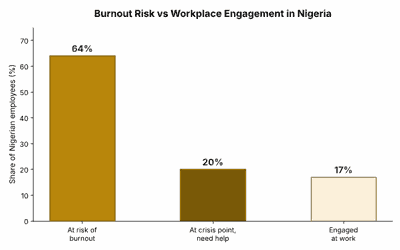
Burnout in the Nigerian workplace isn’t a rare or isolated problem — it’s close to the norm. A health-technology survey by WellNewMe found that 64% of Nigerian employees are at risk of burnout, with nearly 2 in 10 (about 20%) already at crisis point and in need of immediate help. Separately, Gallup’s State of the Global Workplace data ranks Nigeria 25th of 36 countries surveyed, with only 17% of employees genuinely engaged at work. If you’ve been feeling constantly drained, irritable, or disconnected from work you used to care about, you’re not imagining it — and you’re far from alone.

How widespread is burnout really?
The numbers paint a fairly stark picture. Beyond the 64% at-risk figure, 57% of Nigerian workers report experiencing daily stress in their jobs, and a striking 83% say they aren’t emotionally invested in their work at all. Worker engagement has grown by about 21% between 2023 and 2025 according to some tracking, but as multiple reports note, that improvement has done little to cushion workers from the broader economic pressures driving burnout in the first place — rising costs, job insecurity, and the pressure to take on more for less.
The four faces of burnout — which one are you experiencing?
Burnout doesn’t show up the same way for everyone. The WellNewMe research breaks it down into four distinct types of exhaustion, and most people experiencing burnout show signs of more than one at the same time.
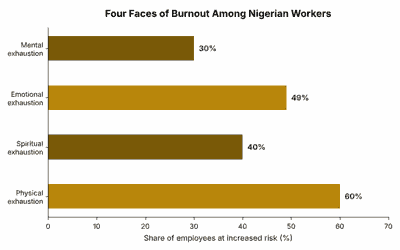
- Physical exhaustion (60% of employees at increased risk): Persistent fatigue, trouble sleeping even when you’re tired, and a body that feels constantly run down regardless of how much rest you get.
- Emotional exhaustion (49%): Feeling numb, easily irritated, or disproportionately affected by small setbacks — this type carries the highest linked risk of depression among the four.
- Spiritual exhaustion (about 40%): A sense that your work has lost meaning or purpose, even if you once cared deeply about it.
- Mental exhaustion (30%): Difficulty concentrating, forgetfulness, and a foggy, sluggish feeling when trying to think through problems that used to come easily.
Beyond these core symptoms, researchers also flag alcohol or substance misuse, and longer-term physical health consequences including heart disease, high blood pressure, and Type 2 diabetes, plus greater vulnerability to everyday illnesses like colds and malaria when the body’s defenses are run down by chronic stress.
Why it’s so common in Nigerian workplaces
Several factors compound to make burnout especially prevalent here. Presenteeism — showing up and working while unwell rather than taking needed rest — is widespread, often driven by job insecurity in a tough labour market. Absenteeism and high staff turnover follow, and turnover in particular tends to cost companies more than absenteeism does, which makes burnout a real business risk and not just a personal one. Underlying all of this is financial pressure: a large share of employed Nigerians are actively job-hunting, largely out of dissatisfaction with pay and the broader cost of living, which adds a constant low hum of stress on top of the demands of the job itself.
How to actually start recovering

- Name it honestly. Burnout is prolonged, excessive stress with real physical and emotional symptoms — not a personal failing or simple laziness. Recognizing it for what it is makes it far easier to take seriously.
- Protect your sleep first. Insomnia tends to feed every other symptom of burnout — physical, emotional, and mental. Of everything on this list, consistent sleep is usually the fastest lever you have direct control over.
- Cut back on hidden overtime. Presenteeism and unpaid extra hours are repeatedly flagged as leading drivers of burnout in Nigerian workplace research. Where you can, start setting firmer boundaries around when your workday actually ends.
- Get support before you hit crisis point. Talking to a doctor, a counselor, or even a trusted colleague early — rather than waiting until you’re among the roughly 1 in 5 at crisis point — makes a measurable difference in outcomes.
- Address what you can control financially. Since so much workplace stress in Nigeria is tied to pay and cost-of-living pressure, even small steps toward financial stability — negotiating pay, building an emergency fund, or exploring side income — can ease some of the background stress fuelling burnout.
The bottom line
With 64% of Nigerian employees at risk of burnout and only 17% genuinely engaged at work, this is a workplace-wide problem, not an individual weakness. If you’re feeling the physical, emotional, mental, or spiritual exhaustion described above, that’s real data your body and mind are giving you — and the earlier you act on it, whether through better sleep, firmer boundaries at work, or professional support, the easier the recovery tends to be.