
TL;DR:
- Nigerians’ personal data is frequently collected and shared online, increasing risks like identity theft.
- Nigeria’s data laws, including the NDPA 2023, protect personal information but require active enforcement.
- Individuals should practice proactive privacy measures, such as strong passwords and cautious social media use.
Every time you open a banking app, post on social media, or sign up for a new service, your personal data is being collected, stored, and often shared without you fully realizing it. In Nigeria alone, millions of internet users expose sensitive information daily, and identity theft and fraud are growing consequences. Data privacy is not a concern reserved for tech experts or large corporations. It is a personal right that every Nigerian internet user should understand, protect, and actively exercise. This guide covers what data privacy means, the laws that protect you, how Nigeria compares globally, and what practical steps you can take today.
Table of Contents
- What is data privacy? Understanding the basics
- What laws protect your data in Nigeria?
- How does Nigeria compare to Africa and the world?
- Practical data privacy tips for Nigerians
- Why enforcement—and personal vigilance—matter most
- Take charge: Next steps for privacy-aware Nigerians
- Frequently asked questions
Key Takeaways
| Point | Details |
|---|---|
| Privacy is a basic right | Nigerian laws and global norms recognize your control over personal data. |
| NDPA 2023 is crucial | It sets the rules for data use, access, and protection in Nigeria. |
| Africa is moving forward | Regional laws are strong but vary; Nigeria leads in some areas and lags in enforcement. |
| Your actions matter | Use strong habits and tools to protect your digital life, not just legal rights. |
What is data privacy? Understanding the basics
Now that you see the stakes, let’s define what data privacy really means and why everyone, especially in Nigeria, must care.
Data privacy is about keeping your personal information safe and under your own control. It determines who can collect your data, how they can use it, and when they must stop. According to the legal foundation in Nigerian law, data privacy is both an ethical standard and a legal requirement, protecting individuals from misuse of their personal details by organizations and third parties.
Why does this matter for everyday Nigerians? Consider what counts as personal data:
- Your phone number and email address
- Bank account details and BVN (Bank Verification Number)
- Location data from your phone or apps
- Social media posts, photos, and messages
- Health records and biometric information
- Your National Identification Number (NIN)
When any of these fall into the wrong hands, the consequences can be serious. Identity theft, financial scams, targeted harassment, and manipulative profiling are all real risks that Nigerians face online. Good online privacy protection reduces your exposure to all of these threats.
One of the most damaging misconceptions is the idea that “I have nothing to hide, so I have nothing to fear.” This thinking misses the point entirely. Privacy is not about hiding wrongdoing. It is about maintaining control over your own narrative, your financial security, and your personal safety.
“Privacy is a fundamental human right and social good that enables individuals to shape their own narrative, protect themselves from exploitation, and engage authentically in society.” This principle sits at the core of data protection frameworks emerging across Africa.
Another common myth is that only large businesses or celebrities need to worry about data privacy. In reality, insurance data privacy experts point out that individual consumers are among the most targeted groups, precisely because they are less likely to have protective systems in place.
Data privacy also connects directly to your digital rights in Nigeria. When you understand how your data is used, you can make informed decisions about which apps to trust, which websites to use, and which terms and conditions to reject. That awareness is power.
What laws protect your data in Nigeria?
With a foundation in what data privacy means, it’s vital to know your legal rights.
Nigeria has built a solid legal framework for data protection over the past few years. Three key pillars define this structure:
- Section 37 of the 1999 Constitution: Guarantees the privacy of citizens, including their homes, correspondence, telephone conversations, and telegraphic communications.
- Nigeria Data Protection Regulation (NDPR) 2019: The first dedicated data protection framework in Nigeria, setting rules for how organizations handle personal data.
- Nigeria Data Protection Act (NDPA) 2023: The current operative law. It replaces and strengthens the NDPR, creating clear obligations for both data controllers and data processors operating in or targeting Nigeria.
The NDPA 2023 is significant because it applies even to organizations based outside Nigeria, as long as they process data belonging to Nigerians. It establishes lawful bases for data processing, including consent, contractual necessity, legal obligation, and public interest.
Key NDPA mechanics include:
- Data Protection Impact Assessments (DPIAs): Required for high-risk processing activities.
- Breach notification: Organizations must report data breaches to the Nigeria Data Protection Commission (NDPC) promptly.
- Registration requirements: Data controllers of major importance must register with the NDPC.
| Law | Year | Key protection |
|---|---|---|
| Section 37 Constitution | 1999 | Right to privacy |
| NDPR | 2019 | Data handling rules for organizations |
| NDPA | 2023 | Comprehensive data rights and enforcement |
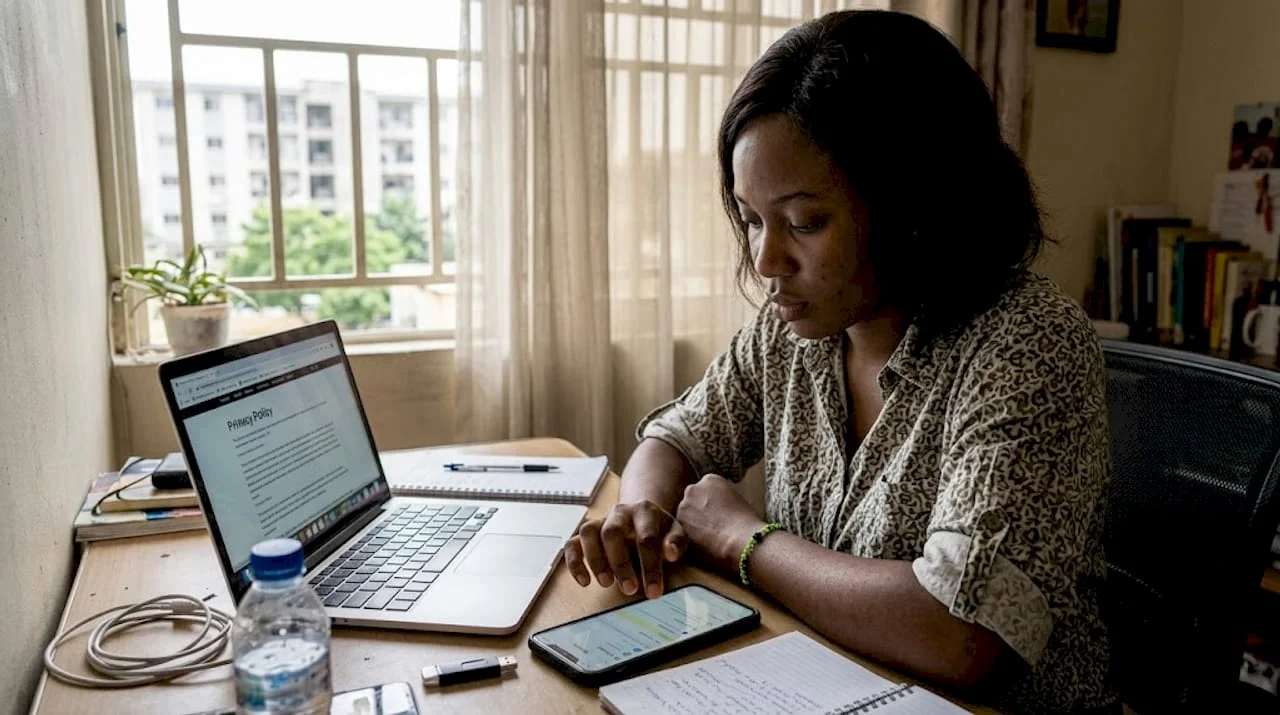
Pro Tip: Before submitting personal information on any Nigerian website, scroll to the bottom of the page and look for a privacy policy. A compliant site will reference the NDPA and provide contact details for their data controller.
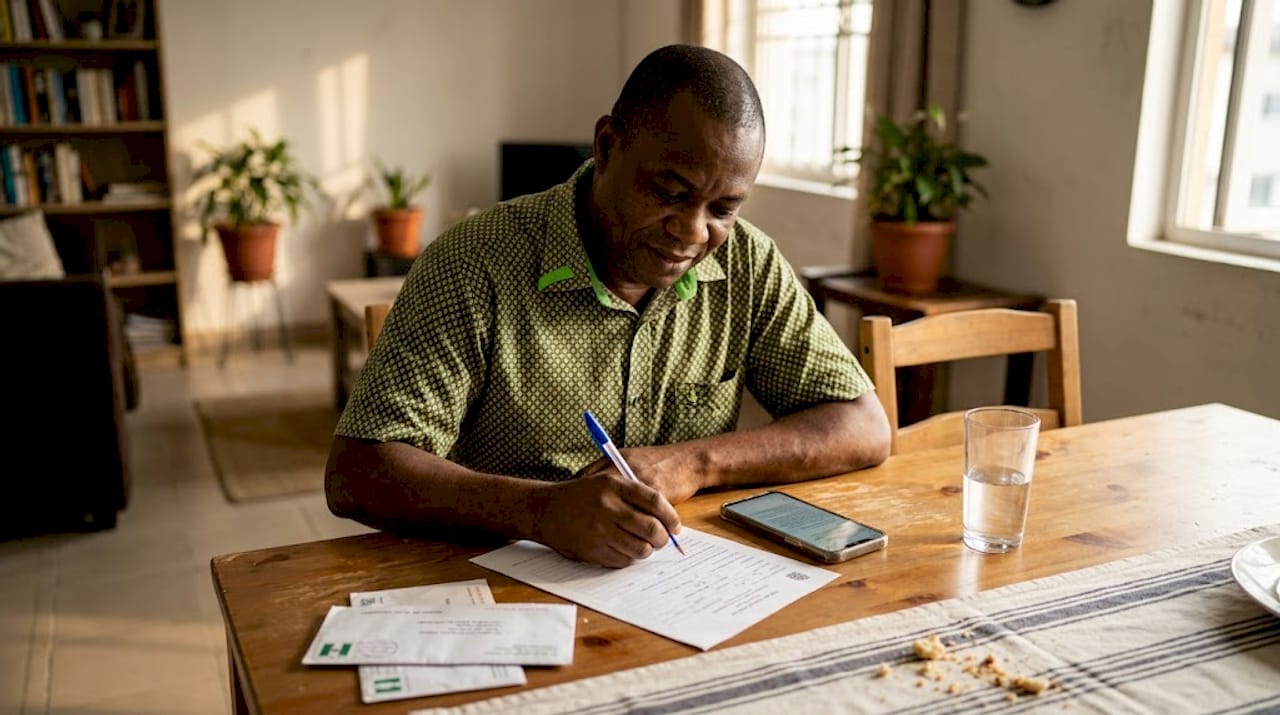
If your data is misused, you can file a complaint with the NDPC. You may also have grounds for civil action depending on the breach. Staying informed about Nigeria cybercrime laws helps you understand your full range of legal options. Additionally, understanding social media etiquette and privacy limits the data you unintentionally expose on platforms.
How does Nigeria compare to Africa and the world?
Beyond national laws, it’s useful to see how Nigeria compares with its neighbors and the world.
Nigeria is not alone in building data privacy frameworks, but the continent is at very different stages of development. Across Africa, 65% of countries allow private data privacy actions, and virtually all have some form of sanction for violations. However, the gap between legislation and actual enforcement remains a serious challenge region-wide.
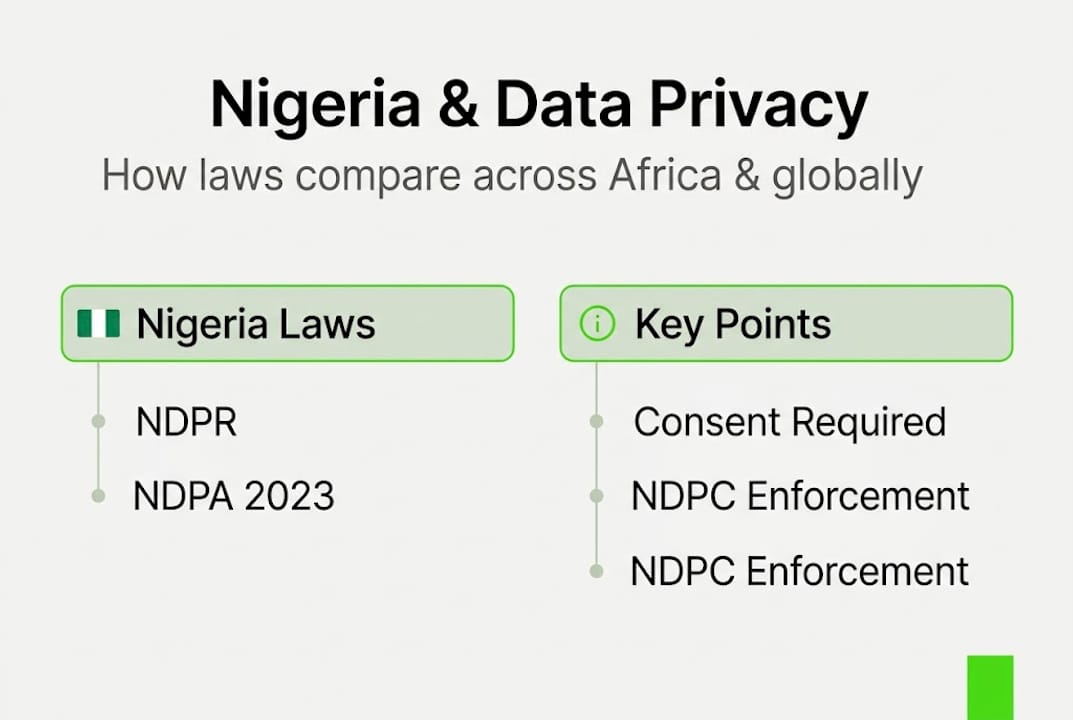
Statistical callout: While the majority of African nations have data protection laws on paper, fewer than half have fully operational data protection authorities actively processing complaints and issuing penalties.
Here is how Nigeria’s framework compares with key jurisdictions:
| Jurisdiction | Key law | Consent requirement | Enforcement body | Cross-border scope |
|---|---|---|---|---|
| Nigeria | NDPA 2023 | Yes | NDPC | Yes |
| Kenya | Data Protection Act 2019 | Yes | ODPC | Yes |
| South Africa | POPIA 2020 | Yes | Information Regulator | Yes |
| EU | GDPR 2018 | Yes | National DPAs | Yes (strict) |
Nigeria is strong on consent requirements and sanctions, which puts it ahead of many African peers. However, full integration with the African Union’s Malabo Convention on Cyber Security and Personal Data Protection remains pending, which limits pan-African harmonization.
Steps Nigeria can take to strengthen data privacy enforcement:
- Fully operationalize the NDPC with adequate staffing and funding.
- Ratify and implement the Malabo Convention for regional coordination.
- Increase public awareness campaigns on data rights.
- Mandate regular audits of major data controllers.
- Strengthen cooperation with other African data protection authorities.
Pan-African harmonization matters because data crosses borders constantly. When a Nigerian uses a Kenyan fintech app or a South African e-commerce platform, multiple legal systems apply. Without alignment, gaps emerge that bad actors can exploit. Staying updated on international privacy news helps professionals understand how these frameworks interact.
Globally, the EU’s GDPR remains the gold standard, with heavy fines and active enforcement. Nigeria’s NDPA draws inspiration from the GDPR, which is a positive sign. Concerns about AI transparency and ethics are also pushing global regulators to rethink how consent and harm are defined in automated data processing. Understanding how fake news and data risks intersect also helps you see the broader digital threats Nigerians navigate daily.
Practical data privacy tips for Nigerians
Understanding the law is one thing. Putting privacy into practice is essential.
Even the best laws cannot protect you if you do not take personal steps. Enforcement lags, meaning individual action is your first and most reliable line of defense. Here is what you should be doing right now:
Secure your accounts:
- Use strong, unique passwords for every account. A password manager helps you keep track.
- Enable two-factor authentication (2FA) on banking apps, email, and social media.
- Limit app permissions. If a flashlight app asks for your contacts, deny it.
Protect yourself from scams:
- Recognize phishing attempts. Legitimate banks and government agencies in Nigeria will never ask for your PIN or OTP via SMS or email.
- Do not click links in unsolicited messages, even if they appear to come from known contacts.
- Verify website addresses before entering personal or financial details.
Be mindful on social media:
- Avoid posting your home address, phone number, or travel plans publicly.
- Review your privacy settings on Facebook, Instagram, X (formerly Twitter), and WhatsApp regularly.
- Consider how influencer culture and privacy norms shape what feels normal to share online, and push back when necessary.
Check for NDPA compliance:
- Before using a Nigerian app or website, look for a privacy policy that references NDPA 2023.
- Check privacy safety in apps to understand what to look for in app permissions and data practices.
- Review your account settings on popular Nigerian platforms and limit data sharing wherever possible.
Pro Tip: Never submit sensitive personal or financial information while connected to public or unsecured Wi-Fi. Use mobile data or a trusted VPN instead.
If you suspect a data breach, report it to the NDPC and contact your bank or service provider immediately. Check essential online security tips for a more detailed security checklist tailored to Nigerian users.
Why enforcement—and personal vigilance—matter most
These practical steps tie into a bigger, often overlooked reality.
Many Nigerians assume that because the NDPA 2023 now exists, data privacy is protected automatically. That assumption is risky. Laws are only as strong as their enforcement, and as consent-based models are increasingly criticized, researchers and regulators are calling for a shift toward harm-accountability: what matters is not just whether you clicked “I agree,” but whether your data was actually misused and whether someone faced real consequences for it.
Consent checkboxes are everywhere in Nigeria’s growing digital economy. But most users click through them without reading a word. That checkbox does not make you safe. It mostly transfers legal liability to you.
The call for harm-accountability is the right direction. But until enforcement catches up, your vigilance on privacy is the most practical tool you have. Do not wait for a regulator to protect you. Own your privacy today by treating your personal data the same way you treat your wallet or your house keys. The law is there to support you, but you must also support yourself.
Take charge: Next steps for privacy-aware Nigerians
Ready to apply what you’ve learned and connect with other privacy-aware Nigerians?
Data privacy is not a one-time action. It is an ongoing habit, and you build it best when you are part of a community that takes it seriously. Naijatipsland.com gives you the platform to do exactly that.
You can participate in online discussions about privacy, security, and digital rights with thousands of Nigerians who share your concerns. If you have insights or experiences to share, learn how to start an online forum and build your own conversation around topics that matter. Staying engaged with digital communities also brings real community engagement benefits that go well beyond data privacy. Join the conversation today and stay ahead of the threats.
Frequently asked questions
What is the difference between data privacy and data security?
Data privacy focuses on who can access or use your personal information, while data security is about protecting that data from attacks or breaches. Both are necessary, but they address different aspects of protecting your information.
Is consent always required before sharing my data in Nigeria?
No. Consent is one of several lawful bases under NDPA 2023. Data can also be lawfully processed for contracts, legal obligations, or legitimate public interest without your explicit consent.
What penalties exist for violating data privacy laws in Nigeria?
Violations can lead to fines, criminal charges, or civil actions. African data benchmarks confirm that virtually all nations with data privacy laws, including Nigeria, have sanctions in place for non-compliance.
How can Nigerians check if a website is compliant with NDPA 2023?
Look for a published privacy or data protection policy that explicitly mentions NDPA compliance and includes clear contact details for the data controller responsible for your information.
Recommended
- Online Privacy Protection – How It Impacts Your Life
- Nigeria’s Cybercrime Laws: Stay Protected In 2026
- What Is Nigerian Democracy And Why It Matters
- Essential Security Tips: Stay Safe Online As A Nigerian User
- Privacy & Safety — How Caia Keeps Your Conversations Private