

TL;DR:
- Digital platform regulation creates a legal framework to oversee how companies control content, data, and market power. It aims to prevent monopolistic behavior, misinformation, privacy breaches, and algorithmic bias, protecting users and fostering fair competition. Nigerian users and businesses can participate through digital literacy, advocacy, and monitoring regulatory developments worldwide.
Digital platform regulation is defined as the legal and policy framework that governs how companies like Facebook, TikTok, Google, and WhatsApp operate, collect data, and moderate content. The question of why regulate digital platforms is no longer theoretical. These companies now control how billions of people access news, run businesses, and communicate, and that level of power demands oversight. For Nigerians and the diaspora, understanding this issue is direct and practical. The platforms you use daily shape your economy, your elections, and your rights online.
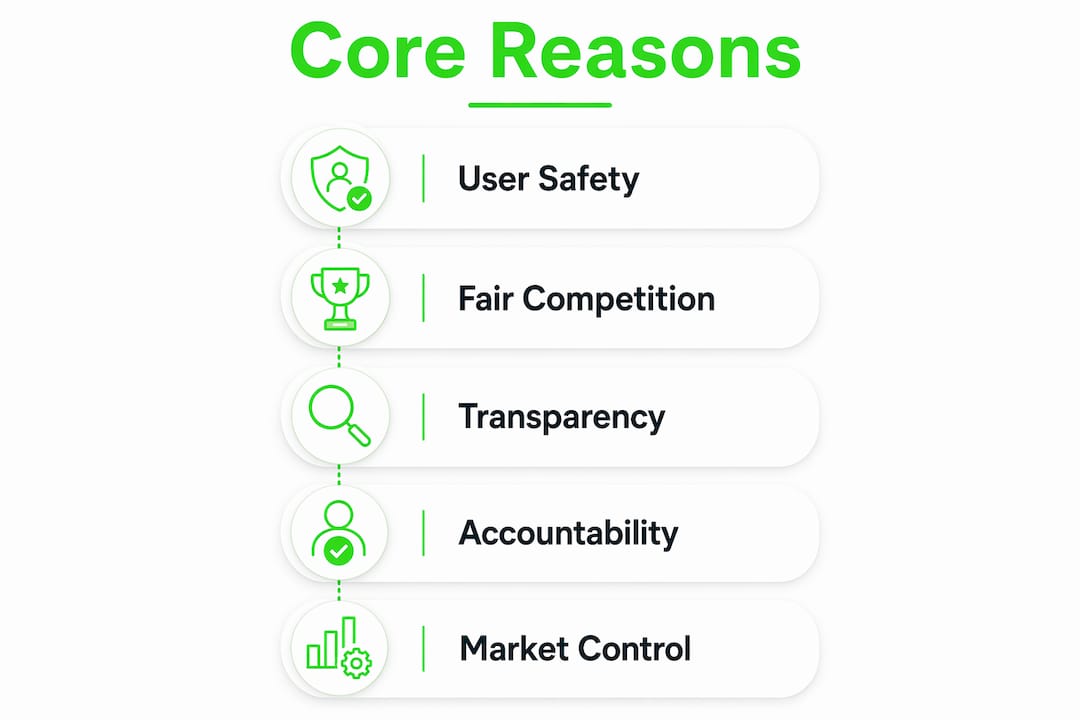
Why regulate digital platforms: the core reasons
The primary driver behind platform regulation is unchecked market power. A handful of companies act as digital gatekeepers, controlling which apps get promoted, which businesses get visibility, and which competitors survive. That control is not neutral. It favors the platform’s own products and profits.
The five core reasons regulators act are:
- Market dominance: Platforms pick winners and losers in the digital economy, limiting what smaller Nigerian tech startups or content creators can achieve without paying for placement.
- Misinformation and harmful content: Without oversight, platforms have little financial incentive to remove false health claims, election interference content, or incitement to violence.
- Privacy and data protection: Platforms collect personal data at scale. Without rules, that data gets sold, profiled, or breached with no accountability.
- Algorithmic bias: Automated systems can discriminate by race, gender, or geography, affecting who sees job ads, loan offers, or news.
- Transparency and accountability: Users deserve to know how content is ranked, why accounts are suspended, and who pays for the ads they see.
Pro Tip: If you use Facebook or TikTok for business in Nigeria, check each platform’s transparency center. These pages now exist partly because of regulatory pressure and show you how your content is ranked.
Regulation addresses all five of these areas simultaneously. That is the importance of regulating digital platforms: it forces companies to act in the public interest, not just their own.

How does the EU Digital Services Act shape platform governance?
The EU’s Digital Services Act (DSA) is the most significant platform regulation law passed to date. It mandates platforms with over 45 million monthly users to actively mitigate systemic risks like misinformation and hate speech. That threshold matters because it captures every major platform Nigerians use.
The DSA uses a systems-based governance approach. Rather than telling platforms exactly what content to remove, it requires them to build systems that reduce harm. This distinction is significant. It shifts responsibility from regulators policing every post to platforms designing safer products from the ground up.
| Regulatory tool | What it requires | Impact on users |
|---|---|---|
| Risk assessments | Platforms must identify and report systemic risks | More transparent reporting on harms |
| Advertising restrictions | Targeted ads to minors are banned | Stronger protection for young users |
| Algorithmic transparency | Users can opt out of profiling-based recommendations | Greater control over your feed |
| Enforcement proceedings | 16 formal proceedings launched by may 2026 | Real consequences for non-compliance |
The EU’s Digital Markets Act (DMA) goes further on competition. It establishes upfront rules for gatekeepers that prohibit self-preferencing without requiring regulators to prove harm first. That is called ex-ante regulation. It avoids the slow, expensive process of building an antitrust case after damage is already done.
Pro Tip: Even if you live in Nigeria, DSA-driven changes affect you. When Meta or TikTok updates its global ad policies or content moderation tools, those changes often roll out worldwide, not just in Europe.
UNESCO guidelines reinforce this direction, advocating for multistakeholder governance that includes governments, civil society, academia, and platforms working together. Solo government control creates censorship risks. Shared governance creates accountability.
What challenges arise in regulating digital platforms effectively?
Regulation is not simple, and the risks of getting it wrong are real. The biggest challenge is overregulation. When governments bundle too many issues into a single law, covering AI, child safety, content moderation, and competition all at once, the result is slow progress and unclear standards. Businesses and users end up with vague rules and regulators with too much discretion.
The second challenge is technological complexity. Regulating AI-driven recommendation systems requires technical expertise that most government agencies do not yet have. An algorithm that amplifies outrage is harder to prosecute than a company that dumps toxic waste.
Key risks in the current regulatory environment include:
- Censorship creep: Broad content moderation rules can silence legitimate political speech, a serious concern in countries where governments already restrict press freedom.
- Regulatory capture: Platforms with large lobbying budgets can shape the rules written to govern them.
- Enforcement gaps: Rules written for European markets do not automatically apply in Nigeria. Local enforcement capacity matters.
- Box-ticking compliance: Platforms may make superficial changes that satisfy legal requirements without improving user experience. Regulators now push for outcome-based compliance to counter this.
Understanding online censorship risks is part of reading any regulation clearly. The goal is protection, not control.
What practical impacts has platform regulation had on users and businesses?
The impact of digital platform regulation is already visible in concrete changes. Snapchat, TikTok, and Meta have all stopped targeted advertising to minors in the EU following DSA enforcement. That shift protects young users from manipulative marketing and sets a global precedent that other markets, including Nigeria, can reference.
For Nigerian businesses, the effects are mixed but significant:
- Advertising strategy shifts: Brands that relied on hyper-targeted ads to young audiences must now rethink their approach. This creates space for more content-driven marketing.
- Fairer competition: Regulation curbs gatekeeping by dominant platforms, giving smaller Nigerian digital businesses a better chance to compete on merit.
- Transparency gains: Platforms now publish clearer data on ad reach, content removal, and algorithmic systems. Nigerian marketers can use this data to make smarter decisions.
- Compliance costs: Businesses that operate across borders must track multiple regulatory regimes. This is a real operational burden for growing Nigerian tech companies.
Platform designation thresholds are not permanent. The UK’s Strategic Market Status framework and the EU’s Very Large Online Platforms category both require regular evidence-based reviews. That means the regulatory scope adjusts as platforms grow or shrink. For Nigerian platforms that scale globally, this is a future consideration worth tracking now.
The broader point is that what happens without platform regulation is a digital economy where the largest players write their own rules. Nigerian users and businesses pay the price through data exploitation, unfair market access, and unchecked misinformation.
How can Nigerians and the diaspora engage with platform regulation?
You do not need to be a lawyer or a policymaker to benefit from platform regulation. Awareness and digital literacy are your first tools.
- Know your data rights: Even without a comprehensive Nigerian data protection law matching the DSA, the Nigeria Data Protection Act 2023 gives you rights over your personal data. Read platform privacy policies and use opt-out settings where available.
- Engage in policy discussions: Organizations like the Paradigm Initiative and the Alliance for Affordable Internet include African voices in global digital governance conversations. Follow their work and participate where you can.
- Support content moderation accountability: Read Naijatipsland’s guide on content moderation in Nigeria to understand how platforms handle Nigerian-specific content and what you can demand from them.
- Demand transparency from platforms: Use the tools platforms now provide under regulatory pressure. On Facebook, check “Why am I seeing this ad?” On TikTok, review your data in the privacy settings.
- Build media literacy: Learning to identify misinformation protects you before regulation catches up. Naijatipsland’s guide on avoiding misinformation is a practical starting point.
Pro Tip: If you run a Nigerian business that advertises on Meta or Google, document your ad performance data now. Regulatory changes can shift targeting options quickly, and historical data helps you adapt your strategy faster.
Global regulation shapes the internet you use. Staying informed means you adapt ahead of the curve, not after the damage is done.
Key Takeaways
Regulating digital platforms is the most direct way to protect users, promote fair competition, and hold powerful companies accountable for the systems they build and the harms they cause.
| Point | Details |
|---|---|
| Market power drives regulation | A few platforms control digital access; regulation prevents them from picking winners unfairly. |
| DSA sets the global standard | The EU’s Digital Services Act covers platforms with over 45 million users and bans targeted ads to minors. |
| Overregulation is a real risk | Bundled legislation slows progress and can create censorship risks if not carefully designed. |
| Nigerian businesses must adapt | Ad targeting changes and transparency rules affect marketing strategy and competitive access. |
| Engagement is your advantage | Digital literacy and policy participation give Nigerians a voice in how these rules are written. |
Naijatipsland’s take on regulation and Nigerian digital life
Watching the regulation debate unfold over the past few years, one thing stands out: the loudest voices in these conversations are rarely African. The EU writes the DSA. The UK builds its Digital Markets regime. The US debates its own platform laws. And Nigeria, with one of the largest and fastest-growing digital populations on the continent, often watches from the outside.
That has to change. The platforms Nigerians use every day, Facebook for community organizing, WhatsApp for business, TikTok for culture, are shaped by rules written elsewhere. When the DSA bans targeted ads to minors, that policy eventually reaches Nigerian users too. When the DMA forces Google to open its app store to competitors, Nigerian developers benefit. The impact of digital platform regulation crosses borders whether we participate in writing those rules or not.
The balance between protection and censorship is real and worth taking seriously. Regulation that gives any single government too much content control is dangerous, especially in political environments where press freedom is fragile. The UNESCO multistakeholder model is the right direction. It requires platforms, governments, civil society, and users to share accountability.
Naijatipsland believes Nigerian voices belong in that conversation, not as observers but as active participants. Digital responsibility starts with knowing the rules that govern your online life. From there, you can demand better ones.
— Naijatipsland
Stay informed with Naijatipsland
Understanding digital platform regulation is one part of a larger picture. How media is owned, how journalism operates, and how advertising shapes public opinion all connect directly to the rules governing platforms.
Naijatipsland covers these intersections in depth. Explore how digital ads impact Nigerian brands in a regulated environment, and read the analysis of how traditional media shapes Nigerian civic life alongside the platforms now competing for the same audience. For context on how power and media intersect globally, the Naijatipsland feature on US media and oligarchy offers a sharp comparison. Stay connected, stay informed, and keep asking the right questions about who controls your digital world.
FAQ
Why do digital platforms need regulation?
Digital platforms need regulation because their market power, data collection practices, and content systems create risks that self-governance cannot fix. Without oversight, platforms prioritize profit over user safety and fair competition.
What is the EU Digital Services Act?
The EU Digital Services Act is a law requiring platforms with over 45 million monthly users to reduce systemic risks like misinformation and hate speech. It also bans targeted advertising to minors and mandates algorithmic transparency.
How does platform regulation affect Nigerian businesses?
Regulation changes ad targeting options, increases transparency requirements, and opens competitive space by limiting how dominant platforms favor their own products. Nigerian businesses that adapt early gain a strategic edge.
What happens without platform regulation?
Without regulation, dominant platforms set their own rules, exploit user data without accountability, and suppress smaller competitors. Misinformation spreads faster, and users have no formal recourse when harmed.
Can Nigerians influence global platform regulation?
Yes. Nigerians can engage through civil society organizations, digital rights groups, and multistakeholder forums that feed into global policy processes. The Nigeria Data Protection Act 2023 also provides a domestic foundation to build on.