Best Countries for Nigerians to Move to for Work in 2026 (Visas, Salaries and Honest Trade-offs)

Last updated: 28 October 2026 · By Naijatipsland Editorial Team · Editorial policy
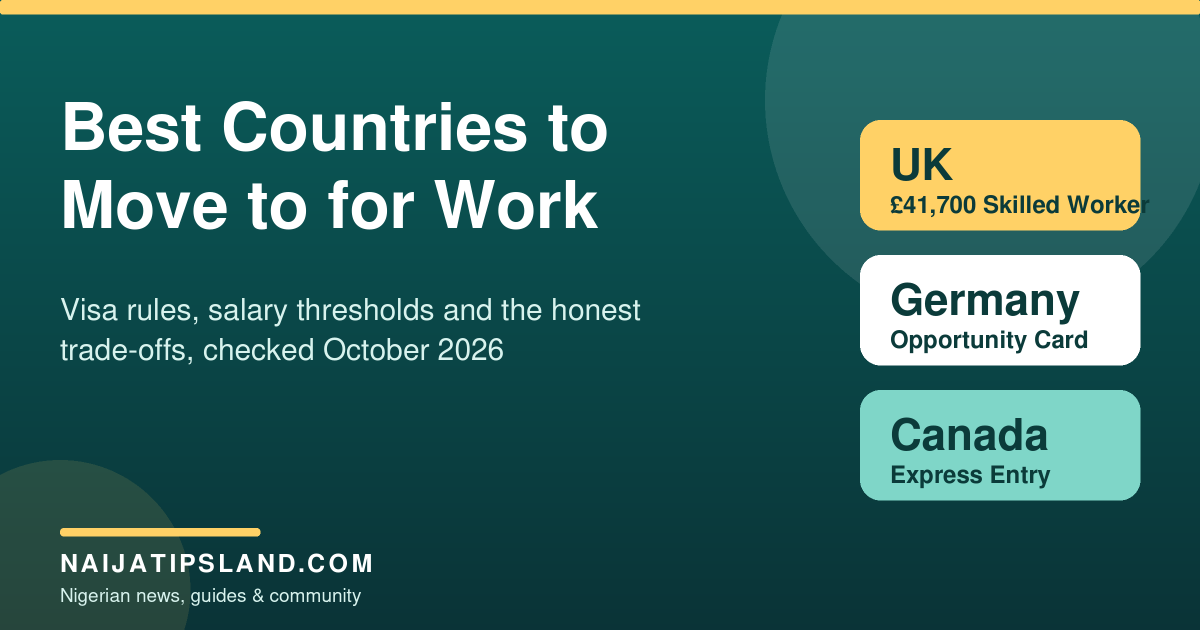
Every month thousands of Nigerians search for the same thing: which country will actually let me work there, and what will it cost me? The honest answer is that no single country is best for everyone. The right one depends on your profession, your salary, your savings and whether you are moving alone or with family. This guide compares the most realistic routes for Nigerian professionals in 2026, using the governments’ own published rules, and tells you the trade-offs that glossy visa-agent adverts leave out.
Checked 28 October 2026. Immigration rules and salary thresholds change often, sometimes with only weeks of notice. Treat every figure below as a guide and confirm it on the official government page linked in the Sources list before you pay for anything.
First, what “easiest” really means
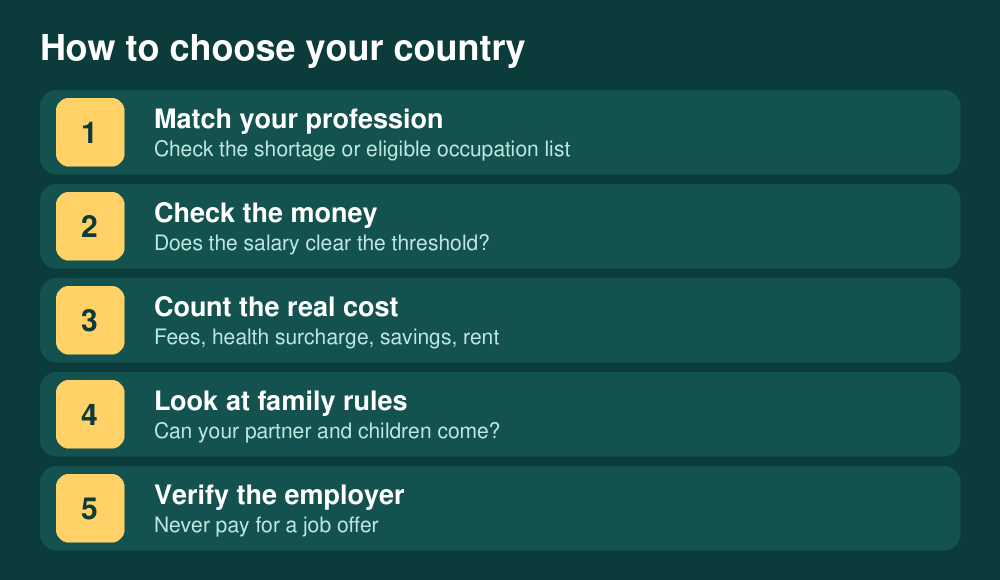
People ask for the easiest country, but there are three different questions hiding inside it. How hard is it to qualify? How hard is it to get a job offer? And how hard is it to stay and bring family afterwards? A route with a low qualification bar can still be useless if employers rarely sponsor in your field. Keep those three questions in mind as you read.
1. United Kingdom: Skilled Worker visa
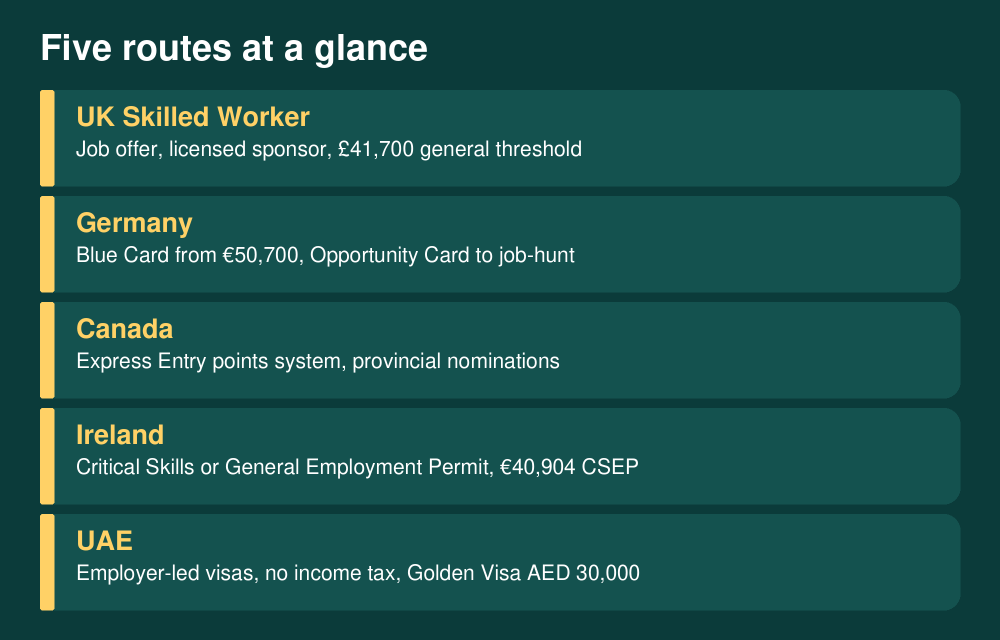
The UK remains the first choice for many Nigerians because of language, family ties and a large sponsor market. The Skilled Worker route needs a job offer from a Home Office licensed sponsor, a role at the required skill level (RQF level 6, roughly degree level, for most new applicants) and a salary that meets the threshold. The general threshold is £41,700 a year, or the going rate for your occupation if that is higher, with some reduced rates for particular categories. Health and care routes have been tightened, so do not rely on older advice about care-worker visas.
The trade-offs are cost and dependants. You pay the visa fee, the Immigration Health Surcharge and often a sponsor-related cost, and you need to show you can support yourself. Read our full breakdown in the UK Skilled Worker Visa guide and the overview of types of visas before you apply.
2. Canada: Express Entry and provincial routes
Canada selects many skilled workers through Express Entry, a points system that scores age, education, language test results (IELTS or CELPIP in English), work experience and sometimes a Canadian job offer. Draws favour candidates with strong language scores, Canadian experience and in-demand occupations, and the government’s multi-year immigration levels plan for 2026 to 2028 signals that overall permanent-resident targets are being managed more tightly than in earlier years. Provincial nominee programmes can help if your occupation is in demand in a particular province.
The honest warning: a high score is needed and there is no job-offer shortcut for most people. Many Nigerians enter via study first. Our guides to the Canada study permit route and its costs are a useful companion, and the government has also announced changes to how high-wage and Canadian-experience candidates are ranked, so check the latest Express Entry notices before you plan.
3. Germany: Blue Card and Opportunity Card
Germany has opened its doors more widely to skilled workers. The EU Blue Card is for graduates with a job offer above a salary threshold; the published 2026 figures are about €50,700 a year in general and about €45,934 for shortage occupations such as IT, engineering and health. The Opportunity Card (Chancenkarte) is a points-based visa that lets qualified people come to look for work for up to a year, with permission to work limited hours while searching.
The trade-offs are language and recognition. German helps enormously in daily life and in many jobs, and some professions (nursing, medicine, engineering titles) require your qualification to be formally recognised first. Tax and social contributions are high but buy strong public services.
4. Ireland: employment permits
Ireland uses employment permits. The Critical Skills Employment Permit targets higher-paid or shortage roles, and the General Employment Permit covers a wider range of jobs with a labour-market test in many cases. The Department of Enterprise has set the Critical Skills minimum at about €40,904 from 1 March 2026 for eligible occupations. English is the working language, the job market is strong in tech, pharma and health, and a Critical Skills permit lets a spouse work, which is a real advantage. Housing costs in Dublin are the main sting.
5. Australia and the UAE
Australia has replaced its old temporary skilled visa with the Skills in Demand visa and uses a separate pathway for permanent skilled migration, with salary thresholds that are reviewed every July. It is attractive but the job-offer and skills-assessment steps are demanding, so check the Department of Home Affairs list for your occupation. The United Arab Emirates works differently: residence is mostly tied to an employer visa, there is no personal income tax, and a Golden Visa exists for some skilled professionals earning around AED 30,000 a month. The catch is that residence does not usually lead to citizenship. If Dubai is on your list, start with our Dubai visa guide.
How to pick between them
- If you have a job offer in hand: the UK, Ireland and the UAE are the fastest, because the employer drives the process.
- If you have no offer but strong credentials: Canada’s points system and Germany’s Opportunity Card let you apply on your own merit.
- If you want permanence and citizenship: Canada, Germany, the UK and Ireland all offer long-term settlement routes; the UAE generally does not.
- If your savings are limited: avoid routes that need large proof-of-funds and a long unpaid job search.
Also remember mobility: a Nigerian passport has limited visa-free reach, so look at visa-free countries for Nigerians, the Schengen visa and your passport options as you plan.
Finding a job from Nigeria
Most work visas start with an employer, so your job search matters as much as the visa. Build a LinkedIn profile that recruiters abroad can find (our LinkedIn guide shows how), apply through company career pages and official job boards, and look at remote jobs that can build an international record before you move. Licensed sponsors in the UK are published in the government’s public register, so you can confirm a company is allowed to sponsor.
Protect yourself from visa and job scams
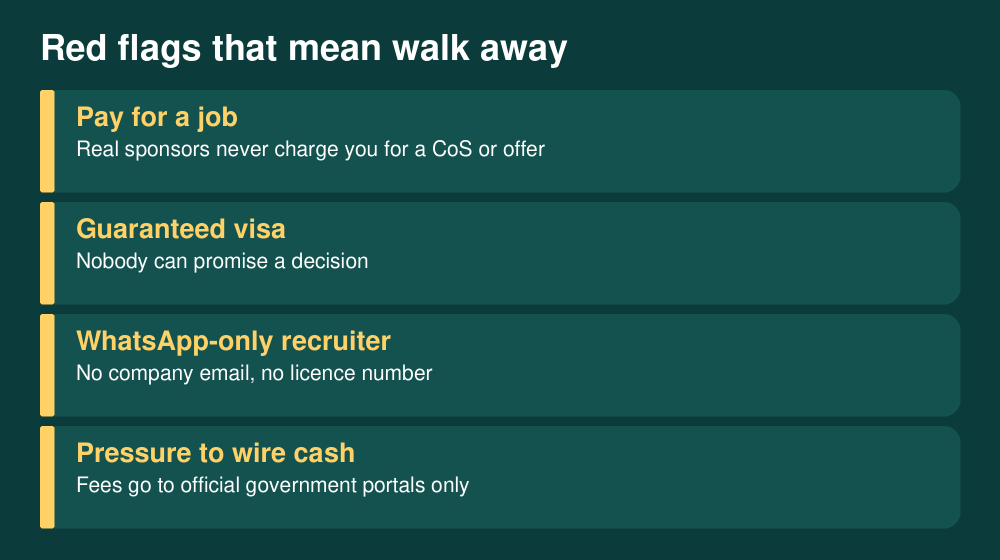
Where people are desperate to leave, fraudsters follow. A real employer or sponsor does not charge you for a job or a certificate of sponsorship, no agent can guarantee approval, and government fees are paid only through official portals. Verify the company, ask for a written contract and licence number, and never send money to a personal account. Read our warnings on fake job offers before you pay anyone.
Frequently asked questions
Which country is easiest for a Nigerian to get a work visa?
There is no universal answer. With a sponsored job offer, the UK, Ireland and the UAE are usually quickest. Without an offer, Canada and Germany offer self-driven routes, but they take preparation and money.
Can I move without a degree?
Some routes allow it, but most skilled routes expect degree-level work or recognised trade qualifications. Check the occupation list for each country.
Can my family come with me?
Usually yes on skilled routes, but each country sets its own rules and funds requirements, and some roles restrict dependants. Check this before accepting an offer.
Bottom line
Start with your profession and your salary, not with a country you like the sound of. Shortlist two routes, confirm the current rules on the official pages, and budget the full cost before you resign from anything. Do not pay for jobs, and do not trust anyone who promises a visa.
What it really costs to relocate
Visa fees are only part of the bill. Budget for flights, a rental deposit (often one to three months’ rent), health insurance or a healthcare surcharge, document translation and recognition, and at least two or three months of living costs before your first salary. A job offer in London, Dublin or Toronto may look strong on paper and still leave little after rent and tax, so compare take-home pay, not headline salary.
Taking your family
Check partner and child rules before you accept an offer. Some routes allow a spouse to work from day one, while others restrict dependants or require extra savings. If you are already married to someone in the UK, a different route may fit: see our guide to the UK spouse visa for Nigerians.
Before you resign or sell anything
Do not leave a stable job, sell property or hand over money on the strength of a verbal promise. Wait for the visa decision in writing, confirm start dates with the employer in writing, and keep a plan B. Many failed moves come from people who acted before the paperwork was final. For an overview of the legal routes without a job offer, read easiest work visas for Nigerians.