

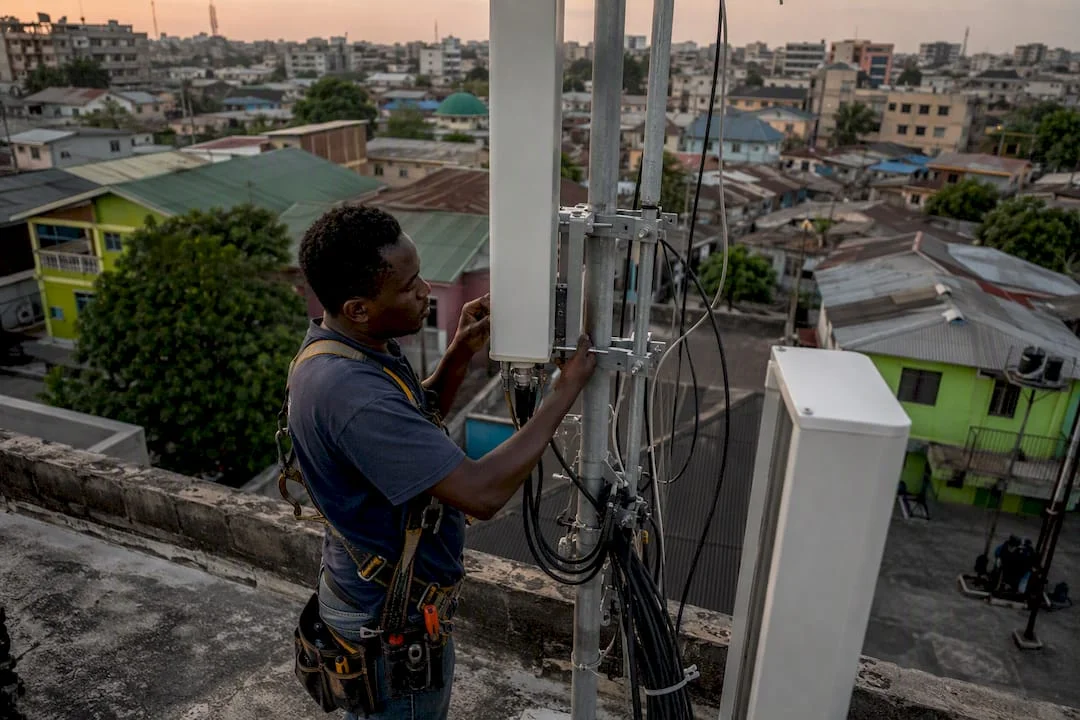
Nigeria’s internet penetration was reported to have increased in early 2026, according to NCC data cited by industry trackers, reflecting significant growth in online users among the population. That marks a sharp jump from the 45.5% penetration DataReportal recorded just weeks earlier, at the end of 2025. The gain reflects aggressive mobile network expansion, not a sudden change in how many households own a computer.
TL;DR:
- Mobile subscriptions significantly outnumber fixed broadband lines, emphasizing Nigeria’s mobile-first internet access model.
- Broadband speeds remain inconsistent across urban and rural areas, with 4G coverage concentrated mainly in cities.
- Rising internet traffic reflects increased streaming, mobile banking, and online learning, driven by a growing number of data-heavy users.
- Infrastructure investment has expanded 4G and introduced satellite broadband, but last-mile fiber remains limited outside major cities.
- Cost and unreliable electricity supply continue to constrain faster internet growth, especially in rural communities.
Table of Contents
- Internet Penetration Nigeria 2026: The Core Numbers
- Why Nigeria’s Internet Growth Accelerated in 2026
- Where Nigeria’s Digital Divide Still Runs Deep
- Telecom Infrastructure Behind the 2026 Numbers
- How Nigerians Actually Use the Internet in 2026
- What Comes Next for Nigeria’s Internet Access
- How We Compiled These 2026 Internet Statistics
- Naijatipsland’s Take on Nigeria’s Connectivity Surge
- Sources
Internet Penetration Nigeria 2026: The Core Numbers
You want the figures that actually hold up under scrutiny, not a single headline percentage repeated across a dozen blogs. Here’s the problem: three respected sources report three different penetration rates for roughly the same period, and each one is measuring something slightly different.
The NCC tracks active internet subscriptions reported monthly by licensed operators. DataReportal estimates unique internet users based on survey and platform data, landing at 109 million users and 45.5% penetration at the close of 2025. The World Bank maintains a longer historical series for international comparison, useful for tracking Nigeria’s trajectory against peer economies rather than pinning down a single 2026 snapshot.
By mid-2026, telecom subscriptions and broadband penetration had increased notably, according to reporting in Vanguard. That broadband figure matters more than the raw subscription count, because broadband access is what actually supports streaming, video calls, and online transactions rather than just basic browsing.
| Internet traffic growth | 168% increase | Jan 2023 to Jan 2026 | NCC/Punch |
A few things stand out beyond the raw table. Mobile connections dominate the access mix almost entirely. Fixed-line and fixed-wireless broadband still make up a small fraction of total connections, meaning most Nigerians experience the internet through a smartphone and a SIM card rather than a home router.
- Active mobile subscriptions vastly outnumber fixed broadband lines, reflecting Nigeria’s mobile-first market structure.
- Broadband speeds vary widely by operator and location, with 4G coverage far more consistent in cities than in rural local government areas.
- Subscription counts include multiple SIMs per person, which inflates the raw numbers compared to unique user estimates.
The gap between the NCC’s subscription-based figures and DataReportal’s user-based figures isn’t a contradiction. It’s a definitional difference. One counts active SIM connections; the other estimates individual humans online. Both are useful, but they answer different questions.
Why Nigeria’s Internet Growth Accelerated in 2026
Three forces pushed penetration higher this year, and none of them happened by accident. Telecom operators poured capital into network upgrades through 2025 and into 2026, adding new base stations and expanding 4G coverage into secondary cities and peri-urban areas that previously relied on 3G or no signal at all.
Airtel posted a particularly large monthly subscriber increase in early 2026, a jump DabaFinance reported as a key driver behind the January penetration surge. That kind of single-operator swing shows how concentrated Nigeria’s telecom market remains. A handful of players still set the pace for national connectivity.
Demand-side pressure matters just as much as supply. Nigerians are streaming more video, moving more money through mobile banking apps, and relying on data-heavy platforms for work and school in ways that simply weren’t universal five years ago.
- Cheaper Android devices from budget manufacturers put smartphones within reach of more first-time users.
- Mobile money and fintech apps pushed non-users online simply to manage their finances.
- Streaming platforms and social video drove heavier data consumption among people who already had access.
- Remote work and online learning habits formed during the pandemic never fully reversed.
Cost and power supply remain the two biggest brakes on faster growth. Data plans still eat a meaningful share of household income for lower-income Nigerians, and unreliable electricity makes it harder to keep routers, base stations, and phones charged in many communities.
Pro Tip: If you’re tracking connectivity trends for business planning, watch broadband penetration rather than total subscriptions. Broadband growth tells you where real digital spending power is emerging, not just where SIM cards are being sold.
Where Nigeria’s Digital Divide Still Runs Deep
Access in Nigeria isn’t evenly distributed, and pretending otherwise misleads anyone trying to reach the whole country. Infrastructure investment clusters heavily around Lagos, Abuja, and Port Harcourt, where operators find the densest, most profitable customer base and where fiber backbones already exist to connect.
Rural areas tell a different story. Most rural access runs through basic mobile GSM networks rather than fixed broadband, and last-mile fiber simply hasn’t reached many communities outside major population centers.
- Lagos and Abuja show the highest concentration of 4G and emerging 5G coverage, plus the bulk of fixed broadband subscribers.
- Rural households depend almost entirely on mobile data, often on 3G where 4G towers haven’t been built.
- Schools and clinics outside urban corridors frequently lack any reliable connection, limiting telemedicine and e-learning options.
- Operator POP (point of presence) data in NCC’s tables consistently shows infrastructure density tracking urban population, not geographic spread.
This unevenness has real consequences. A student in rural Kebbi State trying to access an online exam portal faces a fundamentally different experience than one in Lekki, even though both count as “connected” in national statistics. Penetration percentages hide that gap unless you look at the regional breakdown underneath.
Telecom Infrastructure Behind the 2026 Numbers
Operators didn’t hit these numbers by coasting. Network expansion through 2025 and into 2026 involved new site rollouts, fiber backbone investment, and a push into underserved LGAs that telecom companies had previously deprioritized.
NCC’s operator tables now include newer entrants alongside the traditional big four. Starlink Internet Services Nigeria Ltd appears as a wireless subscriber category in recent regulator data, signaling that satellite broadband has moved from a novelty to a measurable slice of the connectivity mix, particularly for remote and underserved locations that terrestrial fiber hasn’t reached.
- Fiber backbone expansion continued linking regional hubs, though last-mile fiber into individual homes remains rare outside affluent urban neighborhoods.
- 4G coverage deepened in secondary cities, while 5G rollout stayed concentrated in Lagos and Abuja pilot zones.
- Satellite broadband entrants like Starlink began appearing in official subscriber counts, adding a new access category for remote areas.
- Power supply and site security costs remain the biggest constraints on how fast operators can add new base stations.
For a broader look at how fiber and cable infrastructure tradeoffs typically play out, this primer on last-mile connectivity breaks down the economics operators weigh when choosing between technologies, a useful frame even outside the Nigerian context.
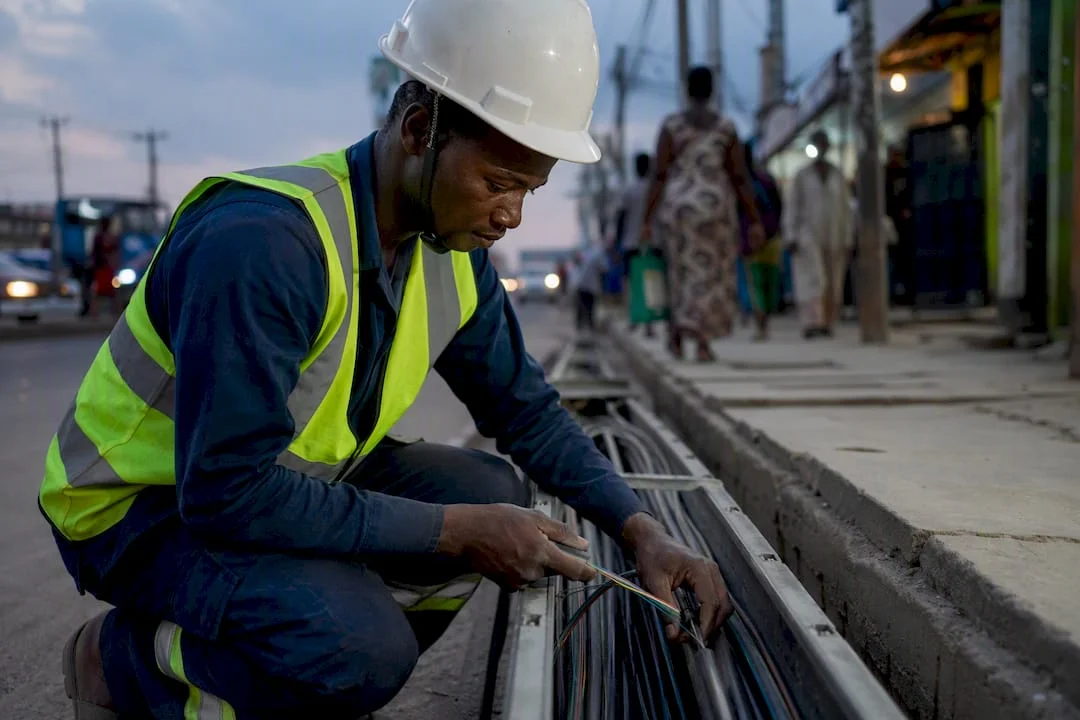
Backhaul capacity, the links connecting cell towers back to the core network, remains a quiet bottleneck. Operators can add towers faster than they can guarantee the fiber or microwave links needed to move traffic away from those towers efficiently.
How Nigerians Actually Use the Internet in 2026
Subscription counts tell you how many SIM cards are active. They don’t tell you how much Nigerians are actually doing online, and that gap is widening fast.
Nigeria’s internet traffic saw a large increase between early 2023 and early 2026, rising substantially in monthly volume, according to Punch’s analysis of NCC data. That increase means existing users are streaming more, transacting more, and consuming far more data per person than they were three years ago, not just that more people signed up for a SIM.
- Streaming video and social platforms drive the largest share of mobile data consumption.
- Digital payments and mobile banking apps have become daily-use tools rather than occasional conveniences.
- E-commerce browsing and transactions add steady, growing data demand outside peak entertainment hours.
- Multiple-SIM ownership means subscription totals overstate unique users; many Nigerians carry two or three lines for cost and coverage reasons.
That last point deserves emphasis. It means SIM churn and multi-SIM habits inflate the raw count well above the unique-user figure DataReportal and the World Bank track separately.
What Comes Next for Nigeria’s Internet Access
If the monthly trend lines from early 2026 hold, penetration should keep climbing through the rest of the year, though probably at a slower pace than the sharp January jump suggests. Broadband growth looks more durable than raw subscription growth, since it reflects actual infrastructure capacity rather than SIM registration drives.
For advertisers, publishers, and digital service providers, rising penetration means a larger, younger, mobile-first audience spending more time and money online. Naijatipsland’s own audience growth tracks this exact curve: more Nigerians online means more people discovering community discussion spaces and more attention available for advertisers targeting Nigeria’s digital economy.
- Expect continued mobile-led growth rather than a fixed broadband surge, given cost and infrastructure realities.
- Watch power supply policy and fuel subsidy changes closely, since both directly affect network uptime and data costs.
- Businesses building for Nigerian audiences should design mobile-first, low-bandwidth-tolerant experiences by default.
- Content creators and marketers should treat data traffic growth, not subscriber counts, as the real signal of audience engagement capacity.
Pro Tip: When pitching to Nigerian advertisers or partners, cite broadband penetration and data traffic growth together. Either figure alone tells an incomplete story about audience reach.
Regulatory shifts also matter here. Government policy on spectrum allocation, tariff structures, and rural connectivity subsidies will shape how quickly the remaining gap closes, particularly outside the big three cities.
How We Compiled These 2026 Internet Statistics
Numbers on Nigerian internet access vary because sources measure different things at different times. Here’s how to reconcile them.
- NCC monthly and quarterly tables report active subscriptions by operator, refreshed regularly and used for the subscription and broadband counts throughout this piece.
- DataReportal’s Digital 2026: Nigeria report estimates unique users and penetration through survey-based methodology, offering a check against operator subscription inflation caused by multi-SIM ownership.
- World Bank’s IT.NET.USER.ZS indicator provides a longer historical series for Nigeria, useful for spotting multi-year trends rather than pinpointing a single 2026 figure.
- ITU’s global database supplies international comparators, helping readers judge whether Nigeria’s growth rate is unusual or in line with peer markets.
Always check the reporting date attached to any figure. A “2026” statistic pulled in January reflects a very different state of the network than one pulled in June, given how fast operator tables update.
Naijatipsland’s Take on Nigeria’s Connectivity Surge
More Nigerians online means louder, faster, more contentious conversation, and that’s exactly the space Naijatipsland exists to serve. Rising broadband access won’t just add readers. It will add voices from towns and states that rarely got heard in national discourse before. Naijatipsland plans to expand coverage of regional stories precisely because connectivity growth is finally making that possible, and we’re building community features to match. If you’ve got a story your neighborhood is talking about but the national outlets haven’t touched, start the discussion here. That’s exactly the gap in Nigerian digital media that a growing, more connected readership can finally close.
— Naijatipsland
Sources
For readers who want to dig into the raw numbers themselves: NCC’s subscriber statistics tables list monthly operator-level subscriptions and broadband counts. DataReportal’s Digital 2026: Nigeria report offers user-based penetration estimates and demographic context. The World Bank’s internet indicator page tracks Nigeria’s long-term trend, and the ITU’s data hub supplies global comparisons.
- NCC subscriber statistics and market data reports
- Digital 2026: Nigeria
- Individuals using the Internet (% of population) – Nigeria
- Telecom subscriptions rise to 188m as broadband penetration hits 55.67% – Vanguard