


TL;DR:
- A cultural trend is a sustained change in behavior or meaning that crosses multiple communities and lasts beyond viral moments.
- Successful analysis requires cross-platform evidence, tracking velocity over volume, and testing explanations within community forums like Naijatipsland.
A cultural trend is a sustained change in behavior, meaning, or practice that crosses multiple communities and endures well beyond short-lived viral moments. Before you post an explanation anywhere, run this quick check:
- Community breadth: Is this happening across more than one group or region?
- Narrative consistency: Do different communities describe it in similar terms?
- Velocity: Are mentions growing steadily over weeks, not just spiking for a day?
Quick start: Post your early reading on Naijatipsland to gather local context fast. The forum’s threaded discussions and community tagging help you test whether your interpretation holds up across Nigerian and diaspora audiences before you commit to a full explainer.
Table of Contents
- What is the difference between “trending” and a cultural trend?
- How do you explain any cultural trend in three steps?
- What data and signals should you actually collect?
- How does Naijatipsland help you test and legitimize your explanation?
- How do you write the explanation once you have the evidence?
- What ethical checks should you run before publishing?
- A 9-question checklist before you post your explanation
- What do successful cultural trend explanations look like?
- What are the most common mistakes when explaining cultural trends?
- How do you track a cultural trend’s lifecycle over time?
- Key Takeaways
- Why this method matters for Nigerian internet users
- Naijatipsland is where your trend explanation gets real
- Useful sources for deeper reading
What is the difference between “trending” and a cultural trend?
A trending topic spikes and fades. A cultural trend shifts behavior and sticks. Confusing the two is the most common mistake when explaining cultural shifts.
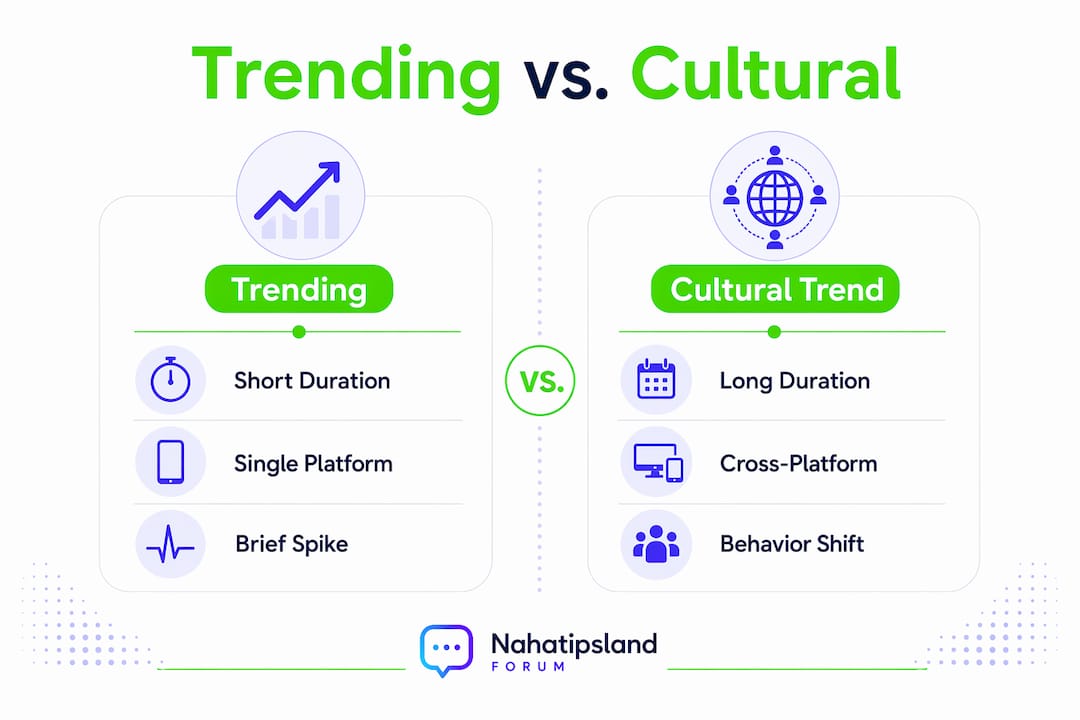
The fad example: A single-week viral meme, say a funny audio clip that every Nigerian Twitter account uses for three days, is pure novelty-driven amplification. Volume is high; duration is near zero. Once the novelty fades, behavior returns to baseline.
The trend example: The shift from full-length album rollouts to single-driven streaming strategies in Afrobeats is a genuine cultural trend. It changed how artists release music, how fans consume it, and how labels budget. That change crossed multiple communities, persisted across years, and altered industry practice. Signals & Shifts plots exactly this kind of deeper movement on a lifecycle curve, separating short-lived spikes from durable shifts.
Pro Tip: Wait for several weeks of consistent, cross-platform growth before calling something a cultural trend. A signal that doubles in 48 hours is exciting, but a signal that grows steadily for a month across Twitter, TikTok, and community forums is evidence.
How do you explain any cultural trend in three steps?
Use the Observe → Decode → Explain framework. It turns raw chatter into a credible, structured explanation.
- Observe: Collect mentions, map the timeline, identify which platforms carry the signal, and note the influential nodes (creators, community leaders, media accounts) driving early adoption. Track where the conversation started and how it spread.
- Decode: Cluster conversations by theme, not just keyword. Check sentiment direction (is the tone celebratory, anxious, ironic?). Map community identity: who is adopting this, and what does it say about them? Narrative velocity — how fast a topic’s mentions are growing — often predicts crossover better than raw volume alone.
- Explain: Link the signals to underlying causes (economic pressure, generational shift, technology change, backlash to a prior trend). Shape a one-sentence thesis. Predict where the trend heads next based on the memetic adoption cycle — Innovators have adopted it; is the Early Majority arriving yet?
Mini-case: Observe that “slow living” content is rising steadily on Nigerian YouTube and Instagram over six weeks. Decode: the sentiment is aspirational and anti-hustle; creators are young urban professionals. Explain: economic uncertainty plus burnout culture is producing a backlash trend, consistent with the pattern that technology accelerations produce counter-movements.
| Dimension | Signal | Shift |
|---|---|---|
| Duration | Days to one week | Weeks to months |
| Spread | One platform or community | Multiple platforms and communities |
| Behavior change | None or superficial | Measurable and persistent |
| Recommended action | Monitor; do not publish yet | Analyze causes; publish explanation |

What data and signals should you actually collect?
Velocity beats volume. A narrative doubling in 48 hours is more predictive than a large but static conversation, according to Pulsar’s trend detection guidance. Here is what to track and how.
| Signal type | What to measure | Quick method |
|---|---|---|
| Velocity | Week-over-week mention growth rate | Manual hashtag count or Hootsuite tracker |
| Sentiment | Positive/negative/ironic tone ratio | Read multiple posts; note dominant tone |
| Cross-platform spread | Same narrative on 3+ platforms | Search identical phrases on Twitter, TikTok, Reddit |
| Influential nodes | Accounts with outsized early engagement | Check who posted first; note follower reach |
| Timeline | When did mentions first appear? | Sort search results by oldest |
For tools, Hootsuite’s trend research product recommends combining sentiment analysis, conversation clustering, and cross-network monitoring to move from what is trending to why. The free Hootsuite trend tracker surfaces momentum and sentiment context in real time. For hashtag-specific work, Naijatipsland’s own guide on analyzing trending hashtags covers the practical steps for a Nigerian context. AI-powered narrative clustering can also surface early signals by grouping related content across different phrasings and platforms, raising recall across disparate hashtags when the same underlying idea is spreading under multiple labels.
Pro Tip: Before publishing, confirm your reading with at least three independent signal sources: platform data, community forum responses, and a media scan. One source is a hunch; three is evidence.
How does Naijatipsland help you test and legitimize your explanation?
Community forums do more than host discussion. Research by Godart & Galunic shows that cultural elements gain popularity when they connect producers and audiences across network structures. Naijatipsland does exactly that: it links content creators, news followers, and everyday readers in one space, which means your explanation gets stress-tested by multiple perspectives at once.
Follow this workflow:
- Prepare your evidence snippet: Write two to three bullet points summarizing your signals (platform, velocity, sentiment, one example post).
- Post a focused prompt: Frame it as a question, not a statement. “Is the ‘slow living’ trend real in Lagos, or is it just content?” invites more honest responses than a declarative claim.
- Tag relevant communities: Use Naijatipsland’s topic tags (entertainment, lifestyle, politics, tech) so the right readers see your post.
- Summarize early responses: After 24–48 hours, note whether responses confirm, challenge, or add local nuance to your reading. Counter-evidence is valuable; it sharpens your explanation.
Naijatipsland’s threaded replies, community voting, and cross-posting features mean you can track how your explanation evolves as more readers weigh in. The platform’s role in Nigerian online community life makes it a practical first stop for crowdtesting a cultural reading before publishing a longer explainer.
How do you write the explanation once you have the evidence?
Three formats cover most situations.
A. Short forum post (best for Naijatipsland threads): One headline sentence stating the trend. Three bullet points of evidence (platform, velocity, one concrete example). One closing sentence with your thesis. Keep it under 150 words.
B. Long explainer (for a full article or newsletter): Lead with the thesis. Present evidence in order of strength. Build the narrative by connecting signals to causes. Add a local angle (how does this play out in Nigeria specifically?). Close with a short-term prediction.
C. Thread format (for Twitter/X or Naijatipsland discussion threads): Open with a hook claim. Each reply or numbered point adds one sourced example. End with a summary and a question to drive responses.
Walkthrough: You have observed that “thrift fashion” mentions tripled on Nigerian Instagram over five weeks, sentiment is positive and identity-driven, and three major Lagos influencers posted about it. Your short post headline: “Thrift fashion is becoming a cultural identity marker in Lagos, not just a budget choice.” Bullets: platform spread, velocity, influencer adoption. Thesis: economic pressure plus global sustainability discourse is shifting how young Nigerians signal status.
What ethical checks should you run before publishing?
Bias and bad evidence can damage your credibility and harm the communities you are writing about.
The three most common problems are confirmation bias (only collecting signals that support what you already believe), sampling bias (drawing conclusions from one platform when the trend may not exist elsewhere), and amplification harm (spreading a harmful meme further by explaining it without context).
Verification steps: Check that screenshots include visible timestamps and source URLs. Confirm the original community where a post appeared before attributing it. Never share identifying information about private individuals. If a trend involves sensitive topics (mental health, ethnicity, religion), add context rather than just describing the pattern.
Pro Tip: Always link to the original thread or post when citing evidence. A screenshot without a source is unverifiable. Readers and moderators on Naijatipsland will trust your explanation more when every claim traces back to a real, accessible source.
A 9-question checklist before you post your explanation
Run through these before you publish anything:
- Does this signal appear across at least two communities or platforms?
- Has it persisted for four or more weeks?
- Is the narrative consistent across different groups describing it?
- Have you checked velocity (growth rate), not just total volume?
- Can you verify at least three independent sources?
- Have you actively looked for counter-evidence or alternative explanations?
- Does your explanation include a local Nigerian angle or context?
- Can you predict one short-term movement this trend will produce?
- Have you checked for ethical risks (amplification harm, privacy, bias)?
If you answer “no” to more than two questions, gather more evidence before posting.
What do successful cultural trend explanations look like?
The best explanations share three qualities: they name a specific behavior change, they connect it to a cause, and they predict movement.
Researchers Varnum and Grossmann demonstrated this approach at scale by using cross-temporal data and behavioral ecology to show that shifts in individualism in the United States consistently followed changes in socioeconomic conditions, not the other way around. That is the model: evidence first, cause second, prediction third.
In a Nigerian context, a strong explanation of the Afrobeats global expansion would not just say “Afrobeats is popular worldwide.” It would specify: streaming platform data shows Nigerian artists entering charts in markets where they had no presence three years ago; the sentiment in those markets is curiosity-driven, not nostalgia-driven; the influential nodes are diaspora communities acting as cultural bridges. That structure is what separates a credible analysis from an opinion.
What are the most common mistakes when explaining cultural trends?
Calling a spike a shift is the most frequent error. A single viral moment, even a massive one, does not constitute a cultural trend without sustained behavioral change across communities.
Ignoring counter-evidence is the second. If your explanation only accounts for the data that supports it, it will not survive scrutiny in a forum. Readers will find the exceptions immediately.
Skipping the cause layer produces weak explanations. Describing what is happening without explaining why leaves readers with no predictive value. An NBER working paper on cultural change makes this point directly: culture changes because incentives change. Your explanation should always trace the signal back to a shift in incentives, ecology, or information.
Finally, over-relying on one platform distorts your reading. A trend that exists only on Nigerian Twitter may not be present in Lagos street culture at all. Cross-platform triangulation is not optional.
How do you track a cultural trend’s lifecycle over time?
A trend moves through recognizable stages: emergence (small communities, low volume), acceleration (cross-platform spread, rising velocity), mainstream adoption (mass media coverage, brand adoption), and decline or backlash. Signals & Shifts plots 40 shifts on a lifecycle curve at any given time, showing where each sits.
To track this yourself, set a recurring weekly check: note mention volume, sentiment direction, and which new communities have adopted the signal. When mainstream media starts covering it, you are likely in the late-acceleration or early-mainstream phase. When backlash content begins to outnumber supportive content, decline is starting.
Community-origin signals often appear four to twelve weeks before mainstream coverage. Posting early on Naijatipsland and tracking how the community response evolves gives you a running record of the trend’s movement through its lifecycle.
Key Takeaways
Explaining cultural trends well requires distinguishing sustained behavioral shifts from short-term viral spikes, collecting cross-platform evidence, and testing your reading in a community forum before publishing.
| Point | Details |
|---|---|
| Trend vs. viral spike | A cultural trend persists across communities for weeks or months; a viral spike fades in days. |
| Velocity over volume | A narrative growing steadily over four-plus weeks is stronger evidence than a single high-volume day. |
| Three-source rule | Confirm any trend reading with at least three independent signal sources before publishing. |
| Lifecycle tracking | Monitor weekly for mention growth, sentiment shifts, and new community adoption to place a trend on its lifecycle curve. |
| Naijatipsland as testing ground | Post a three-bullet evidence summary on Naijatipsland to crowdtest your explanation and surface local Nigerian context. |
Why this method matters for Nigerian internet users
Nigerian digital culture moves fast. A phrase that starts in a Lagos group chat can reach diaspora communities in Houston and London within 48 hours, and by the time mainstream media covers it, the original meaning has often shifted. That speed makes rigorous analysis more valuable here, not less.
Naijatipsland sits at the intersection of producers and audiences in the Nigerian online space, which is precisely the network position that research by Godart and Galunic identifies as the point where cultural elements gain real traction. When you post an early reading on the platform, you are not just sharing an opinion. You are inserting your explanation into the network where adoption decisions are actually being made. That is what makes community-driven trend decoding a practical method, not just an academic one.
Naijatipsland is where your trend explanation gets real
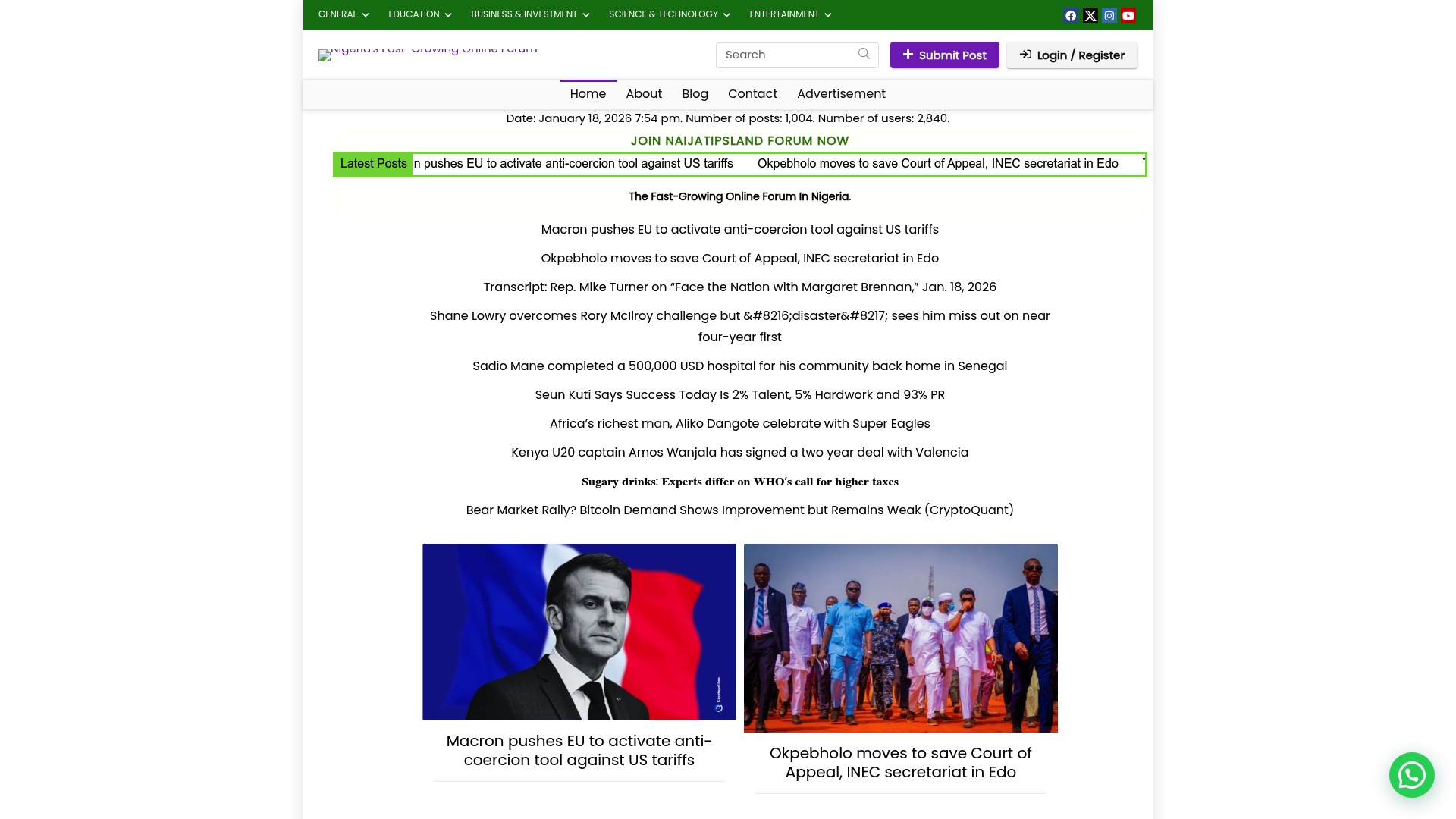
Most trend analysis stays theoretical until a real audience pushes back on it. Naijatipsland gives you that audience immediately: threaded replies, community voting, topic tagging, and local subforums covering politics, entertainment, sports, tech, and lifestyle.
Here is a ready-to-copy post template for your first submission:
“I’ve been tracking [trend name] across [platforms] for [X weeks]. Mentions have grown steadily, sentiment is [positive/negative/mixed], and [specific example]. Is this a real shift or still a spike? What are you seeing in your area?”
That format invites honest responses, surfaces counter-evidence, and builds your credibility as an analyst. Register on Naijatipsland to post your first explanation and connect with a community that takes trending topics seriously.
Useful sources for deeper reading
| Source | Why it helps |
|---|---|
| Signals & Shifts | Tracks 40 cultural shifts on a lifecycle curve; shows how to separate signals from durable changes. |
| Pulsar — AI trend detection guide | Explains velocity tracking and NLP clustering for early trend detection. |
| Hootsuite trend research | Practical guidance on sentiment analysis and cross-platform conversation monitoring. |
| Godart & Galunic, Organization Science | Academic evidence for why network position determines which cultural elements gain popularity. |
| NBER — Understanding Cultural Change | Economic framework for why culture changes; useful for building the “cause” layer of any explanation. |