

TL;DR:
- Discussing pop culture shapes social norms, builds identity, and practices civic skills with real societal impacts.
- It influences community bonds, political views, mental health, and economic trends through shared references and engagement.
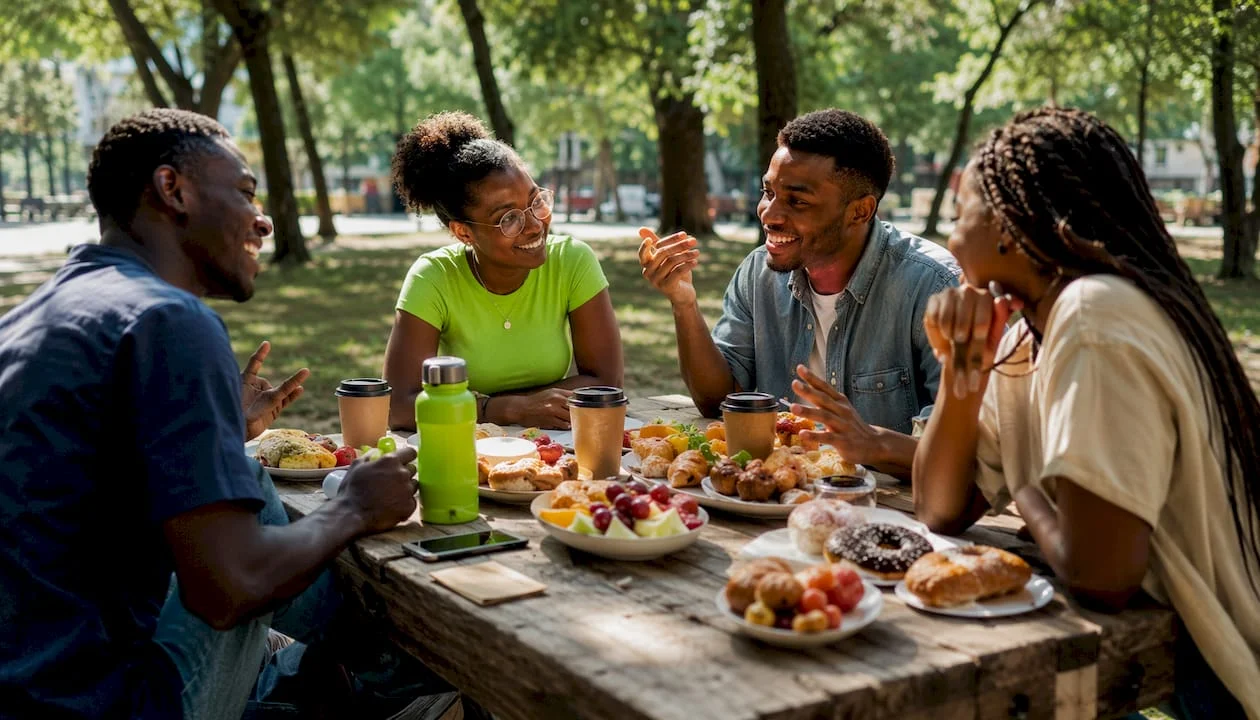
We discuss pop culture because it organizes shared meaning, shapes social norms, and creates low-stakes practice for the civic skills that matter in real life. It is not just entertainment. The conversations it sparks touch identity, community, politics, mental health, and economic power.
TL;DR — Why discussing pop culture matters:
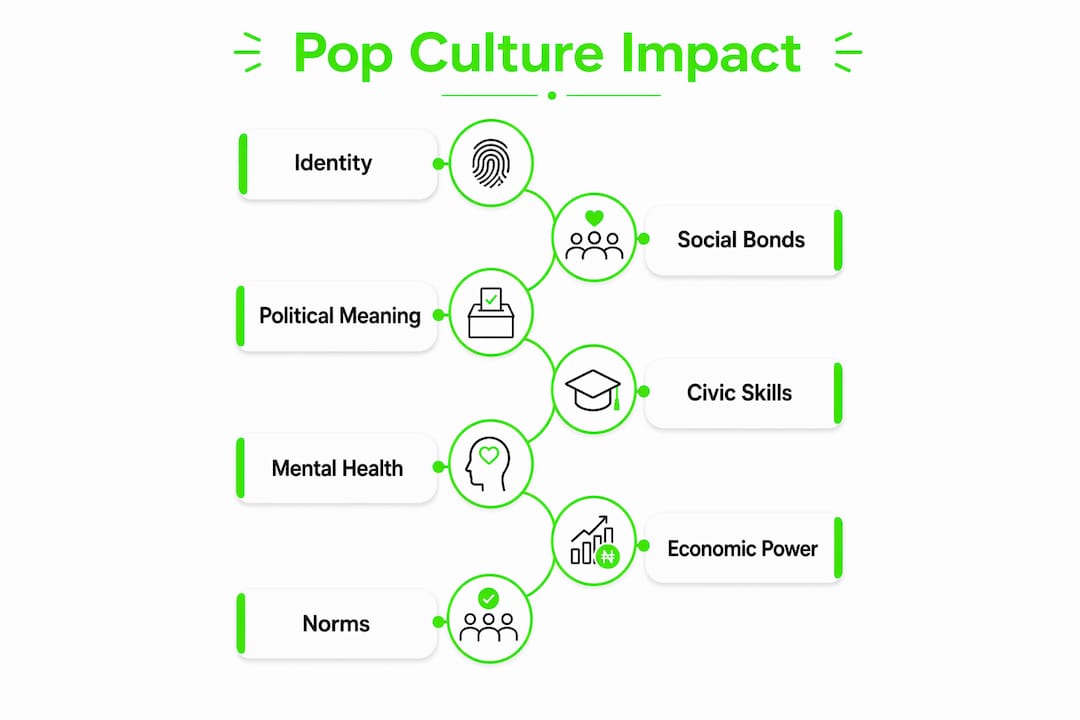
- Identity: Pop culture gives you a vocabulary for who you are and who you want to become.
- Community: Shared fandoms and cultural references reduce loneliness and build real social bonds.
- Politics and meaning-making: Cultural products shape views on race, gender, and power before critical thinking even kicks in.
- Civic skills: Debating a film or a meme is practice for harder conversations about science and policy.
- Mental health: Engaging with stories and characters helps people process difficult emotions safely.
- Economic signals: Pop culture drives tourism, language learning, and brand interest at a measurable scale.
Harvard scholars studying sports fandom have found that shared viewing increases social connection in ways that resemble other forms of community infrastructure. That finding alone reframes the question. Talking about pop culture is not a guilty pleasure. It is a social practice with real consequences.
Table of Contents
- What exactly counts as pop culture?
- Why discuss pop culture? The core reasons that actually matter
- Concrete examples that show these reasons in action
- What are the real benefits of discussing pop culture?
- Where pop culture discussions can go wrong
- How to discuss pop culture critically and constructively
- What recent research says about fandoms, civic skills, and mental health
- Key Takeaways
- Naijatipsland’s perspective on why this conversation matters locally
- Useful sources for further reading
What exactly counts as pop culture?
Pop culture is the set of ideas, images, stories, and practices that circulate widely through a society at a given moment, produced and consumed by large, diverse audiences rather than by elite or specialized groups. Think films, streaming series, chart music, memes, viral social media moments, celebrity culture, sports fandoms, fashion trends, and the slang that travels from one generation to the next.
“Popular culture is entertainment for the masses: movies, TV shows, music. But pop culture is also hairstyles, outfits, even buildings. It’s so prevalent that references work their way into our lexicon. Tell someone, ‘May the Force be with you,’ and they’ll catch the Star Wars reference — even if they haven’t seen the saga.” — BYU Magazine
That definition matters because it separates pop culture from three related but distinct categories. High culture (opera, fine art, literary fiction) is produced for and consumed by a narrower, typically educated or affluent audience. Folk culture emerges organically from specific communities and is passed down through tradition rather than mass media. Subcultures share some features with pop culture but remain deliberately marginal, defined partly by their distance from the mainstream. Pop culture sits at the center: widely shared reference points that cut across class, region, and background.
The scope is broader than most people assume. A Nollywood blockbuster, a trending TikTok sound, a World Cup meme, and a Beyoncé album all qualify. So does the slang your teenager uses that you had to look up. What unites them is mass circulation and the shared vocabulary they create.
Why discuss pop culture? The core reasons that actually matter
1. Pop culture helps you build and express identity
People use pop culture to signal who they are, what they value, and which groups they belong to. The music you listen to, the shows you reference, the celebrities you admire — these choices communicate identity before you say a word. Scholars at the University of Virginia’s Scholars’ Lab note that audiences “make and remake their identities, in terms of gender, sexuality, race, ethnicity, class, and any other mode of intersectionality, in response to the popular culture they consume.” Those identities then shape personal and political choices. Discussing pop culture is how that identity work becomes conscious rather than automatic.

2. Shared fandoms create genuine social bonds
Fandoms are not trivial. Research by Harvard scholars finds that sports fandom strengthens social ties and reduces loneliness, with early experiments showing measurable increases in feelings of connection after shared viewing. The mechanism is straightforward: repeated, voluntary participation in a shared cultural experience creates ritualized interaction patterns. You show up for the same thing, week after week, alongside people you might never otherwise meet. That is social infrastructure, not just fandom.
3. Pop culture shapes political and social meaning
Cultural messages in songs, stories, and images supply the frameworks people use to make sense of their experiences. Because pop culture feels like entertainment, people often absorb its ideological content without conscious critique. That is precisely why discussing it matters. Movements like #BlackLivesMatter and #MeToo gained traction partly because pop culture gave them a shared vocabulary and a platform for challenging dominant norms. Ignoring that dynamic leaves a significant lever of social change unexamined.
4. Discussing pop culture trains civic skills
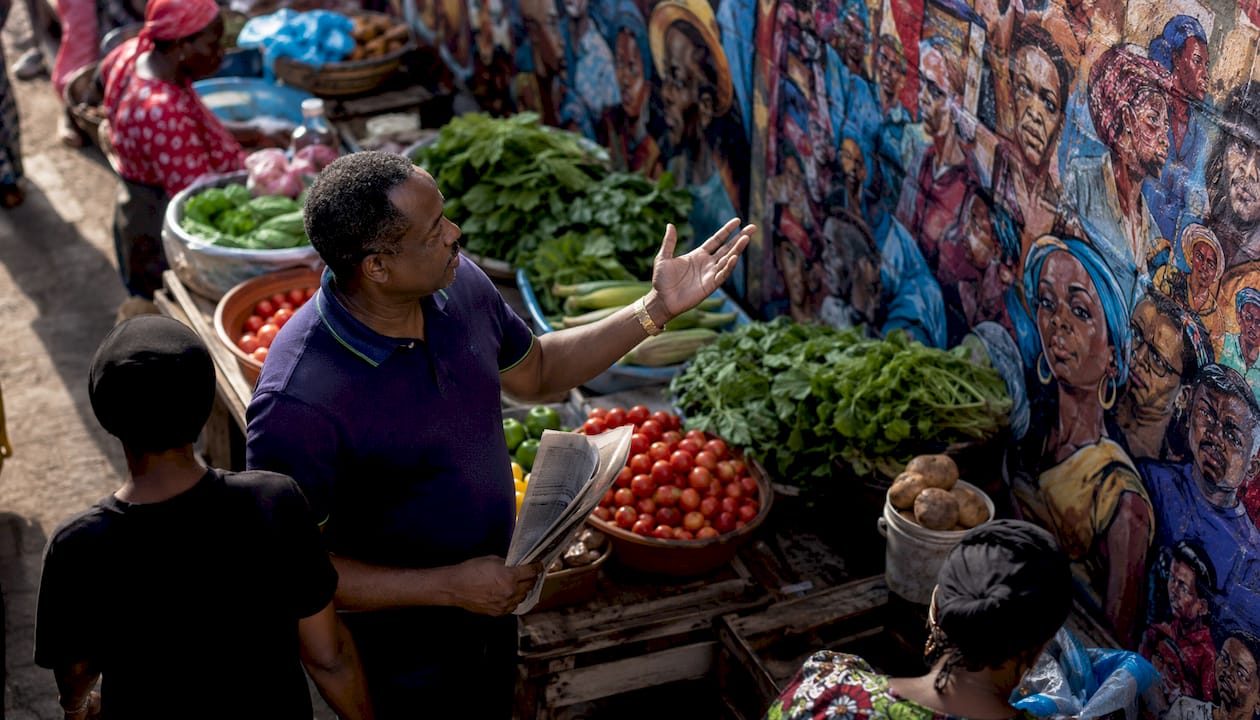
Pop culture offers a low-stakes environment to practice constructive disagreement. Arguing about whether a film’s ending was earned, or whether a celebrity’s public statement was appropriate, requires the same skills as debating a policy proposal: listening carefully, articulating a position, considering counterarguments, and changing your mind when the evidence warrants it. Those skills transfer directly to harder conversations about science, politics, and ethics.
5. Pop culture supports mental health and emotional processing
Engaging with fictional characters and stories lets people approach difficult feelings at a safe distance. Therapists and mental-health practitioners use media examples to help clients externalize problems; analyzing a character’s choices often lowers defensiveness and creates space for genuine reflection. Pop culture also provides “refuges” for marginalized groups, where shared references build resilience and a sense of belonging that may be harder to find elsewhere.
6. Pop culture carries economic and soft-power weight
Cultural products produce tangible economic outcomes. The World Economic Forum documents how films and series drive tourism and product interest — Dubrovnik saw a measurable tourism spike linked to Game of Thrones, and Squid Game generated a surge in interest in the Korean language and Korean goods. Discussing these products is not separate from their economic effects; the conversation amplifies reach and sustains cultural relevance long after a release date.
7. Pop culture is a site for both reinforcing and resisting dominant norms
Pop culture is ideologically charged in both directions. It can reproduce stereotypes and normalize harmful ideas. It can also be a platform for resistance and social change. Understanding that dual role is why the importance of pop culture extends beyond entertainment criticism into sociology, media studies, and civic education.
Concrete examples that show these reasons in action
The abstract reasons above become clearer when you map them to specific cultural moments. The table below links each reason to a real example and its documented or widely observed outcome.
| Reason | Example | Outcome |
|---|---|---|
| Identity formation | Beyoncé’s Lemonade | Sparked widespread public conversation about Black womanhood, grief, and infidelity; became a reference point for identity and representation discussions in media studies courses. |
| Social bonding via fandom | English Premier League viewing communities in Nigeria | Weekly watch parties in Lagos and Abuja create cross-ethnic social ties and shared rituals that persist beyond the match duration. |
| Economic and soft-power effects | Squid Game (Netflix) | Drove a documented surge in Korean language enrollment and interest in Korean food and fashion globally, per WEF reporting. |
| Civic skills and political meaning | #EndSARS movement (Nigeria) | Protesters used Afrobeats references, memes, and pop culture symbols to communicate demands and build solidarity across demographics online. |
| Mental health and coping | Schitt’s Creek fan communities | Viewers and fan forums reported using the show’s humor and character arcs to navigate anxiety and social isolation, particularly during 2020. |
| Challenging dominant norms | #MeToo and Hollywood | Pop culture’s centrality to the entertainment industry made it the natural arena for surfacing and debating systemic abuse, producing policy changes at major studios. |
The #EndSARS example is worth pausing on. Nigerian youth used digital communities to shape identity and trends in real time, turning pop culture references into political signals that reached international audiences. That is the impact of pop culture operating at full force.
What are the real benefits of discussing pop culture?
The benefits are concrete and backed by research, not just intuition.
- Empathy and perspective-taking: Authentic portrayals of diverse experiences in film and television expose audiences to lives unlike their own, building the capacity to understand different viewpoints. BYU Magazine researchers describe this as pop culture “building bridges” through genuine representation.
- Social bonding and reduced loneliness: Shared cultural references create instant common ground. Harvard research on sports fandom shows this effect is measurable, not just anecdotal.
- Practice for productive disagreement: Scientific American notes that debating books and films develops the same argumentation skills needed for scientific and political discourse, in a context where the stakes feel lower.
- Educational engagement: MDPI research finds that using pop culture as a case study improves engagement and retention in academic settings. Students connect abstract theories to media they already know.
- Economic and tourism benefits: WEF case studies document how cultural products generate measurable increases in tourism, language learning, and consumer interest in related goods.
- Representation and mental-health benefits: For marginalized groups, seeing themselves reflected in mainstream pop culture reduces isolation and supports self-worth. Community engagement tied to these shared experiences also correlates with better mental health outcomes, as Naijatipsland’s own coverage of community engagement and mental health in Nigeria documents.
A teacher who uses a popular film to introduce a history lesson, a parent who discusses a song’s lyrics with their teenager, or a community leader who references a shared cultural moment to open a difficult conversation — all of them are applying these benefits deliberately.
Where pop culture discussions can go wrong
Discussing pop culture is valuable, but it comes with real risks worth naming directly.
- Commercialization distorts the message. Most pop culture is produced by large commercial interests. The values it promotes often reflect what sells rather than what is true or fair. Treating a brand’s marketing campaign as a cultural statement requires skepticism.
- Stereotypes get reinforced through repetition. Television and film have historically underrepresented or misrepresented women, racial minorities, and LGBTQ+ communities. Discussing pop culture without acknowledging those patterns can normalize them further.
- Echo chambers and fandom polarization. Online fan communities can become insular and hostile to outside perspectives. The same social bonding that makes fandoms valuable can also produce tribalism and harassment.
- Misinformation spreads through cultural channels. A viral meme or a celebrity’s offhand comment can carry false health, political, or scientific claims to millions of people faster than any correction can follow.
- Shallow engagement substitutes for deeper analysis. Referencing a pop culture moment in a policy debate can be a shortcut that replaces rather than supports rigorous argument. The role of memes in politics is a clear example: memes simplify complex issues in ways that can mislead as easily as they inform.
- Pop culture is a weak source for technical or legal claims. A storyline about a medical procedure or a legal case may be dramatically compelling but factually wrong. Citing it as evidence in a serious conversation undermines credibility.
Pro Tip: Before using a pop culture example to support a point in a serious conversation, ask yourself: “Is this illustrating a principle, or am I using it as a substitute for evidence?” Illustration is legitimate. Substitution is not.
How to discuss pop culture critically and constructively
Good pop culture conversations do not happen by accident. Here is a practical framework you can apply immediately.
- Start with context. Before forming an opinion, establish basic facts: When was this produced? By whom? For what audience? A film made in 1985 reflects different norms than one made in 2025.
- Separate enjoyment from endorsement. You can love a song and still recognize that its lyrics reinforce a harmful stereotype. Critical engagement does not require you to stop enjoying things.
- Ask who benefits. Every cultural product is made by someone with interests. Ask whose perspective is centered, whose is absent, and who profits from the message.
- Use clarifying questions before disagreeing. “What did you mean when you said that show is problematic?” gets further than a flat rebuttal. Online debates work better when participants confirm they are arguing about the same thing.
- Cite the actual source, not the cultural reference. If a documentary inspired your view on a policy issue, find the underlying research the documentary cited. The film is a starting point, not the evidence.
- Acknowledge the commercial context. Note when a cultural moment is primarily a marketing event. That does not make it uninteresting, but it changes what you can reasonably conclude from it.
- Know when to disengage. If a conversation shifts from disagreement about ideas to personal attacks, stepping back is the right move. Pop culture discussions can escalate quickly online, especially around identity-linked topics.
- Fact-check viral claims before sharing. A meme that claims a celebrity said something, or that a film is “based on a true story,” deserves thirty seconds of verification before you repeat it.
Conversation prompts you can use right now:
- “What does this show assume is normal? Do you agree?”
- “Who is missing from this story, and why might that be?”
- “If this film came out today instead of ten years ago, would the reaction be different?”
- “What real-world issue does this storyline remind you of? What are the differences?”
- “Is this meme making a fair point, or is it oversimplifying something?”
These prompts work at a dinner table, in a classroom, or in an online thread. They shift the conversation from reaction to analysis without making it feel like a lecture.
What recent research says about fandoms, civic skills, and mental health
The strongest recent finding is this: fandoms function like social infrastructure, reducing isolation and building cross-demographic ties through repeated, elective participation. Harvard scholars studying sports fandom describe it as a form of social “medicine” — a phrase that signals a shift in how researchers think about shared cultural consumption.
“Shared fandom is social ‘medicine’ — repeated, voluntary participation in a shared cultural experience creates ritualized interaction patterns that reduce social isolation and build ties across demographic lines.” — Harvard Gazette
The mental-health angle extends beyond fandoms. Therapists increasingly use media examples in clinical settings because analyzing a fictional character’s choices lowers a client’s defensiveness and creates productive distance from their own problems. That therapeutic application validates what many people already do informally: process their own experiences through the stories they consume.
On civic skills, Scientific American’s analysis of productive disagreement identifies pop culture as an underused training ground. The argument is precise: because the stakes feel lower when you are debating a film than when you are debating a political candidate, you are more willing to listen, update your view, and practice the mechanics of good argument. Those mechanics then transfer.
MDPI research on pop culture in education adds a retention dimension. Educators who treat pop culture as rigorous case studies rather than filler see better engagement and memory retention. The key word is “rigorous” — the benefit comes from treating the cultural artifact as a serious object of analysis, not from using it as a distraction.
Practical implications for readers and community leaders:
- Use fandom spaces intentionally to build social ties, especially for young people at risk of isolation.
- Bring pop culture examples into civic education and community discussions as entry points, not endpoints.
- Apply the therapeutic model informally: when a conversation gets defensive, shift to a fictional parallel and return to the real issue from there.
- Treat pop culture literacy as a genuine skill, not a guilty pleasure, and teach it accordingly.
Key Takeaways
Discussing pop culture is a civic and social practice with measurable effects on identity, community, mental health, and economic outcomes — not a distraction from more serious concerns.
| Point | Details |
|---|---|
| Identity and community | Pop culture gives people a shared vocabulary for self-expression and builds genuine social bonds through fandoms. |
| Civic skills training | Debating films, music, and memes develops the same argumentation skills needed for political and scientific discourse. |
| Mental health benefits | Engaging with stories and characters helps people process emotions safely; therapists use this approach clinically. |
| Economic and soft-power effects | Cultural products drive measurable outcomes in tourism, language learning, and consumer interest globally. |
| Critical engagement required | Commercialization, stereotyping, and misinformation mean pop culture discussions need context, skepticism, and fact-checking. |
Naijatipsland’s perspective on why this conversation matters locally
At Naijatipsland, we see every day how pop culture shapes public conversation in Nigeria and across Africa. A trending Afrobeats track, a Nollywood release, a viral political meme — these are not background noise. They are the primary channels through which millions of Nigerians form opinions, build community, and make sense of current events. Dismissing them as trivial means missing where the real conversation is happening.
That is why Naijatipsland exists: to give those conversations a home where they can go deeper. If you want to understand why discussing topical issues matters for Nigerian youth specifically, or if you are ready to participate in online discussions about the cultural moments shaping your community, the platform is built for exactly that. The conversation is already happening. Join it with the critical tools this article gives you.
Useful sources for further reading
| Source | Why it’s worth reading |
|---|---|
| Popular Culture: Introduction — Research Guides (CCCNEB) | Solid academic overview of pop culture’s scope, forms, and social functions; good starting point for students and educators. |
| Harvard Gazette: Shared Fandom Is Social “Medicine” | Harvard research on sports fandom and social connectedness; the most rigorous recent source on fandoms as community infrastructure. |
| World Economic Forum: Cultural Products Can Change the World | Documents measurable economic and diplomatic effects of pop culture, including tourism and language-learning spikes. |
| MinnPost: There’s a Lot to Be Learned from the Study of Popular Culture | Explains why pop culture’s subtlety makes it powerful and why critical study is necessary for civic literacy. |
| Scientific American: Using Pop Culture to Practice Productive Disagreement | The clearest argument for pop culture as a training ground for constructive civic debate. |
| MDPI: Using Pop Culture in Education | Peer-reviewed research on how pop culture case studies improve engagement and retention in academic settings. |
| Sociology Institute: Exploring Popular Culture — Its Impact and Influence | Sociological analysis of pop culture’s dual role: reproducing dominant ideologies and enabling resistance. |
| Haven Psychology: From the Therapy Couch to Pop Culture | Explains the therapeutic uses of media engagement and how practitioners use fictional narratives clinically. |
| BYU Magazine: How Pop Culture Can Benefit Our Lives | Accessible, research-backed overview of empathy, catharsis, and identity benefits from a BYU academic perspective. |
| Scholars’ Lab, University of Virginia: Why Study Popular Culture? | Academic argument for treating pop culture as a serious object of study, with strong points on identity and political culture. |
| Naijatipsland: Why Participate in Online Discussions | Local entry point for Nigerian readers ready to engage with pop culture and topical issues in a community forum. |