


What is misinformation online, and how does it differ from disinformation?
Explaining misinformation online starts with one clear distinction: misinformation is false or inaccurate information shared without any intent to deceive. The person spreading it usually believes it is true. That separates it sharply from disinformation, which is deliberately created to mislead or cause harm.
The OECD defines misinformation as false or misleading information shared unknowingly, with no intention to deceive, manipulate, or inflict harm. The United Nations draws the same line: misinformation is the accidental spread of inaccurate information, while disinformation intends to deceive and cause serious harm.
Here is a quick breakdown of the key terms:
- Misinformation: False or inaccurate information shared by mistake. The sharer genuinely believes it is true.
- Disinformation: False information deliberately created and spread to deceive, manipulate, or cause harm, often for political or financial gain.
- Malinformation: Truthful information shared out of context or manipulated to cause harm.
- Fake news: A popular term for false or misleading content, often tied to political stories, that mimics the format of legitimate journalism.
- Satire: Exaggerated or humorous content meant as commentary. It becomes problematic when shared without context and mistaken for fact.
The intent behind the content is what separates these categories. A rumor shared by someone who believes it is misinformation. The same claim crafted and spread by someone who knows it is false is disinformation.
How to spot misinformation online effectively
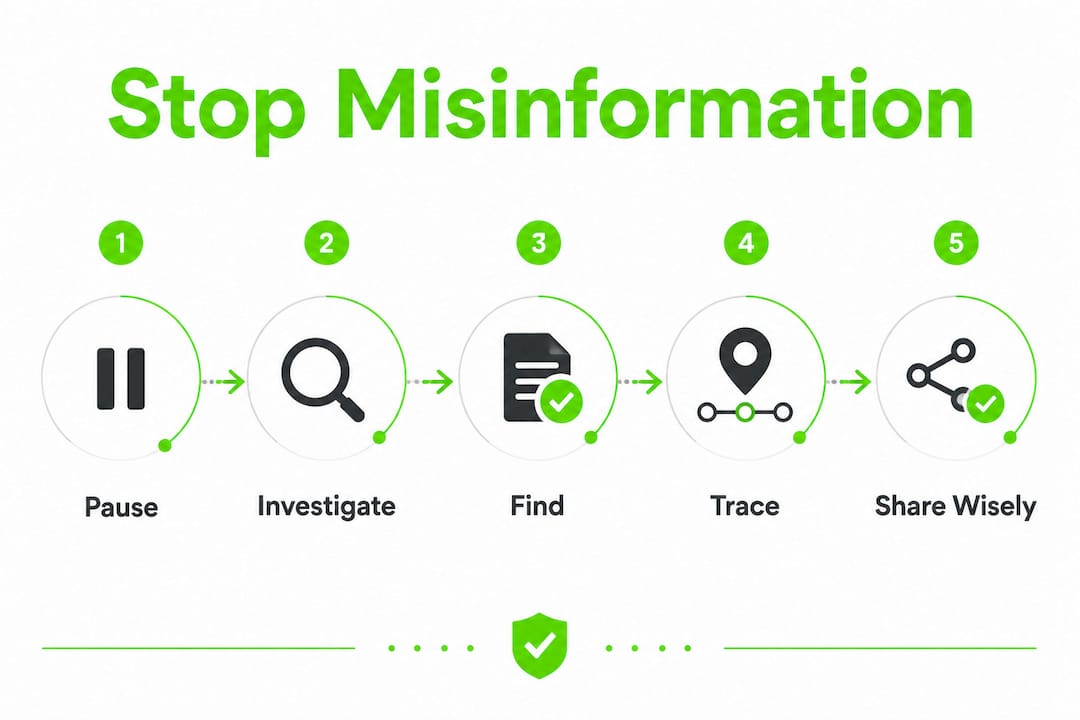
Most misinformation does not announce itself. You need a reliable method to evaluate what you read before you share or act on it. The SIFT method, developed by digital literacy expert Mike Caulfield, gives you four practical steps.
- Stop: Pause before reacting or sharing. If a post triggers strong emotion, that is exactly when to slow down, not speed up.
- Investigate the source: Open a new tab and search for the outlet or author. Is it a known news organization, a satire site, or an anonymous blog?
- Find better coverage: Check whether reputable outlets are reporting the same claim. If a story is real and significant, major newsrooms will cover it.
- Trace claims to the original context: Track down the original source of a quote, image, or statistic. Many viral posts strip context from real research to change its meaning.
Beyond SIFT, lateral reading is one of the most effective verification habits you can build. Instead of reading a webpage deeply to judge its credibility, you leave it and search for what other sources say about it. Professional fact-checkers use this approach because it works faster and more reliably than analyzing a site in isolation.
Watch for these red flags in any piece of content:
- Sensationalist language and urgent calls to action designed to trigger an emotional reaction
- No named author, no publication date, or no links to original sources
- Headlines that contradict or exaggerate the article body
- Images that feel out of place (use Google Images or TinEye for a reverse image search)
- Claims that only appear on one obscure website
Pro Tip: Lateral reading takes less time than you think. A Stanford study found that people can learn to spot unreliable sources within minutes using this technique, simply by checking what credible sites say about an unfamiliar outlet rather than reading the outlet itself.
The impact of misinformation on individuals and society
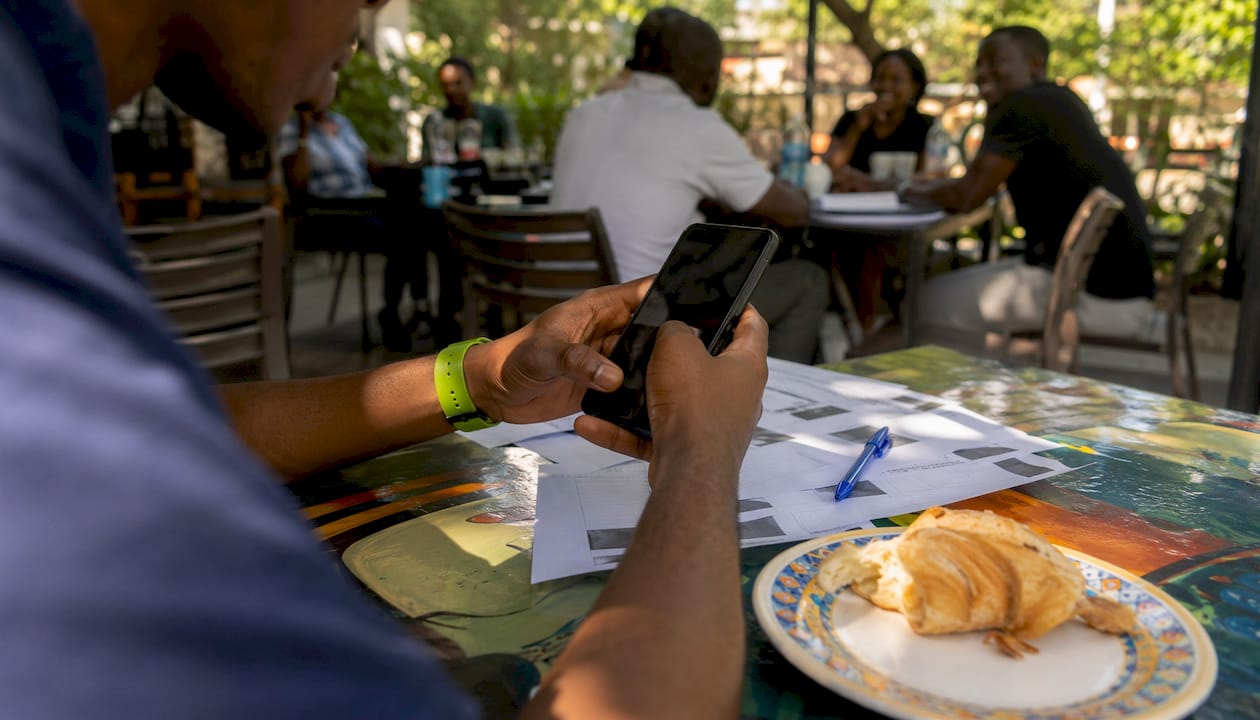
Misinformation causes real damage, both personally and collectively. At the individual level, it distorts decision-making on health, finances, and civic participation. At the societal level, it erodes trust in institutions, fuels social division, and can undermine democratic processes.
The APA notes that people tend to give excess weight to information that reinforces their existing beliefs, a pattern called confirmation bias. This makes misinformation especially sticky: once a false belief takes hold, correcting it is harder than preventing it in the first place.
Public health is one of the clearest areas where misinformation causes measurable harm. During the COVID-19 pandemic, false claims about vaccines and treatments spread rapidly online, making public health responses harder to implement. The UN Secretary-General specifically cited the pandemic as a moment when misinformation made health measures “more difficult” to carry out.
Misinformation also weakens democratic systems. When voters cannot distinguish accurate information from false claims, electoral integrity suffers. The OECD reports that waves of false content can undermine societal cohesion and cast doubt on factual information, threatening the foundation of informed public debate.
Key stat: 86% of adult Americans access news on a digital device, making online misinformation a direct threat to the information most people rely on daily.
How to stop misinformation from spreading online
Stopping the spread of false content starts with your own behavior before it reaches platform-level solutions. These practical steps make a real difference:
- Verify before you share. Use the SIFT method or a fact-checking site like Snopes before passing along any claim that surprises or outrages you.
- Report false content. Most social media platforms have a report function on individual posts. Using it signals the problem to moderators.
- Support quality journalism. Subscribing to or sharing work from credible news outlets strengthens the information environment for everyone.
- Avoid amplifying content you are unsure about, even to debunk it. Sharing a false claim to argue against it still increases its reach.
- Use platform labeling features. Many platforms now flag disputed content. Treat those labels as a prompt to investigate further, not a final verdict.
The SIFT method directly addresses impulsive sharing, which is one of the primary ways misinformation travels. Pausing to consider source credibility before clicking “share” is a small habit with a large collective effect.
Platform accountability also matters. Algorithms on major social media platforms are built to maximize engagement, not accuracy. Understanding how algorithms shape perception helps you recognize why emotionally charged false content spreads faster than calm, accurate reporting. Advocacy for algorithmic transparency and platform reform is part of the broader solution.
How to talk to someone who believes misinformation constructively
Correcting someone who believes false information rarely works if you lead with confrontation. The goal is to reduce defensiveness, not win an argument.
- Ask questions first. “Where did you read that?” opens a conversation without triggering resistance.
- Acknowledge what they got right, if anything. Partial truths are common in misinformation, and recognizing them builds trust.
- Provide a clear explanation of why the claim is false, not just a label. A University of Pennsylvania study found that explaining inaccuracies is more effective than simply flagging content as false, because it gives people something accurate to replace the false belief with.
- Avoid the backfire effect by not attacking the person’s identity or intelligence. People dig in harder when they feel personally criticized.
- Share credible sources calmly. Link to a government health site, a peer-reviewed study, or a recognized fact-checker rather than another opinion piece.
- Accept that change takes time. One conversation rarely shifts a deeply held belief. Planting a seed of doubt is a realistic and worthwhile outcome.
Approaching corrections with factual sharing rather than aggression consistently reduces resistance. The aim is shared understanding, not a debate victory.
The role of psychology and human behavior in the spread of misinformation
False information spreads so effectively because it exploits how human brains actually work, not how we wish they worked. Confirmation bias, described by the APA as a core driver of misinformation spread, causes people to favor content that confirms what they already believe and dismiss content that challenges it. Emotionally charged stories accelerate this: anger, fear, and outrage all increase the likelihood of sharing without verification.

Social media algorithms compound the problem. Platforms are optimized for engagement, and misinformation tends to trigger stronger emotional reactions than accurate reporting. Content that generates fast comments and reshares gets amplified, regardless of its accuracy. AI-generated content adds another layer of difficulty, since automated tools can now produce realistic false media at scale, making individual vigilance more important than ever.
The United Nations recommends building digital literacy and critical thinking as the most effective long-term defense, rather than relying solely on platform moderation. Developing digital literacy skills gives you the tools to recognize manipulation before it influences your beliefs or behavior.
Pro Tip: When you feel a strong emotional reaction to a piece of content, treat that feeling as a signal to pause, not share. Misinformation is often engineered to provoke exactly that reaction.
Understanding the psychological mechanics behind false content is not just academic. It is the foundation of every practical skill covered in this guide, from lateral reading to constructive correction.
Stay informed with Naijatipsland
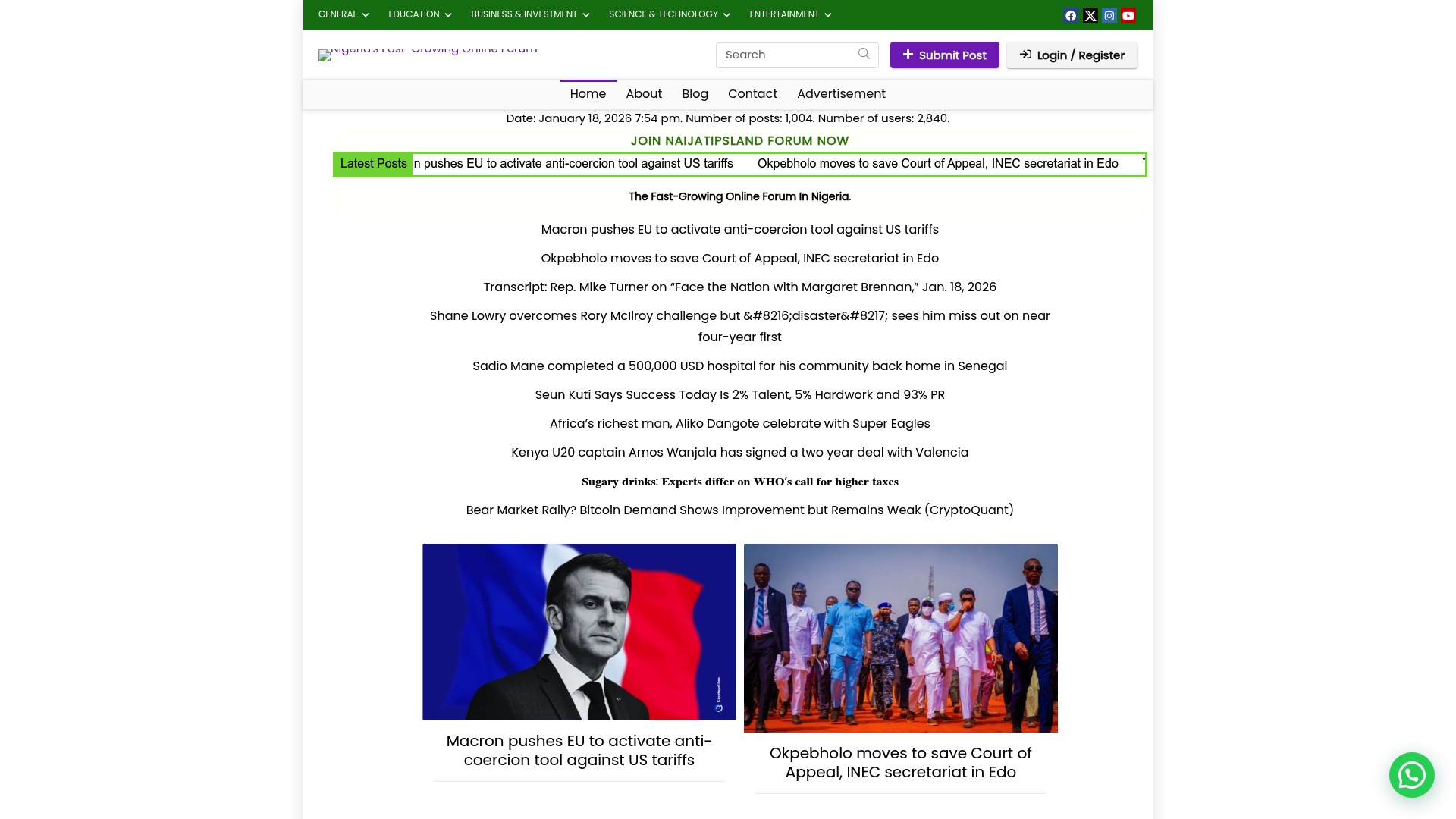
Naijatipsland covers current affairs in Nigeria and beyond, giving you a trusted community space to discuss, verify, and engage with the news that matters. For step-by-step guidance on verifying news on social media, Naijatipsland has practical resources built for the Nigerian digital context.
Key Takeaways
The most effective defense against online misinformation combines clear definitions, practical verification habits, and an understanding of the psychological triggers that make false content spread.
| Point | Details |
|---|---|
| Intent separates the terms | Misinformation is shared unknowingly; disinformation is deliberately created to deceive or cause harm. |
| SIFT is your verification framework | Stop, Investigate, Find better coverage, and Trace claims before sharing any suspicious content. |
| Lateral reading beats deep reading | Leave a webpage and search what credible sources say about it, rather than judging it in isolation. |
| Explain, don’t just label | Explaining why a claim is false is more effective than simply flagging it, because it replaces the false belief with accurate information. |
| Confirmation bias accelerates spread | People favor content that confirms existing beliefs, making emotionally charged misinformation especially likely to go viral. |