


TL;DR:
- Civic tech includes digital tools that improve citizen participation and government transparency.
- In Nigeria, civic tech addresses governance gaps by offering voter verification, reporting apps, and open data portals.
Civic tech is defined as digital tools designed to strengthen the relationship between citizens and government, improving transparency and participation in public life. The field, formally called civic technology, covers everything from voter information apps to community reporting platforms and open government data portals. For Nigerians and the diaspora, civic tech represents a direct path to holding government accountable and making your voice count. Naijatipsland covers this space because understanding how these tools work is the first step toward using them effectively.
What is civic tech, and why does it matter for Nigeria?
Civic tech is digital technology built specifically to serve democratic goals, not commercial ones. Civic tech focuses on collective decisions and the public good, which separates it from personal convenience apps like food delivery or ride-hailing services. A pothole reporting app is civic tech. A budget transparency portal is civic tech. A platform that lets you track your local government’s spending is civic tech.
Nigeria’s governance challenges make civic tech especially relevant. Citizens regularly struggle to access public service information, verify election results, or report infrastructure failures through official channels. Civic technology fills that gap by creating direct, digital connections between citizens and institutions. The tools do not require government cooperation to launch, though they work best when government responds to the data they generate.
The importance of civic tech also shows up in who builds it. A 16-year-old developer built a low-cost AI voter info tool that attracted over 70,000 users, proving that civic tech does not require large budgets or institutional backing to create real impact. That example matters for Nigeria, where young developers and activists are already building tools to address local governance gaps.
What are common civic tech applications in Nigeria?
Civic technology takes many forms, and the most effective ones address specific, felt community needs. Here are the most common civic tech applications relevant to Nigeria and the diaspora:
- Voter information platforms: Apps and websites that help citizens verify their voter registration, find polling units, and check candidate records before elections.
- Public service request tools: Mobile apps that let residents report broken streetlights, blocked drains, or road damage directly to local government authorities.
- Community forums and digital petitions: Online spaces where citizens deliberate on local issues, sign petitions, and organize collective responses to government decisions.
- Budget and spending trackers: Portals that publish government expenditure data so citizens can monitor how public funds are allocated and spent.
- AI-powered civic assistants: Chatbots that answer questions about government services, election procedures, or legal rights in plain language.
- Digital journalism and open data portals: Platforms that publish government documents, court records, and legislative votes for public scrutiny. The role of digital journalism in democracy overlaps directly with civic tech here.
Effective civic tech addresses democratic functions that arise from genuine community needs, including public decision-making and accountability. Tools built without that grounding tend to attract initial interest but fail to sustain engagement.
Pro Tip: Before adopting or promoting a civic tech tool, check whether local government actually responds to its outputs. A reporting app that sends complaints into a void builds frustration, not accountability.
How does civic tech differ from GovTech?
Civic tech and GovTech are related but serve different masters. Understanding the distinction helps you evaluate which tools actually serve citizens versus which ones serve government efficiency.
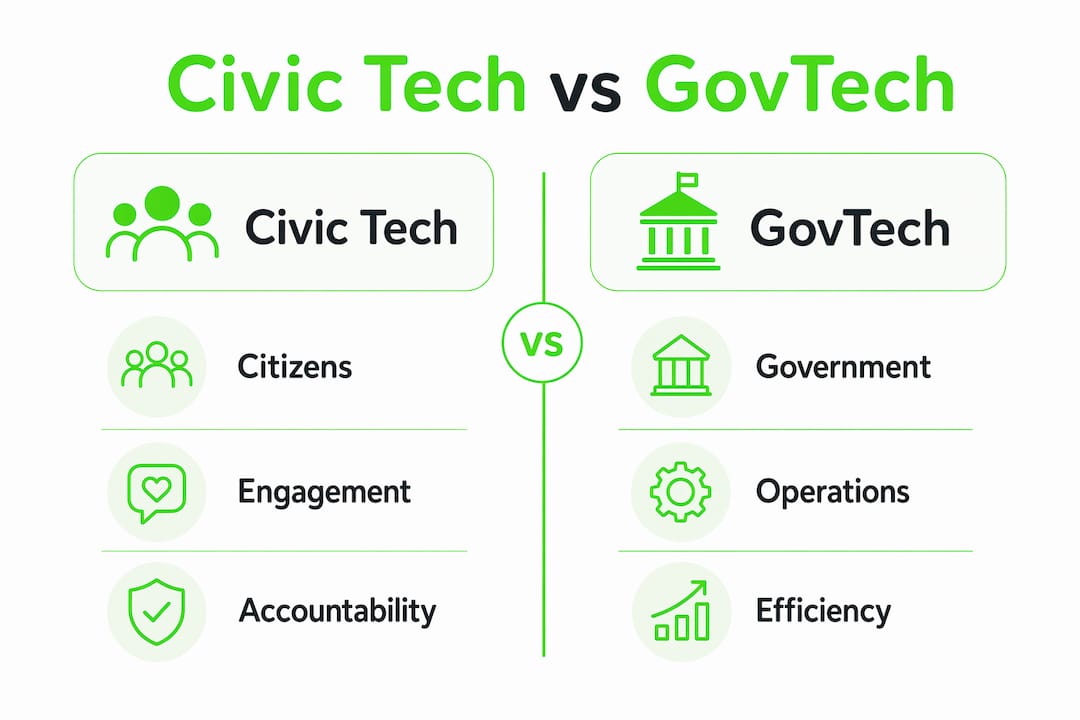
| Feature | Civic tech | GovTech |
|---|---|---|
| Primary user | Citizens | Government agencies |
| Core goal | Participation and accountability | Operational efficiency |
| Who builds it | NGOs, developers, civic groups | Government contractors, agencies |
| Accountability direction | Government answers to citizens | Internal process improvement |
| Nigerian example | Voter tracking apps, community forums | Tax collection software, payroll systems |
GovTech modernizes how government operates internally. Civic tech changes the power relationship between citizens and government. A new payroll system for civil servants is GovTech. A platform that lets citizens flag ghost workers in the public sector is civic tech. Both matter, but only one puts power directly in citizens’ hands.
This distinction matters for Nigerian civic engagement because political power backing is required for civic tech platforms to translate participation into real change. Without government willingness to act on citizen input, even the best civic tech tool becomes a documentation exercise rather than a change mechanism. Knowing this helps you set realistic expectations and focus energy on tools that have demonstrated government responsiveness.
What are the benefits and challenges of civic tech?
Civic tech delivers real benefits, but it also carries limitations that are especially sharp in Nigeria’s governance context.
Benefits of civic tech
- Transparency: Open data portals and spending trackers make government activity visible to anyone with internet access.
- Accessibility: Mobile-first tools reach citizens who cannot attend town halls or navigate bureaucratic offices in person.
- Increased participation: Digital platforms lower the barrier to civic engagement, letting more people contribute to public decisions.
- Government responsiveness: When citizen reports are public and trackable, governments face reputational pressure to respond.
- Speed: Digital reporting and feedback loops operate faster than paper-based or in-person processes.
Challenges you need to know
Technology alone cannot fix governance. Public administrations need capacity and clear pathways to integrate civic tech outputs into actual decisions. That is a structural problem, not a technical one.
Civic tech projects often fail without clear community demand or government integration of their outputs. Nigeria’s civic tech space has seen promising platforms stall because government agencies ignored the data they generated. Digital literacy barriers also limit reach. A significant portion of Nigeria’s population accesses the internet primarily through basic smartphones with limited data, which means complex platforms with heavy interfaces exclude the people who most need civic tools.
Civic tech reduces engagement friction but cannot create accountability or trust without willing democratic processes. That is the honest ceiling of what technology can achieve. The tools work best when paired with community organizing, legal advocacy, and media pressure.
Pro Tip: Focus on civic tech tools that publish their data openly. Transparency about what gets reported and what gets ignored is itself a form of accountability.
How does civic tech work in practice?
Civic tech works by creating structured channels for citizens to report, deliberate, vote, and track government actions digitally. The mechanics vary by tool type, but the core loop is consistent: citizen input enters the system, government or community actors respond, and the outcome is visible to the public.
| Tool type | Citizen action | Expected output |
|---|---|---|
| Reporting app | Submit complaint with photo and location | Government repair or public record of inaction |
| Online poll | Vote on community priority | Aggregated data shared with decision-makers |
| Budget tracker | View and share spending data | Public pressure for accountability |
| Deliberation platform | Post and respond to community proposals | Structured community consensus |
| AI civic assistant | Ask questions about services or rights | Instant, plain-language answers |
Simple tools combined with human process design often succeed more than complex software in civic engagement. This is why the most sustainable civic tech frequently uses familiar tools. Accessible tools like WhatsApp and Google Forms power many effective civic initiatives in Nigeria because citizens already know how to use them.
The tool type should match the democratic goal. Voting systems suit collective choices. Deliberation platforms foster dialogue. Surveys gather input but lack built-in accountability. Matching the right tool to the right civic goal is what separates effective civic tech from digital noise. How digital communities shape social change in Nigeria follows exactly this logic.
How can Nigerians and the diaspora engage with civic tech?
You do not need to be a developer to participate in civic tech. Engagement takes many forms, and each one contributes to a stronger civic culture.
- Register and use voter information platforms. Before every election cycle, verify your registration status and use available tools to research candidates’ records and policy positions.
- Report infrastructure problems through digital channels. Many Nigerian state governments now have official reporting apps or social media handles. Document issues with photos and timestamps, then submit through every available channel.
- Join community forums and deliberation spaces. Online platforms that discuss local governance, budget allocation, and public services need active, informed participants. Your contribution shapes the quality of the conversation.
- Sign and share digital petitions. Petitions work best when they are specific, time-bound, and directed at a named authority. Share them within your network to build visible public pressure.
- Contribute to open data projects. If you have skills in data analysis, writing, or translation, civic tech organizations regularly need volunteers to clean data, write reports, or translate materials into local languages.
- Engage as diaspora through digital activism. Nigerians abroad can participate in civic tech through online platforms, fund civic organizations, and amplify Nigerian civic voices to international audiences. Digital activism for Nigerian youth covers practical entry points for this kind of engagement.
- Stay informed through credible civic media. Follow platforms that report on government actions, budget releases, and legislative votes. Informed citizens make better use of civic tech tools.
Key Takeaways
Civic tech is most effective when digital tools are matched to clear democratic goals and backed by community demand and government willingness to act on citizen input.
| Point | Details |
|---|---|
| Core definition | Civic tech is digital tools built to strengthen citizen-government relationships and democratic participation. |
| Nigeria relevance | Voter apps, reporting tools, and budget trackers address real governance gaps Nigerians face daily. |
| Civic tech vs. GovTech | Civic tech empowers citizens; GovTech improves internal government operations. |
| Key limitation | Technology cannot create accountability without political will and willing democratic processes. |
| Best engagement path | Use simple, accessible tools and combine digital participation with community organizing. |
Naijatipsland’s take on civic tech’s future in Nigeria
Civic tech in Nigeria is real, but it is not magic. I have watched promising platforms launch with genuine enthusiasm, only to fade when government agencies ignored the reports citizens submitted. The technology worked. The political will did not show up.
What gives me confidence is the diaspora factor. Nigerians abroad bring pressure, funding, and visibility that domestic actors sometimes cannot generate alone. When diaspora communities amplify civic tech campaigns, they reach international audiences that Nigerian governments care about for investment and reputation reasons. That is leverage worth using deliberately.
The honest truth about civic tech is that the tools follow the organizing, not the other way around. The most effective civic tech deployments I have seen in Nigeria started with a community that already knew what it wanted and used technology to make its demand visible and trackable. Technology did not create the movement. It made the movement harder to ignore. Combine digital tools with community journalism, as covered in community journalism principles, and you have a genuinely powerful combination.
— Naijatipsland
Civic conversations start here on Naijatipsland
Naijatipsland is where Nigerians and the diaspora come to discuss the issues that matter, including governance, technology, and civic life.

If this article helped you understand civic tech, the next step is joining the conversation. Naijatipsland’s community covers topical issues in Nigerian politics, society, and digital life every day. Read why discussing topical issues matters for Nigerian youth, and see how your voice fits into a larger civic dialogue. You can also learn how to start online discussions that actually move people. Civic tech works best when citizens are informed, connected, and willing to speak up. Naijatipsland gives you the space to do all three.
FAQ
What is civic tech in simple terms?
Civic tech is digital technology built to help citizens engage with government, report problems, access public information, and participate in democratic decisions. It differs from commercial apps because its goal is the public good, not profit.
What are some civic tech examples in Nigeria?
Civic tech examples in Nigeria include voter registration verification tools, state government reporting apps for infrastructure complaints, open budget portals, and community forums that organize citizen responses to government decisions.
How does civic tech work differently from GovTech?
Civic tech puts tools in citizens’ hands to demand accountability, while GovTech improves how government agencies operate internally. Both use digital technology, but only civic tech is designed primarily to serve and empower citizens.
Can civic tech actually change governance in Nigeria?
Civic tech reduces friction in civic engagement but cannot create accountability without willing democratic processes and political will. It works best when combined with community organizing, media pressure, and legal advocacy.
How can diaspora Nigerians participate in civic tech?
Diaspora Nigerians can use online platforms to sign petitions, fund civic organizations, amplify Nigerian civic campaigns to international audiences, and contribute skills like data analysis or translation to civic tech projects remotely. Media coverage of how civic tech affects governance reporting also shapes how diaspora audiences engage with these issues.