

TL;DR:
- Digital archiving involves long-term preservation of digital content with added metadata and access controls. It improves operational efficiency, security, and legal compliance while mitigating risks like format obsolescence and data decay. Proper management and ethical practices enable archives to support societal transparency and social change.
Digital archiving is the systematic collection, management, and long-term preservation of digital content, including documents, images, audio recordings, and video, to keep records accessible and authentic over time. The role of digital archives extends far beyond simple storage. Institutions like UNESCO and the International Council on Archives recognize digital preservation as a core responsibility for governments, research bodies, and organizations worldwide. Whether you manage historical records for a university library or maintain operational files for a growing business, understanding how digital archiving works gives you a real advantage in protecting what matters most.
How do digital archives work to preserve and provide access?
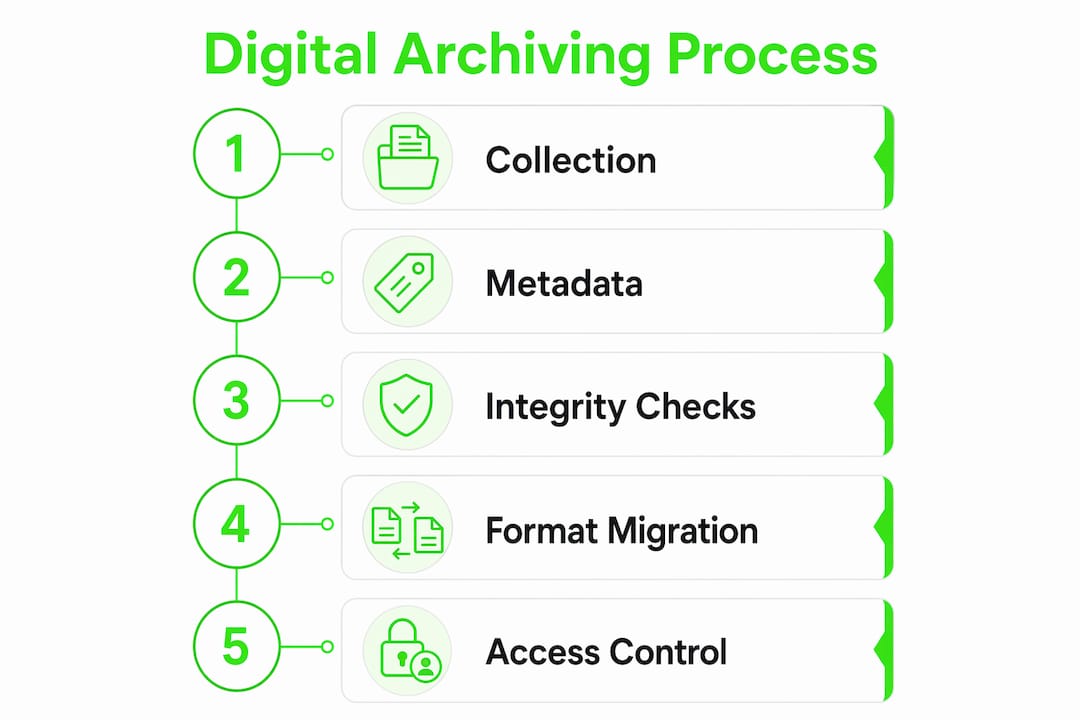
Digital archiving is not the same as making a backup. A backup copies files to prevent data loss. A true digital archive goes far beyond backups by adding metadata, indexing, integrity verification, and access controls that keep records usable over decades.
Metadata is the backbone of any functional archive. Tags like creator name, creation date, file format, and subject classification let you find a specific document in seconds rather than hours. Without structured metadata, even a well-organized file system becomes a maze as collections grow.
Digital preservation also battles two persistent technical threats:
- Format obsolescence: File formats become unreadable as software evolves. A WordPerfect document from 1995 is nearly inaccessible today without specialist tools.
- Bit rot: Physical storage media degrades over time, causing silent data corruption that can go undetected for years.
Archivists counter these threats through regular integrity checks, format migration to current open standards, and redundant storage across multiple locations. UNESCO mandates early intervention in the document lifecycle, meaning preservation planning should begin before a record is even created, not after it is at risk.
Pro Tip: Schedule automated integrity checks on your archive at least quarterly. Catching bit rot early prevents the kind of silent data loss that only surfaces when you need a file most.
What are the key benefits of digital archiving for organizations?
The operational case for digital archiving is concrete and measurable. Document retrieval times drop by over 90% when organizations move from physical filing systems to structured digital archives, cutting search time from 2–3 hours down to 5–10 minutes per query. That time saving compounds across hundreds of staff and thousands of requests each year.
Operational cost efficiency can increase by up to 40% through reduced physical storage needs and lower administrative processing time. Physical records require floor space, climate control, and manual handling. Digital archives eliminate most of those costs.
The benefits extend well beyond cost savings:
- Security: Password protection, role-based access controls, and automated backups protect records against unauthorized access and accidental deletion.
- Disaster recovery: Geographically distributed copies mean a flood or fire at one location does not destroy your records permanently.
- Legal compliance: Structured archives with audit trails satisfy regulatory requirements in sectors like finance, healthcare, and government.
- Institutional memory: When experienced staff leave, their knowledge stays accessible through well-tagged records rather than disappearing with them.
- Transparency and accountability: Governments and nonprofits that archive decisions and communications build public trust over time.
For Nigerian organizations managing growing volumes of digital content, these benefits translate directly into better governance and stronger operational continuity.
What challenges and risks affect digital archiving?
Digital archiving carries real risks that require active management. Hardware and software obsolescence tops the list. UNESCO guidelines specifically call for legislative and technical frameworks to protect the authenticity of digital records and prevent unauthorized manipulation. Without those frameworks, even a well-maintained archive can be compromised.
Human resource limitations present a second major obstacle. Many organizations lack staff with the technical skills to manage format migrations, run integrity checks, or implement metadata standards consistently. This gap is especially pronounced in smaller institutions and community archives across Africa.
Ethical risks deserve equal attention. Digital archives reflect the choices of those who build them. If archivists prioritize certain voices, communities, or perspectives, they shape how history is recorded and remembered. Ethical stewardship and decolonization are now recognized as vital approaches to prevent bias from being embedded permanently into archival collections.
Practical risk management requires attention to several areas:
- Open standards adoption: Use formats like PDF/A, TIFF, and FLAC that are designed for long-term readability without proprietary software.
- Multi-institution cooperation: Shared infrastructure and expertise reduce the burden on any single organization.
- Legal frameworks: Clear policies on record authenticity, retention schedules, and access rights protect both the archive and its users.
- Stakeholder engagement: Communities whose records are being archived should have a voice in how those records are described and accessed.
The digitization revolution is reshaping power relations in knowledge and history. Archivists who ignore that reality risk building systems that repeat old exclusions in a new format.
How do digital archives drive broader societal change?
Digital archives are not passive storage systems. They are active infrastructure for governance, research, and social equity. Research shows a strong correlation between digital archive transformation and improved public service quality, with a correlation coefficient of r=0.712. That figure means organizations that invest seriously in digital archiving consistently deliver better services to the public.

Archives also accelerate decision-making by integrating data across departments and making information available instantly to those who need it. A government ministry that can retrieve a policy document in five minutes makes faster, better-informed decisions than one that spends days searching through physical files.
The social dimension is equally significant. When archives include the stories of marginalized communities, those communities gain visibility and recognition in the historical record. Digital archives that preserve media stories online give underrepresented voices a second life and a permanent platform. The COVID-19 pandemic reinforced this point. Archivists shifted to hybrid digital-physical services to maintain public access when physical locations closed, proving that digital infrastructure is not optional but foundational.
Pro Tip: If you manage a community or organizational archive, document your collection development policy in writing. A clear policy on whose records you collect and why makes your archive more trustworthy and easier to defend.
The shift toward user-oriented archiving, where the needs of researchers, citizens, and communities drive collection decisions, marks a fundamental change in how the profession defines its purpose. You can see this shift play out in how digital journalism archives now serve as permanent records of public discourse.
What best practices should professionals follow when implementing digital archives?
Effective digital archiving requires a structured approach from the start. These steps give you a solid foundation:
- Intervene early in the document lifecycle. Preservation is far easier when you plan for it before records are created. Decide on file formats, naming conventions, and metadata schemas at the project planning stage, not after thousands of files already exist.
- Adopt open, interoperable standards. Formats like PDF/A for documents, TIFF for images, and MP4 for video are widely supported and designed for long-term access. Proprietary formats create dependency on specific vendors.
- Build a metadata strategy. Define required fields for every record type: creator, date, subject, format, and rights status at minimum. Consistent metadata makes your archive searchable and auditable.
- Plan for format migration. No format lasts forever. Schedule regular reviews of your collection to identify files in obsolete formats and migrate them before they become unreadable.
- Embed legal and ethical frameworks. Write a collection policy that addresses retention schedules, access rights, privacy obligations, and the communities whose records you hold.
- Train staff continuously. Organizational leadership and ongoing training are the two factors most strongly linked to successful digital archive programs. Technology alone does not sustain transformation.
- Secure leadership commitment. Archive programs that lack executive support stall at the pilot stage. Present the operational efficiency and compliance case to decision-makers in concrete terms they can act on.
Understanding digital literacy skills is also foundational for staff who work with these systems daily.
Key Takeaways
Digital archives are the most reliable infrastructure an organization can build for long-term knowledge management, operational efficiency, and public accountability.
| Point | Details |
|---|---|
| Archiving vs. backup | True archiving adds metadata, integrity checks, and access controls that backups do not provide. |
| Operational efficiency | Document retrieval times drop by over 90% with structured digital archives, cutting hours to minutes. |
| Preservation threats | Format obsolescence and bit rot require active management through open standards and regular migration. |
| Societal impact | Digital archive transformation correlates strongly with improved public service quality (r=0.712). |
| Ethical responsibility | Inclusive, decolonized archival practices prevent historical bias from being embedded permanently in collections. |
Naijatipsland’s view on where digital archives are headed
Digital archiving has moved from a technical specialty to a foundational discipline. Every organization that creates records, which is every organization, now has a preservation responsibility it cannot outsource or ignore.
What strikes me most is how the profession has shifted its self-understanding. Archivists used to define themselves as custodians, people who kept things safe. The better framing today is steward. A steward makes active choices about what gets preserved, who gets access, and whose story gets told. Those choices have consequences that last generations.
The organizations that will get this right are the ones that treat their archives as living infrastructure rather than filing cabinets. They invest in staff training, adopt open standards, and build collection policies that reflect the communities they serve. They also accept that digital archiving is never finished. It requires continuous attention, just like any other critical system.
The digital communities shaping social change in Nigeria and across Africa need archives that reflect their realities. That work starts with professionals who understand both the technical and ethical dimensions of preservation.
— Naijatipsland
What Naijatipsland readers can explore next
Digital archiving connects directly to how communities access information, preserve culture, and build institutional knowledge over time. Naijatipsland covers these intersections regularly, from technology and governance to media and cultural preservation.
If you are exploring digital content platforms and archiving solutions, the guide to top digital content alternatives on Naijatipsland is a practical starting point. It covers platforms that support long-term content access and community engagement, two outcomes that sit at the heart of effective digital archiving. Naijatipsland also tracks how media archives build brand continuity for organizations operating in fast-moving information environments.
FAQ
What is the role of digital archives in organizations?
Digital archives preserve records, support legal compliance, and accelerate information retrieval. Organizations with structured digital archives can reduce document search time by over 90% compared to physical filing systems.
How do digital archives differ from regular backups?
Backups copy files to prevent data loss, while digital archives add metadata, indexing, integrity checks, and access controls that keep records usable and authentic over decades.
What are the biggest risks in digital archiving?
Format obsolescence and bit rot are the primary technical risks. Ethical risks, including bias in collection decisions, are equally significant and require inclusive governance policies.
Why is metadata important in digital archiving for research?
Metadata tags like creator, date, and subject classification make records searchable and auditable. Without consistent metadata, large collections become effectively inaccessible to researchers.
How does digital archiving support transparency and public trust?
Archivists who provide equitable, transparent access to records build public trust over time. Research shows digital archive transformation correlates strongly with improved public service quality, with a correlation of r=0.712.