

TL;DR:
- Social listening involves actively analyzing online conversations to understand audience needs and detect trends. It helps Nigerian brands respond more authentically, manage reputation risks, and gain competitive advantages. Continuous, cross-departmental listening with local insight is essential to succeed in Nigeria’s fast-moving digital culture.
Social listening is defined as the active monitoring and analysis of online conversations to extract insights that improve brand engagement and community interaction. For Nigerian social media users and young adults, understanding why social listening matters is the difference between guessing what your audience wants and actually knowing. Over 63% of a company’s market value comes from reputation, which means every unmonitored conversation is a risk you are carrying blind. Naijatipsland covers this topic because Nigerian brands and creators operate in one of Africa’s most vocal, fast-moving digital cultures, where a single viral thread can shift public opinion overnight.
Why social listening matters for brand engagement in Nigeria
Social listening gives brands a real-time window into what their audience thinks, feels, and needs before those signals disappear. The industry term is “social intelligence,” and it goes well beyond tracking likes or counting mentions. It means analyzing the tone, language, and patterns behind online conversations to make smarter decisions.
The practical benefits for Nigerian brands are direct and measurable:
- Trend detection before competitors. Social listening identifies rising signals before they peak, giving brands a first-mover advantage on platforms like TikTok and X (formerly Twitter). A brand that spots a trending Afrobeats challenge on Wednesday can publish relevant content by Thursday, while competitors are still catching up.
- Smarter, culturally relevant content. Listening reveals the voice of customers, including the exact language and problems your audience uses. That raw material feeds directly into content calendars and messaging that feels native, not forced.
- Crisis detection and reputation management. Early detection of negative sentiment prevents crises from escalating. One documented case showed a 4,900% engagement increase after a brand caught a pricing error early and responded publicly before the story spread.
- Proactive community engagement. Brands that respond to conversations before they are tagged build stronger loyalty than those that only react to direct complaints.
Pro Tip: Add a weekly “listening digest” to your content calendar. Pull the top five audience phrases from the past seven days and use them as headline inspiration for your next posts.
The importance of social listening also shows up in ROI confidence. Brands with consistent social listening move from reactive to proactive engagement, which directly improves social ROI. Reacting to a crisis costs far more in time and credibility than preventing it through early detection.

What are the best tools and strategies for social listening?
The first thing to get right is the difference between social monitoring and social listening. Social monitoring responds to direct mentions and tags. Social listening analyzes broader conversations for strategic insights and trend forecasting. Monitoring tells you what happened. Listening tells you why it happened and what comes next.
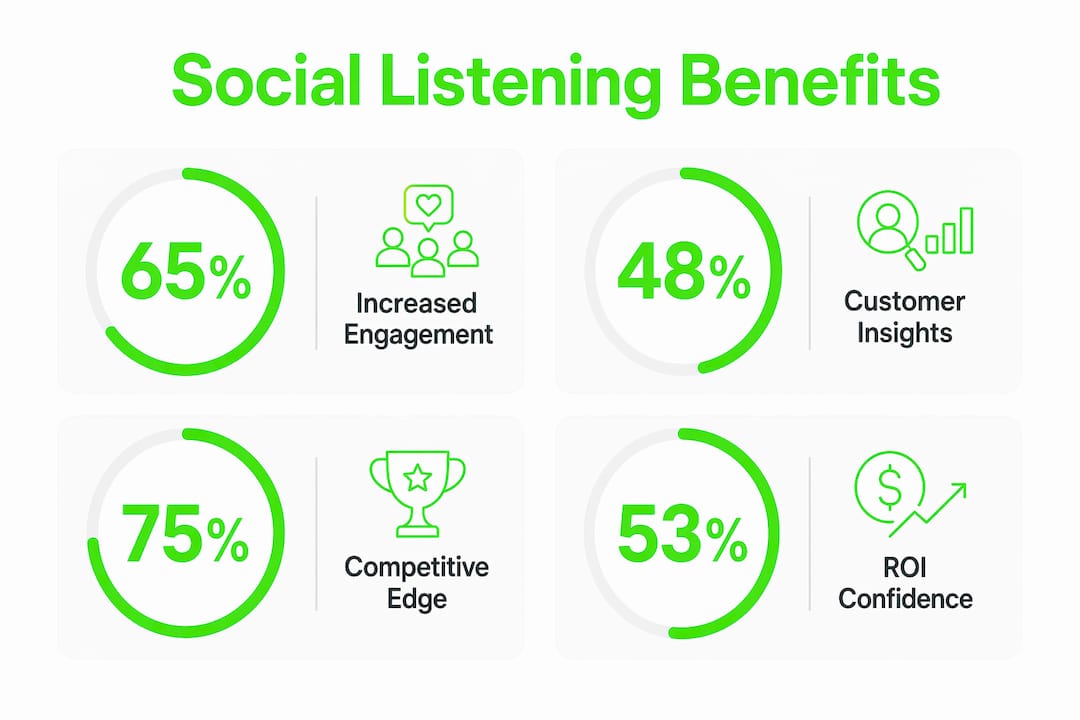
When choosing a tool, look for these core features: multi-platform coverage (Instagram, X, Facebook, TikTok, YouTube), sentiment analysis, topic clustering, and Boolean keyword search. For Nigerian brands, the ability to track local slang, Pidgin English, and regional hashtags is non-negotiable.
A practical social listening workflow for Nigerian brands looks like this:
- Define your keywords. Include your brand name, product names, competitor category terms, and relevant Nigerian slang or trending phrases.
- Set your baseline. Collect at least two weeks of data before drawing conclusions. Continuous data collection establishes a baseline sentiment that helps you distinguish isolated complaints from emerging crises.
- Segment by topic cluster. Group conversations into themes: product feedback, customer service issues, competitor mentions, and cultural trends.
- Spot-check automated sentiment scores. Automated sentiment tools often misinterpret sarcasm and local slang, which are extremely common in Nigerian digital culture. Manual review during sensitive moments is not optional.
- Act on the data. Assign findings to the right team. Marketing gets content insights. Customer care gets complaint patterns. Product gets feature requests.
- Adjust your trackers regularly. Social listening is iterative, requiring ongoing adjustment to stay ahead of shifting trends.
Pro Tip: Run a listening sweep every Monday morning. Review weekend conversations before your team plans the week’s content. Weekend social activity in Nigeria is often the highest, and Monday insights are the freshest.
Platforms like trending hashtag analysis guides can help you identify which keywords to track before you even open a listening tool.
How does social listening strengthen Nigerian online communities?
Social listening does more than help brands sell products. It shapes the quality of community interaction across Nigerian social media. When brands and creators understand what their community actually cares about, they respond with messages that feel authentic rather than scripted.
The community-level benefits are specific:
- Identifying real pain points. Brands that listen discover complaints that never reach their inbox. Nigerian users often vent frustrations in comment sections, WhatsApp groups, and Twitter threads without tagging the brand directly.
- Engaging local influencers and advocates. Understanding how influencers shape trends in Nigeria requires knowing which voices are gaining traction before they go fully viral. Social listening surfaces those rising voices early.
- Supporting healthier online spaces. When community managers track conversation patterns, they can moderate comments more effectively and reduce the spread of misinformation or toxic threads before they escalate.
- Connecting with youth-driven social movements. Nigerian Gen Z users drive significant cultural conversations around music, fashion, politics, and social justice. Brands that listen to these conversations without inserting themselves awkwardly build far more trust than those that chase trends without context.
The engagement strategies used by growing media brands consistently show that community-first listening produces higher retention than broadcast-only approaches. Listening is the foundation of genuine participation.
What competitive advantages does social listening give Nigerian brands?
Social listening is one of the few tools that gives you direct visibility into your competitors’ weaknesses without them knowing. Social listening enables brands to analyze share of voice and understand what competitors’ fans love and detractors hate. That intelligence is impossible to get from traditional market research alone.
The table below shows how social listening data translates into competitive positioning:
| Metric | What it reveals | How to use it |
|---|---|---|
| Share of voice | Your brand’s conversation volume vs. competitors | Identify whether you are gaining or losing audience attention |
| Competitor sentiment | What audiences dislike about rival brands | Find gaps your product or content can fill |
| Trending topics | Emerging conversations in your category | Publish first and own the narrative |
| Audience language | The exact words your market uses | Mirror that language in ads and captions for higher resonance |
Running competitor listening sweeps every six months reveals content and product gaps that benchmarking reports miss entirely. The brands that treat social listening as a live intelligence feed, not a quarterly report, consistently outmaneuver those that do not.
What common mistakes should you avoid with social listening?
The biggest mistake Nigerian brands make is confusing social listening with social monitoring. Monitoring is reactive. Listening is strategic. Treating them as the same thing means you are always responding to yesterday’s news.
Other critical pitfalls to avoid:
- Trusting automated sentiment scores without review. Sarcasm, Pidgin English, and Nigerian humor regularly fool sentiment algorithms. A tweet saying “this brand is too much” could be a compliment or a complaint depending on context.
- Treating listening as a one-time project. Most brands overestimate positive sentiment internally and miss common complaints because they only listen during campaigns. Continuous listening is the only way to catch slow-building reputation risks.
- Keeping insights inside the marketing team. Sharing social listening insights across teams reduces reaction time to changing expectations. Product, HR, and customer care all benefit from knowing what audiences are saying.
- Ignoring the cultural layer. Nigerian digital culture moves fast and carries deep cultural codes. A listening strategy built for a Western market will miss the nuance that makes local conversations meaningful.
The fix for all of these mistakes is the same: treat social listening as an ongoing, cross-departmental practice, not a marketing checkbox.
Key Takeaways
Social listening is the most direct way for Nigerian brands to turn online conversations into decisions that build real audience trust and competitive advantage.
| Point | Details |
|---|---|
| Define social listening correctly | It analyzes broader conversations for strategy, not just direct brand mentions. |
| Reputation is at stake | Over 63% of a company’s market value ties to reputation, making early detection critical. |
| Cultural context is non-negotiable | Automated sentiment tools miss Nigerian slang and sarcasm; manual review is required. |
| Cross-team sharing multiplies value | Insights shared with product, HR, and customer care reduce reaction time across the organization. |
| Listening is continuous, not periodic | Ongoing data collection establishes the baseline needed to spot emerging crises early. |
Naijatipsland’s take on social listening in Nigerian digital culture
Nigerian social media is not just loud. It is layered. The same phrase can mean admiration in one community and mockery in another, and the difference matters enormously for any brand trying to build genuine trust. What I have observed consistently is that the brands winning on Nigerian social media are not the ones with the biggest budgets. They are the ones paying the closest attention.
The brands that listen closely rather than shout loudest build the most durable communities. That is not a theory. It is a pattern visible across Nigerian Twitter, Instagram, and TikTok every week. A brand that spots a community frustration on Tuesday and addresses it by Thursday earns more goodwill than one that runs a polished campaign the following month.
For young Nigerians building personal brands or managing community pages, social listening is equally powerful. Knowing what your audience is actually talking about, in their own words, is the fastest way to create content that spreads. The importance of online trends for Nigerian youth is real, and social listening is the tool that keeps you ahead of those trends rather than chasing them.
The cultural nuance argument is the one I feel most strongly about. No algorithm built outside Nigeria fully understands the rhythm of Nigerian digital conversation. That is why manual verification, local knowledge, and community-first thinking are not optional extras. They are the core of any listening strategy that actually works here.
— Naijatipsland
Stay connected with Naijatipsland for audience insights that matter
Naijatipsland tracks the conversations, trends, and cultural shifts that Nigerian social media users care about most. Whether you are a brand manager, a content creator, or a curious young adult trying to understand your digital community better, the platform gives you a front-row seat to what Nigeria is talking about right now.
From entertainment updates that keep you informed to deep dives into Nigerian digital culture, Naijatipsland publishes the kind of content that feeds your social listening strategy with real, local context. You can also explore engagement metrics guides built specifically for Nigerian brands looking to measure what their audience actually responds to. The community is active, the content is current, and the insights are grounded in the Nigerian experience.
FAQ
What is social listening in simple terms?
Social listening is the process of monitoring online conversations about your brand, industry, or topics of interest and then analyzing those conversations to make better decisions. It goes beyond tracking mentions to understanding the sentiment and patterns behind what people say.
How is social listening different from social monitoring?
Social monitoring tracks direct mentions and tags in real time. Social listening analyzes the broader context of online conversations to identify trends, sentiment shifts, and strategic opportunities that monitoring alone cannot reveal.
Why do Nigerian brands specifically need social listening?
Nigerian digital culture moves fast and carries strong cultural codes, including Pidgin English, local slang, and community-specific humor. Social listening helps brands decode these conversations accurately and respond in ways that feel authentic rather than tone-deaf.
Can small Nigerian brands or creators use social listening?
Yes. Even without enterprise tools, creators can manually track relevant hashtags, monitor comment sections, and note recurring audience phrases. The key principle, listening before broadcasting, applies regardless of budget or team size.
What is the biggest risk of skipping social listening?
Brands that skip social listening operate without an objective reality check and consistently overestimate how positively their audience views them. That gap between internal perception and public sentiment is where reputation crises begin.