
TL;DR:
- Online subcultures are deliberately organized communities rooted in shared passions, shaping unique language, memes, and norms across digital spaces.
- These communities influence culture and markets globally, with Nigerian digital spaces remixing and enriching these mechanics through local creativity and activism.
Online subcultures are not random accidents of the internet. Every major movement you see online, from K-Pop stans flooding Twitter with fancams to Nigerian Twitter (now X) users coining phrases that go global, has roots in deliberate, organized communities built around shared passions. Internet culture forms around shared interests rather than geography, connecting dispersed people with niche passions across borders. If you have ever wondered why some groups online feel like a whole other world with their own language, rituals, and humor, this guide will answer that clearly and show you how to navigate these spaces with confidence.
Table of Contents
- What are online subcultures?
- Core traits: What makes subcultures unique?
- How big are these online worlds? Surprising facts and numbers
- Advice for exploring and joining online subcultures safely
- A Nigerian perspective: The real impact of online subcultures
- Ready to dive deeper?
- Frequently asked questions
Key Takeaways
| Point | Details |
|---|---|
| Subcultures are intentional | Online subcultures unite people by shared interests and unique language, not geography. |
| Memes and norms matter | Insider knowledge, jokes, and behavior codes help members recognize each other and belong. |
| Size and reach vary | Some online communities number in the millions while others are small but highly influential. |
| Explore safely | Joining new spaces means learning the rules, contributing positively, and staying alert for risky groups. |
| Nigerian twists | Global trends take on local meaning—don’t miss out on homegrown memes and communities. |
What are online subcultures?
An online subculture is not just any group of people gathered around a hashtag or trending topic. It is an intentional digital community with its own shared language, symbols, memes, behavioral expectations, and identity markers. Think of it like a neighborhood within the giant city of the internet. You can pass through a neighborhood without belonging to it, but the people who live there have a very specific sense of who they are and what belongs.
The difference between an online subculture and a general internet crowd is significant. When a celebrity posts something controversial and millions of people comment, that is a crowd reacting to a moment. When a K-Pop fandom organizes mass streaming parties, translates content into dozens of languages, funds charity projects in their idol’s name, and has inside jokes that only members understand, that is a subculture. Internet communities in Nigeria follow similar patterns, where groups form around shared Nigerian experiences, music genres, political views, and entertainment niches.
Online subcultures come in many forms. Here are some common types you will encounter:
- Meme communities: Groups on Reddit, Instagram, and Twitter built around specific humor styles, often coded with inside jokes.
- Music fandoms: K-Pop, Afrobeats stans, and hip-hop communities that go beyond casual listening.
- Gaming communities: Players of specific games who develop their own vocabulary, content, and social rituals.
- Lifestyle groups: Fitness culture, fashion subcultures, beauty communities, and more.
- Activism spaces: Groups using digital tools to organize around social, political, or economic causes.
Research confirms that specialized language and practices including shibboleths (unique words that signal membership), memes, behavioral norms, participatory creation, and platform design all shape how these subcultures grow and function. Understanding these elements gives you real digital confidence. You stop feeling like an outsider and start reading online spaces with clarity.
| Subculture type | Primary platforms | Key traits |
|---|---|---|
| K-Pop fandom | Twitter, TikTok, YouTube | Mass coordination, fan art, streaming parties |
| Gaming community | Discord, Twitch, Reddit | Specialized vocabulary, real-time interaction |
| Meme culture | Instagram, Reddit, Twitter | Inside jokes, rapid content evolution |
| Nigerian Twitter | Twitter/X | Pidgin, humor, social commentary |
| Parenting groups | Facebook, Reddit | Shared advice, emotional support, niche topics |
“An online subculture is not a place you stumble into—it is a community you earn your way into by learning its codes, contributing meaningfully, and respecting its unwritten rules.”
Core traits: What makes subcultures unique?
Now that we have defined online subcultures, let’s break down the core ingredients that give each its identity. These traits are what separate a passing trend from a lasting community.
1. Specialized slang and language
Every subculture has its own vocabulary. Words like “stan” (an obsessive fan), “ratio” (when replies outnumber likes, suggesting a bad take), “OG” (original, referring to a veteran member), “lowkey” (subtly or secretly), and “slay” (to perform excellently) all originated in specific online communities before going mainstream. In Nigerian digital spaces, you see additional layers: Pidgin English phrases, Yoruba or Igbo slang mixed with internet terminology, and uniquely Nigerian abbreviations. Mastering a subculture’s language signals insider status. It tells other members you belong. Learning it intentionally is one of the fastest ways to integrate into any community.
2. Memes and inside jokes
Memes are the currency of online subcultures. They communicate complex ideas, emotions, and group values in seconds. A single image, sound clip, or phrase can carry an entire backstory that only members understand. Inside jokes build loyalty because they create a sense of shared history. When you understand a reference, you feel included. When you do not, you immediately feel like an outsider. This is intentional. Subcultures use their meme language to maintain group identity and filter membership.
3. Behavioral norms and etiquette
Every subculture has unspoken (and sometimes written) rules. Some communities require you to introduce yourself before posting. Others expect you to search existing threads before asking a question. Some have strict rules about sharing external links or promoting other platforms. Breaking these norms, even accidentally, can get you blocked, reported, or publicly ridiculed. Learning the behavioral expectations of any community before you start engaging heavily is essential. Observe first, then participate. This is a universal rule across all digital subcultures.
4. Participatory creation
Real subcultures do not just consume content. They create it. Fan fiction, fan art, meme templates, video edits, remixes, and threads are all forms of participatory culture. Essential digital skills like photo editing, video creation, and copywriting become genuinely useful when you engage with communities that value original contributions. Your participation level often determines your status within the group.
5. Platform shape
The platform a community uses fundamentally shapes its culture. Reddit rewards long-form text and upvoting, which creates discussion-heavy subcultures. TikTok rewards short, visually engaging content, producing trend-driven communities. Discord allows private, real-time voice and text channels that build tight-knit groups. Understanding why a community lives on a specific platform tells you a lot about how it operates.
Here is a quick comparison:
| Platform | Content type | Community style |
|---|---|---|
| Text, links, images | Deep discussion, voting-based hierarchy | |
| TikTok | Short video | Trend-driven, fast-moving, visual |
| Discord | Voice and text | Private, real-time, tight-knit |
| Twitter/X | Short text, threads | Fast debate, social commentary |
| Facebook Groups | Mixed media | Broad reach, older demographics |
Pro Tip: Before posting in any new community, spend at least one to two weeks reading existing content. Notice what gets upvoted, what gets ignored, and what gets criticized. This observation period saves you from making avoidable mistakes.
Numbered steps for learning a new community’s norms:
- Join the platform and find the community’s main space.
- Read pinned posts, wikis, or rules sections carefully.
- Scroll through recent and top posts to understand tone and content style.
- Observe how members interact with newcomers.
- Make your first post low-stakes, like a question or a reaction.
- Engage genuinely before promoting yourself or your content.
How big are these online worlds? Surprising facts and numbers
With a sense of what holds these subcultures together, let’s look at surprising real-world data to appreciate their true scale and impact.
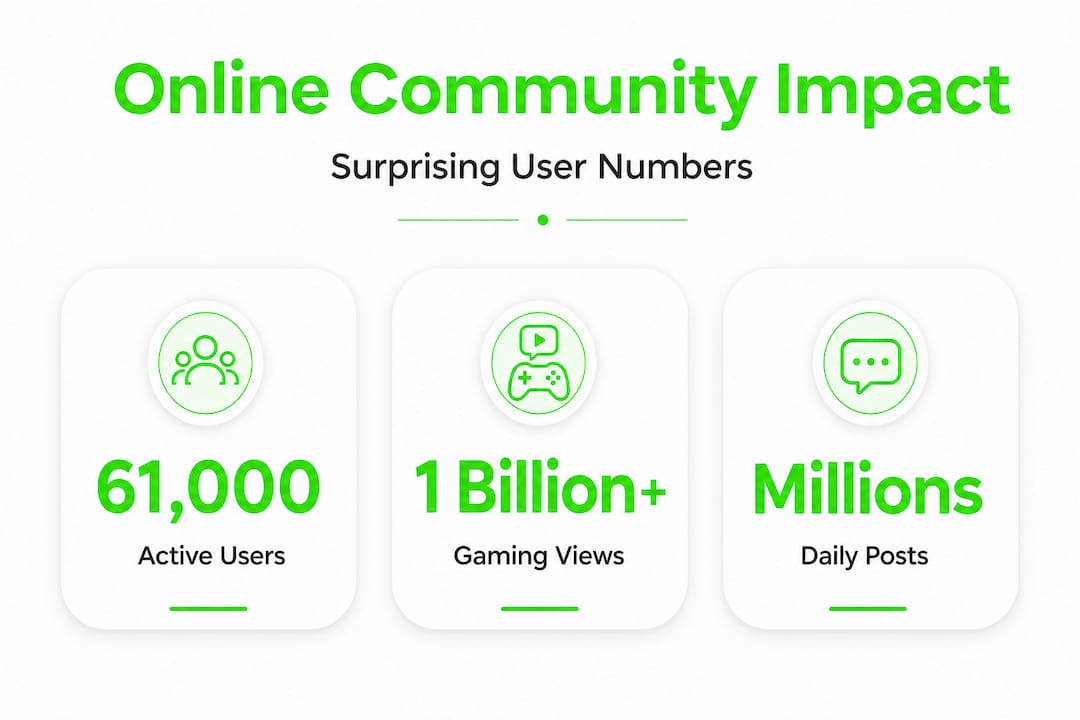
The numbers are genuinely staggering. Eating disorder online communities alone showed an analysis of 61,000 users producing 805,000 tweets on Twitter, 178,000 Reddit submissions, and 14,000 TikTok videos between 2019 and 2023. This is one niche topic spanning multiple platforms, with millions of pieces of content created by members who never met in person. That is the power of a deeply embedded online subculture.
Scale of key online communities:
| Community type | Platform | Estimated scale |
|---|---|---|
| Gaming (Minecraft) | YouTube and Reddit | Billions of views |
| K-Pop (BTS ARMY) | Twitter and Weverse | Over 50 million members |
| Parenting groups | Facebook and Reddit | Tens of millions globally |
| Eating disorder forums | Twitter, Reddit, TikTok | 61K+ users, 800K+ posts |
| Nigerian Twitter | Twitter/X | Millions of active users |
Beyond niche communities, 34% of U.S. parents visit online parenting communities at least monthly, based on a Pew Research survey of 3,054 parents. That is more than one in three parents turning to digital communities for advice, support, and information. Apply that proportion to interest-based communities globally, and the numbers become enormous.
What this tells us practically:
- Even small subcultures can have real influence on mainstream trends.
- Niche communities often lead cultural shifts before they reach mass media.
- Being an early participant in a growing subculture gives you reach and credibility.
- Online communities can generate significant commercial and social opportunities.
- The Nigerian internet audience is large enough to sustain major local subcultures entirely.
The relationship between traditional media and Nigerian culture is also shifting because of this. Online subcultures are increasingly setting the agenda, pushing stories, trends, and social conversations that legacy media then picks up and covers.
Key insight: A community with just 10,000 highly engaged members can have more cultural influence than a page with 500,000 passive followers. Engagement, not size, is the real measure of a subculture’s power.
Advice for exploring and joining online subcultures safely
Armed with real numbers, it is time to get practical. Here is how you can join digital communities while staying safe and engaged.
How to find and evaluate a new community:
- Start with your existing interests. Search for communities around music, hobbies, career goals, or causes you already care about.
- Check how active the community is. Look at posting frequency, response rates, and whether discussions feel alive or stale.
- Read the rules and community description before anything else.
- Look at how veteran members treat newcomers. Welcoming spaces are good signs.
- Check if the community celebrates original contributions or mostly reshares external content.
- Notice whether critical thinking and disagreement are handled respectfully or with hostility.
Decoding slang and unspoken rules:
Every community has terms you will not find in a regular dictionary. When you encounter unfamiliar slang, search for it within the platform before asking publicly. Many active communities have glossaries pinned in their wikis or Discord channels. Internet culture mechanics apply universally, but always watch for local adaptations, especially in Nigerian spaces where Pidgin, local humor, and cultural references create distinct layers.
Warning signs of harmful communities:
- Groups that encourage members to harass outsiders or rival communities.
- Spaces where questioning leadership or norms is punished harshly.
- Communities built around extreme or fringe ideologies.
- Groups that pressure members into sharing personal information early.
- Spaces where misinformation is promoted as exclusive insider knowledge.
Pro Tip: Protect your personal information carefully in online communities. Use a username that does not reveal your real identity, avoid sharing your location or financial details, and be cautious about clicking external links posted by new or unverified members.
Participating in online subcultures can also open economic doors. Understanding how monetizing online communities works helps you turn your participation into real value over time. Many Nigerian creators have built brands, businesses, and income streams directly from their active presence in digital communities. Similarly, civic discussions in Nigerian forums show how subcultures can drive genuine social change, not just entertainment.
Embrace Nigerian adaptations:
Global trends always arrive in Nigeria with a local flavor. Afrobeats stans have created entirely unique fandom cultures. Nigerian Twitter has produced original slang, viral content formats, and social commentary styles that now influence global conversations. When you join global subcultures, bring your local perspective. It makes you a more interesting contributor and helps Nigerian voices shape these spaces from the inside.
A Nigerian perspective: The real impact of online subcultures
Here is what many outside observers consistently get wrong about Nigerian internet culture: they see it as derivative, as if Nigerians are simply copying global trends. That view misses the reality completely.
Nigerian internet users aged 18 to 35 are not passive consumers of global subcultures. They remix, adapt, and often improve on what they encounter. When a global meme format arrives on Nigerian Twitter, it comes back out transformed with Pidgin captions, local political commentary, and humor rooted in the specific texture of Nigerian daily life. That transformation is creative work, and it is not accidental.
Global mechanics apply universally, but the Nigerian adaptation of those mechanics has produced something distinct. Afrobeats stans have organized globally with the same coordination skills as K-Pop fandoms. Nigerian Twitter has shown a remarkable ability to mobilize around social causes, as seen during the #EndSARS movement, which demonstrated how a digital subculture can produce real-world political consequences.
What global observers also miss is the business intelligence embedded in Nigerian digital communities. Young Nigerians are using subcultures as launching pads for fashion brands, music careers, design studios, and media companies. The community is the market research, the marketing channel, and the customer base all at once. Understanding how these internet communities function in Nigeria is essential knowledge for anyone building anything for a Nigerian audience.
Our view is that the best digital spaces are not the biggest or most viral ones. They are the ones that generate genuine connection, foster real self-expression, and create opportunities for members to grow. Nigerian digital culture is producing exactly those kinds of spaces, and that deserves far more serious attention than it typically receives from global tech commentary.
Ready to dive deeper?
If this guide has sparked your curiosity about Nigerian digital communities and online subcultures, you are already in the right place to go further. Naijatipsland.com is built for exactly this kind of exploration, offering resources, discussions, and community engagement tailored to the Nigerian internet experience.
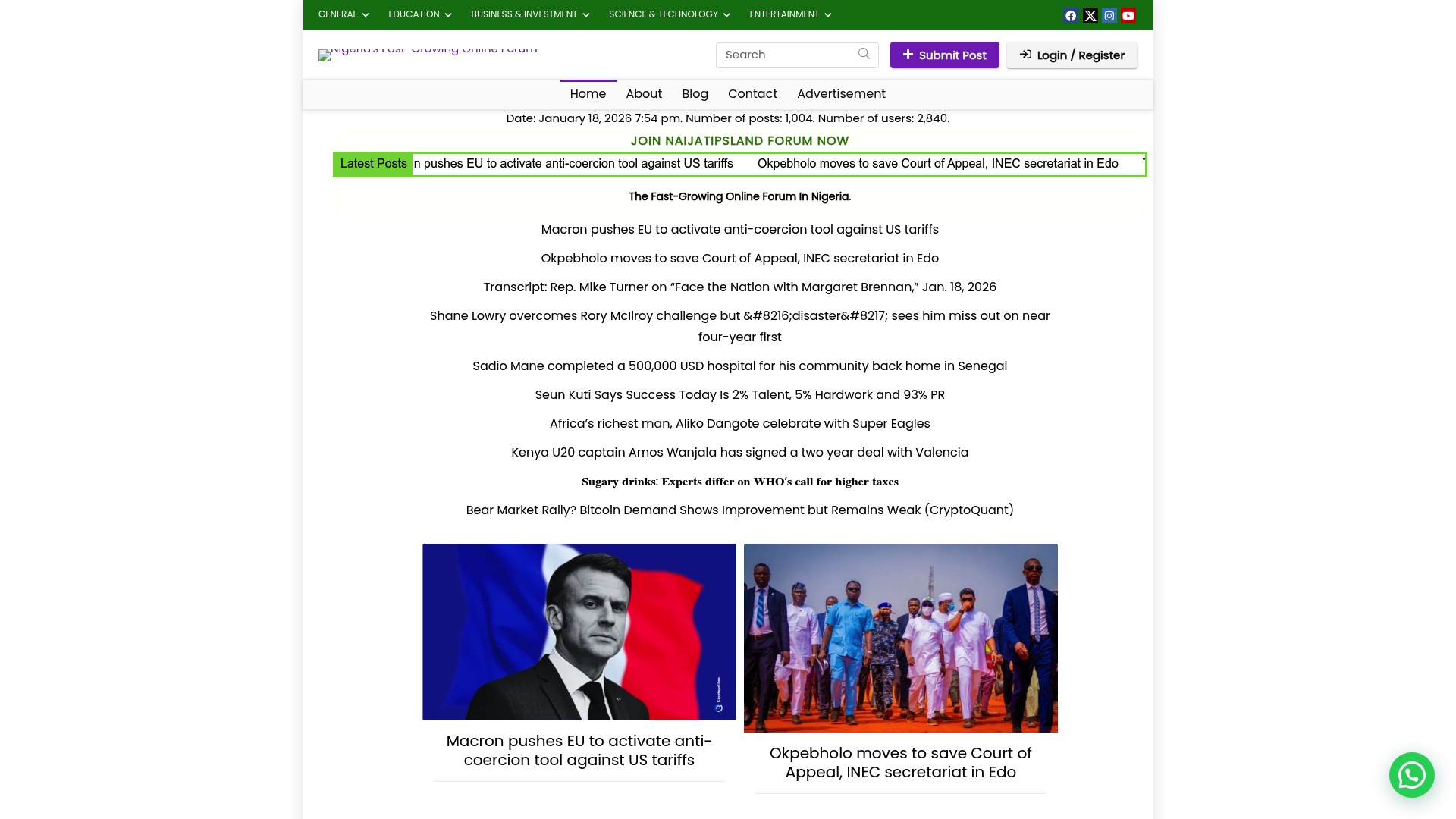
Whether you want to learn how to start online discussions from scratch, follow the beginner’s guide to online discussions specifically designed for Nigerians, or simply stay updated with the latest entertainment updates and trending conversations, Naijatipsland gives you the tools to participate meaningfully. Join a growing community of Nigerian internet users who are informed, engaged, and connected.
Frequently asked questions
What is the main difference between an online subculture and a general forum?
An online subculture features deep shared values, insider language, and specific unwritten rules that create a strong group identity, while a general forum may be a looser collection of people with less cohesion. Internet culture shows that subcultures form specifically around shared passions rather than broad topics.
How do I spot a safe and positive online community?
Look for clear, enforced rules, supportive moderation, and members who treat newcomers respectfully. Communities that actively discourage harassment and misinformation are generally healthier spaces to join, as internet culture research confirms that platform norms significantly shape community behavior.
What are examples of major online subcultures?
K-Pop fandoms, gaming communities, meme creator networks, and parenting groups are all well-documented online subcultures. Research shows that U.S. parenting communities alone attract over a third of parents monthly, demonstrating the scale these groups can reach.
Can I join global subcultures as a Nigerian?
Yes, shared interests connect members worldwide regardless of location, and Nigerian users regularly participate in and shape global subcultures. You will need to learn platform-specific slang and cultural references, but internet culture mechanics apply universally, making entry possible for any curious and engaged newcomer.