


TL;DR:
- Effective news writing in Nigeria prioritizes accuracy, objectivity, and clarity, especially amid widespread misinformation.
- Journalists should verify sources, follow structured formats like the inverted pyramid, and adapt content to local contexts.
- Building trust with audiences involves transparency, using simple language, local voices, and engaging with community feedback.
Missing a single key fact or angle can cause even the most promising breaking story to go ignored. Nigerian journalists and content creators face this risk daily, especially in a media environment where misinformation spreads faster than verified reporting. Strong news writing builds your credibility, attracts wider audiences, and positions your work as a trusted source of information. This guide walks you through every stage, from understanding core news standards to researching, drafting, editing, and localizing your stories for Nigerian readers. Whether you are just starting out or sharpening existing skills, you will find clear, actionable steps here.
Table of Contents
- What makes a news article: Core elements and standards
- Preparation: Research, verification, and planning your story
- Step-by-step: Writing your news article using proven structures
- Polishing, reviewing, and adapting for Nigerian audiences
- A new vision for Nigerian news: Blending global principles and local voices
- Next steps: Grow your skills and connect with Nigeria’s news community
- Frequently asked questions
Key Takeaways
| Point | Details |
|---|---|
| Structure is essential | The inverted pyramid lets readers get the most important facts first. |
| Accuracy builds trust | Always verify sources and cite information to make your reporting credible. |
| Local adaptation matters | Tailor your articles for Nigerian audiences by using clear language and highlighting relevance. |
| Polish your drafts | Edit for grammar, simplicity, and objectivity before publishing. |
What makes a news article: Core elements and standards
To start, let’s clarify exactly what makes news writing effective for both local and international readers.
A news article is not an opinion piece or a feature story. It is a factual, objective report of a current event or development. Opinion articles express personal views. Feature stories go deeper into a topic, often using narrative techniques. News articles stay focused on verified facts, presented without bias. Understanding this difference is your first step toward writing that readers and editors respect.
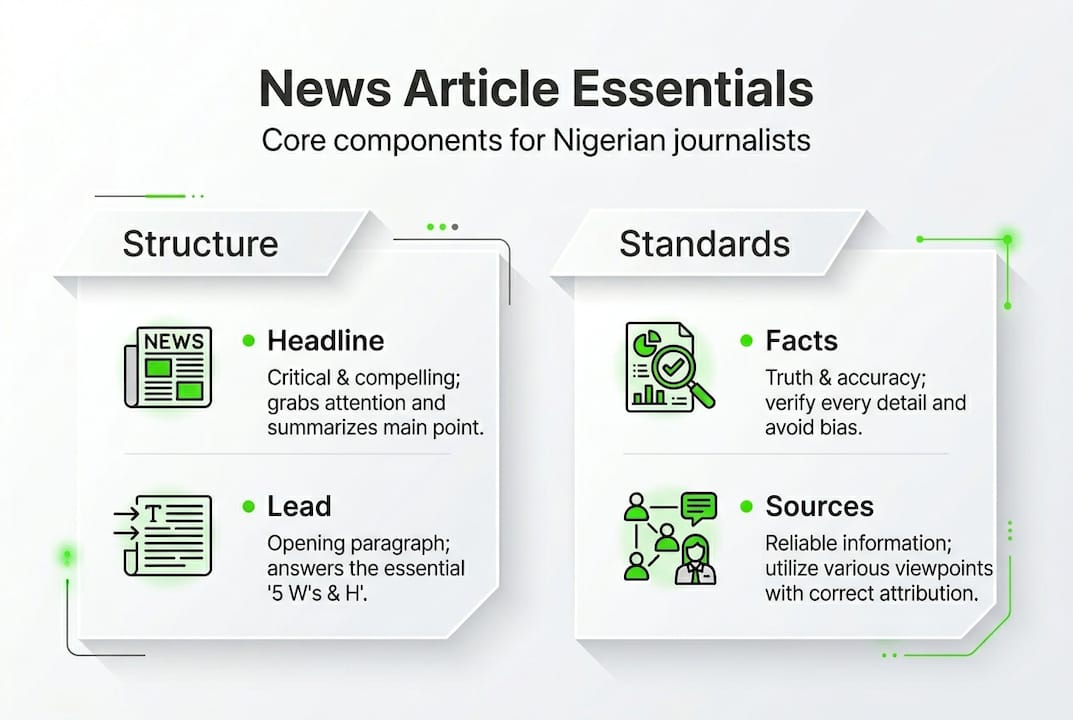
International newsrooms follow established standards. The NPR Style Guide is clear: prioritize accuracy, objectivity, clarity, simplicity, active voice, short sentences, and attribution of sources. These are not optional. They are the foundation of every credible news article.
Core elements every news article must include:
- Headline: Clear, specific, and attention-grabbing without being misleading
- Lead paragraph: Summarizes the story in 25 to 35 words, answering the most critical questions
- Body: Supports the lead with facts, quotes, and background in order of importance
- Quotes: Add human voices and direct attribution to claims
- Background: Provides context so readers understand the significance of the story
- Attribution: Credits every fact, figure, or claim to a named source
For Nigerian journalists, there is an additional layer. Nigeria’s media landscape has a significant trust problem. Misinformation circulates widely on WhatsApp, Twitter/X, and Facebook. This makes building audience trust even more critical here than in many other markets. Using simple, clear English also matters. Nigeria has over 500 languages, and many readers consume content in English as a second or third language. Plain language reaches more people.
Style guides provide essential structure. The NPR Style Guide recommends you follow AP style for grammar, punctuation, capitalization, and abbreviations. Consistency across these elements makes your writing look professional and trustworthy.
| Element | Purpose | Nigerian context tip |
|---|---|---|
| Headline | Attract readers | Keep it specific to local events |
| Lead | Summarize the story | Answer the 5Ws immediately |
| Body | Deliver facts | Use simple sentences |
| Quotes | Attribute claims | Include local voices |
| Attribution | Build credibility | Name your sources clearly |
Also understand what makes a story viral news in the Nigerian context, because shareability often follows clear, accurate, and locally relevant reporting.
Pro Tip: Read at least one published news article from a reputable Nigerian outlet every day and identify each core element. This builds your structural instincts faster than any textbook.
Preparation: Research, verification, and planning your story
Once you know the goals and structure of a news article, it is time to gather the right facts and plan.
Choosing a newsworthy topic is your starting point. Ask yourself: Is this timely? Is it relevant to my audience? Does it affect people’s daily lives? Nigerian readers respond strongly to stories about security, cost of living, politics, education, and health. Staying updated in Nigeria with the latest developments helps you spot story opportunities before they become stale.
Once you have a topic, follow this structured preparation process:
- Identify your primary sources. These include eyewitnesses, government officials, experts, and direct documents. Primary sources are your strongest foundation.
- Gather secondary sources. Reports, previous articles, and official statistics fill in context.
- Cross-verify every claim. Never publish a fact based on a single source. The NPR Style Guide emphasizes accuracy and attribution as non-negotiable.
- Build your outline using the 5Ws and H. Who is involved? What happened? When and where did it occur? Why does it matter? How did it unfold?
- Check for plagiarism. Paraphrase and attribute instead of copying. Plagiarism destroys your reputation fast.
Fact-checking deserves special attention in Nigeria. Social media posts, anonymous forwards, and unverified screenshots are not sources. A strong guide to spotting fake news will sharpen your ability to separate reliable information from fabricated claims before your story goes live.
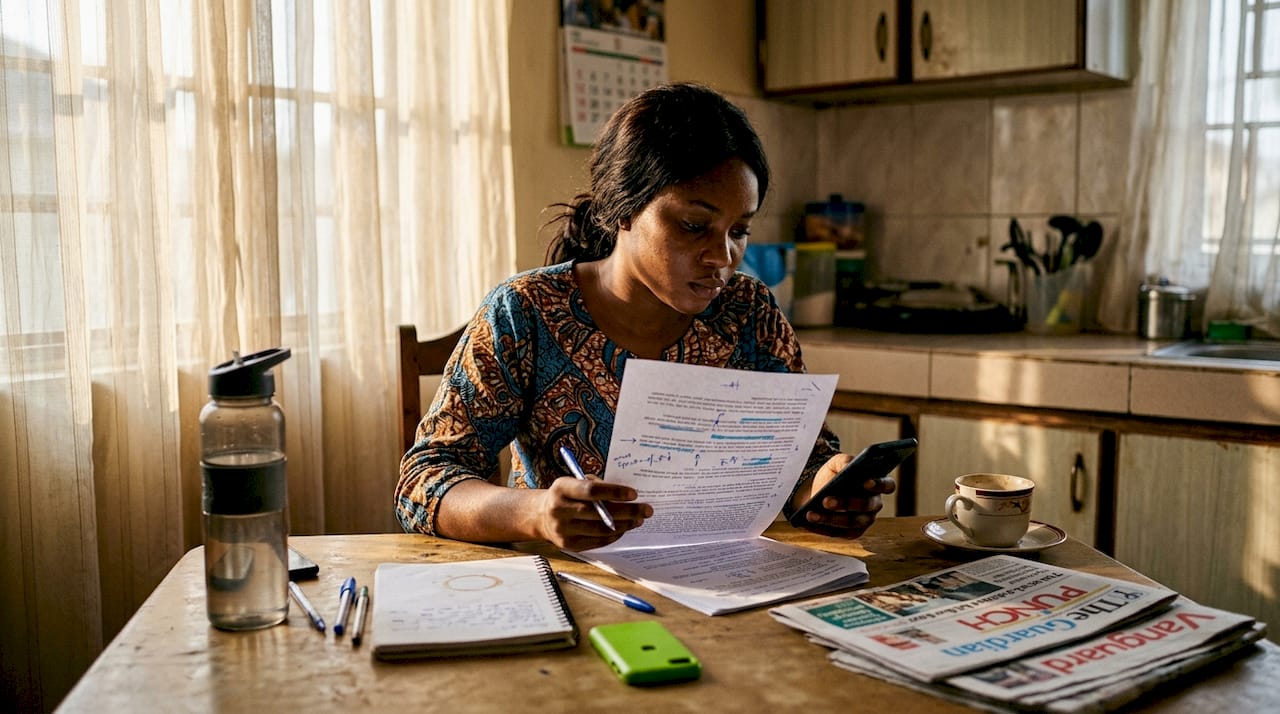
| Source type | Reliability level | Example |
|---|---|---|
| Government official statement | High | Ministry press release |
| Eyewitness account | Medium (verify) | Interview with community member |
| Social media post | Low (requires verification) | WhatsApp screenshot |
| Published academic research | High | University study or report |
Effective news writing techniques also require that you plan your story before you write a single word. Jumping straight into writing without an outline often leads to disorganized, hard-to-follow articles that lose readers quickly.
Pro Tip: Create a simple document before writing that lists your confirmed facts, your sources with contact details, and your key quotes. This becomes your safety net during editing.
Step-by-step: Writing your news article using proven structures
With your sources gathered and outline ready, you can begin crafting your article.
Your lead paragraph is the most important sentence group you will write. It must summarize the story in 25 to 35 words, covering the most critical elements of who, what, when, where, why, and how. A weak lead buries the story. A strong lead tells readers immediately why they should keep reading.
From the lead onward, use the inverted pyramid structure. The inverted pyramid means placing the most important information first in the lead paragraph, followed by supporting details in descending order of importance. This structure allows editors to cut from the bottom without losing essential facts, and it keeps readers engaged even if they only read the first few paragraphs.
Here is a step-by-step writing process you can follow:
- Write your lead first. Summarize the story in one strong paragraph.
- Add the second-tier facts. These are details that support the lead but are not the most urgent.
- Insert direct quotes. Use exact words from sources to add credibility and human voice.
- Provide background context. Help readers understand why this story matters.
- End with less critical details. These might include statistics, future dates, or supplementary information.
“The inverted pyramid is not just a writing style. It is a commitment to respecting your reader’s time by giving them the most important facts first.”
Always write in active voice. “The government approved the policy” is stronger than “The policy was approved by the government.” Active voice is faster, clearer, and more direct.
Format quotes carefully. Use the exact words of your source, place them in quotation marks, and attribute them immediately. For example: “This decision affects every household in Lagos,” said Chukwuemeka Obi, a market trader in Alaba.
You can also reference the role of news forums in distributing your article once it is written, since sharing published work on active platforms expands your reach significantly. Follow NPR style guidelines for formatting consistency throughout your article.
Quick stat: News articles that follow the inverted pyramid structure see significantly higher completion rates because readers quickly find the value they are looking for.
Polishing, reviewing, and adapting for Nigerian audiences
After drafting, strong editing and local adaptation take your article to the next level.
Editing is where good articles become great ones. Read your draft aloud. If a sentence feels clunky or confusing when spoken, rewrite it. Check every fact against your source documents. Confirm every name, title, and date. One factual error can undermine an otherwise excellent story.
For Nigerian audiences specifically, adapt global standards to local context. This means covering proximity and timeliness for local stories, using human interest angles for engagement, writing in simple English for broad audiences, and building trust via transparency amid the misinformation challenges Nigeria faces.
Your editing checklist:
- Verify every fact, name, and figure against original sources
- Replace jargon with plain language where possible
- Confirm that every quote is accurately attributed
- Check that the story answers the 5Ws and H clearly
- Remove any bias or personal opinion from the body
- Update the article if new information becomes available before publishing
- Read from the perspective of a first-time reader in your target community
Proximity matters enormously for Nigerian readers. A story about flooding in Anambra State will resonate more with readers in the Southeast if you include local voices, community impact figures, and relief efforts. Generic national coverage often feels distant. Local adaptation makes it real.
Transparency also builds long-term credibility. If you made an error, correct it visibly and acknowledge it. Readers respect honesty more than perfection. Understanding why following international news matters also helps you benchmark your work against global reporting standards, which raises the overall quality of your output.
For urban reporting specifically, study how outlets approach Nigerian urban reporting on complex issues like infrastructure, housing, and public services. These examples show how professional journalists localize global techniques.
Pro Tip: After editing, share your draft with one trusted colleague before publishing. A fresh pair of eyes often catches errors and weak angles that you have become blind to after multiple revisions.
A new vision for Nigerian news: Blending global principles and local voices
Here is something many journalism guides will not tell you directly: rigidly following textbook methods can make your stories bland and disconnected from your actual audience.
Nigerian journalism has its own rhythm. Communities here value storytelling, context, and relatability. When you copy Western news templates without adaptation, you risk producing content that feels technically correct but emotionally hollow. The most powerful Nigerian news articles combine factual accuracy with narrative energy. They use data, but they also use people. They report what happened, but they also explain what it means for the reader’s life.
Transparency and audience feedback loops matter more in Nigeria’s current media environment than almost anywhere else. Readers are increasingly skeptical. They have been burned too many times by fabricated stories. The journalists who win long-term loyalty are those who invite readers in, acknowledge uncertainty when it exists, and correct mistakes openly.
Experimenting with formats helps too. Solutions-focused journalism, where you report not just the problem but what is being done about it, builds reader trust and engagement. Staying current on trending news curation techniques also keeps your content strategy sharp and competitive. Nigeria’s media landscape is evolving fast, and the journalists who adapt will lead it.
Next steps: Grow your skills and connect with Nigeria’s news community
Ready to practice? Keep sharpening your craft and join Nigeria’s active news community.
Putting these skills into action requires consistent practice and peer feedback. Naijatipsland.com offers you a platform to engage directly with current affairs, practice your reporting instincts, and connect with other Nigerians who care about quality information.
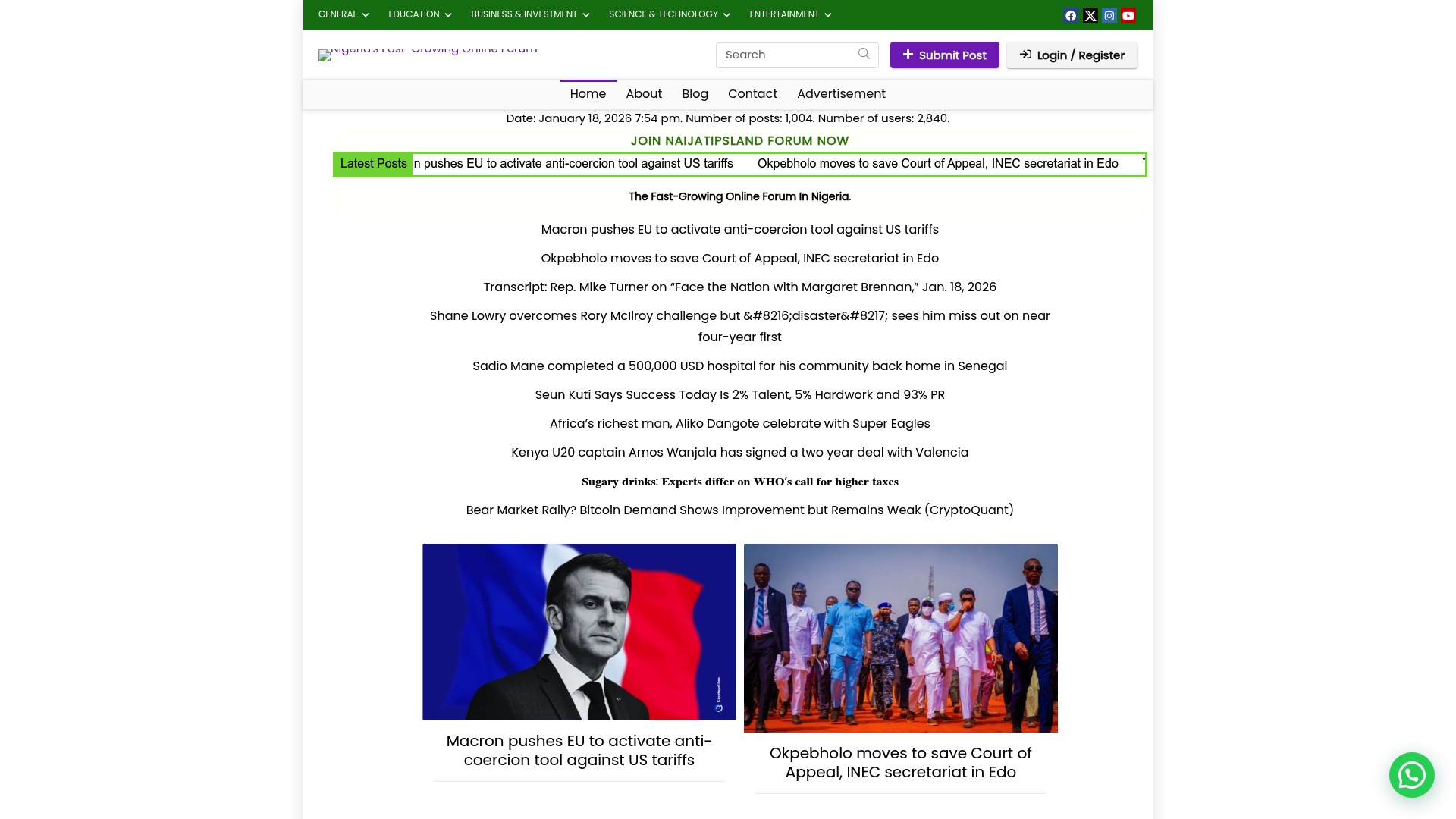
Deepening your understanding of current affairs in Nigeria helps you stay relevant and spot newsworthy stories before others do. Practicing forum etiquette ensures that your engagement in discussions is professional and builds your reputation. Learning the value of participating in online discussions connects you with readers, sources, and fellow journalists who can elevate your work. Start engaging today and let community feedback accelerate your growth.
Frequently asked questions
What is the inverted pyramid in news writing?
It is a story structure where the most important information comes first, followed by details in descending order of importance, as outlined in Mastering News Writing.
Which style guide do most newsrooms use?
Most newsrooms use the Associated Press (AP) Stylebook as the gold standard for grammar, punctuation, and tone, a standard also reinforced by the NPR Style Guide.
How do I make my news articles credible in Nigeria?
Verify all facts, attribute sources, use simple English, and provide full transparency. Building credibility in Nigeria also means adapting global standards to local context, as outlined by Joy Mayer.
What is the difference between news, feature, and opinion articles?
News articles report facts objectively, features explore stories in depth with narrative techniques, and opinions express the author’s personal viewpoint without claiming to be objective.
How can I spot fake news when researching sources?
Cross-check claims with multiple credible sources and avoid relying on unverified social media posts. The NPR Style Guide recommends prioritizing accuracy and attribution as your first defense against misinformation.