


Scrolling through lively debates about Nigeria on your phone can feel exciting, but true connection goes beyond just reading posts. For Nigerian young adults and the diaspora, finding a space where your voice matters is important now more than ever. User registration is more than just a formality—it is the key that unlocks real peer interaction and a stronger sense of belonging. Discover how joining Naijatipsland.com helps you create your digital identity and connect with others who share your passion for current events.
Table of Contents
- Defining Registration In Online Communities
- Types Of Registration And Access Levels
- Benefits Of User Registration For Engagement
- Privacy, Security, And Legal Implications
- Risks And Common Mistakes To Avoid
- Alternatives To Mandatory Registration Models
Key Takeaways
| Point | Details |
|---|---|
| User Registration Enhances Engagement | Registering for online communities allows users to personalize their experience and engage more meaningfully. It also provides access to exclusive features and fosters connections. |
| Diverse Registration Models Exist | Online communities employ various registration types, from open to tiered access, each with implications for user experience and security. Choosing the right model is crucial for engagement and privacy. |
| Privacy and Security Are Paramount | Users must prioritize their privacy and security by understanding platform policies and employing strong password practices to mitigate risks. Regular reviews of data protection measures are essential. |
| Alternatives to Mandatory Registration | Flexible participation approaches, such as guest access or social media logins, can enhance user engagement while maintaining community standards. Platforms should consider these models to attract diverse users. |
Defining registration in online communities
Online communities have transformed dramatically from traditional location-based interactions to dynamic virtual spaces where social connectivity transcends geographical boundaries. Peer-to-peer interactions now define these digital environments, with user registration serving as the fundamental gateway to participation.
At its core, registration represents the formal process by which individuals gain access to digital platforms, enabling them to engage, communicate, and share resources. The process typically involves creating a unique user profile that allows members to:
- Establish a digital identity
- Access platform-specific features
- Interact with other community members
- Participate in discussions and knowledge exchange
- Customize personal engagement settings
Virtual group interactions have become increasingly sophisticated, with registration mechanisms evolving to provide more robust authentication and personalization. Modern online community platforms recognize that registration is not merely about collecting user data, but about creating meaningful digital experiences that foster genuine connections.
The registration process serves multiple critical functions beyond basic access control. It helps platforms manage user interactions, prevent spam, maintain community standards, and create a sense of accountability among participants. By requiring users to create identifiable profiles, online communities can cultivate more respectful, transparent, and constructive digital environments.
Pro tip: When registering for online communities, use a dedicated email address and create a username that represents your authentic digital persona while maintaining personal privacy.
Types of registration and access levels
Online community platforms have developed sophisticated approaches to user access, ranging from completely open systems to highly restrictive environments. Community access mechanisms now incorporate multiple layers of registration complexity that determine user engagement and platform interactions.
Generally, online communities can be categorized into several distinct registration and access types:
- Open Registration: Allows anyone to join with minimal barriers
- Closed Registration: Requires specific qualifications or invitations
- Verified Registration: Demands additional identity confirmation
- Tiered Access: Provides different privilege levels based on user status
- Restricted Membership: Limits participation to predefined user groups
Online community structures fundamentally divide into two primary categories: public and private platforms. Public platforms prioritize accessibility and broad participation, while private platforms emphasize controlled, curated interactions among specific user segments.
The registration process itself has become increasingly nuanced, with platforms implementing multi-stage verification to ensure community quality. Advanced systems might require email verification, phone number confirmation, or even social media profile linking to establish user credibility and reduce potential spam or malicious activities.
Here’s a comparison of major online community registration models and their implications:
| Registration Model | User Experience Strengths | Security Considerations | Typical Privacy Risks |
|---|---|---|---|
| Open Registration | Fast entry, high openness | Low barrier attracts spam | More exposure to data scraping |
| Closed Registration | Moderated user quality | Invites reduce fake accounts | Risk if invites not well managed |
| Verified Registration | High trust, reduced abuse | Strong identity controls | Sensitive data collection issues |
| Alternatives (e.g. guest access) | Minimal friction, broad reach | Weaker identity verification | Anonymity may enable misuse |
Pro tip: Always review the specific registration requirements and access levels before committing to an online community to ensure the platform aligns with your engagement goals and privacy expectations.
Benefits of user registration for engagement
User registration transforms passive online platforms into dynamic, interactive spaces where meaningful connections flourish. Academic community engagement demonstrates that registered users experience significantly enhanced interaction opportunities compared to anonymous browsing.
The primary benefits of user registration include:
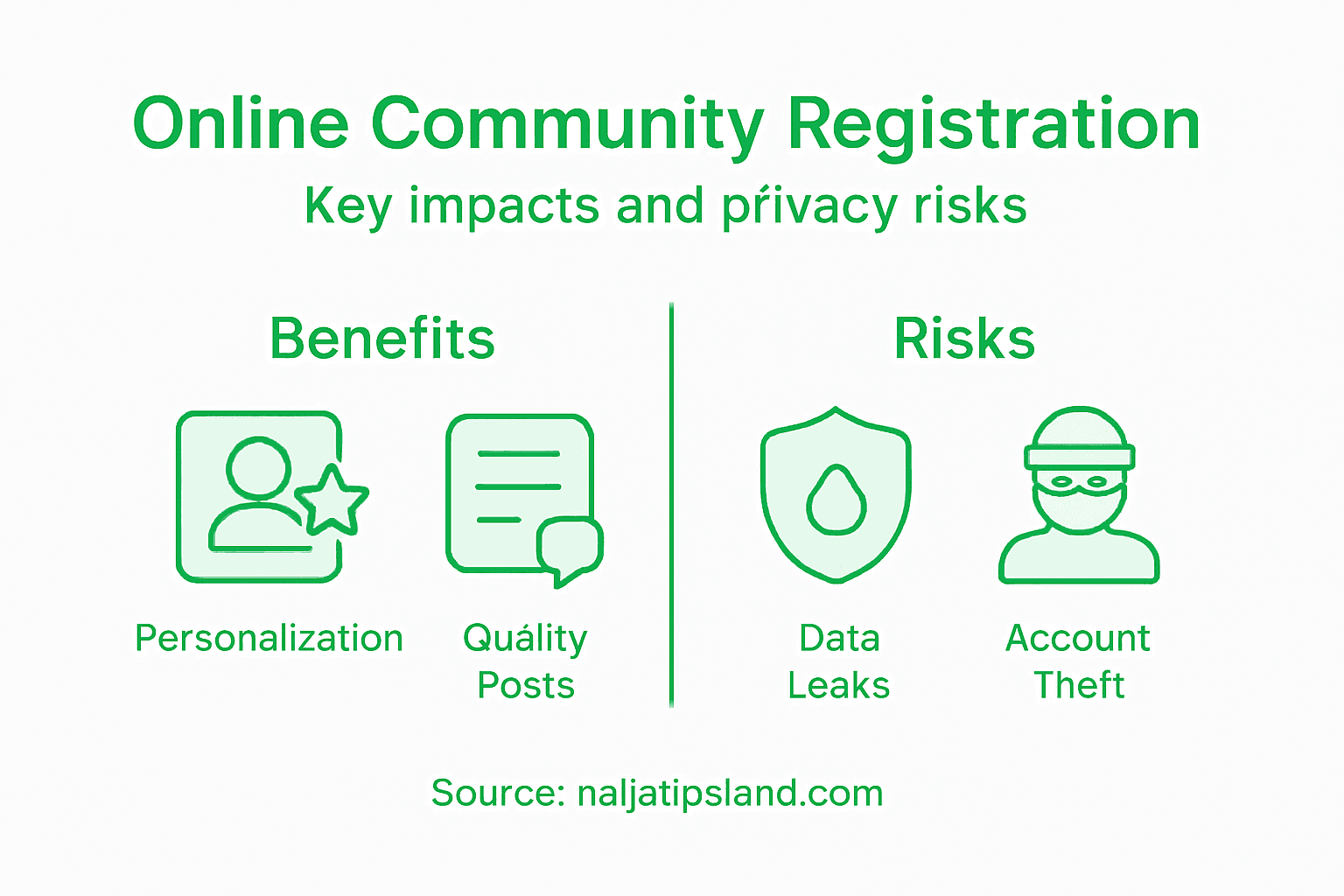
- Personalized content recommendations
- Enhanced communication capabilities
- Access to exclusive platform features
- Ability to build reputation and credibility
- Trackable interaction history
- Improved network connection opportunities
Collaborative participation strategies reveal that registered users are more likely to contribute meaningful content and sustain long-term platform engagement. By creating a personal profile, users invest in their digital identity, which naturally encourages more authentic and thoughtful interactions.
Registration provides platforms with critical mechanisms to cultivate quality interactions. Advanced registration processes enable community managers to verify user identities, reduce spam, and create more meaningful engagement environments. These systems allow for reputation tracking, content moderation, and personalized user experiences that adapt to individual interests and participation patterns.
Pro tip: When registering for online platforms, use a consistent username and profile image across communities to build a recognizable and trustworthy digital persona.
Privacy, security, and legal implications
Online communities face increasingly complex privacy and security challenges that demand sophisticated legal and technological strategies. Data privacy regulations now impose strict requirements on how digital platforms collect, process, and protect user information.
Key legal and security considerations include:
- Compliance with national and international data protection laws
- Robust user consent mechanisms
- Transparent data collection practices
- Secure encryption of personal information
- Regular security audits and vulnerability assessments
- Clear user rights for data access and deletion
Social media privacy dynamics critically demonstrate how user trust directly correlates with platform transparency and security measures. Online communities must balance engaging user experiences with stringent privacy protections, creating frameworks that respect individual rights while maintaining platform functionality.
The legal landscape for digital platforms requires continuous adaptation. Emerging regulations demand that online communities implement comprehensive security protocols, including multi-factor authentication, encrypted data storage, and clear privacy policies that explicitly outline how user information will be collected, used, and protected. These measures not only ensure legal compliance but also build user confidence in the platform’s commitment to privacy.
Pro tip: Always read the privacy policy carefully and use strong, unique passwords for each online community registration to minimize potential security risks.
Risks and common mistakes to avoid
Online community participation comes with inherent digital interaction risks that require careful navigation and strategic awareness. Privacy and security vulnerabilities emerge when users underestimate the potential consequences of their digital behaviors and overshare personal information.
Common risks in online community registration include:
- Exposing sensitive personal details
- Using weak or repetitive passwords
- Neglecting privacy setting configurations
- Accepting connection requests from unknown users
- Sharing location-specific information
- Failing to review platform data policies
- Engaging in impulsive or emotional interactions
Forum participation challenges demonstrate that community engagement requires more than just technical awareness. Users must develop a nuanced understanding of digital etiquette, communication boundaries, and potential psychological risks associated with online interactions.

Modern digital platforms demand proactive risk management strategies. This involves critically evaluating each platform’s security protocols, understanding the potential long-term implications of shared content, and maintaining a deliberate, thoughtful approach to online engagement. The most successful community participants recognize that digital interactions are permanent and can have significant personal and professional consequences.
Below is a summary highlighting primary challenges and solutions for safer online community participation:
| Challenge | Potential Solution | Benefit of Solution |
|---|---|---|
| Weak password practices | Use password managers | Stronger account protection |
| Oversharing personal details | Limit info shared in profiles | Reduced identity theft risk |
| Accepting unknown connections | Vet requests before accepting | Lowers likelihood of scams |
| Poor privacy rule awareness | Review platform policies regularly | Enhanced control of personal data |
| Impulsive interactions | Pause before posting or replying | Maintains professional reputation |
Pro tip: Create a dedicated email address for online registrations and use a password manager to generate unique, complex passwords for each platform.
Alternatives to mandatory registration models
Online platforms are increasingly recognizing the limitations of rigid registration requirements and exploring more flexible engagement strategies. Alternative community management approaches aim to balance user accountability with reduced bureaucratic barriers to participation.
Potential alternatives to traditional registration models include:
- Guest commenting with temporary identifiers
- Social media authentication
- Limited-access preview modes
- Pseudonymous participation options
- Tiered engagement levels
- Community reputation-based access
- Blockchain-verified identity systems
Online learning engagement strategies demonstrate that platforms can create meaningful interactions without mandatory sign-ups. These models prioritize user experience, reducing friction while maintaining community standards through innovative verification and participation frameworks.
Successful alternative models focus on creating low-barrier entry points that progressively build user investment. By offering flexible participation mechanisms, platforms can attract a broader range of users, encourage initial engagement, and organically develop community involvement without imposing rigid registration requirements.
Pro tip: Design platforms with progressive engagement models that allow users to experience community value before committing to full registration.
Secure Your Place in Vibrant Online Communities with Naijatipsland
Navigating the complexities of user registration in online communities can be daunting. The article highlights key challenges such as privacy risks, security vulnerabilities, and the need for trusted digital identities. If you want to engage confidently while protecting your personal information, understanding these issues is vital. Naijatipsland offers a dynamic platform where Nigerians can participate safely in discussions, share insights, and stay informed about trending topics across politics, entertainment, and more. Our registration system balances accessibility with robust security, helping you build a credible digital presence without exposing yourself to common risks.

Join thousands of Nigerians who trust Naijatipsland for authentic community engagement and up-to-date news. Start by registering today to enjoy personalized content and safe interaction. Explore how easy it is to connect with other users, submit posts, and contribute meaningfully in a secure environment by visiting Naijatipsland Community. Take control of your online presence now and experience the benefits of informed, safe, and active participation.
Frequently Asked Questions
What is the purpose of registration in online communities?
Registration serves as the formal process that allows individuals to access digital platforms, enabling them to establish a digital identity, engage with other members, participate in discussions, and utilize platform-specific features.
What are the types of registration commonly used in online communities?
Types of registration include open registration, closed registration, verified registration, tiered access, and restricted membership, each offering different levels of user access and engagement.
What are the benefits of user registration in online communities?
User registration enhances engagement by providing personalized content recommendations, enabling enhanced communication, granting access to exclusive features, and building user reputation and credibility.
What risks are associated with online community registration?
Common risks include exposing sensitive personal information, using weak passwords, neglecting privacy settings, and engaging in impulsive interactions that may have long-term consequences.