Last updated: 13 October 2026. This is an informational guide, not an endorsement. Fees, rules and features change often, so we describe what to compare rather than quoting prices. An earlier version listed seasonal discounts and plan prices that we could not verify.
Shopping this November? Read our Black Friday 2026 guide to spot real deals and avoid scams. Ordering from abroad? Read how to buy from Shein, Amazon and Temu in Nigeria.
Where should you sell? It depends on what you sell, how much stock you hold and whether you want buyers to come to you or you want to go to them. There are four main routes in Nigeria, and many successful sellers use more than one.
1. Marketplaces
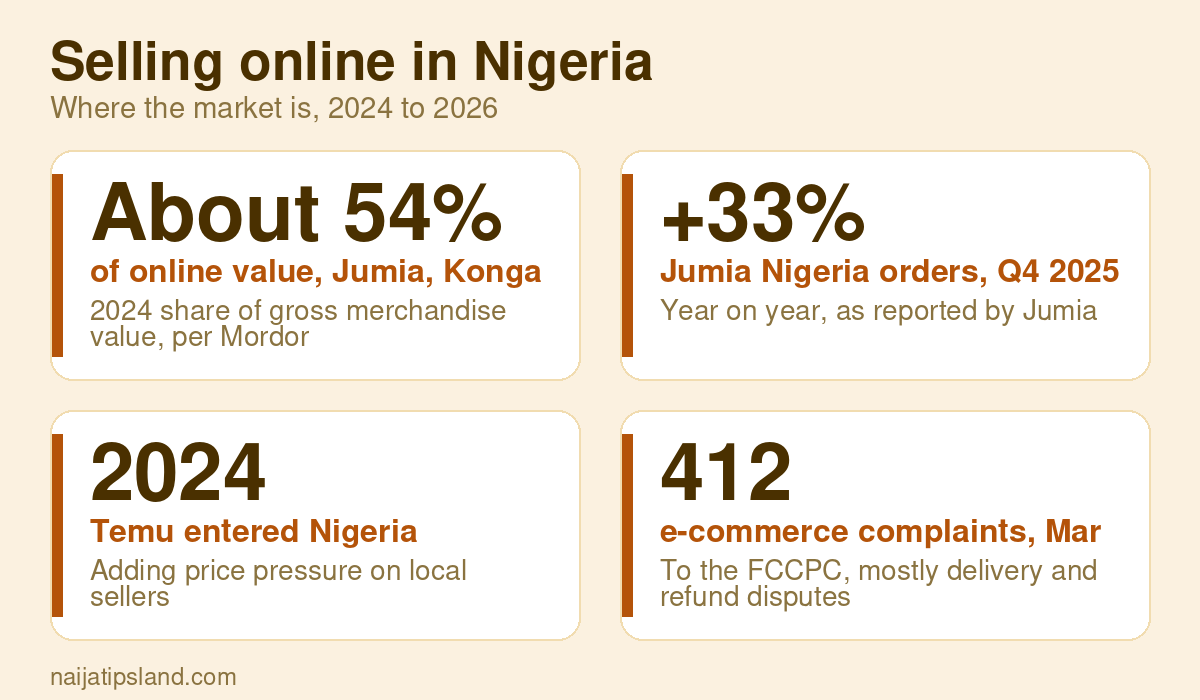
Marketplaces such as Jumia and Konga bring a ready audience, handle payments and offer logistics, in exchange for commission and rules. They are strongest for products that buyers search for by name, such as phones, appliances, fashion and beauty. Research firm Mordor estimated that Jumia, Konga and Temu together held about 54% of online gross merchandise value in 2024, and Jumia reported Nigerian order growth of 30% in the third quarter of 2025 and 33% in the fourth. Temu, a buyer-side competitor from China, entered in late 2024 and put pressure on prices. The trade-offs for sellers include fees, competition on price and limited ownership of the customer relationship.
2. Classifieds
Classified sites such as Jiji let individuals and businesses list products and services for free or for a fee, and buyers contact them directly. They suit second-hand goods, vehicles, property and local services. Payment and delivery are usually arranged between buyer and seller, so the risk of scams is higher. Meet in safe places and confirm payment in your own account before handing over goods.
3. Social commerce
Much of Nigeria’s online selling happens on WhatsApp, Instagram, TikTok and Facebook. It is cheap to start, personal and fast, but it depends on trust, which is hard to scale. Use clear photos, a price list, honest delivery times and written terms. Label sponsored posts and follow advertising rules; see our guide to influencers and the rules.

4. Your own store
A store built on a platform such as Shopify or a WordPress shop gives you control of your brand, your customer list and your pricing, but you must bring your own traffic, payments and delivery. It makes sense once you have repeat customers or a distinctive product. Check each builder’s current pricing, transaction fees and which Nigerian payment methods and delivery partners it supports before you commit.
How to choose
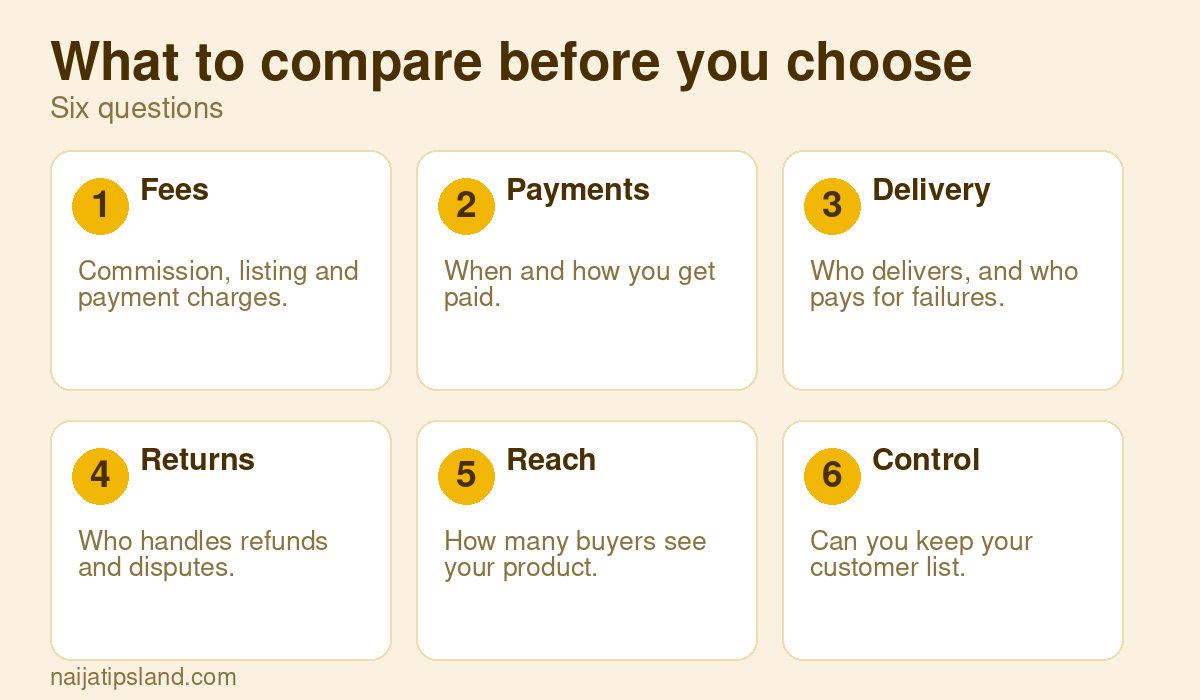
- Test on a small scale with a few products on one channel first.
- Know your margins after fees, delivery, packaging and returns.
- Look at payment timing. Waiting weeks to be paid can hurt cash flow.
- Protect your brand. Use your own name and photos consistently on every channel.
- Keep your own customer list where the rules allow, so you are not at the mercy of one platform.
Basics every seller needs
- Register your business. See our guide on registering a business name.
- Open a separate business account, and pick a payment provider. See our guide on fintech apps.
- Keep records of sales and costs for tax. See our VAT guide.
- Write clear refund and delivery terms. Consumer law applies, and the FCCPC handles complaints.
- Protect customer data under the Nigeria Data Protection Act 2023.
Buyer safety
- Prefer sellers with reviews and a verifiable address and contact.
- Use payment on delivery or platform-protected payment where possible, especially with new sellers.
- Beware of prices far below the market and sellers who rush you.
- Keep chats and receipts. If a seller fails you, report to your bank, the platform and the FCCPC. The commission logged 412 e-commerce complaints between March and August 2025.
For the wider market, read our guide to Nigeria’s mobile-first e-commerce market and the types of online businesses.
Which Route Suits Which Product?
- Phones, appliances and branded goods: marketplaces, because buyers search for known products and expect warranties.
- Handmade, fashion and beauty items: social commerce plus your own store, because story and trust matter.
- Second-hand goods, cars and property: classifieds, with careful in-person checks.
- Digital products and services: your own page or a store builder with a payment link.
- Food and perishables: local delivery through social channels, with tight timing.
A 30-Day Launch Plan
- Week 1: choose five to ten products, set prices with a costing sheet and register your business name.
- Week 2: take clear photos in natural light, write honest descriptions and set up payment and delivery.
- Week 3: list on one channel, tell friends and past customers, and answer every message within an hour.
- Week 4: review sales, costs and complaints, then add one more channel or product line if the numbers work.
Mistakes Sellers Make
- Listing too many products before learning what sells.
- Ignoring delivery costs when setting prices.
- Hiding refund rules in small print.
- Using stolen or manufacturer photos that do not match the item.
- Releasing goods on the strength of a screenshot rather than a confirmed credit alert.
Handling a Bad Review
Reply politely and quickly, apologise where you were wrong, offer a fix such as a replacement or refund, and move the conversation to a private channel if details are needed. Do not argue or delete honest feedback. Buyers read how you respond as much as the review itself.
Strengths and Weaknesses at a Glance
- Marketplaces: strong on reach, payments and logistics; weaker on margins, branding and control of customer data.
- Classifieds: strong on low cost and local reach; weaker on safety, payment protection and delivery.
- Social commerce: strong on personal trust and flexibility; weaker on scale, consistency and record-keeping.
- Your own store: strong on brand and data; weaker on traffic, setup effort and the need to manage payments and delivery yourself.
Numbers to Track Every Week
- Orders and revenue by channel, so you know where sales come from.
- Gross margin after product cost, fees, delivery and packaging.
- Return and complaint rates, which show product and delivery problems early.
- Time to reply to messages, which strongly affects conversion.
- Repeat buyers, which show whether customers trust you.
Frequently Asked Questions
What is the best platform to sell on in Nigeria?
There is no single best. Marketplaces give reach, social media gives relationships and your own store gives control. Many sellers combine them.
Do I need money to start selling online?
You can start small with a few products and a phone, but stock, packaging and delivery cost money, and borrowing to start is risky.
How do I avoid scams as a seller?
Confirm payment in your own banking app before dispatch, and be wary of fake alerts and overpayment requests.
Do I have to pay tax on online sales?
Sales income is generally taxable, though small businesses may have reliefs and the first ₦800,000 of annual taxable income is taxed at 0%. Keep records and check your position.
Sources
- Nexdigm (citing Mordor Intelligence): Nigeria e-commerce market share
- Ken Research: Nigeria FMCG e-commerce and last-mile market (Jumia order growth)
- Ken Research: Nigeria fashion and apparel e-commerce market
- TechCabal: How banks and fintechs refunded Nigerians N10 billion in six months
- Templars: The legality of no-refund policies under Nigerian consumer protection law