
First published 17 January 2026. Rewritten on 13 October 2026 from reports by Cointelegraph, The Block and others. These are plans and promises, not finished work.
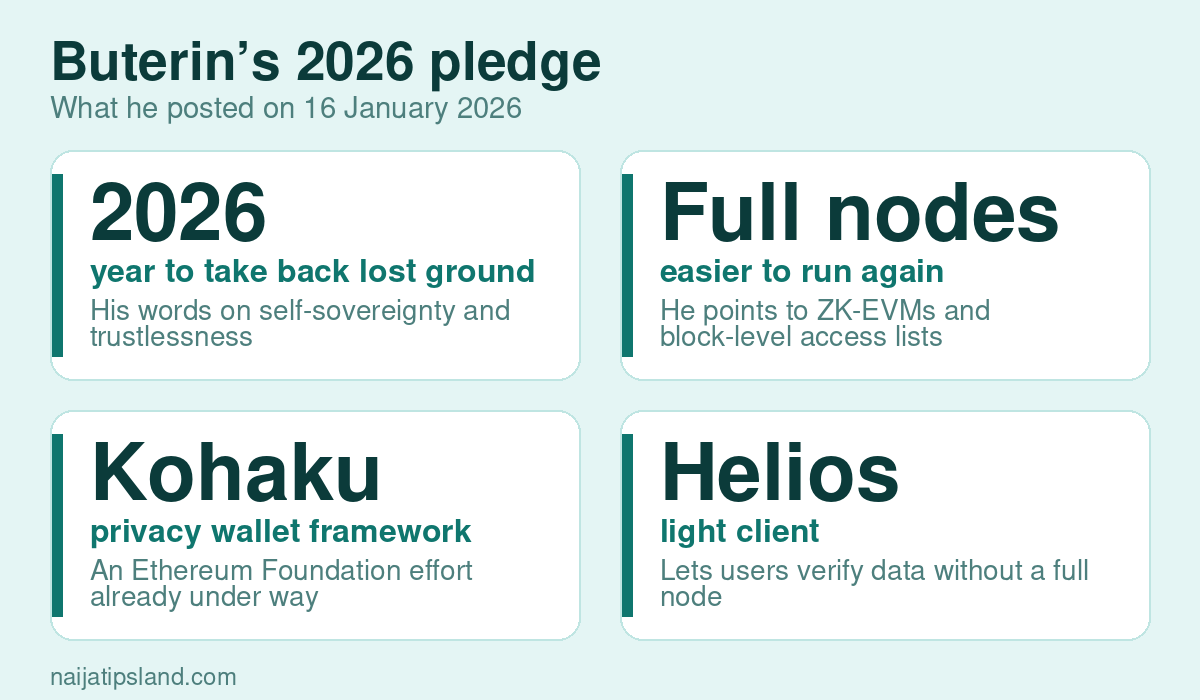
Ethereum’s co-founder Vitalik Buterin does not often scold his own community, but in January 2026 he came close. In a post on X on Friday 16 January he said the network had slid away from some of its founding values while chasing mainstream adoption, and that the slide was over. “2026 is the year that we take back lost ground,” he wrote, on self-sovereignty and trustlessness.
What he says went wrong
Buterin listed several ways Ethereum had backslid over ten years. Running a node, the software that lets anyone check the chain for themselves, went from easy to hard. Many applications became heavy programmes that send users’ data to a dozen servers instead of simple pages. In his words, every compromise made in the name of mainstream adoption would stop.
What he wants
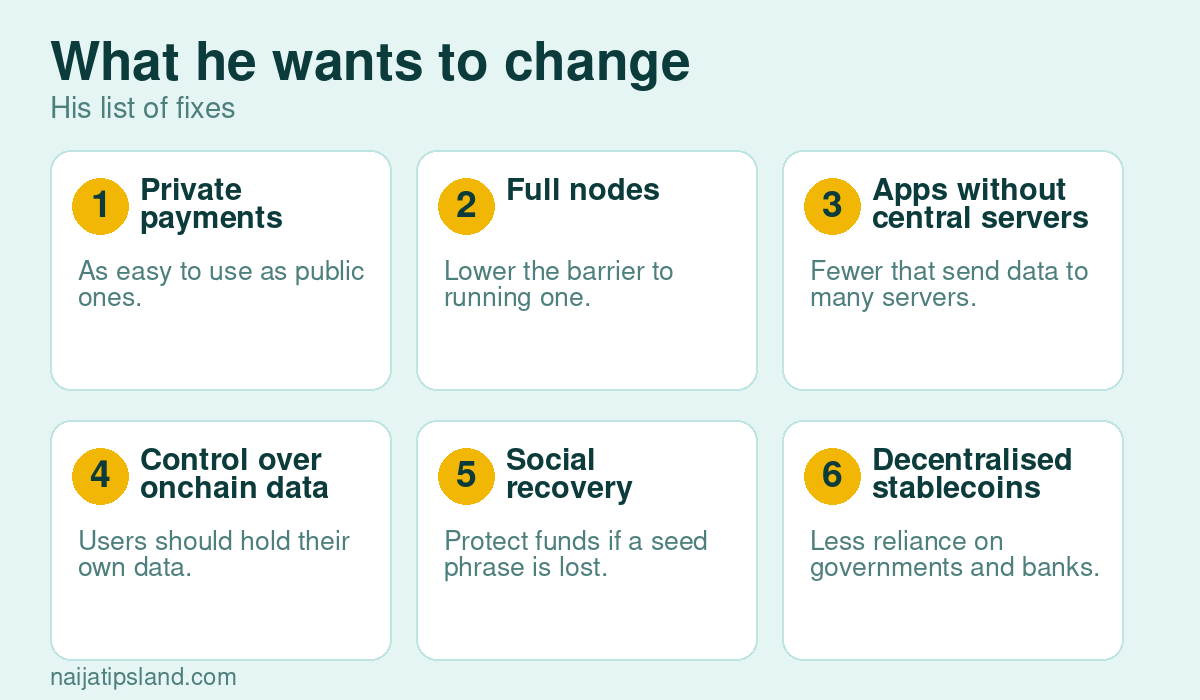
His list was specific: private payments that are as easy to use as public ones; a lower barrier for users to run full nodes; decentralised apps that do not rely on centralised servers; easier control over personal onchain data; and better social recovery wallets that protect funds if a seed phrase is lost or stolen. He also called for better decentralised stablecoins, so that people have real independence from governments and the traditional financial system. Earlier that week he had written that Ethereum should pass a “walkaway test”, meaning it could keep going for decades without its developers.
The tools behind the promise
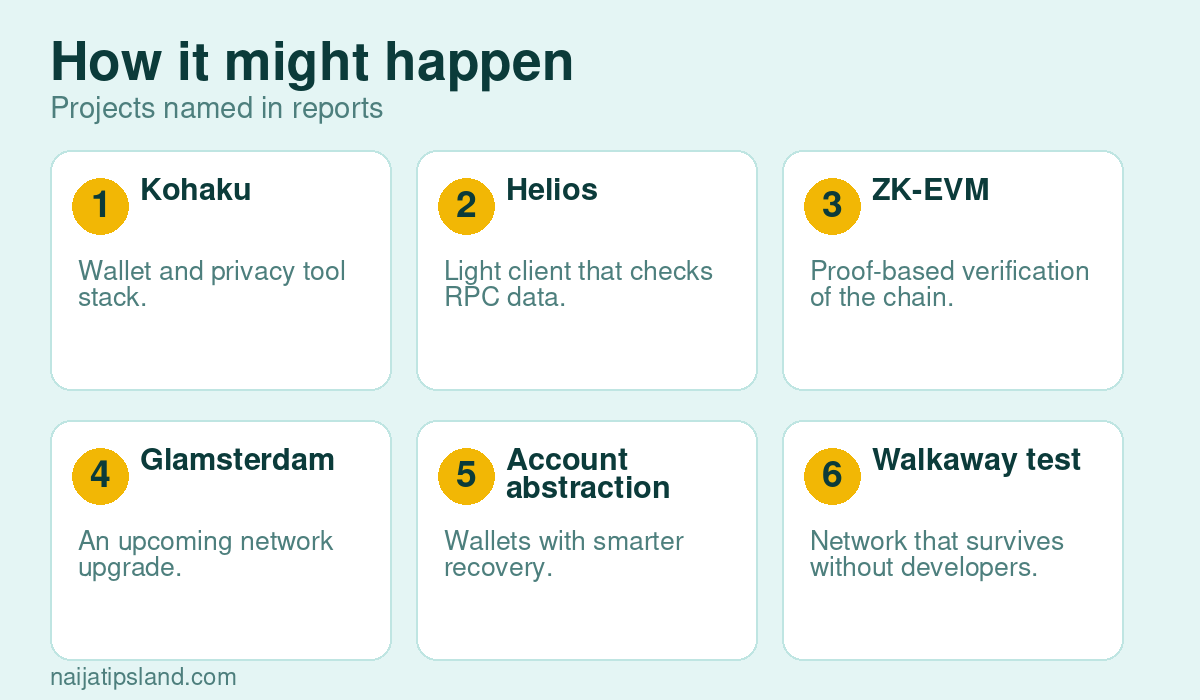
Reports pointed to concrete projects. The Ethereum Foundation’s Kohaku effort is building a framework for private wallets. Helios, a light client, lets users check the data they receive from remote servers rather than trusting it blindly. Zero-knowledge proofs and block-level access lists, Buterin said, should make it easier to run a node and verify the chain on a personal computer, and a hard fork called Glamsterdam is on the roadmap. As one sign of progress on privacy, the firms Zama and Bron were reported to have run the first confidential payroll on Ethereum’s main network.
Reading it with a cool head
Promises like these take years, and the market does not move because of a social media post. It is also worth noticing the tension: the same community cheers when big institutions arrive, and many of them want rules and oversight that clash with strict privacy. What Buterin has done is set a direction and invite people to hold him to it.
What it means for an ordinary user
You do not need to run a node to benefit. If these plans work, wallets should become easier to recover and apps more private. In the meantime, protect yourself: keep your seed phrase offline, use reputable wallets and be careful of anyone who claims an upgrade requires you to send funds. Our guides to blockchain technology and buying Bitcoin and USDT in Nigeria explain the basics. This is general information, not investment advice.
Sources
- The Block: Vitalik Buterin declares 2026 the year Ethereum reverses backsliding
- Cointelegraph via TradingView: Buterin warns Ethereum has backslid
- Forklog: Buterin advocates a return to Ethereum’s core values
- Crowdfund Insider: Buterin says Ethereum will aim to take back lost ground
- Cointelegraph: the original report this story was first based on