
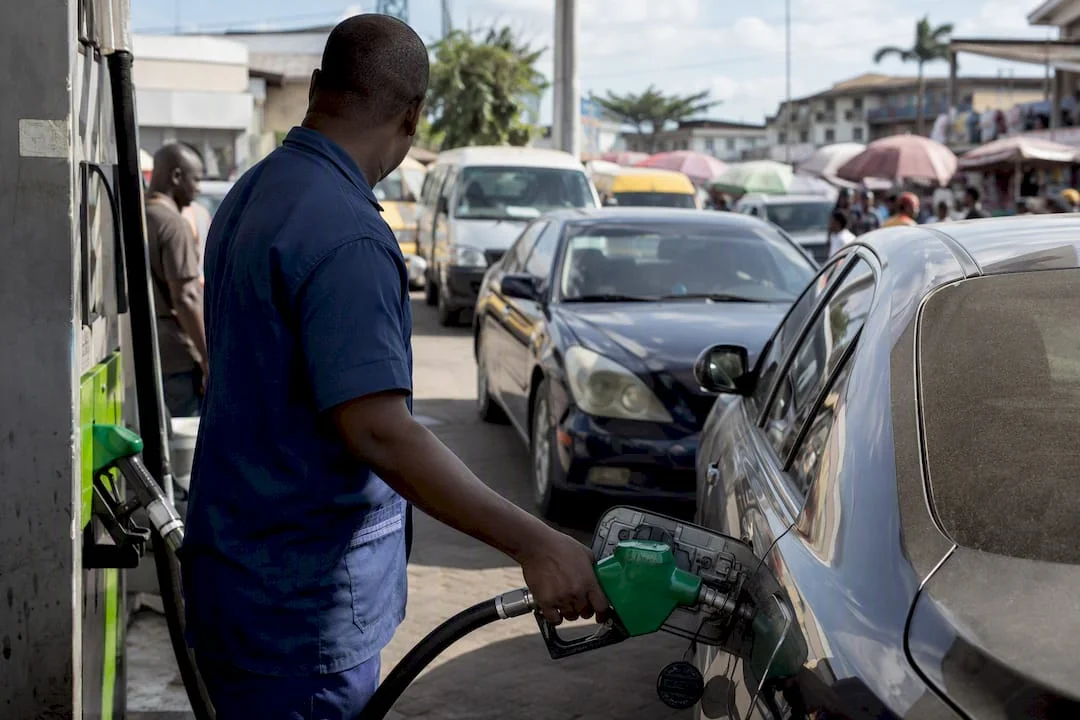
Nigeria removed the petrol subsidy on May 29, 2023, and it has not returned. The government says the move freed ₦15.8 trillion for public spending between June 2023 and December 2025, but pump prices have climbed sharply and household budgets have absorbed most of the shock. The rest of this guide walks through the timeline, the money, and what it means for you.
TL;DR:
- Nigeria’s ₦15.8 trillion in savings from fuel subsidy removal was mainly used to fund government spending on infrastructure, security, and social programs, not to reduce national debt.
- Pump prices increased sharply after subsidy removal, with some stations reporting prices as high as ₦1,175 per liter at the Dangote Refinery and other local refinements.
- Currency devaluation and global oil prices moved simultaneously with subsidy reform, making it difficult to isolate the true impact of subsidy removal on inflation and living costs.
- Households relying on transport and generators, especially lower-income families, experienced disproportionate cost increases that are unlikely to be fully offset by government compensation efforts.
- Continued fiscal pressure, currency volatility, and public opposition suggest Nigeria may face recurring debates over subsidy reinstatement or alternative pricing policies in future years.
Table of Contents
- Fuel Subsidy Nigeria Timeline: What Happened and When
- How the ₦15.8 Trillion in Savings Was Calculated and Shared
- Inflation, Pump Prices, and the Real Cost of Living
- Who Pushed Back and What Cushioning Was Offered
- What Comes Next for Nigeria’s Fuel Pricing
- Why Nigeria Started Subsidizing Petrol in the First Place
- How the Subsidy Actually Worked and Who Benefited
- How Nigeria’s Reform Compares to Other Oil-Producing Nations
- Corruption and Inefficiency in Subsidy Administration
- Where Fuel Pricing Reform Goes From Here
- Naijatipsland’s Take: What This Means for Everyday Nigerians
- Stay Ahead of Nigeria’s Next Policy Move
- Sources
Fuel Subsidy Nigeria Timeline: What Happened and When
President Bola Tinubu ended the petrol subsidy in his inauguration speech on May 29, 2023, and pump prices jumped within days as marketers repriced stock. The Nigerian National Petroleum Company Limited stopped absorbing the difference between the landing cost of imported petrol and the pump price, shifting that cost directly to consumers.
- May 2023 — Subsidy removal announced and enforced almost immediately, with petrol prices increasing sharply at some stations within weeks.
- June 2023 — The naira was floated and unified across official and parallel markets, compounding fuel-price pressure since Nigeria still imported the bulk of its refined petrol.
- 2024–2025 — The Dangote Petroleum Refinery ramped up local production, and gantry prices (the refinery’s wholesale rate to marketers) became a new benchmark, with adjustments like the shift from ₦1,185 to ₦1,200 per liter rippling through retail prices in Lagos, Abuja, and Kano.
- Late 2025 into 2026 — Price volatility continued as KPMG’s analysis of the subsidy reform had warned, with local refining capacity still not fully insulating pump prices from currency swings and global crude costs.
The Federal Ministry of Information and National Orientation has used this timeline to argue the reform gave Nigeria breathing room it desperately needed. Whether that breathing room reached ordinary households is a separate question, and one this article addresses in the sections ahead.
How the ₦15.8 Trillion in Savings Was Calculated and Shared
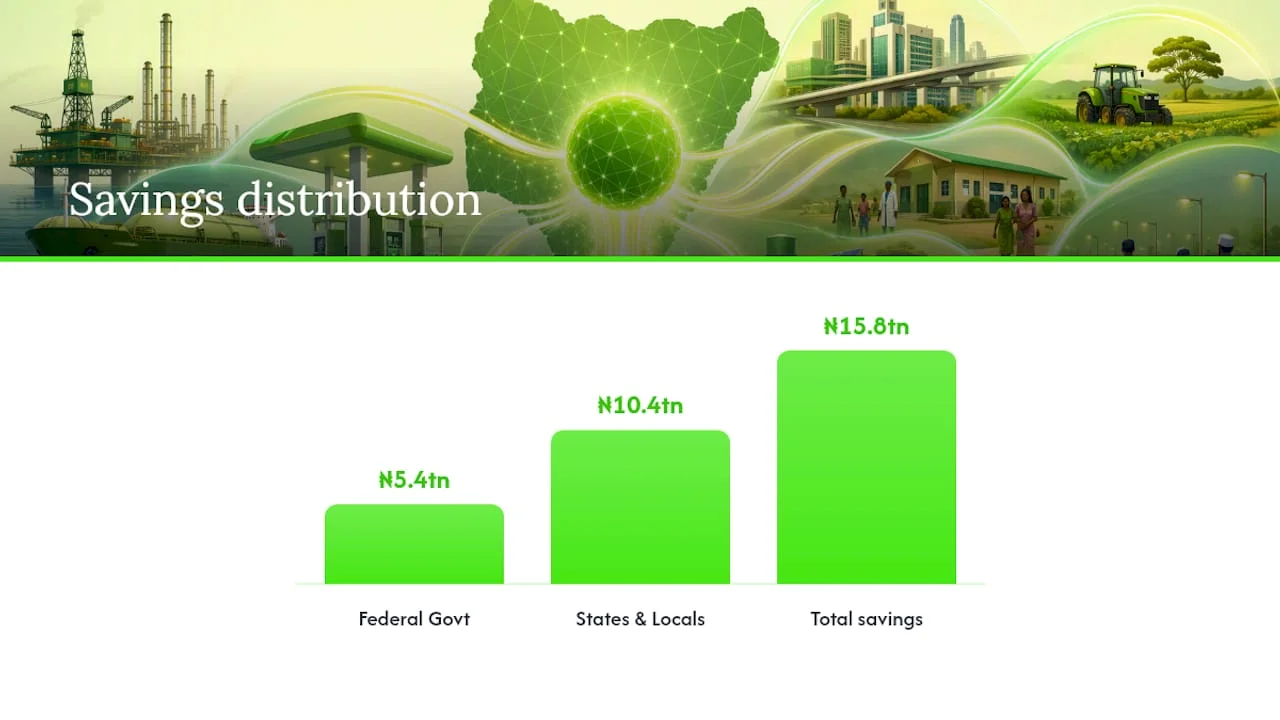
The government’s headline figure comes straight from the Ministry of Information’s press briefing: ₦15.8 trillion in cumulative subsidy savings between June 2023 and December 2025. That figure doesn’t sit in one federal account. It splits ₦5.4 trillion to the Federal Government and ₦10.4 trillion shared among states and local governments through the federation allocation formula.
The fuller fiscal picture is more complicated than “₦15.8tn saved and banked.” Incremental revenues added roughly ₦3.1 trillion, and the government also took on ₦11.9 trillion in incremental borrowing, bringing total incremental resources to about ₦20.4 trillion. Against that, incremental expenditure ran close to ₦30.64 trillion, meaning much of the fiscal space created by subsidy removal was absorbed by higher spending rather than banked as surplus.
| Fiscal Component | Amount |
|---|---|
| Total reported subsidy savings (June 2023 to December 2025) | ₦15.8 trillion |
| Federal Government share | ₦5.4 trillion |
| States and local governments share | ₦10.4 trillion |
| Incremental revenues | ₦3.1 trillion |
| Incremental borrowing | ₦11.9 trillion |
| Total incremental resources | ₦20.4 trillion |
| Incremental expenditure | ₦30.64 trillion |
Where did that expenditure go? The government points to several priority areas:
- Infrastructure projects, including road, rail, and port modernization efforts.
- Security spending tied to ongoing counterinsurgency and policing needs.
- Human capital programs covering health, education, and social investment.
- Debt servicing obligations that grew alongside incremental borrowing.
A separate ministry statement clarifying the reform’s fiscal space makes an important distinction here: the ₦15.8 trillion isn’t idle cash waiting to be spent. It mainly reduced how much new debt the government needed to take on to keep running.
Inflation, Pump Prices, and the Real Cost of Living
Nigeria’s headline inflation climbed through 2023 and 2024, and an academic simulation study using dynamic modeling found that fuel subsidy removal significantly worsened cost-of-living pressures and inflation across the period studied. The mechanism is straightforward: petrol touches transport, food logistics, and manufacturing input costs almost simultaneously, so a price shock at the pump spreads through the entire consumer basket within weeks.
Pro Tip: Track pump prices at two or three stations near you over a month rather than checking once. Prices can shift daily based on marketer stock and gantry adjustments, and a single snapshot rarely tells the real story.
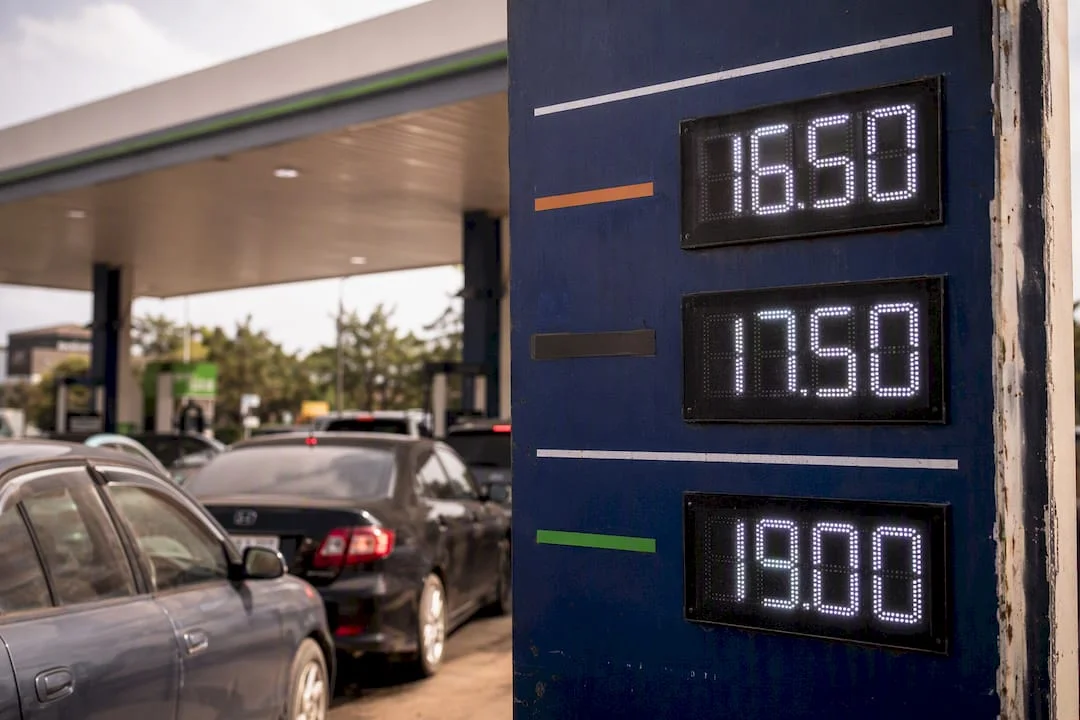
Reported pump prices in Abuja moved higher following refinery gantry price revisions covered by Vanguard, with similar upward pressure in Lagos and Kano. Naijatipsland’s own reporting on Dangote Refinery’s petrol price hikes tracked one such jump to ₦1,175 per liter, illustrating how quickly local refining shifted from a hoped-for stabilizer to just another variable in the pricing equation.
A few factors make this harder to untangle than a simple subsidy-removal-equals-inflation story:
- The naira float in June 2023 hit at nearly the same time, making it difficult to isolate subsidy removal from currency effects.
- Global crude oil prices moved independently of Nigeria’s domestic policy choices during this period.
- Local refining capacity from Dangote reduced import dependence but didn’t fully decouple pump prices from dollar-denominated input costs.
The honest answer is that subsidy removal, currency unification, and global oil markets moved together, and separating their individual weight on your grocery bill isn’t something any single study can cleanly do.
Who Pushed Back and What Cushioning Was Offered
Public opposition to the removal has been consistent and measurable. Afrobarometer’s polling found that a large share of Nigerians opposed the policy and believed the country was headed in the wrong direction following the change, a sentiment that tracks with the visible strain on transport fares and food prices.
The impact fell unevenly across households and sectors:
- Commercial transport operators raised fares almost immediately after each pump-price jump, since fuel is their single largest operating cost.
- Small businesses reliant on generators for power faced compounding pressure from both diesel and petrol price increases.
- Lower-income households, who spend a larger share of income on transport and food, absorbed a proportionally heavier hit than wealthier households.
On compensation, the International Institute for Sustainable Development recommended targeted cash transfers and clearly scoped palliative programs rather than broad, hard-to-track handouts. The government has pointed to allocations like the pension payments approved by Uba Sani in Kaduna State as evidence that subnational governments are redirecting freed-up resources toward vulnerable groups. IISD’s own analysis cautions, though, that targeting mechanisms in Nigeria have historically struggled to reach the poorest households efficiently, and that gap between intention and delivery remains one of the reform’s weakest links.
What Comes Next for Nigeria’s Fuel Pricing
The government has signaled that mobilized resources will keep flowing toward infrastructure, security, and human capital, which means budget allocations over the next few cycles will be worth watching closely for follow-through.
- Watch for renewed subsidy pressure. Political cycles create recurring temptation to reintroduce price caps, especially ahead of elections.
- Track exchange-rate stability. Since Nigeria still imports a share of its refined products, naira volatility feeds directly into pump prices regardless of subsidy status.
- Follow local project roll-outs. Infrastructure and security spending tied to freed-up funds should show up in visible projects, not just budget line items.
- Monitor household budgeting. Building a buffer for periodic pump-price jumps is more realistic than expecting stable prices anytime soon.
Why Nigeria Started Subsidizing Petrol in the First Place
Nigeria’s fuel subsidy dates back decades, rooted in a paradox that frustrated economists for years: Africa’s largest crude oil producer imported most of its refined petroleum products because domestic refineries ran far below capacity. The government stepped in to shield citizens from the gap between international crude-linked import costs and what it judged an affordable local pump price.
The rationale carried real political weight. Petrol subsidies became viewed as a tangible dividend of oil wealth, something every Nigerian could point to as a benefit from the country’s resource endowment, regardless of region or income level. Successive administrations found it politically costly to remove the subsidy even when its fiscal burden grew unsustainable, because doing so meant visibly taking away a benefit rather than failing to deliver one.
By the early 2010s, the subsidy had grown into one of the largest line items in the federal budget, at times consuming resources that could have funded healthcare, education, or infrastructure. Attempts at partial removal, including a widely resisted move in January 2012, sparked mass protests and were partially reversed within days. That episode set the template for over a decade of hesitant, incremental adjustments rather than a clean break.
By the time Tinubu made his announcement in 2023, the subsidy had become what many economists called fiscally unsustainable, consuming trillions of naira annually while failing to reach the poorest Nigerians as efficiently as direct transfers would have.
How the Subsidy Actually Worked and Who Benefited
The mechanics were simpler than the politics. The Nigerian National Petroleum Company Limited (and its predecessor, the NNPC) imported refined petroleum products and sold them to marketers at a price below the true landed cost, which includes international crude prices, shipping, and exchange-rate conversion. The government then reimbursed the difference, either directly or by absorbing the loss on NNPC’s own balance sheet.
In practice, that meant Nigerians paid a regulated pump price, often held steady for years even as global oil prices swung, while the state quietly covered the gap. On paper, every driver and household using petrol benefited from artificially cheap fuel. In reality, benefits skewed toward wealthier Nigerians who consumed more fuel, whether through car ownership, generator use, or business operations, while the opportunity cost, in the form of underfunded public services, fell hardest on the poor.
KPMG’s analysis of the subsidy removal noted that the system also created enormous room for arbitrage. Marketers with import licenses could exploit gaps between the official subsidized price and black-market or cross-border rates, particularly by smuggling subsidized Nigerian fuel into neighboring countries where pump prices ran higher. That leakage meant a meaningful share of subsidy spending never benefited Nigerian consumers at all.
How Nigeria’s Reform Compares to Other Oil-Producing Nations
Nigeria isn’t alone in wrestling with fuel subsidies, and its 2023 removal fits a broader pattern seen across oil-exporting economies. Countries like Indonesia, Egypt, and Iran have all attempted subsidy reforms in the past decade, often triggered by similar fiscal pressure: subsidies consuming an unsustainable share of national budgets while global oil price swings made the cost unpredictable.
Indonesia’s approach offers a useful contrast. Jakarta phased out subsidies gradually over several years, pairing incremental price increases with expanded cash transfer programs, which softened public backlash compared to Nigeria’s more abrupt single-day removal. Egypt took a similarly staged approach starting in 2014, spreading adjustments across multiple years rather than concentrating the shock.
Nigeria’s removal was closer to what Iran experienced in 2010, when subsidies were cut sharply and quickly, triggering immediate price shocks and public anger, though Iran paired its reform with more extensive direct cash payments to households than Nigeria has managed so far.
What sets Nigeria apart within the region is its unique position as a major crude producer still historically dependent on imported refined products, a structural quirk most other oil exporters don’t share since they generally refine domestically. That gap is precisely what the Dangote Refinery’s ramp up aims to close, and its success or failure will shape whether Nigeria’s reform ultimately resembles a well-managed transition or a prolonged period of price instability.
Corruption and Inefficiency in Subsidy Administration
The subsidy regime’s biggest vulnerability wasn’t the policy concept. It was administration. Nigeria’s 2012 subsidy scandal, uncovered through a National Assembly probe, exposed billions of naira paid out for fuel that was never imported or that was imported in quantities far smaller than claimed. Marketers submitted inflated import documentation, and verification systems proved too weak to catch discrepancies before payments went out.
Cross-border smuggling compounded the problem for years. Subsidized Nigerian petrol, priced well below market rates in neighboring Benin, Niger, and Cameroon, created a persistent incentive for smuggling that drained subsidized volumes out of the country entirely, meaning Nigerian taxpayers effectively subsidized fuel consumption in other nations.
Regulatory oversight struggled to keep pace with the scale of the program. Multiple agencies, including NNPC, the Petroleum Products Pricing Regulatory Agency, and the Ministry of Finance, all touched some part of subsidy administration, creating overlapping responsibilities without a single accountable authority for verifying claims before disbursement. That structure made it easier for inflated or fraudulent claims to slip through, and harder for anti-corruption investigators to pin accountability on any one office when scandals surfaced. It’s a cautionary case study in why removing a subsidy program is often easier than administering one honestly for years on end.
Where Fuel Pricing Reform Goes From Here
Nigeria’s policy alternatives going forward largely fall into three camps. The first is staying the current course: a fully liberalized, market-determined pump price with targeted social protection rather than broad price controls. This is the direction the government has committed to publicly, and it’s the approach independent analysts generally favor, provided compensation mechanisms actually reach vulnerable households.
The second alternative, floated periodically in policy debates, involves shifting subsidy support toward domestic production rather than consumption, essentially subsidizing crude supply to local refineries instead of the retail pump price. Reporting on these production-subsidy proposals notes the idea is politically appealing since it could lower pump prices without reinstating a consumer subsidy directly, but it carries its own large fiscal costs and remains contested among policymakers who worry it just repackages the old problem.
The third path, which no serious policymaker is currently pushing but which populist pressure could revive, is a partial reversal back toward price caps if inflation or public anger reaches a breaking point. Given the fiscal math already showing incremental expenditure outpacing incremental resources, a full reversal looks financially difficult regardless of political appetite. The more realistic long-term trajectory is continued market pricing, expanded local refining capacity, and incremental improvements to how compensation programs are targeted and verified.
Naijatipsland’s Take: What This Means for Everyday Nigerians
The subsidy removal is neither the clean fiscal win the government describes nor the unmitigated disaster its critics claim. Both things are true at once: Nigeria genuinely needed to stop borrowing to keep petrol artificially cheap, and millions of households genuinely absorbed real pain doing it. The ₦15.8 trillion figure is real, but so is every Nigerian who watched their transport fare double.
If you want to hold this policy accountable, three things help. Ask your state and local representatives exactly how their share of that ₦10.4 trillion got spent. Report pump prices you see locally so patterns become visible beyond official gantry statements. And keep the conversation going in community spaces where policy gets tested against lived reality, not press releases.
Naijatipsland will keep tracking this story as it develops.
— Naijatipsland
Stay Ahead of Nigeria’s Next Policy Move
Petrol prices, palliative announcements, and budget allocations shift fast in Nigeria, and reading about them a week late means missing the window to act, whether that’s adjusting a household budget or joining a local conversation about accountability. Naijatipsland tracks pump-price changes, official policy statements, and how subsidy savings actually show up (or don’t) in your state, turning scattered headlines into a single place you can check.
If you want the fuller picture of why current affairs coverage matters for decisions like this one, visit our current affairs landing page and see how Naijatipsland’s community breaks down policy news as it happens. You can also join the conversation directly and see why discussing current affairs matters for young Nigerians navigating this economy right now. Sign up, follow the coverage, and add your voice to the discussion threads tracking every new pump-price update.
Sources
- Opening Remarks by The HMINO, Mohammed Idris, FNIPR, at The Press Conference on the Release of Details of Fuel Subsidy Savings
- Removing Nigeria’s PMS Fuel Subsidies – KPMG International
- Compensation Mechanisms for Fuel Subsidy Removal in Nigeria | International Institute for Sustainable Development
- AD958: Nigerians say country is headed in wrong direction, oppose fuel-subsidy removal
- Impact of fuel subsidy removal on cost of living and inflation (simulation study)
This article is general information, not a substitute for advice from a qualified financial advisor. Consult a qualified financial professional about your own circumstances before acting on anything here.