


TL;DR:
- Following local news helps Nigerian communities stay informed about decisions and issues that directly affect their daily lives. It promotes civic engagement, accountability, and stronger emotional connections among residents, leading to more active participation in community development. Supporting and engaging with local journalism ensures transparent governance, reduces misinformation, and empowers citizens to influence positive change.
Local news is defined as journalism focused on events, decisions, and issues that directly affect a specific town, city, or community. For young Nigerians, understanding why follow local news matters is not an abstract question. It is a practical one. Local journalism covers the road construction in your area, the school board decision affecting your younger siblings, the local government official spending public funds without accountability. National outlets like Channels TV or Arise News cannot cover every ward, every local government area, or every community development association meeting. That is exactly where local news steps in, and why it deserves your consistent attention.
Why follow local news instead of national or international media?
Local news provides place-based information that no national outlet can replicate at scale. When a borehole project in Ogun State is abandoned halfway, or a market in Kano faces demolition, national media rarely sends a reporter. Local journalists do. This is the core distinction between local and national coverage: proximity and specificity.

Local news acts as a watchdog for councils, schools, and public safety systems in ways that national media structurally cannot. It covers zoning decisions, local elections, community health alerts, and neighborhood crime patterns. These are the issues that shape your daily life far more directly than international headlines.
Consider this comparison between local and national news coverage:
| Feature | Local news | National news |
|---|---|---|
| Geographic focus | Your town, LGA, or ward | Country-wide or global |
| Relevance to daily life | Direct and immediate | Often indirect |
| Coverage of local officials | Consistent and specific | Rare or surface-level |
| Community events and services | Regularly featured | Almost never covered |
| Early warning on local issues | Yes, often first to report | No, typically reactive |
Local news also functions as an early warning system. When a disease outbreak begins in a specific local government area, or when a new policy affects market traders in your town, local reporters are the first to document it. National outlets pick up the story days later, if at all.
Pro Tip: Set up Google Alerts for your local government area name combined with keywords like “policy,” “project,” or “budget.” This pulls local news directly to your inbox without requiring you to search daily.
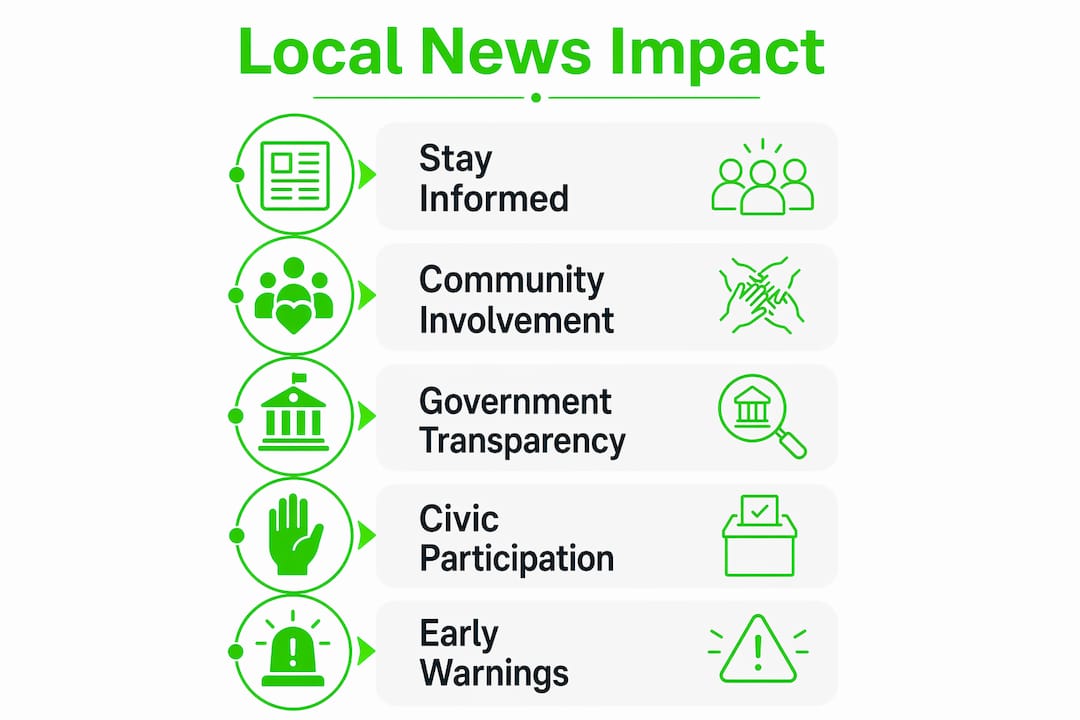
How does following local news promote community engagement?
People who closely follow local news are measurably more likely to participate in sports leagues, religious groups, and community charities. This is not coincidence. Local news creates awareness of opportunities to get involved, and awareness is the first step toward participation.
Local journalism also builds emotional connections between residents. Place-based reporting creates empathy and prevents social isolation, even when political opinions differ. When you read about a neighbor’s business struggling after a flood, or a local school winning a national competition, you feel connected to something larger than yourself. That connection is what builds resilient communities.
The importance of local news for community engagement goes beyond feelings. It translates into concrete civic behavior. Here are practical ways you can turn local news into direct civic action:
- Attend town hall meetings announced in local news coverage and ask questions publicly.
- Share verified local news stories on WhatsApp groups and community forums to amplify reach.
- Contact your local government representative when a news story reveals a problem affecting your area.
- Volunteer with organizations featured in local news coverage to support community projects.
- Vote in local elections informed by local journalism’s coverage of candidates and their records.
Active participation by readers — sharing news, attending events, and engaging publicly — is what converts passive news consumption into real democratic power. This shift from audience to participant is where the true benefits of local journalism become visible.
Pro Tip: Join your community’s WhatsApp or Telegram group and share one verified local news story per week. Over time, you become a trusted information source in your own network, which builds your social influence.
In what ways does local news support transparency in local governance?
Local news trains local officials to be more transparently accountable by increasing public visibility of their decisions. When a local government chairman knows that a journalist will report on how the annual budget is spent, behavior changes. Officials respond proactively to media scrutiny, which improves governance outcomes for everyone in that community.
Investigative local journalism has changed policies in Nigerian communities. Reports on uncompleted school buildings, diverted constituency funds, or unqualified contractors have led to government responses, project restarts, and even prosecutions. These outcomes rarely happen without the pressure that consistent local media coverage creates.
The consequences of losing local news are severe and well-documented:
- News deserts — areas with no local journalism — show increased misinformation, community tensions, and reduced civic engagement.
- Without local reporters, corrupt local officials face no public scrutiny and operate without consequence.
- Communities without local news experience what researchers call “civic drift,” where residents feel disconnected from local governance and stop participating.
- Misinformation fills the vacuum left by absent local journalism, spreading through social media without correction.
Local journalism’s most critical role is orientation. It helps citizens understand local decisions and their consequences, which is the foundation of functional democracy. In Nigeria, where local government accountability is often weak, local journalism is one of the few mechanisms that keeps officials visible to the public they serve.
Local news as a civic foundation is not a metaphor. It is a structural reality. Remove local journalism, and local governance becomes opaque, unaccountable, and disconnected from citizens.
What practical steps can young Nigerians take to engage with local news?
Consuming local news effectively means going beyond reading headlines. You need to track stories over time, follow up on outcomes, and connect what you read to what you observe in your community. A story about a road project is not finished when the groundbreaking ceremony is reported. Follow it until the road is completed or abandoned.
Digital platforms and local forums have expanded how local news reaches Nigerian communities. Platforms like Naijatipsland allow users to submit news tips, discuss trending local issues, and share stories that affect their neighborhoods. This is how digital communities shape social change in Nigeria. When a story gets discussed widely on a community forum, it reaches officials who might otherwise ignore it.
Here is a numbered list of best practices for active local news engagement:
- Follow at least two local news sources for your state or local government area, whether print, radio, or online.
- Read full articles, not just headlines. Headlines often omit context that changes the meaning of a story.
- Track ongoing stories by saving or bookmarking reports on issues like infrastructure, elections, or public health.
- Submit news tips to local outlets when you witness something newsworthy. You can learn how to submit news articles to community platforms directly.
- Attend public meetings covered by local news, such as local government sessions or community development association gatherings.
- Cross-check local news stories against official government announcements to identify discrepancies worth questioning.
- Support local journalists by sharing their work and, where possible, subscribing to or donating to local news outlets.
Optimizing your news consumption for decision-making means treating local news as a tool, not entertainment. Every story you read should prompt a question: what does this mean for my community, and what can I do about it?
Key takeaways
Following local news is the most direct way young Nigerians can stay informed, hold officials accountable, and participate meaningfully in their communities.
| Point | Details |
|---|---|
| Local news fills critical gaps | National outlets cannot cover local governance, services, or community events at the neighborhood level. |
| Civic participation increases | People who follow local news are more likely to vote, volunteer, and engage in community organizations. |
| Accountability depends on coverage | Local officials behave more transparently when local journalists consistently report on their decisions. |
| News deserts carry real costs | Communities without local journalism experience more misinformation, civic disengagement, and unchecked corruption. |
| Active engagement multiplies impact | Sharing, attending events, and submitting tips turns you from a passive reader into a civic participant. |
Naijatipsland’s take on local news in Nigeria
Local news in Nigeria carries a weight that most young people underestimate. At Naijatipsland, we have watched communities mobilize around a single well-reported local story and seen others stay silent about obvious injustices simply because no one documented them. The difference is almost always journalism.
The uncomfortable truth is that many young Nigerians consume international news far more actively than local news. They know what is happening in Washington or London before they know what their local government chairman decided last week. That gap is not just an information problem. It is a power problem. Local officials make decisions that affect your water supply, your roads, your schools, and your safety. If you are not paying attention, someone else is making those decisions for you without your input.
Nigerian local journalism faces real challenges: underfunding, political pressure, and the migration of advertising revenue to social media platforms. But the solution is not to abandon local news. It is to support it actively. Read it, share it, and contribute to it. Platforms like Naijatipsland exist precisely to give Nigerians a space to discuss, submit, and amplify local stories that matter. When you engage with traditional media’s role in Nigerian civic life, you start to see local journalism not as a passive information source but as a tool you can use. That shift in perspective is where real community power begins.
— Naijatipsland
Stay informed and get more involved with your community
If this article has shown you anything, it is that following local news is one of the most practical decisions you can make as a young Nigerian. The benefits extend well beyond staying informed.
Research shows that community engagement linked to local news consumption produces measurable improvements in mental health and social well-being. Naijatipsland has documented how community engagement benefits Nigerian adults across multiple dimensions, including a 30% improvement in mental health outcomes for those who stay actively involved in their communities. If you want a structured path forward, the community engagement guide for Nigerian leaders on Naijatipsland walks you through exactly how to translate local news awareness into real civic action. Start there, and start today.
FAQ
Why does local news matter more than national news for daily life?
Local news covers the decisions, services, and events that directly affect your neighborhood, local government area, and community. National outlets cannot report on every ward or local council meeting, so local journalism fills that gap with information that shapes your daily life.
How does following local news increase civic participation?
Research confirms that people who follow local news are more likely to participate in community organizations, vote in local elections, and engage with local charities. Awareness of community issues is the first step toward taking action on them.
What happens to a community when local news disappears?
Communities that lose local journalism become news deserts, where misinformation spreads, civic engagement drops, and local officials face no public scrutiny. Areas without local news show measurably worse governance outcomes and reduced community trust.
How can young Nigerians find reliable local news sources?
Search for state-specific news websites, follow local radio stations on social media, and use platforms like Naijatipsland to access and discuss community-relevant stories. You can also submit tips and contribute to local coverage directly through community news forums.
Does following local news actually change how officials behave?
Yes. Local officials respond to media scrutiny by becoming more transparent and accountable in their decision-making. Consistent local coverage of government decisions creates public visibility that discourages misconduct and encourages better governance.