

TL;DR:
- Many Nigerian youth lack foundational digital skills despite using smartphones daily.
- Digital literacy encompasses evaluating information, online safety, content creation, and ethical use.
- Bridging the digital divide is essential for Nigeria’s economic and social empowerment.
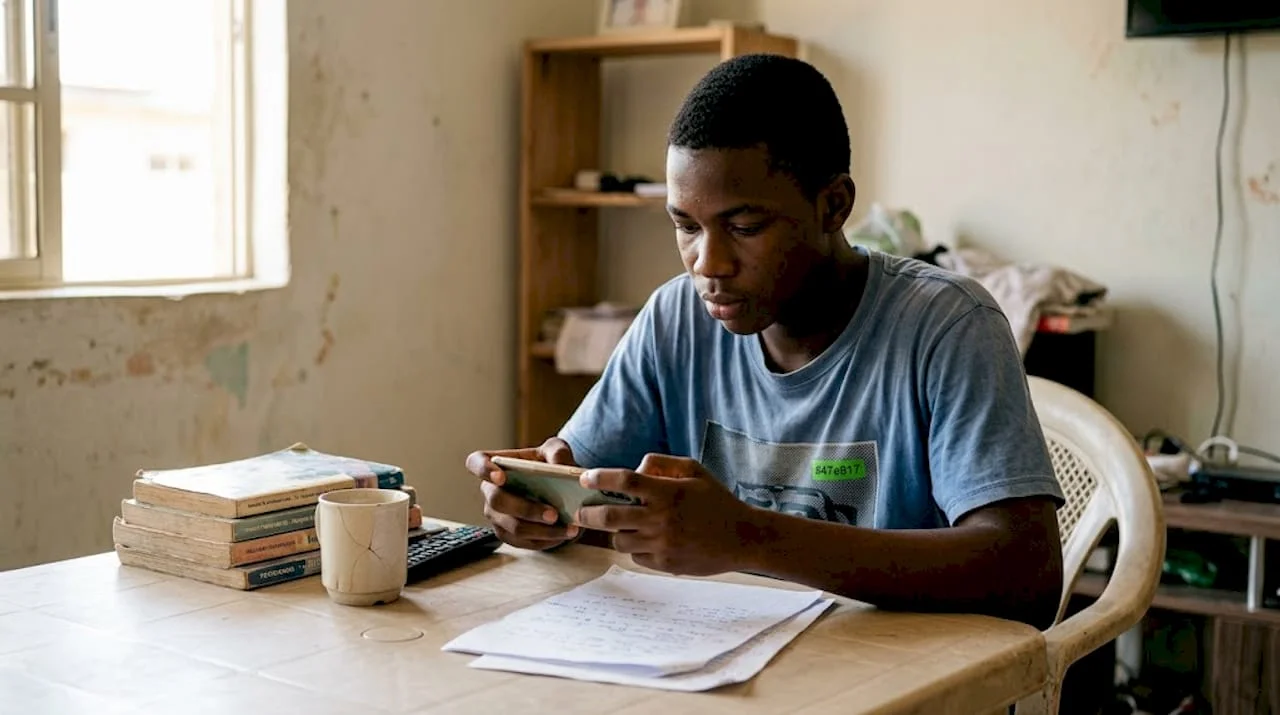
Many Nigerian students assume that owning a smartphone and scrolling through Instagram qualifies as being digitally literate. It does not. 72% of Northern Nigerian girls aged 15 to 20 are classified as “Digital Beginners,” meaning millions of young people lack the foundational skills needed to participate meaningfully in a digital economy. Digital literacy goes far beyond casual tech use. It includes how you evaluate information, protect yourself online, create content responsibly, and solve problems using technology. This article breaks down what digital literacy really means, who is being left behind in Nigeria, and what you can do to build skills that actually matter for your future.
Table of Contents
- Defining digital literacy: More than basic tech skills
- The digital divide in Nigeria: Who’s left behind?
- Global frameworks and practical skills for Nigerian youth
- Building digital literacy for career and life success
- Why digital literacy is about mindset, not just skills
- Boost your digital literacy with the right resources
- Frequently asked questions
Key Takeaways
| Point | Details |
|---|---|
| Digital literacy is broad | It involves more than just using devices; it includes communication, creation, and ethical participation online. |
| Access gaps exist in Nigeria | Location and gender greatly affect who can develop digital skills and benefit from opportunities. |
| Frameworks guide learning | International standards like DigComp and UNESCO’s frameworks show what to learn and how to progress. |
| Employability boost | Strong digital literacy unlocks better careers, self-learning, and empowered participation in a tech economy. |
| Mindset matters | Adaptability and curiosity are just as crucial for digital success as technical skill. |
Defining digital literacy: More than basic tech skills
With this context in mind, let’s unpack what digital literacy truly means.
There is a clear difference between using technology and being digitally literate. Using technology means you can open an app, send a message, or watch a video. Digital literacy means you understand why you are doing those things, how the tools work at a functional level, and what risks and responsibilities come with them. It is a much higher standard, and it is the one that employers, educators, and global institutions are now measuring.
The most widely used global standard is the DigComp framework, which organizes digital competence into five core areas:
- Information and data literacy: Finding, evaluating, and managing digital information
- Communication and collaboration: Interacting effectively and responsibly online
- Digital content creation: Producing and sharing original digital work
- Safety: Protecting your data, privacy, and mental well-being online
- Problem solving: Using digital tools to address real challenges
UNESCO goes further by emphasizing that cognitive and ethical skills are just as important as technical ones. Being able to recognize misinformation, respect others’ intellectual property, and make ethical decisions online are all part of what it means to be truly digitally literate. You can explore more through this UNESCO digital skills resource.
Here is a quick comparison to show the difference:
| Basic tech use | Digital literacy |
|---|---|
| Sending WhatsApp messages | Evaluating the credibility of shared content |
| Watching YouTube videos | Creating and publishing original video content |
| Browsing social media | Understanding digital ads impact in Nigeria and how algorithms shape what you see |
| Using Google Search | Applying advanced search techniques to verify facts |
Understanding the role of social media in shaping public opinion is itself a digital literacy skill. It requires critical thinking, not just a data connection.
Pro Tip: Digital literacy is not only learned on a screen. Connect every new tech skill to a real productivity goal, whether that is writing a better CV, managing a small business, or contributing to community discussions.
The digital divide in Nigeria: Who’s left behind?
Understanding digital literacy is only half the story; let’s see who is being left behind and why.
Nigeria’s digital landscape is deeply unequal. Urban centers like Lagos and Abuja have relatively strong internet infrastructure, but rural communities face serious barriers. Youth computer use is under 20% in Northern Nigeria, reflecting a first-level digital divide rooted in device access, electricity, and connectivity.
The gender gap is equally stark. Adolescent girls are disproportionately excluded from digital participation. Only 18% of Northern Nigerian girls own a phone, and just 43% have any form of internet access. This is not a minor gap. Research confirms that higher digital skills link directly to female empowerment, economic independence, and improved social outcomes in these communities.
“Only 18% of Northern Nigerian girls own a phone, yet digital skills are directly tied to their economic and social empowerment.”
The socioeconomic dimension matters too. Families with lower incomes cannot afford smartphones, data plans, or reliable electricity. This means that even when digital literacy programs exist, the students who need them most often cannot access them. The result is a growing skills gap that threatens to widen Nigeria’s inequality.

Here is a breakdown of key digital access indicators:
| Group | Phone ownership | Internet access | Computer use |
|---|---|---|---|
| Urban Nigerian youth | High | Moderate to high | Moderate |
| Rural Nigerian youth | Low | Low | Under 20% |
| Northern Nigerian girls (15-20) | 18% | 43% | Very low |
Beyond access, there are emerging skill gaps in areas that will define the next decade of Nigeria’s economy. Fields like AI and machine learning, data analytics, and cybersecurity are growing fast. Yet very few Nigerian students receive structured training in these areas before entering the workforce. Nigeria’s digital economy growth depends on closing these gaps urgently.
The barriers are real, but they are not permanent. Understanding who is left behind is the first step toward fixing it. The impact of social media in Nigerian communities also shows how digital tools, when accessible, can drive real social change.
Global frameworks and practical skills for Nigerian youth
The existence of gaps underlines the need for clear, actionable frameworks. Here is what global standards and practical steps look like in the Nigerian context.
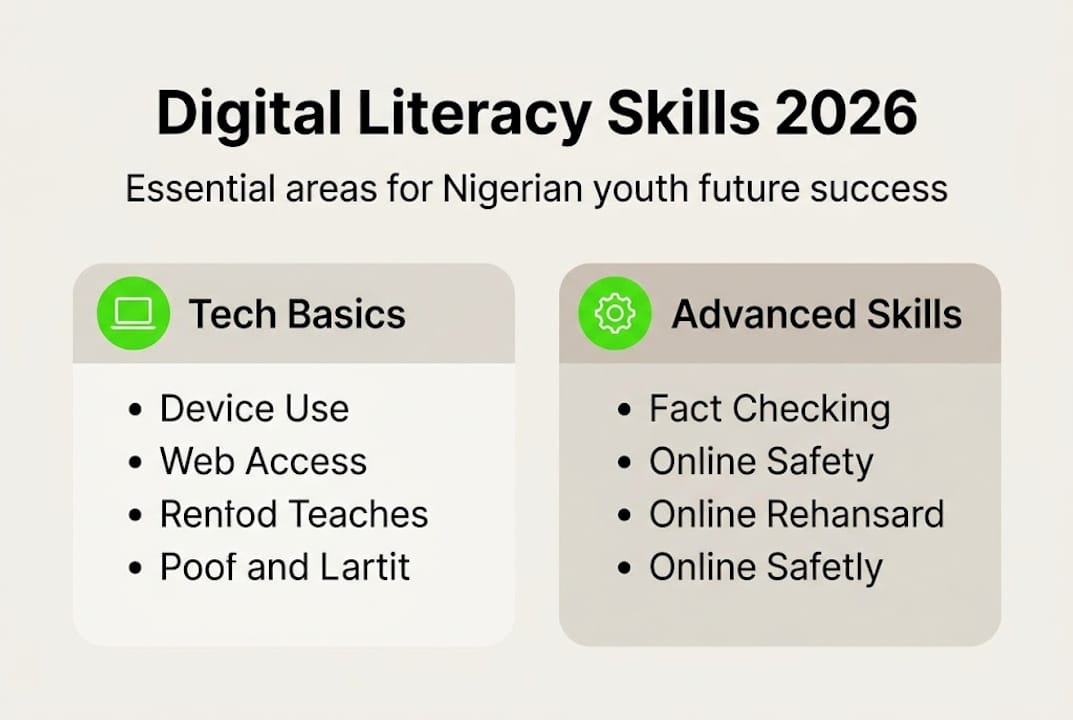
Global frameworks like DigComp and UNESCO’s ICT Competency Framework for Teachers (ICT CFT) organize digital skills into proficiency levels. DigComp proficiency levels range from Foundation to Advanced, giving learners and educators a clear roadmap. At the Foundation level, you can perform basic tasks with guidance. At the Advanced level, you can solve complex problems, create sophisticated digital content, and mentor others.
For Nigerian youth, the most practical approach is to map these levels to real goals. Here is a numbered checklist of core skills every Nigerian student should pursue:
- Information evaluation: Verify the credibility of news, research, and social media posts before sharing
- Online collaboration: Use tools like Google Docs, Zoom, and shared drives to work with others remotely
- Content creation: Produce written, visual, or video content that communicates ideas clearly
- Digital safety: Protect your passwords, recognize phishing attempts, and manage your privacy settings
- Troubleshooting: Diagnose and fix basic technical problems without always relying on someone else
- Data literacy: Read and interpret simple charts, statistics, and data reports
The good news is that you do not need an expensive course to build these skills. Inquiry-based learning, where you ask questions and investigate answers using digital tools, is one of the most effective methods. The flipped classroom model, where you study content independently before discussing it in a group, works well even with limited classroom time. Open Educational Resources (OER) provide free, high-quality learning materials for anyone with internet access.
Practicing online debate skills is another powerful way to build communication and critical thinking simultaneously. Even understanding concepts like digital currency in Nigeria trains you to think analytically about how technology shapes financial systems.
Also explore the UNESCO framework for digital skills to understand how international standards map to your own learning journey.
Pro Tip: Many free platforms, including Khan Academy, Coursera (audit mode), and Google’s Digital Garage, offer structured digital skills training at no cost. Start with one skill area and build from there.
Building digital literacy for career and life success
Having covered what to learn, let’s turn to tangible benefits for your future.
Employers across Nigeria’s growing tech and business sectors are no longer satisfied with candidates who can only use basic office software. They want people who can think critically, work safely online, learn new tools independently, and collaborate across digital platforms. Employability hinges on integrating digital skills into your personal and professional toolkit, not just listing them on a CV.
Digital literacy also opens doors that geography used to close. A student in Kano can now access the same online learning platforms, global job boards, and professional networks as someone in Lagos or London. That is a remarkable shift, and it is only available to those who have developed the right skills.
Here are the top five digital skills that will serve you best in Nigeria’s current economy:
- Critical information evaluation: Separating credible sources from misinformation is essential in every field
- Cybersecurity awareness: Protecting your accounts and data is a basic professional requirement
- Data interpretation: Reading analytics, reports, and dashboards is now expected in most office roles
- Content creation and communication: Writing clearly, creating visuals, and presenting ideas digitally are universally valued
- Self-directed learning: The ability to teach yourself new tools as technology evolves is the skill that outlasts all others
Understanding how digital ads boost brands is one practical example of how digital literacy translates directly into business value. Similarly, knowing how influencers shape trends helps you understand the digital economy from both a consumer and creator perspective.
Digital literacy is not a one-time achievement. It is a continuous practice that grows with you as technology evolves.
Why digital literacy is about mindset, not just skills
Skill checklists are useful. But they are not enough on their own.
The most digitally capable young Nigerians we see thriving are not always the ones with the most formal training. They are the ones who stayed curious when a new platform launched, who asked questions when something did not make sense, and who adapted when the tools changed. That adaptability is a mindset, not a certification.
UNESCO emphasizes that cognitive and ethical skills are as critical as technical ones. Knowing how to use a tool is less valuable than knowing when to use it, why it matters, and what ethical responsibilities come with it. A self-taught content creator in Ibadan who thinks carefully about the impact of what she publishes is more digitally literate than a trained programmer who ignores online safety.
The future of Nigeria’s digital economy belongs to young people who combine technical ability with ethical awareness and a genuine appetite for learning. Understanding digital currency or AI is not the finish line. Staying curious and responsible as these technologies evolve is what will set you apart.
Boost your digital literacy with the right resources
Ready to level up? Here are your best next steps.
Naijatipsland.com is built for exactly this kind of growth. Whether you want to practice what you have learned, engage with current affairs, or sharpen your thinking through real discussions, the platform gives you a space to do it all.
Start by learning how to start an online discussion so you can contribute meaningfully to digital conversations. Brush up on online forum etiquette to communicate professionally and respectfully. And if you want to understand why staying informed matters, read about how discussing current affairs empowers Nigerian youth. Every conversation you join is a chance to practice and grow your digital skills in real time.
Frequently asked questions
What are the five core areas of digital literacy?
They are information and data literacy, communication and collaboration, digital content creation, safety, and problem solving. These five areas come from the DigComp 2.2/3.0 framework adopted by UNESCO and used globally.
Why is digital literacy important for Nigerian students?
It increases access to education, strengthens economic participation, and improves job prospects. Rural Nigeria’s digital divide shows that students without these skills face real barriers to opportunity.
How can I improve my digital literacy for free?
You can use open educational resources (OER), join online communities, and practice inquiry-based learning on your mobile device. Inquiry-based and flipped learning methods are proven to work even with limited resources.
What jobs benefit most from digital literacy in Nigeria?
Fields like data analytics, AI, digital marketing, and online content creation require strong digital literacy skills. These are also the fastest-growing sectors in Nigeria’s evolving digital economy.
Is digital literacy different from ICT skills?
Yes. Digital literacy includes cognitive, ethical, and communication dimensions that go beyond technical ICT operations. UNESCO specifically highlights that ethical and cognitive competences are central to true digital literacy.