First published 8 March 2026. Rewritten on 13 October 2026 from several news agencies’ reports, with later developments added.
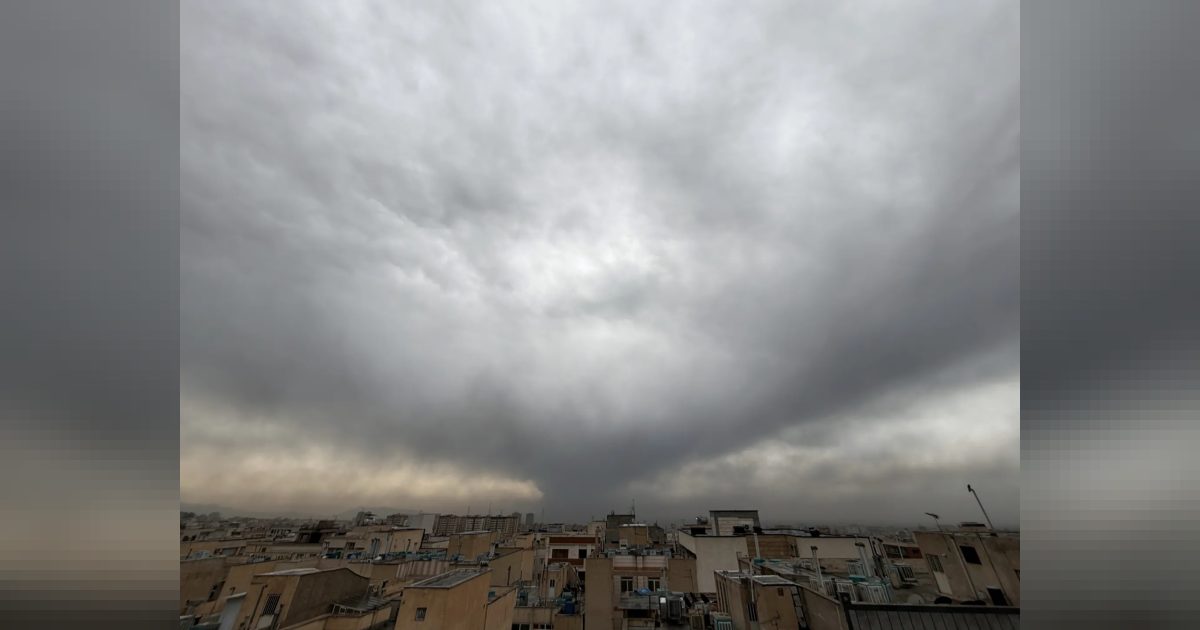
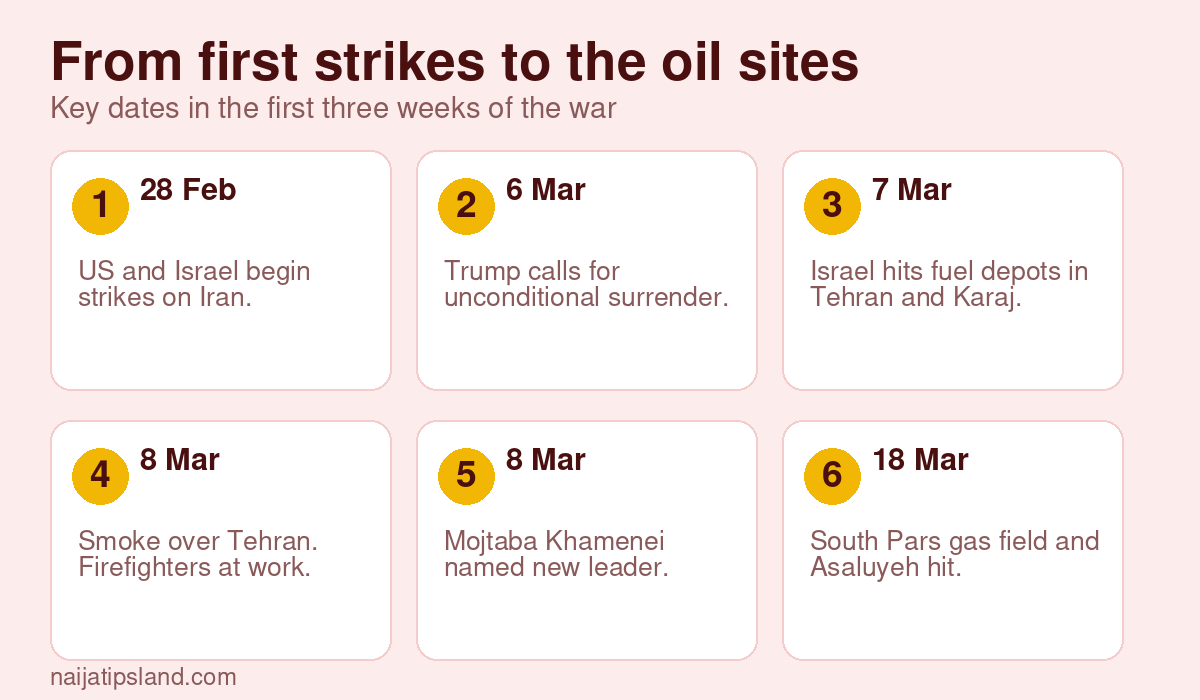
For the first nine days of the war, Iran’s oil and fuel network was left alone. That changed on the night of Saturday 7 March, when Israeli aircraft hit fuel depots in and around Tehran, and thick black smoke rose over the capital the next morning.
What was hit
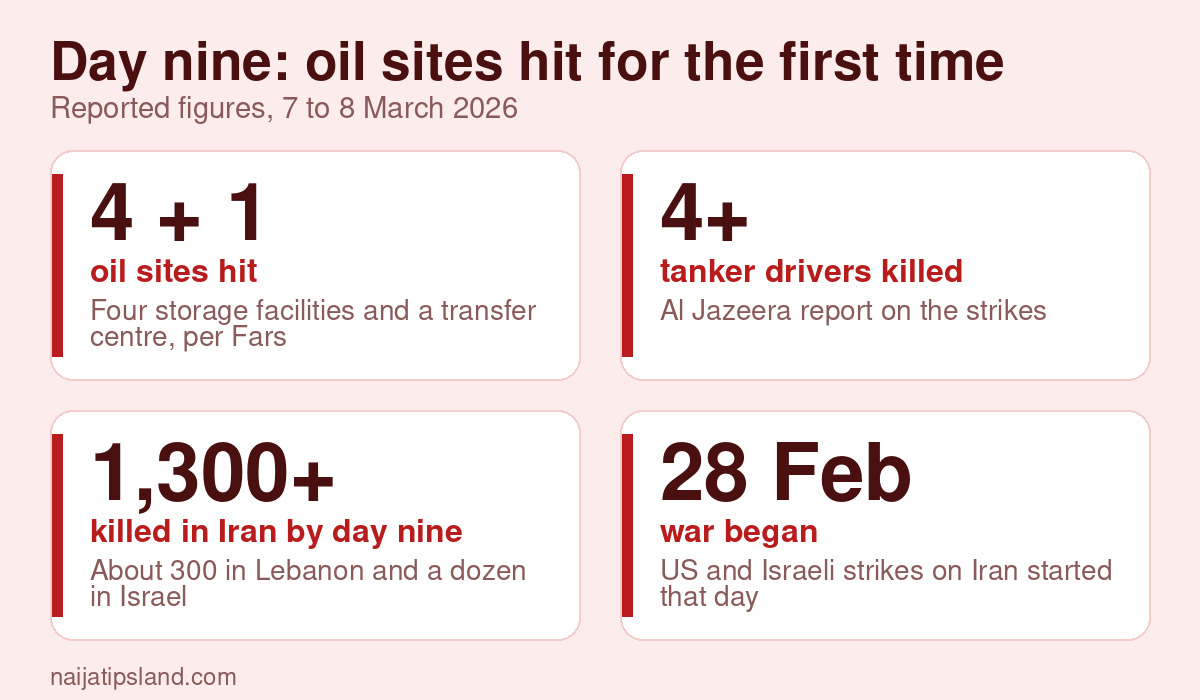
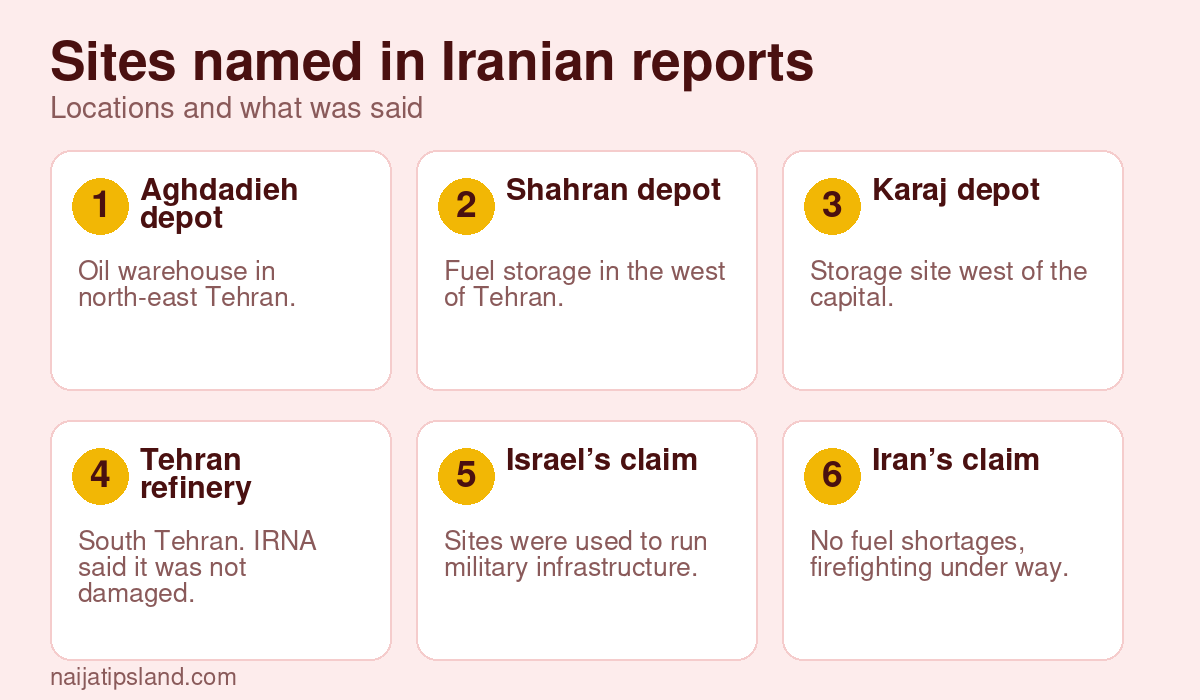
According to Iran’s Fars news agency, the strikes landed on four oil storage facilities and an oil transfer centre in Tehran and neighbouring Alborz province. Reports named the Aghdadieh oil warehouse in the north-east of Tehran, the Shahran depot in the west and the Karaj depot, and some accounts mention the Tehran refinery in the south. Iran’s IRNA agency said that the large refinery in south Tehran had not been damaged. Al Jazeera reported at least four tanker drivers killed, and that large fires broke out.
The Israeli military said it had struck a number of fuel storage sites in Tehran that, in its words, were being used to operate military infrastructure. Iranian state media said there were no fuel shortages and that firefighters were working on the blazes.
A turning point, with a heavy toll around it
It was widely described as the first time since the war began that national energy infrastructure, rather than military sites, had been targeted. By then, joint US and Israeli attacks on Iran had killed more than 1,300 people there, according to Al Jazeera’s count, along with about 300 in Lebanon and roughly a dozen in Israel. Iran was firing missiles and drones back at Israel and at Gulf countries that host American forces.
What came after
The oil strikes were not the last. On 18 March Israel attacked the South Pars gas field and the Asaluyeh petrochemical and refining area, according to reports summarised by Wikipedia, with damage reported to a share of Iran’s gas output and a jump in global oil prices. The same summary says the United States had objected to hitting energy sites, worried the attacks could rally support for the Iranian government.
Meanwhile Trump set out his terms for Iran’s leadership. Read our report on what he said about Iran’s next leader, and the background to the unrest in our story on the January protests.
Why a Nigerian reader should care
Attacks on oil infrastructure push crude prices up, and Nigeria feels it at the petrol pump. Brent was reported around $107 a barrel in September 2026, and petrol in Lagos and Abuja was selling at roughly ₦1,350 to ₦1,430 a litre. The higher crude price helps government revenue and reserves, but it also raises the cost of fuel and transport for households. See our guides to the role of oil in Nigeria and the fuel subsidy debate.
Sources
- Morning Star: Iranian oil facilities hit hard by US and Israeli air strikes
- JNS: Israel strikes Iranian regime’s military fuel facilities
- Times of Israel: Israeli Air Force striking Iranian oil infrastructure in Tehran
- Wikipedia: 2026 South Pars field attack
- Legit.ng: Petrol update, marketers announce new pump prices