
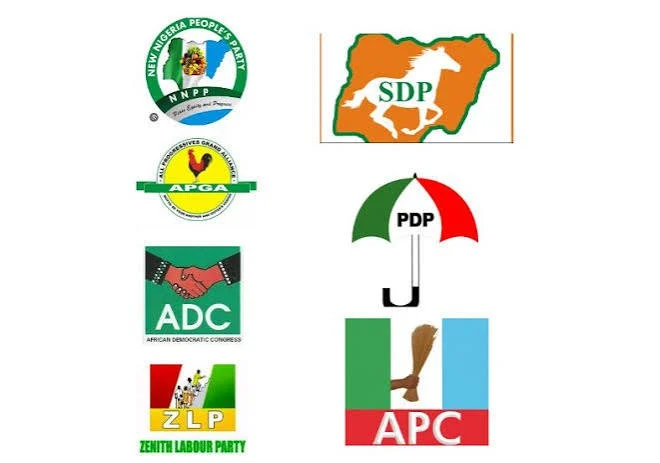
The Peoples Democratic Party, Allied People’s Movement and Labour Party have said they complied with relevant provisions of the Electoral Act 2026 in the conduct of their primaries and membership registration, following the Supreme Court judgment restoring key provisions of the law.
The parties’ National Publicity Secretaries, Jungudo Mohammed (PDP), Abubakar Yusuf (APM) and Ken Asogwa (LP), in separate interviews with The PUNCH, said they were yet to see the Certified True Copy of the judgment to understand its implications.
Meanwhile, the National Publicity Secretary of the Nigeria Democratic Congress, Osa Director, dismissed concerns that the judgment could disqualify its presidential candidate, Peter Obi, his running mate, Rabiu Kwankwaso, and former Deputy Senate President, Ovie Omo-Agege, saying the affected provisions should not be subjected to individual interpretations.
The Supreme Court, on Thursday, restored Sections 77(5), 77(6), 77(7) and 84(2) of the Electoral Act 2026, which concern political parties’ membership registers and the nomination of candidates.
The seven-member panel, in a unanimous judgment, set aside the earlier decision of the Court of Appeal which had voided the provisions.
The ruling has triggered questions over the eligibility of some candidates whose membership or nomination processes could be subjected to the restored provisions.
However, a number of the parties have dismissed the judgment, saying despite the different interpretations by the public, it wouldn’t affect or invalidate their candidates.
PDP Publicity Secretary, Mohammed, said the party complied with the law and provisions of the Electoral Act in conducting its primaries and registering party members.
He stated, “We comply with the relevant sections of the Nigerian Constitution and the Electoral Act. But as to the contents or implications of the judgment, as of Friday, the National Legal Adviser of the party did not have the Certified True Copy of the judgment.
“Until then, and until I am properly briefed by the NLA, I will not be able to comment on whether it has any implications for the party or not.
“I personally have not gone through the CTC because I do not have it. You know this is Sunday. From when the judgment was delivered up till now, I have not been able to sit down and analyse it, even if I had it. But I am not in possession, and I think the party is also not in possession.
“Most likely, within the week ahead, we should be able to have the CTC and see if it has any consequences.”
APM Publicity Secretary, Yusuf, said the opposition party was committed to upholding the law, stressing that it complied with all relevant legal provisions in its processes.
He stated, “To the best of our ability, APM is a party of law and order. We follow all the laid-down laws in line with the Constitution of the Federal Republic of Nigeria and, of course, the Electoral Act. So, that was followed to the letter.
“As we speak now, this suit you are referring to, we have not seen the CTC. We, as a party, have not seen the contents of it. So, we cannot speak on the implications and other matters arising from that particular judgment until we have it, until we see it.”
In an exclusive interview with The PUNCH, Director said the judgment should not be subjected to individual interpretations, stressing that anyone who felt aggrieved by a candidate’s eligibility should approach the court.
He said, “We subject ourselves to the magnitude of the judicial decisions. However, you must be cautious of the fact that once any judgment is given, people subject it to their individual interpretation. We are left to the mercy of the judgment, as it is not interpreted by individuals.
“Whoever feels aggrieved should go to court. So the best place to interpret those judgments, if you feel aggrieved, is when you take someone to court based on your own understanding and then the judge will make a pronouncement. As it is now, we want the law obeyed to the latter.
“We are not against the judgment of the Supreme Court. That’s the apex court of the land. So we are bound to obey it, whether it affects us positively or negatively.”
Asked whether the NDC feared that the judgment could affect Obi, Kwankwaso and Omo-Agege, Director said it was wrong to assume that the candidates were affected without considering whether any of them had been challenged in court.
He said, “That’s what I’m saying. When you say a handful of candidates, is it based on the interpretation of who is saying it? You know that these are all pre-election matters. And the law is clear that only the person who contested with you can take you to court.
“On our candidates you talked about, were they taken to court by aspirants or people who contested with them? And we know that you have 14 days to do that. So by now, the time has lapsed. These are the other issues we have to look at.
“That’s why I feel that people should not feel too excited to start interpreting the judgment, because these are pre-election matters. And it is over. And if no one was taken to court by any aspirant, I don’t see the judgment affecting such a person.”
His comments followed a clarification by Omo-Agege that the Supreme Court judgment did not disqualify him from contesting the 2027 Delta Central Senatorial election.
Omo-Agege, in a statement issued on Saturday by his Special Adviser on Strategy and Communications, Godwin Anaighe, said the apex court neither made an order against him nor declared him ineligible to contest.
The former Deputy Senate President said the judgment merely restored the disputed provisions of the Electoral Act and maintained that his name was included in the NDC membership register submitted to the Independent National Electoral Commission before May 10, as well as the commission’s final list of candidates.
Meanwhile, the National Publicity Secretary of the Labour Party, Ken Asogwa, said his party was also not affected by the Supreme Court decision.
He said, “I don’t think that the Labour Party is caught up by that judgment. I would only comment as it regards our party and how we are affected by it. We are not affected by that judgment. All our candidates were within time,” Asogwa said.
Asked whether the LP would urge or petition INEC to sanction former aspirants, including Young Progressives Party presidential candidate, Peter Agada, who defected to other parties to secure tickets after their primaries, Asogwa said such matters should be addressed by the parties that received them.
“Yes, I am aware. But I’m not here to discuss the fate of former members of the party who had gone to pitch tent with another political platform. It is those parties where they went that should come out and state whether they are eligible to contest elections on their platforms.
“But what I’m here to say is that the Labour Party is not caught up by that judgment. All our candidates are duly qualified because we conducted due diligence before issuing out our nomination forms to most of our aspirants back then. Remember that most of our candidates emerged through consensus arrangements.
“We were able to scrutinise them properly and the authenticity of their membership before we arrived at the consensus on who we want for this constituency and the various positions,” he added.
The Supreme Court’s judgment centred on provisions governing membership registers and candidate nomination.
Section 77(5) limits participation in party primaries to members whose names appear on the register submitted to INEC, while Sections 77(6) and 77(7) impose further requirements on the use and submission of party registers.
Section 84(2) provides for direct primaries or consensus in the nomination of candidates.