


Protecting your digital life in Nigeria is more challenging than ever. Too many believe cybersecurity is just about scam emails, but the threats are far wider and affect everyone from start-up founders in Lagos to tech enthusiasts across Abuja. As digital risks grow more complex, understanding the real scope of cybersecurity is your strongest defense. This guide breaks down common misconceptions and shows practical strategies for staying safe online in the unique Nigerian tech scene.
Table of Contents
- Core Definition And Common Misconceptions
- Major Types Of Cyber Threats In Nigeria
- How Cybersecurity Works Locally
- Key Laws And Regulatory Frameworks
- Roles, Risks, And Common Mistakes
- Effective Strategies For Online Protection
Key Takeaways
| Point | Details |
|---|---|
| Comprehensive Cybersecurity | Cybersecurity in Nigeria is a holistic strategy that goes beyond preventing scams to protect digital infrastructure and data from sophisticated attacks. |
| Evolving Threat Landscape | Cyber threats in Nigeria include financial fraud, identity theft, ransomware, and infrastructure disruption, impacting individuals and national security. |
| Importance of Awareness | Building a culture of digital awareness and continuous learning about cybersecurity is essential for all stakeholders, including businesses and government agencies. |
| Regulatory Framework | Nigeria’s cybersecurity laws focus on defining and prosecuting cybercrimes, ensuring data protection, and establishing collaborative governance among various agencies. |
Core Definition and Common Misconceptions
Cybersecurity in Nigeria represents a complex digital defense strategy against evolving technological threats. Unlike popular misconceptions, cybersecurity is not simply about preventing online scams, but encompasses a comprehensive approach to protecting digital infrastructure, personal data, and national technological assets.
At its core, cybersecurity involves protecting systems, networks, and programs from digital attacks. Scholarly research highlights that these attacks are far more sophisticated than traditional Nigerian email fraud stereotypes. The landscape of cyber threats includes multiple dimensions:
- Financial fraud targeting banking systems
- Identity theft through personal data breaches
- Cyber espionage targeting government and corporate networks
- Infrastructure disruption affecting critical national systems
Many young tech professionals mistakenly believe cybersecurity is exclusively a problem for large corporations or developed nations. Academic research demonstrates that cyber threats are pervasive, impacting individuals, businesses, and national security across all technological ecosystems.
The reality is that Nigeria’s digital landscape is increasingly vulnerable. Cybercriminals exploit technological gaps, targeting everything from personal smartphones to government databases. Understanding these threats requires recognizing that cybersecurity is not just about technology, but about creating a holistic culture of digital awareness and protection.
Pro tip: Continuously update your knowledge about emerging cyber threats and invest time in understanding the latest digital protection strategies.
Major Types of Cyber Threats in Nigeria
Cybersecurity professionals in Nigeria face a complex and evolving landscape of digital threats that extend far beyond traditional misconceptions. Comprehensive research reveals multiple sophisticated attack vectors targeting individuals, businesses, and national infrastructure.
The primary categories of cyber threats in Nigeria include:
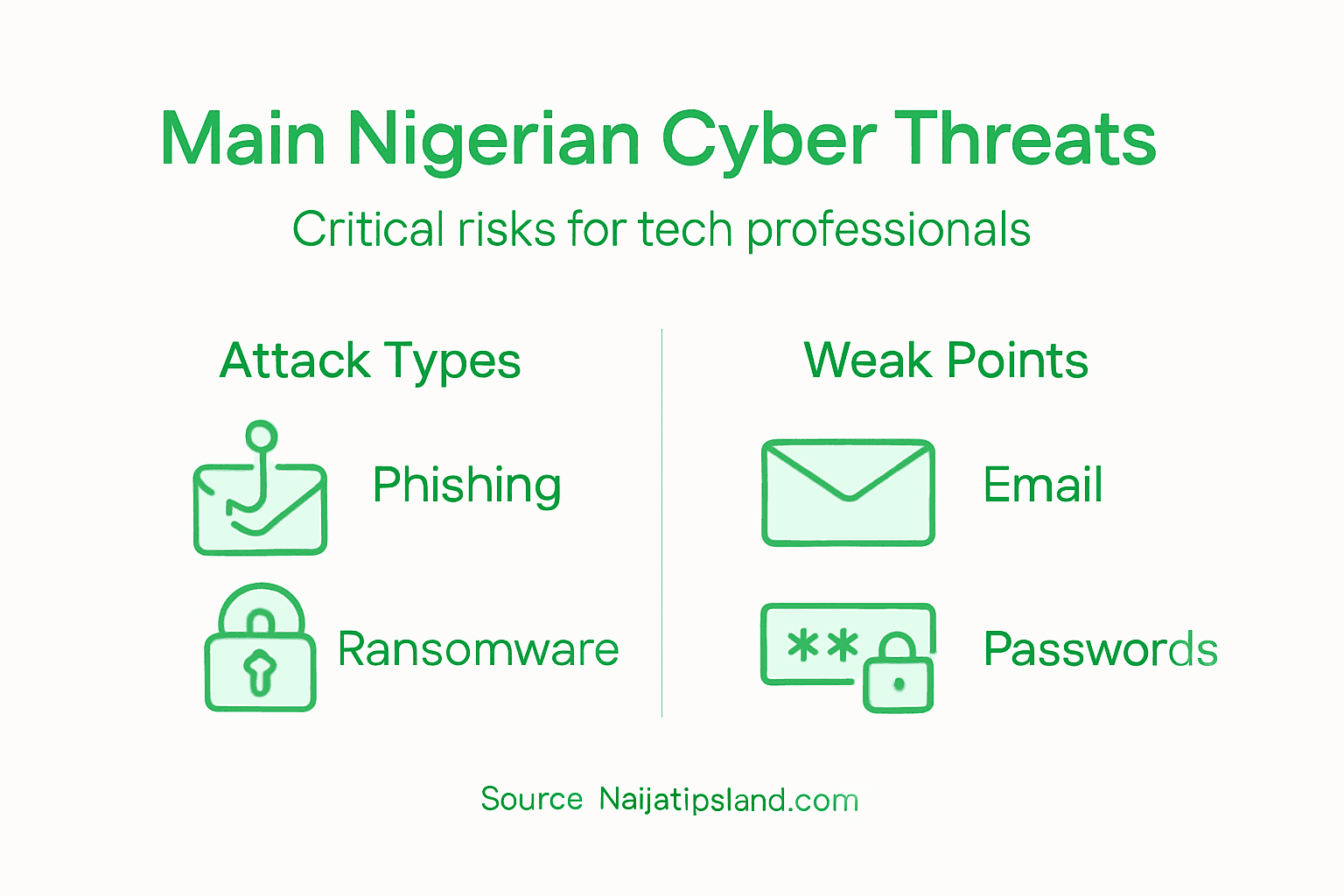
- Phishing attacks targeting personal and financial information
- Ransomware designed to encrypt and hold digital assets hostage
- Business email compromise exploiting corporate communication systems
- Online financial fraud targeting banking and payment platforms
- Data protection violations involving unauthorized personal information access
Emerging digital threats have become increasingly sophisticated, with cybercriminals leveraging advanced technologies to penetrate vulnerable systems. Research indicates that AI-assisted fraud techniques are rapidly becoming more complex, presenting unprecedented challenges for cybersecurity professionals.
Nigerian digital ecosystems are particularly vulnerable due to rapid technological adoption and inconsistent cybersecurity infrastructure. Cybercriminals exploit technological gaps, targeting everything from personal smartphones to government databases, making continuous vigilance and proactive defense strategies critical for protecting digital assets.
To better understand Nigeria’s cybersecurity threats, here is a comparison of traditional and emerging digital threats:
| Threat Type | Target Victims | Typical Methods | Recent Trends |
|---|---|---|---|
| Phishing & Email Fraud | Individuals, firms | Deceptive links, emails | Increasing use of AI deception |
| Ransomware | Businesses, agencies | Malicious attachments | Higher ransom demands, crypto |
| Data Breaches | Corporations, banks | Network intrusions | Larger-scale personal data loss |
| Infrastructure Attacks | National utilities | Direct system compromise | Attacks on critical services |
Pro tip: Develop a habit of regularly updating your digital security knowledge and implementing multi-layered protection strategies across all technological platforms.
How Cybersecurity Works Locally
Cybersecurity in Nigeria operates through a complex network of institutional, governmental, and private sector strategies designed to protect digital infrastructure. Local cybersecurity practices reveal a multi-layered approach addressing technological vulnerabilities and systemic challenges.
The key components of local cybersecurity implementation include:
- Government policy frameworks establishing national cybersecurity guidelines
- Vulnerability assessment programs identifying potential digital risks
- Capacity building initiatives training professionals in advanced defense techniques
- Multi-stakeholder collaboration between public and private digital security entities
- Educational integration of cybersecurity awareness into professional curriculums
National cybersecurity strategies emphasize a holistic approach that goes beyond technological solutions. This includes developing comprehensive risk management protocols, creating national awareness campaigns, and establishing robust infrastructure protection mechanisms across government and private sectors.
The local cybersecurity ecosystem is characterized by continuous adaptation. Professionals must navigate rapidly evolving technological landscapes, addressing challenges such as outdated software, insufficient risk management strategies, and the need for ongoing professional development. This dynamic environment requires persistent learning and proactive defense mechanisms.
Pro tip: Develop a comprehensive understanding of both technological tools and human factors in cybersecurity, recognizing that human behavior is often the most significant vulnerability.
Key Laws and Regulatory Frameworks
Nigeria’s cybersecurity legal landscape is complex and continuously evolving, with comprehensive legislative frameworks designed to address digital threats and protect national technological infrastructure.
The primary legal instruments governing cybersecurity in Nigeria include:
- Cybercrimes (Prohibition, Prevention, etc.) Act 2015
- Nigeria Data Protection Act 2023
- National Cybersecurity Policy and Strategy
- Computer Security Incident Response Team (CSIRT) Guidelines
- Electronic Transaction Act
Cybersecurity policy developments trace a strategic progression from initial initiatives in 2003 to more robust regulatory mechanisms. The legal framework aims to establish clear governmental authority over cyber offenses, create mechanisms for prosecution, and define comprehensive guidelines for digital security practices.
The regulatory ecosystem involves multiple government agencies working collaboratively to enforce cybersecurity standards. This includes the Office of the National Security Adviser, the National Information Technology Development Agency (NITDA), and specialized cybercrime units within law enforcement, each playing a critical role in implementing and enforcing digital protection strategies.
Below is a summary of key Nigerian laws and agencies responsible for cybersecurity governance:
| Legal Instrument | Year | Main Focus | Key Enforcing Agency |
|---|---|---|---|
| Cybercrimes Act | 2015 | Defines & prosecutes cybercrimes | National Security Adviser |
| Nigeria Data Protection Act | 2023 | Regulates data privacy | NITDA |
| National Cybersecurity Policy & Strategy | 2021 | National security guidelines | Multiple agencies |
| CSIRT Guidelines | 2020 | Incident response coordination | National CERT |
Pro tip: Stay updated on evolving cybersecurity regulations by regularly reviewing official government publications and participating in professional cybersecurity networks.
Roles, Risks, and Common Mistakes
Cybersecurity in Nigeria involves complex interactions between various stakeholders, each with distinct responsibilities and potential vulnerabilities. Comprehensive national research reveals the multifaceted nature of digital security challenges.
Key roles and their primary responsibilities include:
- Individual Users: Maintain personal digital hygiene
- Corporate Organizations: Implement robust security protocols
- Government Agencies: Develop and enforce national cybersecurity strategies
- Technology Professionals: Design and maintain secure technological infrastructures
- Educational Institutions: Train future cybersecurity talent
Systematic vulnerability assessments highlight several critical risks and common mistakes that compromise digital security. These include inadequate cybersecurity training, poor risk management practices, and systemic underinvestment in technological defense mechanisms.
The most prevalent risks facing Nigerian digital ecosystems involve insider threats, sophisticated phishing schemes, and ransomware attacks. Organizations frequently make critical errors such as neglecting regular security audits, failing to update software systems, and maintaining weak authentication protocols. These vulnerabilities create significant openings for cybercriminals to exploit technological and human weaknesses.

Pro tip: Develop a comprehensive, multi-layered approach to cybersecurity that combines technological solutions with ongoing human skills development and awareness training.
Effective Strategies for Online Protection
Cybersecurity protection in Nigeria requires a comprehensive, multi-layered approach that combines technological solutions with human-centric strategies. National cybersecurity frameworks emphasize the importance of developing robust defensive mechanisms tailored to local technological ecosystems.
Key strategies for effective online protection include:
- Zero trust security models
- Enhanced identity management
- Continuous vulnerability assessments
- Multi-factor authentication
- Regular security awareness training
Cybersecurity outlook reports highlight the critical importance of integrating cybersecurity as a strategic business function. This involves moving beyond traditional perimeter defense approaches and adopting more dynamic, adaptive security strategies that anticipate and respond to emerging digital threats.
The most effective protection strategies recognize that cybersecurity is not just a technological challenge, but a comprehensive organizational and individual responsibility. Young tech professionals must develop a holistic understanding that combines technical skills, strategic thinking, and continuous learning to create resilient digital defense mechanisms.
Pro tip: Invest in continuous learning and stay updated with the latest cybersecurity trends, technologies, and threat landscapes to maintain your professional effectiveness.
Empower Your Cybersecurity Journey with Naijatipsland.com
Young tech professionals in Nigeria face critical challenges such as sophisticated phishing attacks, ransomware threats, and the urgent need for continuous cybersecurity education. This article highlights the importance of a holistic approach to digital defense and staying updated with emerging threats and laws. At Naijatipsland.com, you gain access to a vibrant community and the latest discussions on Nigerian cybersecurity trends, technology updates, and practical online protection strategies designed to keep you informed and empowered.
Join thousands of Nigerians actively exchanging knowledge on cybersecurity, contributing content, and raising awareness right now. Visit Naijatipsland.com to explore cutting-edge topics and engage in meaningful conversations that enhance your professional skills. Start being part of the solution today by participating in user-generated posts, engaging in debates, and accessing current affairs that illuminate the digital security landscape. Your next step toward mastering cybersecurity in Nigeria begins here.
Frequently Asked Questions
What are the main types of cyber threats affecting young tech professionals?
Cyber threats commonly include phishing attacks, ransomware, business email compromise, online financial fraud, and data protection violations. Each of these poses unique risks to individuals and organizations in the digital landscape.
How can young tech professionals protect themselves from cyber threats?
Young tech professionals can protect themselves by implementing multi-layered security strategies, such as using strong passwords, enabling multi-factor authentication, participating in regular security training, and continuously updating their knowledge on emerging cyber threats.
What role do government policies play in cybersecurity?
Government policies establish cybersecurity guidelines and frameworks to protect national digital infrastructure. They lay the groundwork for collaborative efforts among public, private, and educational institutions to enhance overall cybersecurity practices.
Why is continuous learning important in the field of cybersecurity?
Continuous learning is vital because the cybersecurity landscape is constantly evolving, with new threats and technologies emerging regularly. Staying informed helps professionals adapt their strategies and maintain effective defenses against cyberattacks.
Recommended
- ECN Upgrades Information Processing Techniques For Digital Transformation / Naijatipsland
- Role Of Social Media In Nigeria – Impact And Challenges
- What Is Remote Work – Impact On Modern Careers
- Experts Debate Risks And Rewards / Naijatipsland
- Complete Guide to Youth Leadership Development | Colossus Systems
- 7 Must-Have Skills for an Entrepreneurship Skills Checklist – Nomad Excel – Your Entrepreneurial Adventure Starts Here